
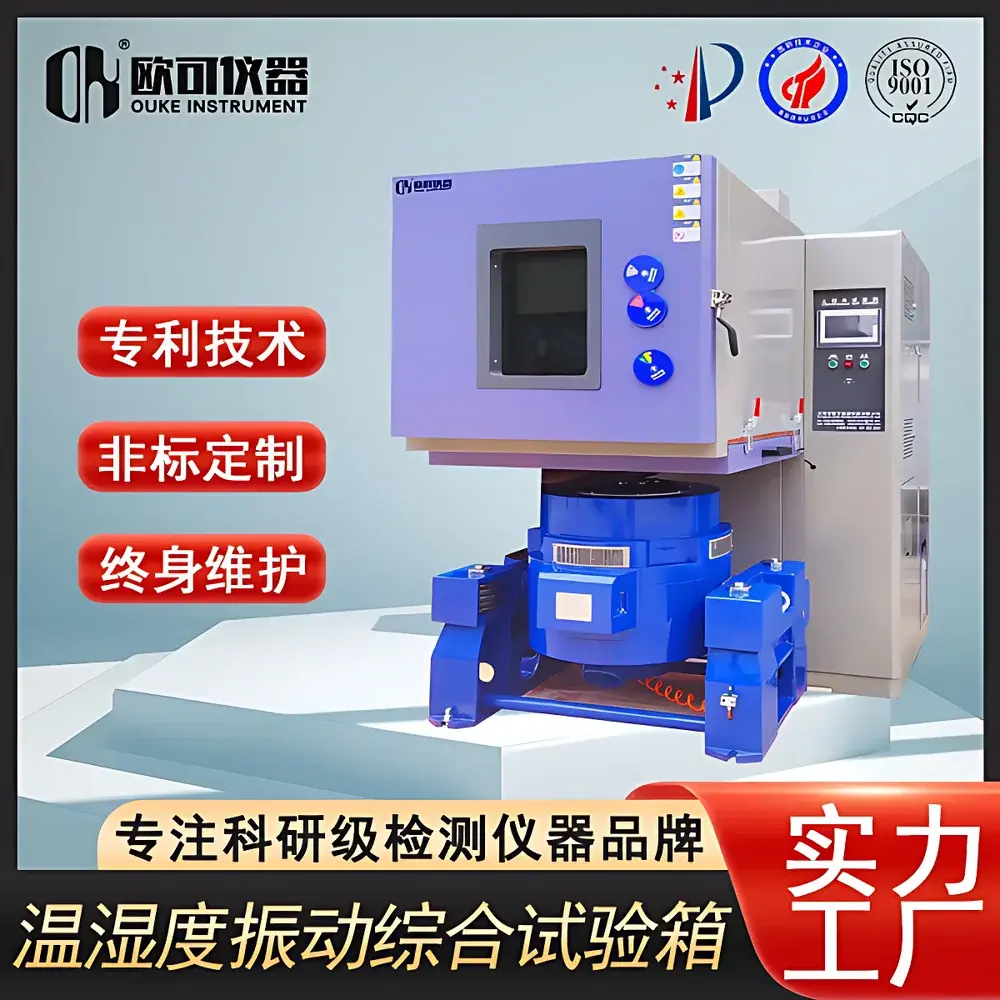
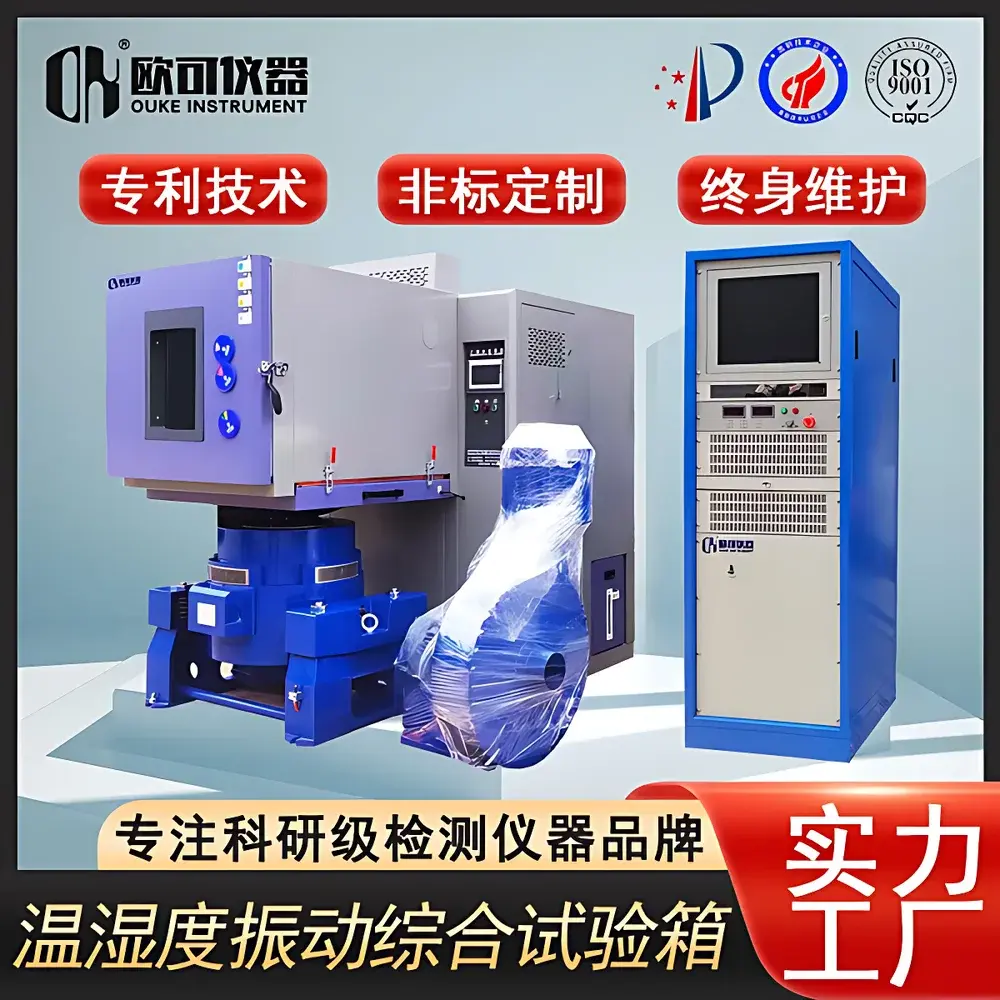
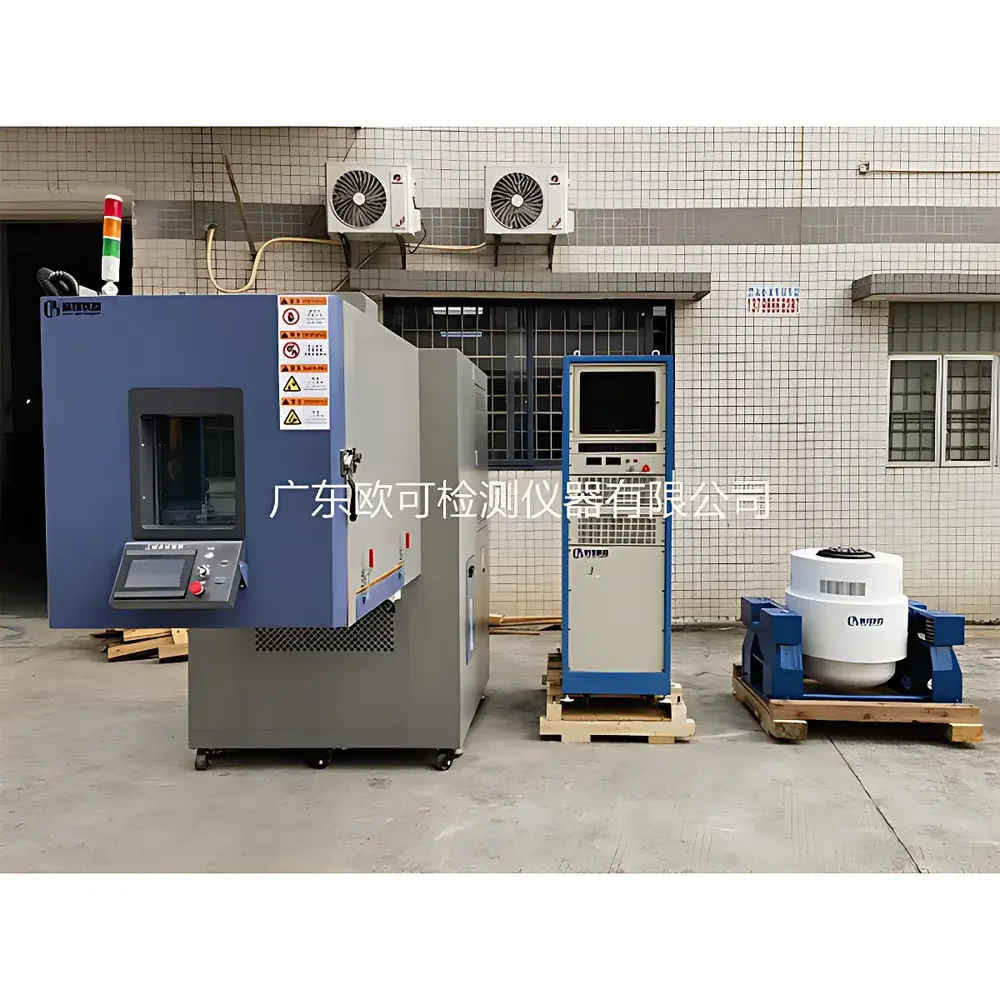
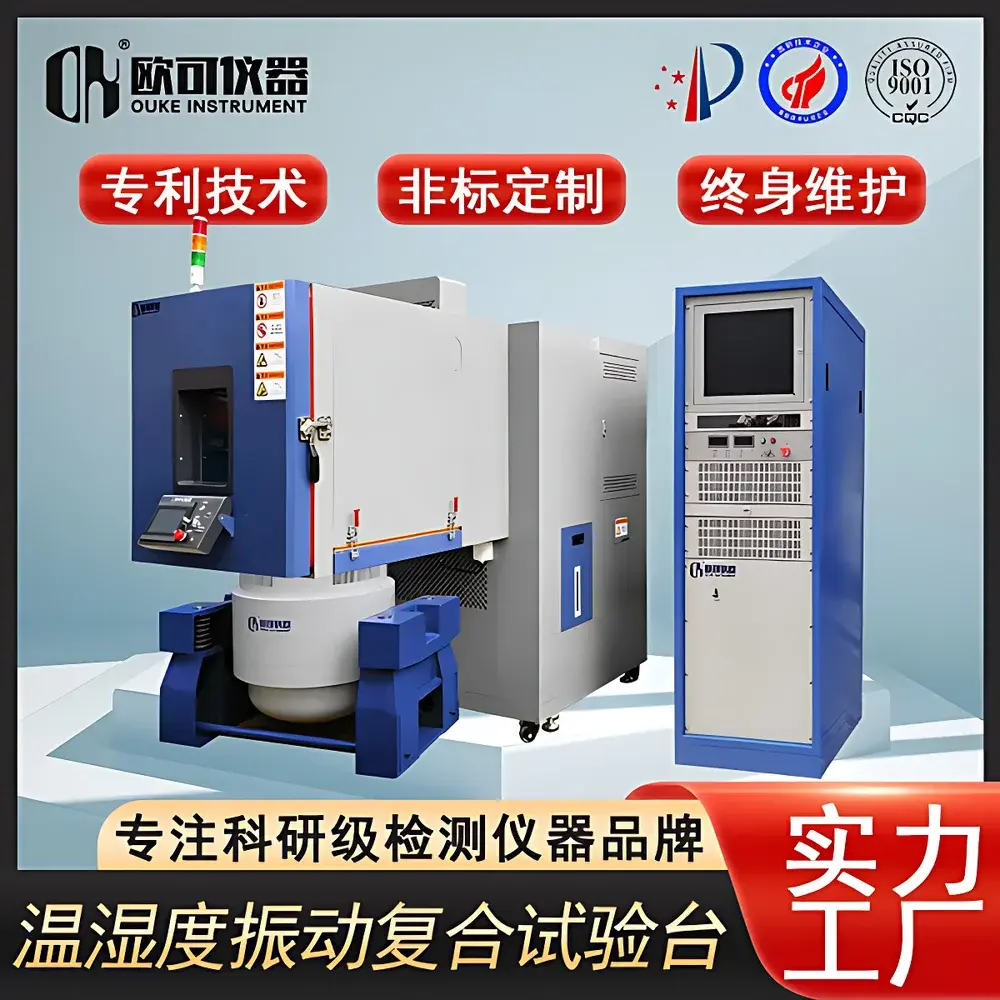
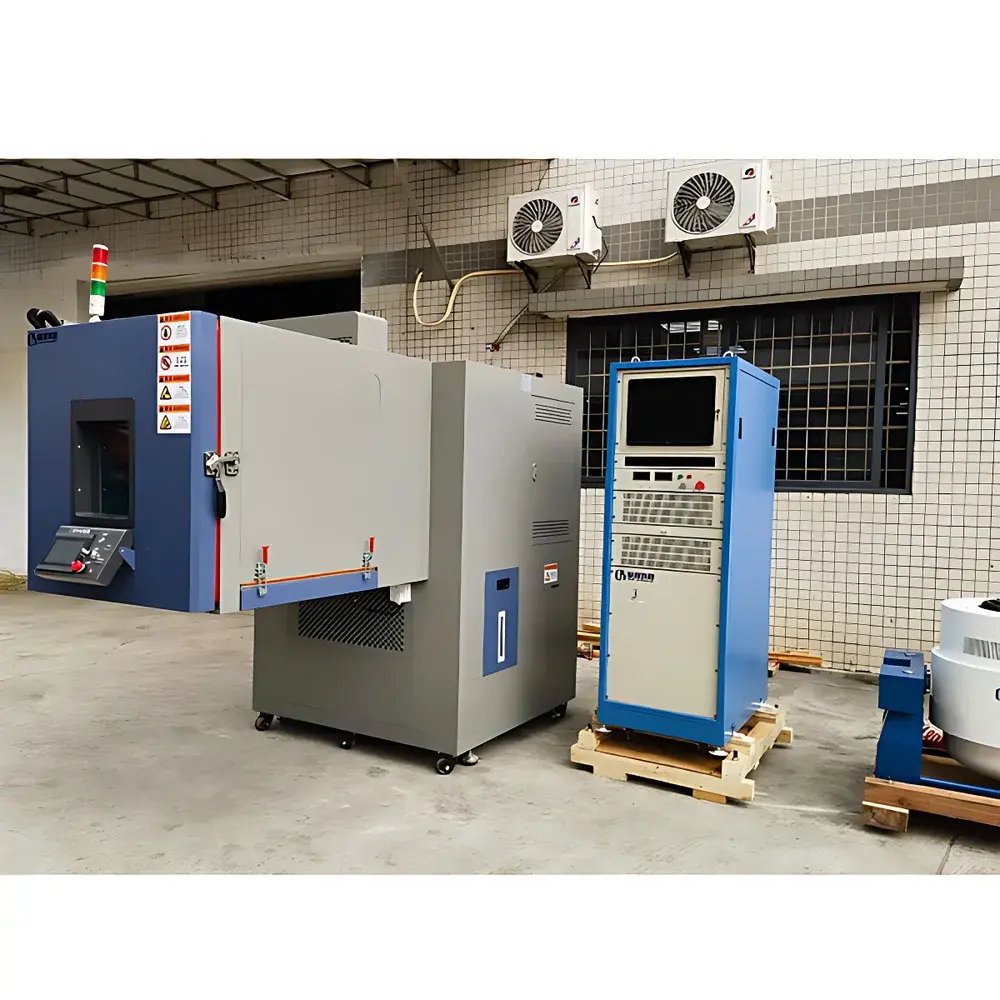
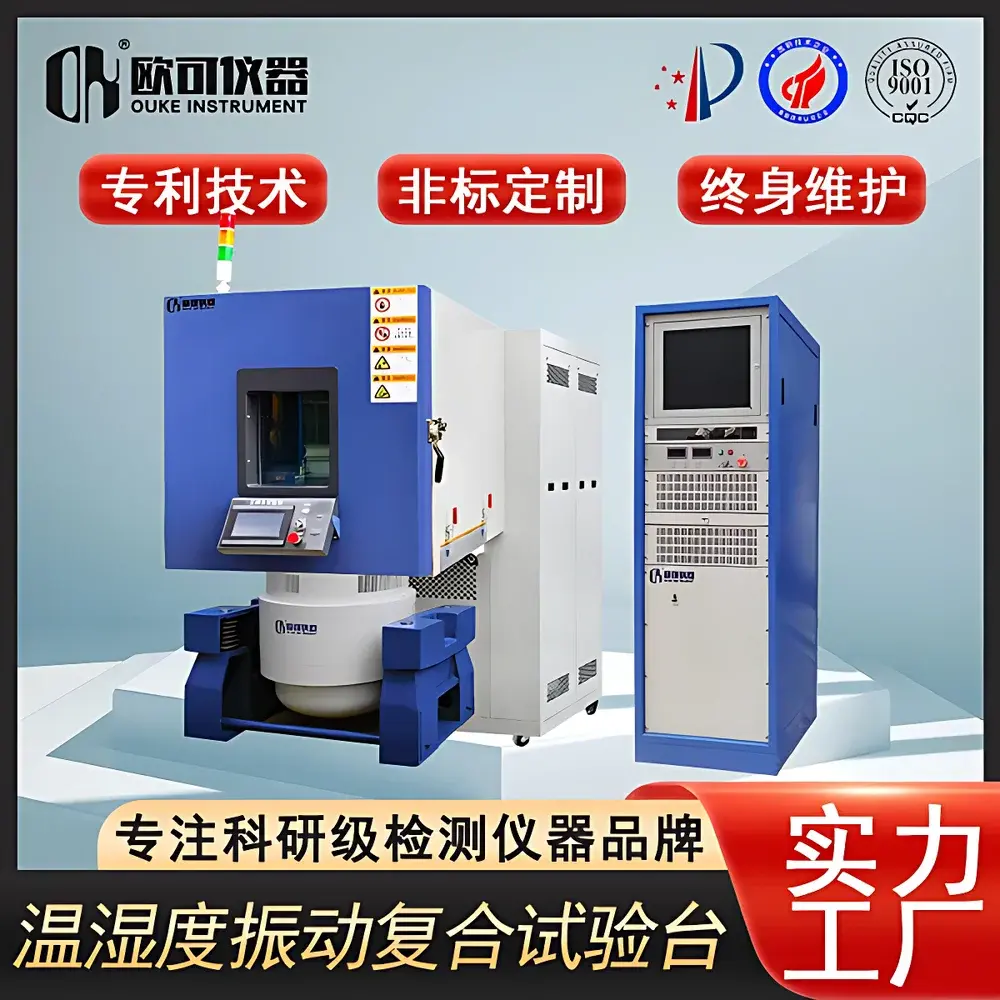
OK-ZTH-512.2 Combined Temperature-Humidity-Vibration Test System
| Brand | OK Instruments |
|---|---|
| Origin | Guangdong, China |
| Manufacturer Type | Direct Manufacturer |
| Product Origin | Domestic (China) |
| Model | OK-ZTH-512.2 |
| Temperature Range | −70 °C to +150 °C |
| Humidity Range | 20–98 %RH at 20–85 °C |
| Temperature Ramp Rate | 5 / 10 / 15 °C/min |
| Temperature Uniformity | ≤ ±0.5 °C |
| Standard Load Capacity | 15 kg aluminum mass block |
Overview
The OK-ZTH-512.2 Combined Temperature-Humidity-Vibration Test System is an engineered platform for simultaneous application of thermal, hygric, and mechanical stress stimuli—designed to replicate real-world operational and transportation environments where multiple environmental variables coexist. It integrates a high-stability climatic chamber with a high-performance electrodynamic shaker under a unified control architecture, enabling synchronized, programmable execution of multi-axis vibration profiles within precisely regulated temperature and humidity conditions. The system operates on the principle of coupled stress acceleration: by imposing thermal cycling, moisture exposure, and broadband mechanical excitation concurrently, it accelerates failure mechanisms that remain latent under single-stress testing—including interfacial delamination, solder joint fatigue, connector fretting corrosion, and polymer creep-induced misalignment. This capability aligns with accelerated reliability test methodologies defined in IEC 60068-2, MIL-STD-810H Method 520.4 (Combined Environments), and RTCA DO-160G Section 25 (Environmental Conditions and Test Procedures for Airborne Equipment).
Key Features
- Triple-stress integration: Independent yet coordinated control of temperature (−70 °C to +150 °C), relative humidity (20–98 %RH, conditioned within 20–85 °C ambient), and vibration (5–3000 Hz random/sine, programmable acceleration and displacement limits)
- Thermally isolated shaker mounting: High-damping air-spring isolation system decouples vibrational energy from the chamber structure, preventing transmission to refrigeration lines, insulation layers, or building foundations
- High-temperature shaker design: Custom-wound voice coil with Class H insulation and external forced-air cooling ducting ensures stable operation up to +150 °C without thermal derating
- Condensation mitigation architecture: Localized heating elements on shaker armature and transition plate, combined with laminar airflow management, suppress frost formation during low-temperature/humid transitions
- Programmable ramp-rate selection: Three discrete temperature transition rates (5 / 10 / 15 °C/min) support both standard qualification cycles and HALT-style step-stress profiling
- Robust chamber construction: Double-wall vacuum-insulated stainless steel enclosure with cryogenic-grade polyurethane foam, integrated defrost management and condensate drainage
Sample Compatibility & Compliance
The OK-ZTH-512.2 accommodates test specimens up to 15 kg mounted on an aluminum mass block, with internal heat load capacity of 350 W—sufficient for active electronic assemblies including ECUs, power converters, and RF modules. Chamber internal dimensions (W × D × H) support standard 19″ rack-mount enclosures and automotive control units. All thermal and humidity sensors are NIST-traceable and calibrated per ISO/IEC 17025 requirements. The system supports audit-ready data logging compliant with FDA 21 CFR Part 11 (electronic records and signatures), including user access control, change history, and tamper-evident audit trails. Test profiles adhere to ASTM D4728 (Random Vibration Testing of Shipping Containers), IEC 60068-2-64 (Vibration, Wideband Random), and ISO 16750-4 (Road Vehicles — Environmental Conditions and Testing for Electrical and Electronic Equipment — Climatic Loads).
Software & Data Management
Control and monitoring are executed via OK-TestSuite™ v4.2—a Windows-based, real-time deterministic platform with dual-domain synchronization engine. The software enables creation of multi-segment test profiles combining time-dependent temperature ramps, humidity setpoints, and vibration spectra (PSD, sine sweep, shock pulses). Each profile segment includes hold times, dwell conditions, and conditional triggers (e.g., “initiate 10 g RMS random vibration upon reaching −40 °C”). Raw sensor data (chamber temperature/humidity, shaker armature voltage/current, accelerometer feedback) are acquired at ≥10 kHz and stored in HDF5 format with embedded metadata (operator ID, calibration expiry, environmental chamber status). Export options include CSV, MATLAB .mat, and XML-based ATML (Automated Test Markup Language) for integration into enterprise PLM and quality management systems.
Applications
- Automotive electronics validation: ECU, ADAS camera modules, and battery management systems subjected to under-hood thermal cycling + engine-order vibration
- Aerospace avionics qualification: Flight-critical sensors and communication transceivers tested per RTCA DO-160G Sections 16 (Vibration), 25 (Temperature/Humidity/Vibration), and 26 (Icing)
- Defense electronics ruggedization: Tactical radios and GPS receivers evaluated across MIL-STD-810H Methods 502.7 (Low Temperature), 507.6 (Humidity), and 520.4 (Combined)
- Industrial IoT gateway reliability: Long-duration burn-in under 85 °C / 85 %RH + 2–500 Hz random vibration to assess conformal coating integrity and PCB-level solder joint durability
- Medical device regulatory testing: Electrosurgical generators and infusion pumps validated against IEC 60601-1 Clause 10 (Environmental Testing) and AAMI TIR17
FAQ
What standards does the OK-ZTH-512.2 support for combined environment testing?
It natively supports test sequencing per MIL-STD-810H Method 520.4, RTCA DO-160G Section 25, IEC 60068-2-64, and ISO 16750-4. Custom profiles can be built to match proprietary OEM specifications.
Can the system perform HALT or HASS protocols?
Yes—the programmable ramp rates, real-time parameter override, and step-stress triggering logic enable full implementation of Highly Accelerated Life Testing (HALT) and Highly Accelerated Stress Screening (HASS) as defined in ANSI/GEIA-STD-0009A.
How is vibration isolation maintained during rapid temperature transitions?
The air-spring isolation system is actively pressure-regulated and thermally compensated; its natural frequency remains below 1.2 Hz across the full temperature range, ensuring >95% vibration energy transmission efficiency to the test specimen while attenuating >99.9% of energy transfer to the chamber base.
Is remote monitoring and alarm notification available?
Yes—via optional OK-RemoteLink™ module supporting TLS-encrypted MQTT over Ethernet or 4G LTE, with configurable SMS/email alerts for out-of-spec conditions, system faults, or test completion.
What maintenance intervals are recommended for long-term operational stability?
Compressor oil and refrigerant checks every 12 months; shaker armature bearing inspection and recalibration every 2000 operational hours; humidity sensor replacement every 18 months or after 500 humidity cycles—documented in the included GLP-compliant maintenance logbook.



