
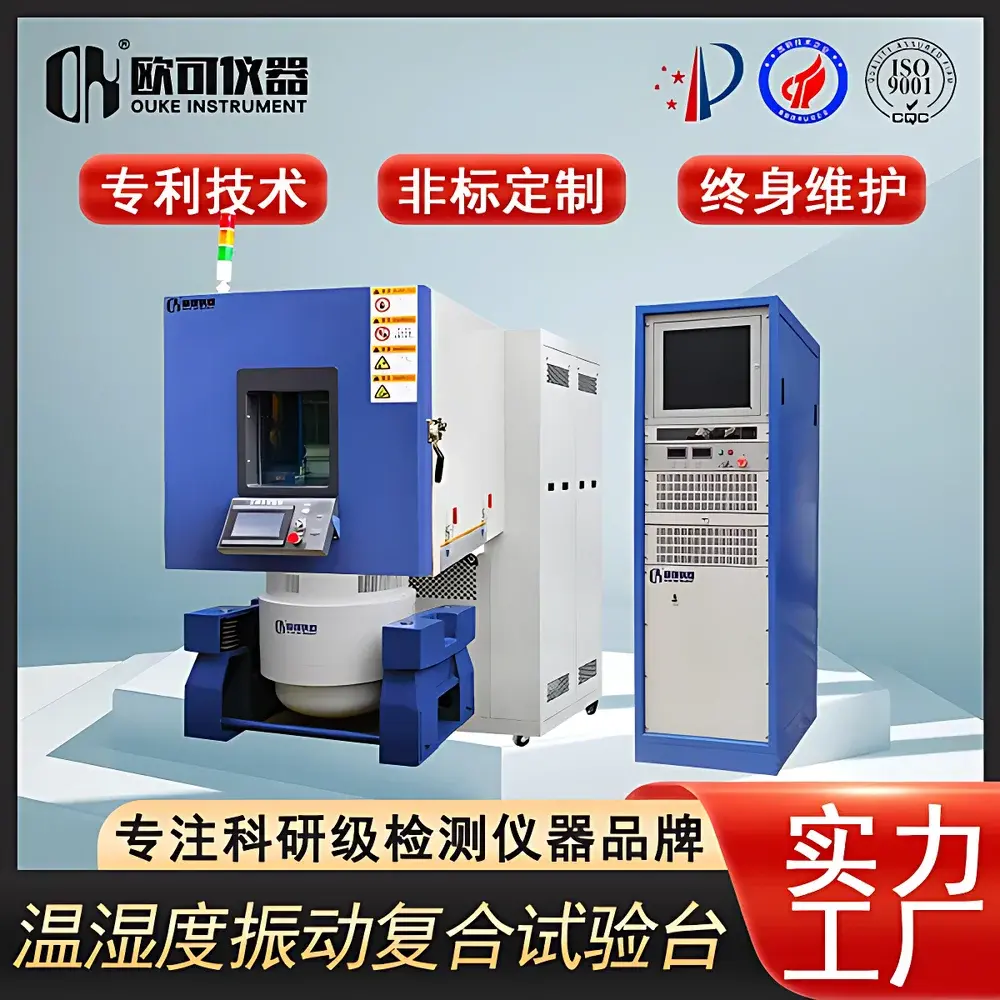
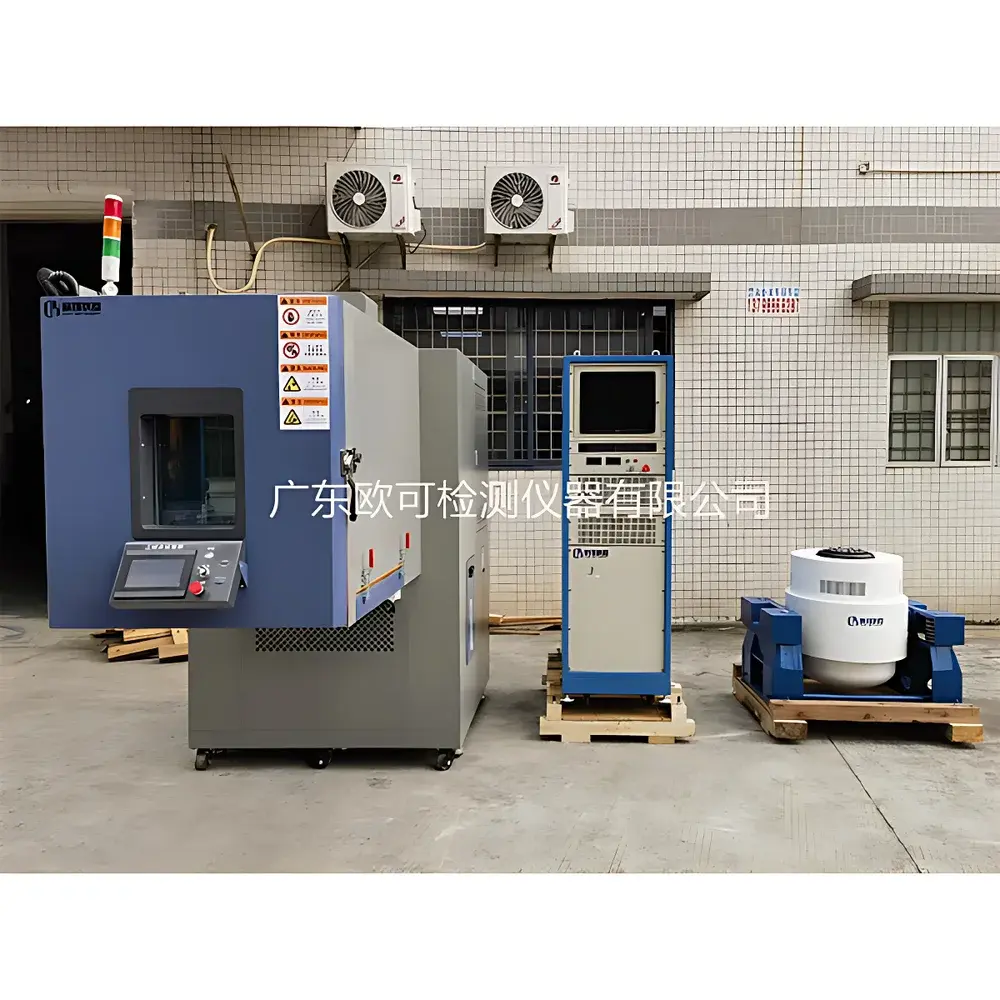
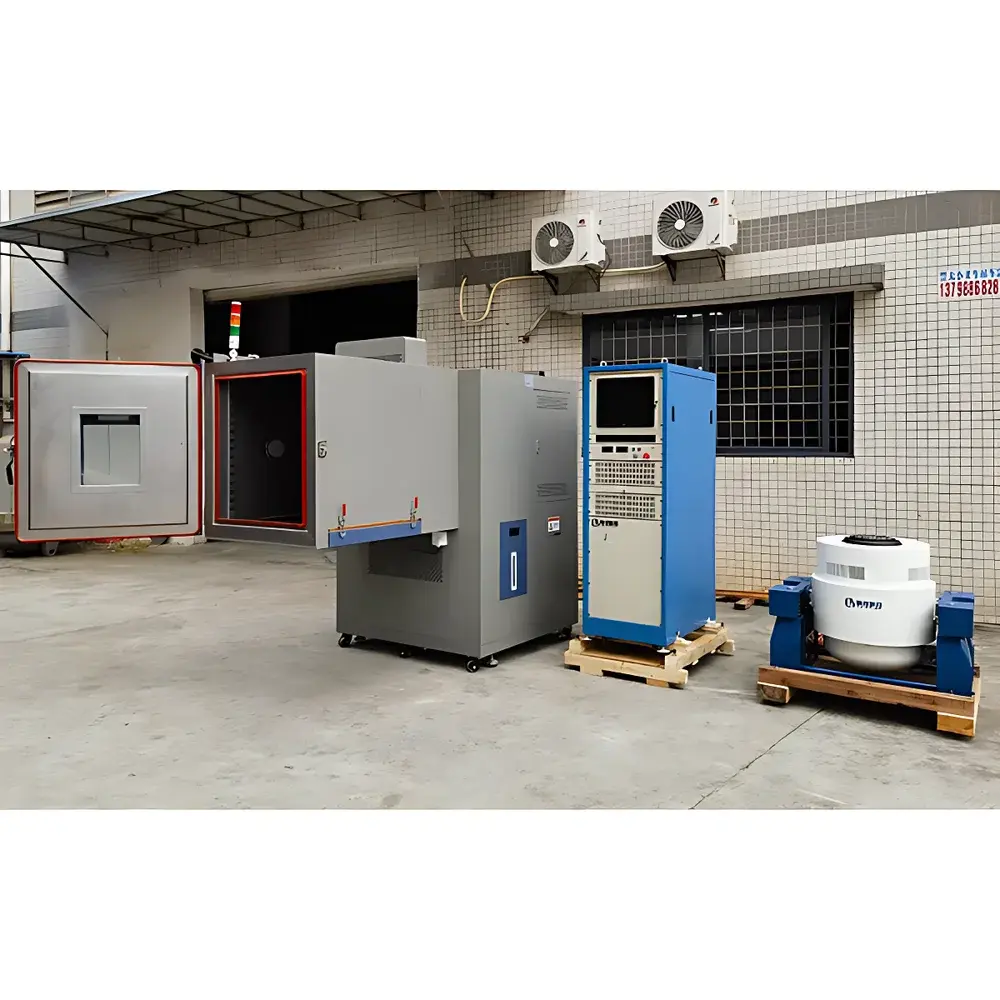
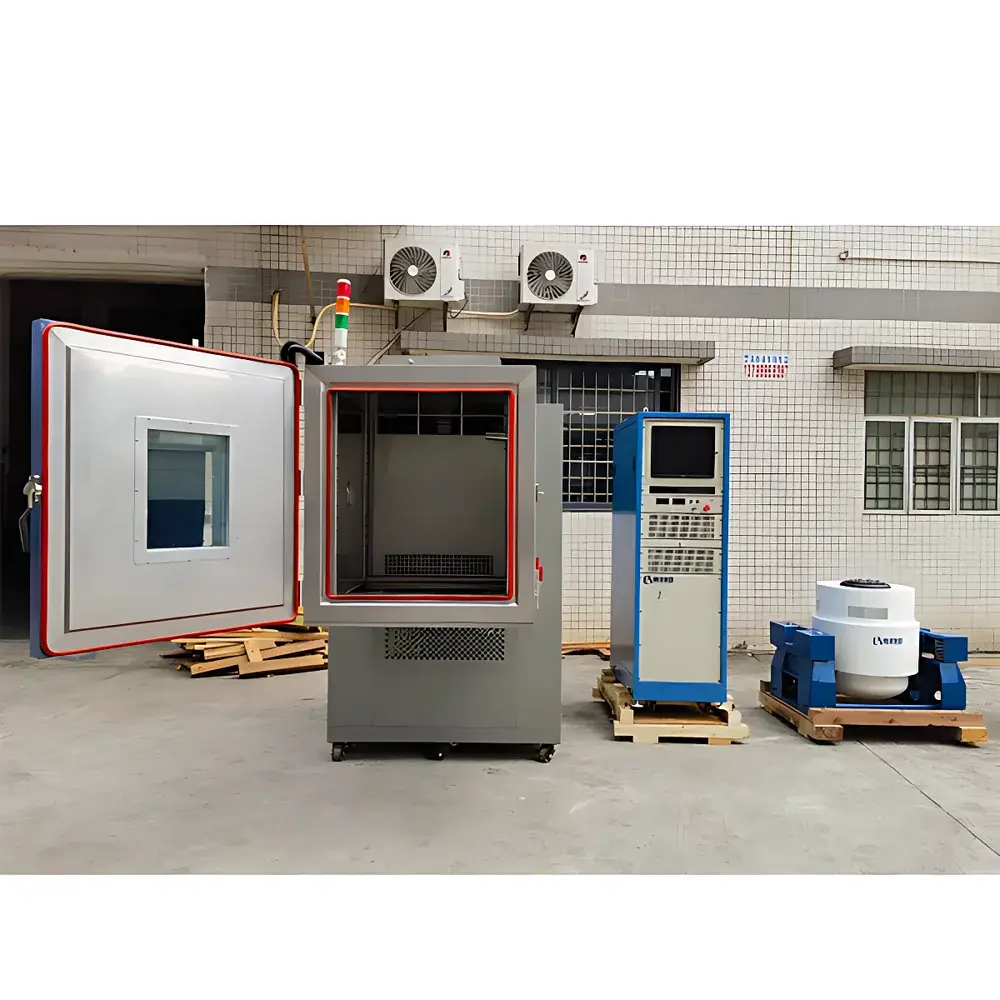
OK-ZTH-512.35 Combined Temperature-Humidity-Vibration Test System
| Brand | OK Instruments |
|---|---|
| Origin | Guangdong, China |
| Manufacturer Type | OEM/ODM Manufacturer |
| Country of Origin | China |
| Model | OK-ZTH-512.35 |
| Temperature Range | −70 °C to +150 °C |
| Humidity Range | 20–98 %RH at 20–85 °C |
| Temperature Ramp Rate | 5 / 10 / 15 °C/min |
| Temperature Uniformity | ≤ ±0.5 °C |
| Standard Load Capacity | 15 kg aluminum mass block (350 W thermal dissipation) |
Overview
The OK-ZTH-512.35 Combined Temperature-Humidity-Vibration Test System is an integrated environmental reliability testing platform engineered for simultaneous or sequential application of thermal, hygric, and mechanical stress stimuli. It operates on the principle of multi-stress acceleration—leveraging synergistic interactions between temperature cycling, controlled humidity exposure, and broadband vibration excitation—to replicate real-world operational and transport environments. This system is purpose-built for accelerated life testing, failure mode analysis, and conformance validation of high-reliability components across aerospace, automotive electronics, medical devices, and industrial control systems. Unlike standalone environmental chambers or shakers, the OK-ZTH-512.35 implements a fully coupled control architecture that maintains traceable synchronization among all three stress domains—ensuring phase-coherent stimulus delivery per IEC 60068-2-67 and MIL-STD-810H Section 514.8 requirements.
Key Features
- Triple-domain synchronized control: Independent yet coordinated regulation of temperature, relative humidity, and vibration profiles via a deterministic real-time controller with sub-second timebase resolution.
- Dynamic hermetic interface: Patented bellows-type motion seal between the climatic chamber baseplate and electromagnetic shaker armature—maintaining <±0.3 °C thermal stability and <±2 %RH humidity fidelity under 5–3000 Hz vibration (up to 100 gpk, 50 mmp-p).
- High-fidelity climate subsystem: Dual-stage cascade refrigeration with liquid nitrogen assist option; stainless-steel steam boiler humidification; condenser-based dehumidification; and forced-air circulation ensuring ≤±0.5 °C temperature uniformity across 512 L working volume.
- Structurally decoupled shaker integration: Pneumatic isolation foundation with active damping compensation prevents energy coupling into facility infrastructure while preserving >95 % transmissibility to test specimen.
- Modular fixture interface: ISO 16750-compliant mounting plate with thermal expansion-compensated fastening points; compatible with standard DIN 45071 and ASTM D4728 vibration fixtures.
- Comprehensive safety architecture: Redundant over-temperature, over-humidity, over-acceleration, and leakage current monitoring with hardware-level emergency shutdown and fail-safe door interlock.
Sample Compatibility & Compliance
The OK-ZTH-512.35 accommodates specimens up to 15 kg mass with maximum dimensions of 600 × 600 × 400 mm (W×D×H), mounted directly onto the extended shaker table through thermally stable aluminum or Invar fixtures. Its operational envelope satisfies critical clauses from multiple international standards—including IEC 60068-2-1 (cold), -2 (dry heat), -14 (change of temperature), -30 (damp heat cyclic), -64 (vibration, broadband random), and -67 (combined temperature/humidity/vibration). The system supports full audit trails compliant with FDA 21 CFR Part 11 when paired with optional validated software modules, and meets GLP/GMP data integrity requirements for regulated industries. All calibration procedures follow ISO/IEC 17025 guidelines, with traceability to NIM (National Institute of Metrology, China) and optional UKAS/NIST cross-validation.
Software & Data Management
Control and data acquisition are managed via OK-TestSuite™ v4.2—a Windows-based, deterministic real-time application supporting multi-segment test profile definition (up to 999 steps), live waveform overlay (temperature vs. acceleration vs. RH), and synchronized analog/digital I/O logging at 10 kHz sample rate. The software includes built-in compliance checkers for MIL-STD-810H Method 514.8 and ISO 16750-4 Annex B, automatic report generation in PDF/XLSX formats with digital signatures, and export-ready CSV streams for MATLAB/Python post-processing. Optional 21 CFR Part 11 add-on enables electronic signatures, role-based access control, and immutable audit logs with hash-verified timestamping. Data storage adheres to ICH M7 and ISO 13485 retention policies—minimum 15-year archival with RAID-5 redundancy.
Applications
- Automotive ECUs subjected to thermal shock combined with road-spectrum random vibration per ISO 16750-4.
- Aerospace avionics undergoing humidity soak followed by launch-profile sine sweep (MIL-STD-810H Ch. 514.8, Fig. 514.8C-1).
- Medical imaging subsystems tested under damp-heat cycling while operating under resonant-frequency excitation.
- 5G base station power amplifiers evaluated for solder joint fatigue under temperature-humidity-vibration triaxial stress.
- Consumer electronics subjected to HALT-style step-stress profiling with real-time functional monitoring via external TTL-triggered DMM integration.
FAQ
What is the maximum allowable specimen thermal load during simultaneous vibration and high-humidity operation?
The system is rated for 350 W continuous thermal dissipation from the test article under full-spec humidity (98 %RH) and vibration (≤500 Hz), verified per GB/T 2423.34–2012 Annex A.
Can the OK-ZTH-512.35 perform independent humidity-only tests without vibration or temperature cycling?
Yes—the controller supports single-stress modes (humidity-only, temperature-only, vibration-only) as well as any dual or triple combination, all programmable via the same unified interface.
Is third-party calibration certification included with shipment?
Standard delivery includes factory calibration certificates for temperature, humidity, and acceleration sensors (traceable to CNAS-accredited labs); ISO/IEC 17025-certified field calibration is available as an optional service.
How is mechanical resonance of the chamber structure mitigated during high-g random vibration?
The chamber frame employs tuned mass dampers and constrained-layer damping panels, validated via modal analysis (0–2000 Hz) to suppress structural amplification peaks below 6 dB across all operational axes.
Does the system support remote monitoring and alarm notification?
Yes—via optional OK-RemoteLink™ module with TLS 1.3-secured MQTT/OPC UA connectivity, enabling real-time parameter streaming, SMS/email alerts on deviation events, and secure web-based HMI access.



