
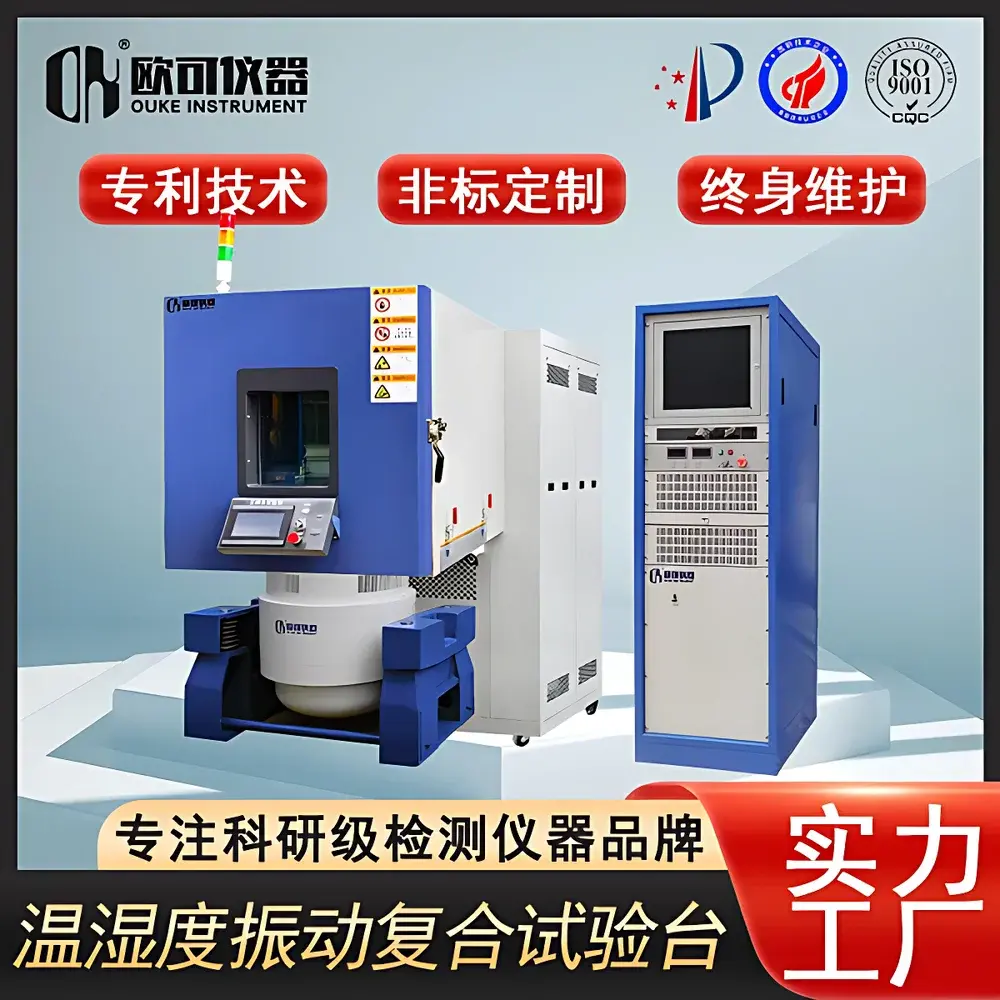
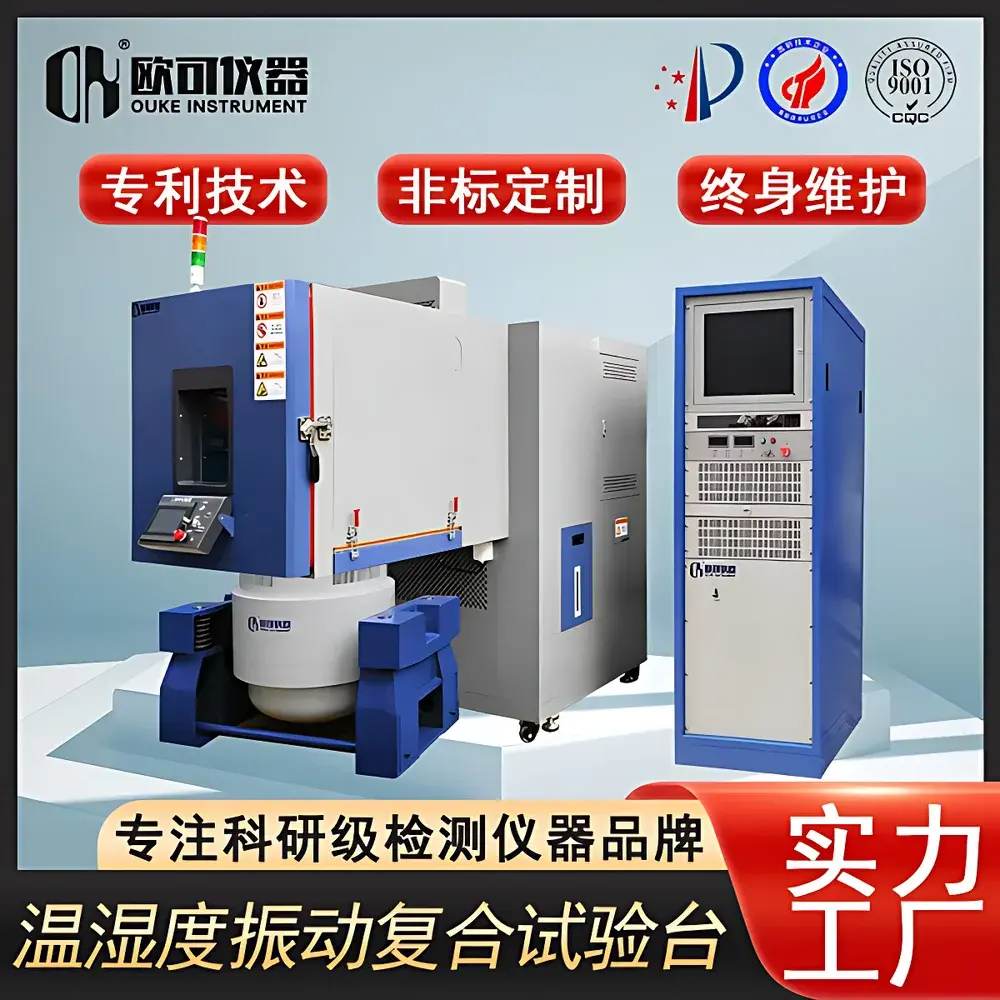
OK-ZTH-515 Combined Temperature-Humidity-Vibration Test System
| Brand | OK Instruments |
|---|---|
| Origin | Guangdong, China |
| Manufacturer Type | OEM/ODM Manufacturer |
| Country of Origin | China |
| Model | OK-ZTH-515 |
| Temperature Range | −70 °C to +150 °C |
| Humidity Range | 20–98 %RH at 20–85 °C |
| Temperature Uniformity | ≤±0.5 °C |
| Standard Load Capacity | 15 kg (aluminum mass block), 350 W thermal dissipation |
Overview
The OK-ZTH-515 Combined Temperature-Humidity-Vibration Test System is an engineered platform for simultaneous application of thermal, hygric, and mechanical (vibrational) stress profiles—designed to replicate real-world environmental service conditions encountered during product transport, storage, operation, and mission life cycles. Unlike sequential or single-stress testing methods, this system implements true multi-axis, time-synchronized environmental excitation based on Couette-type vibration coupling with precision climatic control. Its core architecture integrates a high-stability electrodynamic shaker with a double-wall insulated environmental chamber featuring dynamic sealing, low-thermal-conductivity feedthroughs, and vibration-isolated chamber mounting. The system operates under the fundamental principle that synergistic stress interactions—such as thermally induced material expansion/contraction, moisture ingress along microcracks, and vibration-driven crack propagation—cannot be reliably modeled through isolated stress exposure. This makes the OK-ZTH-515 essential for identifying latent failure mechanisms in electronic assemblies, automotive ECUs, avionics modules, medical devices, and industrial sensors.
Key Features
- Triple-stress synchronization engine enabling concurrent temperature ramping, humidity conditioning, and broadband random/vibration profile execution within a single test sequence
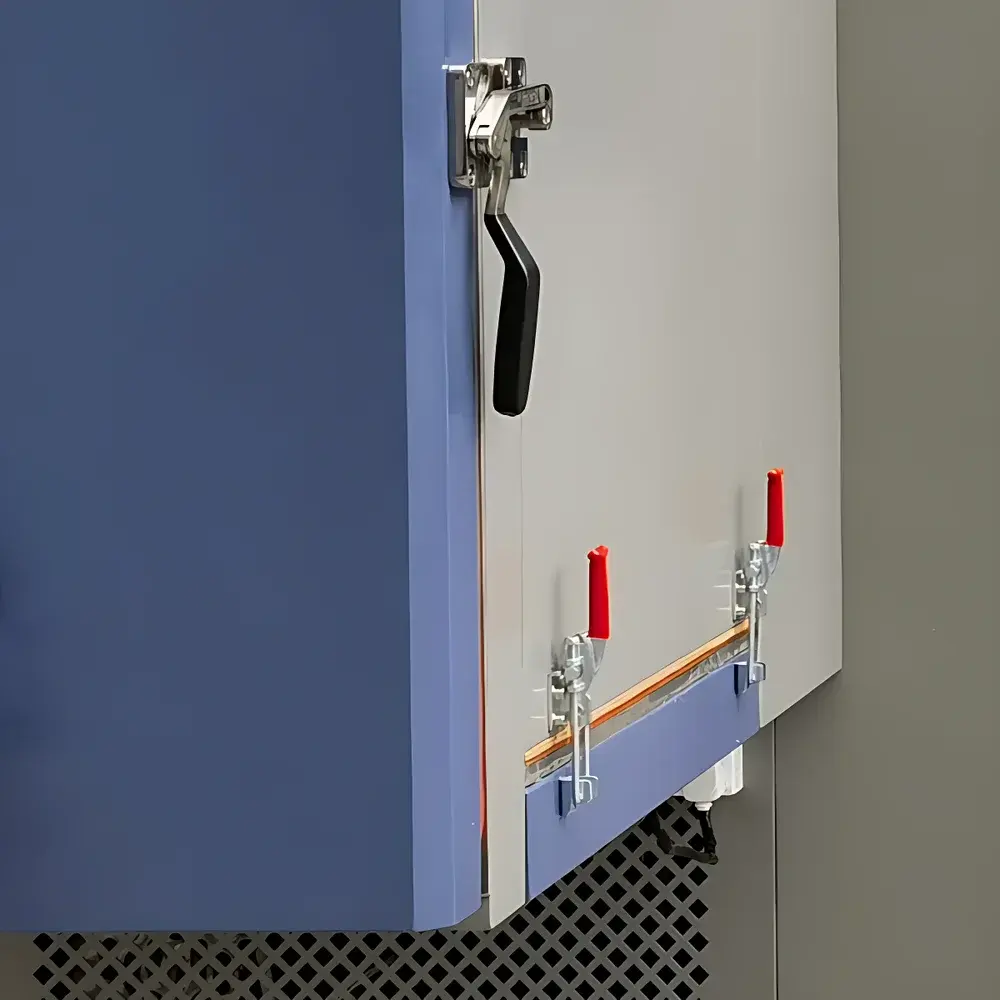
- Structurally reinforced chamber with stainless-steel inner lining, reinforced door gasketing, and vibration-damped mounting interface to prevent fatigue-induced leakage or structural resonance
- Down-mounted electrodynamic shaker (rated for 15 kg payload, 350 W continuous thermal load) integrated via hermetic bottom port with low-thermal-conductivity isolation bushings
- High-fidelity environmental control: ±0.5 °C temperature stability across full range (−70 °C to +150 °C); humidity control from 20–98 %RH at 20–85 °C with rapid recovery after door opening
- Shaker-compatible internal cabling system with IP65-rated feedthroughs and low-outgassing silicone insulation for operation across extreme thermal gradients
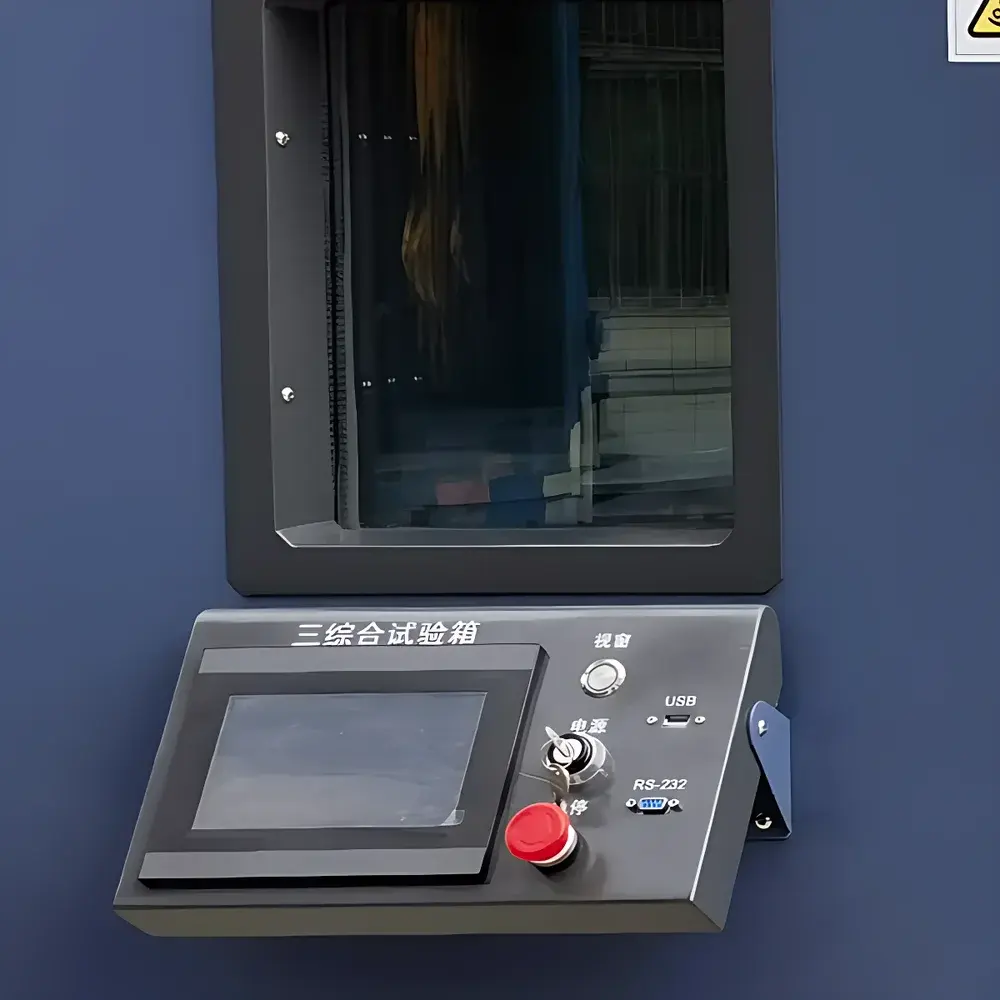
- Modular controller architecture supporting IEC 61000-4-27 compliant test sequencing and programmable dwell-hold-vibrate transitions
Sample Compatibility & Compliance
The OK-ZTH-515 accommodates samples up to 15 kg mounted on standardized aluminum test fixtures, with provisions for external signal monitoring (e.g., voltage, current, digital I/O, thermocouple inputs) via shielded breakout panels. Chamber interior dimensions support standard MIL-STD-810H and IEC 60068-2 test specimen geometries. The system complies with key international environmental test standards including ISO 16750-4 (road vehicles), RTCA DO-160G Section 22 (avionics vibration), ASTM D4728 (shipping container vibration), and IEC 60068-2-64 (random vibration). All control firmware supports audit-ready logging per GLP/GMP requirements, with timestamped parameter traces, user access logs, and configuration change history. Optional validation packages include IQ/OQ documentation aligned with ISO/IEC 17025 laboratory accreditation frameworks.
Software & Data Management
The embedded control software provides a deterministic real-time operating environment capable of executing complex multi-step test profiles—including temperature/humidity ramps with superimposed sine sweeps, random vibration spectra (PSD up to 2000 Hz), and dwell-based stress combinations. Each test run generates synchronized data streams: chamber temperature/humidity, shaker acceleration (m/s²), displacement (mm), and user-defined analog/digital channel inputs. Raw data is stored in IEEE-compliant .tdms format with metadata embedding (test ID, operator, calibration status, environmental setpoints). Export options include CSV, MATLAB .mat, and PDF summary reports with traceable pass/fail criteria. Remote monitoring and alarm notification are supported via HTTPS API and Modbus TCP interfaces. All data handling conforms to FDA 21 CFR Part 11 requirements when configured with electronic signature and role-based access controls.
Applications
- Automotive: Validation of ADAS control units under combined desert heat (+85 °C/95 %RH) and road-induced vibration (ISO 10326-1)
- Aerospace: Mission-profile simulation for UAV flight controllers—from ground-level humidity soak to −55 °C cruise altitude with turbulence-induced broadband vibration
- Medical Devices: Accelerated reliability assessment of implantable pulse generators subjected to body-temperature thermal cycling, perspiration-level humidity, and gait-synchronized mechanical shock
- Consumer Electronics: End-of-life prediction for smartphones exposed to pocket-worn thermal gradients, sweat-mimicking humidity, and walking-induced vibration (0.5–5 Hz dominant band)
- Packaging Engineering: Performance verification of cold-chain pharmaceutical shippers under simultaneous −25 °C refrigeration, 90 %RH maritime humidity, and ISO 13355 road transport vibration spectra
FAQ
What distinguishes “combined” from “sequential” environmental testing?
Combined testing applies temperature, humidity, and vibration simultaneously within a single physical enclosure, enabling detection of synergistic failure modes—such as condensation-assisted corrosion accelerated by resonant vibration—that sequential tests cannot reproduce.
Can the OK-ZTH-515 perform HALT-style high-acceleration stress screening?
No. It is designed for environment-representative reliability testing per MIL-STD-810 and IEC 60068 standards—not for defect discovery at overstressed levels. For HALT/HASS applications, dedicated high-slew-rate systems with non-climatic shakers are recommended.
Is low-pressure (altitude) capability available as an upgrade?
The base OK-ZTH-515 does not integrate vacuum or low-pressure functionality. A four-stress variant (temperature/humidity/vibration/low pressure) is available under custom engineering order (OK-ZTHP series), subject to chamber revalidation and additional safety interlocks.
How is vibration isolation maintained without compromising thermal performance?
The system uses a dual-layer isolation strategy: pneumatic isolators decouple the shaker frame from building foundations, while low-thermal-conductivity composite bushings separate the shaker armature from the chamber floor—minimizing conductive heat transfer and structural coupling.
What calibration and maintenance protocols apply to long-term operational integrity?
Annual metrological verification is required for temperature/humidity sensors (per ISO/IEC 17025) and shaker force transducers (per ISO 16063-21). Preventive maintenance includes quarterly inspection of dynamic seals, shaker coil cooling airflow, and chamber insulation integrity—documented in the provided maintenance logbook.



