
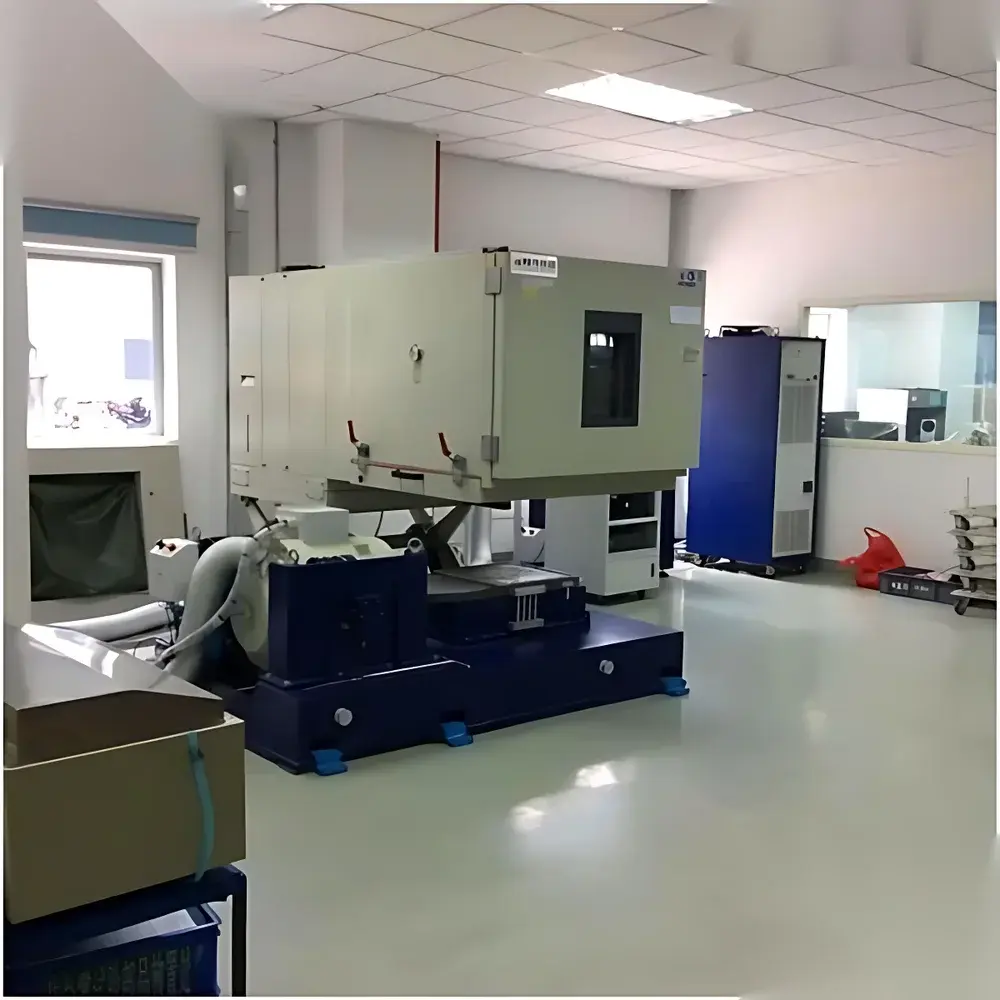
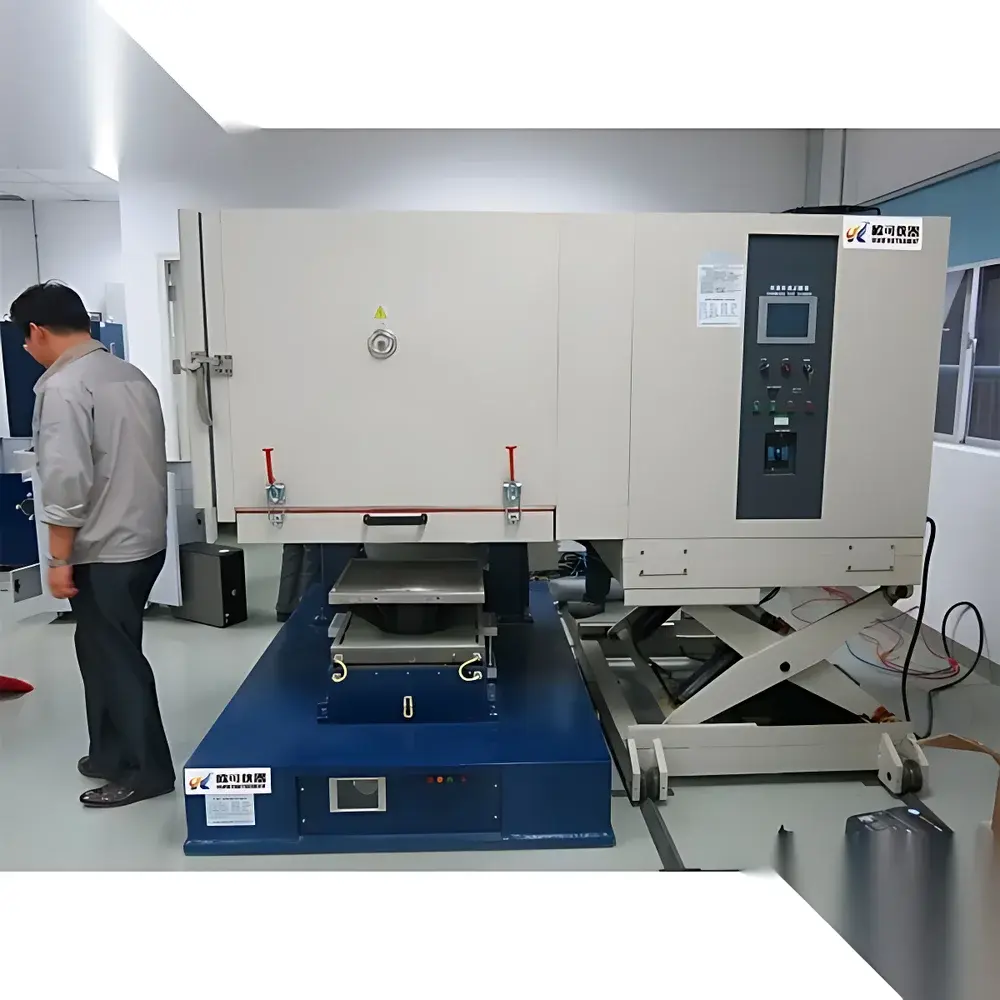
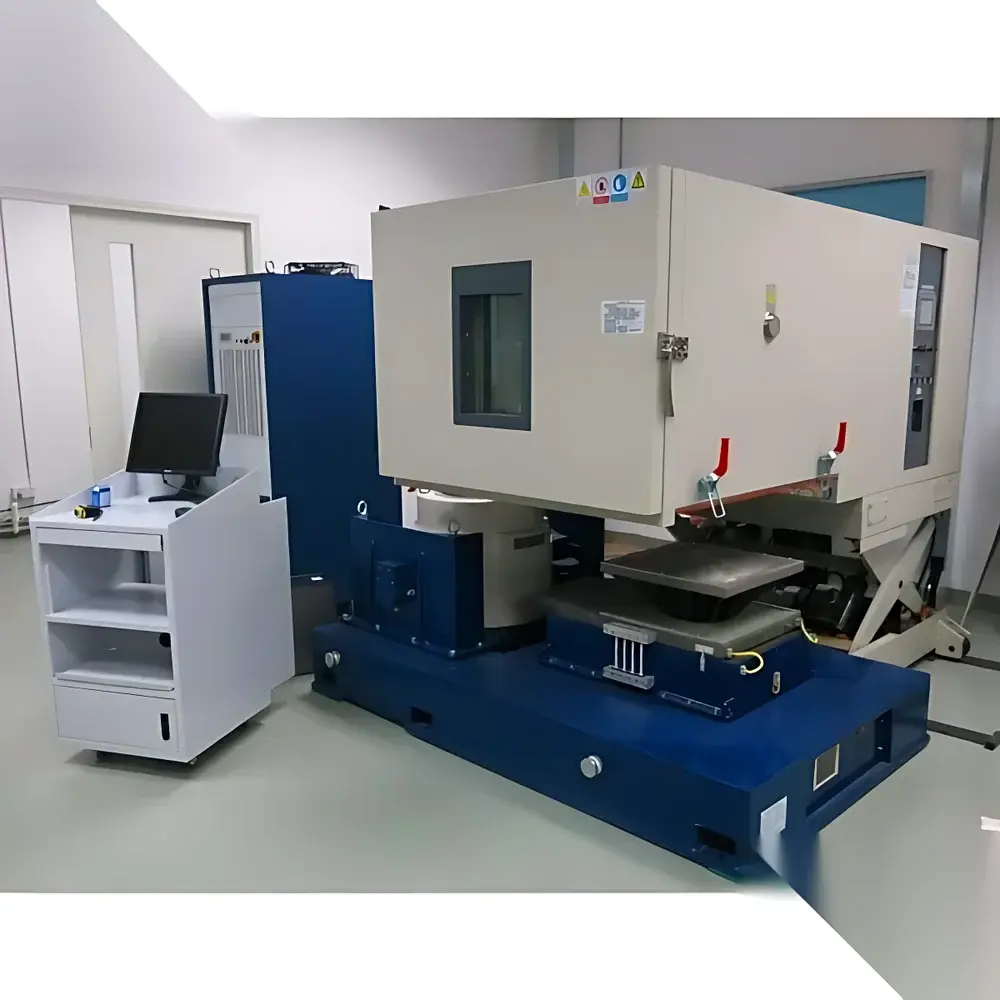
OK-ZTH-518 Combined Temperature-Humidity-Vibration Environmental Test Chamber
| Brand | OK Instruments |
|---|---|
| Origin | Guangdong, China |
| Manufacturer Type | Direct Manufacturer |
| Product Category | Domestic |
| Model | OK-ZTH-518 |
| Temperature Range | −70 °C to +150 °C |
| Humidity Range | 20–98 %RH at 20–85 °C |
| Temperature Fluctuation | ≤0.5 °C |
| Standard Load Capacity | 15 kg aluminum mass (350 W thermal dissipation) |
Overview
The OK-ZTH-518 Combined Temperature-Humidity-Vibration Environmental Test Chamber is an integrated reliability testing system engineered for simultaneous application of thermal, hygric, and mechanical (vibrational) stresses. It operates on the principle of multi-stress coupling—where temperature cycling, controlled humidity exposure, and broadband or profile-based vibration are precisely synchronized in real time. Unlike sequential single-stress tests, this chamber replicates the synergistic environmental conditions encountered during real-world operation, transportation, or deployment—such as automotive electronics operating under desert heat while subjected to road-induced vibration, or avionics experiencing rapid thermal transients during ascent followed by turbulent airflow-induced oscillation at altitude. The system is designed in accordance with foundational principles of environmental engineering and physics-based reliability assessment, supporting both qualification testing per MIL-STD-810H, IEC 60068-2 series, and internal reliability growth programs.
Key Features
- Triple-stress synchronization engine enabling concurrent control of temperature, relative humidity, and vibration across programmable test profiles—including dwell, ramp, and cyclic phases.
- Structurally reinforced chamber body with vibration-damped mounting interface; all load-bearing components (sample platform, cable feedthroughs, door hinges) fabricated from high-fatigue-resistance stainless steel and engineered polymers.
- Dynamic sealing architecture: dual-lip silicone door gasket with differential pressure compensation, plus hermetic feedthroughs rated for continuous operation at −70 °C to +150 °C and up to 98 %RH.
- Under-chamber vibration integration: electrodynamic shaker mounted beneath the insulated baseplate, coupled via a rigid, thermally isolated extension table that maintains thermal stability while transmitting full-spectrum vibration (5–2000 Hz, 100 gpk capability optional).
- Environmental isolation design: multi-layer vacuum-insulated walls with embedded damping layers to suppress thermal bridging and vibrational cross-talk between shaker and chamber control systems.
- Real-time multi-channel data acquisition interface (up to 16 analog/digital inputs) for concurrent monitoring of DUT parameters—e.g., voltage output, thermocouple readings, digital bus signals—enabling pass/fail logic triggering and event-annotated logging.
Sample Compatibility & Compliance
The OK-ZTH-518 accommodates standard test specimens up to 15 kg mass (aluminum reference load), with maximum power dissipation of 350 W. Its chamber interior dimensions (W × H × D: 600 × 800 × 700 mm) support typical automotive ECUs, PCB assemblies, sensor modules, and small electromechanical subsystems. The system complies with mechanical safety requirements per ISO 13857 and electrical safety per IEC 61000-6-4. While not pre-certified to specific regulatory standards, its architecture supports validation against industry-relevant protocols including:
- Automotive: ISO 16750-4 (vibration), ISO 16750-3 (humidity), ISO 16750-2 (temperature)
- Aerospace: RTCA/DO-160G Sections 16 (vibration), 17 (temperature), 22 (humidity)
- General Electronics: IEC 60068-2-1 (cold), -2 (dry heat), -14 (change of temperature), -30 (damp heat, cyclic)
- Quality Systems: Designed to support audit-ready data traceability when paired with compliant software (see Software & Data Management section).
Software & Data Management
The chamber is operated via OK-TestSuite™ v4.2—a Windows-based control and analysis platform supporting hierarchical test sequencing, script-driven profile generation, and synchronized data streaming. Key capabilities include:
- Multi-parameter waveform editing: Define independent or interdependent temperature/humidity ramps, dwell points, and vibration spectra (sine, random, shock, or user-defined PSDs) within a unified timeline.
- Event-triggered logging: Configurable thresholds for DUT signal anomalies (e.g., voltage drop >5%, CAN bus timeout) automatically initiate high-resolution capture (up to 10 kHz sampling) and timestamped annotation.
- Data export in ASTM E1447-compliant CSV and binary formats; optional integration with LabVIEW™, MATLAB®, or enterprise MES/QMS platforms via OPC UA or Modbus TCP.
- Audit trail functionality compliant with FDA 21 CFR Part 11 requirements when deployed with network-authenticated user roles, electronic signatures, and immutable log archiving (server-side configuration required).
Applications
This chamber serves as a core tool in product development and verification stages across multiple regulated and high-reliability sectors:
- Automotive: Validation of ADAS sensors, battery management systems (BMS), and infotainment units under combined thermal-hygric-vibrational stress mimicking South China summer roads or Middle Eastern desert transit.
- Aerospace & Defense: Mission-profile simulation for UAV flight controllers—including ground soak (40 °C/85 %RH), climb (−40 °C), cruise (−55 °C/low RH), and turbulence-induced random vibration (PSD up to 0.04 g²/Hz).
- Consumer Electronics: Accelerated life testing of wearable devices exposed to human-body thermal load (~32 °C), perspiration-level humidity (~60–90 %RH), and walking-induced harmonic vibration (1.5–3 Hz).
- Packaging & Logistics: Assessment of cold-chain integrity for pharmaceutical shipments undergoing refrigerated maritime transport (5 °C/95 %RH) combined with ISO 2247-compliant road-simulation vibration.
- Industrial IoT: Stress screening of edge computing nodes deployed in offshore oil platforms (high salt-humidity + wind-induced resonance + diurnal thermal cycling).
FAQ
What distinguishes “combined” from “sequential” environmental testing?
Combined testing applies all three stressors—temperature, humidity, and vibration—simultaneously and in real time, enabling detection of synergistic failure mechanisms (e.g., moisture-assisted crack propagation under thermal cycling and dynamic loading). Sequential testing applies stresses one at a time and cannot replicate such interactions.
Can the OK-ZTH-518 be upgraded to support low-pressure (altitude) simulation?
The current configuration does not include a vacuum system. However, OK Instruments offers the OK-ZTHP-518 variant, which integrates a cryo-pumped low-pressure chamber (1–100 kPa range) for four-stress (temperature-humidity-vibration-pressure) testing, primarily targeting aerospace applications.
Is the system suitable for HALT/HASS methodology?
While capable of high-slew-rate thermal transitions (up to 15 °C/min) and broad-spectrum vibration, the OK-ZTH-518 is optimized for environment-representative testing—not accelerated stress screening. For HALT-specific workflows, OK Instruments recommends the dedicated OK-HALT-3000 series, which features faster thermal rates, multi-axis vibration, and non-environmental (dry) operation.
How is calibration traceability maintained across all three domains?
Temperature and humidity sensors are factory-calibrated against NIST-traceable references (±0.2 °C, ±2 %RH). Vibration transducers are supplied with individual calibration certificates per ISO 17025-accredited labs. On-site recalibration intervals are recommended every 12 months or after 2000 operational hours, whichever occurs first.
Does the system support remote monitoring and alarm notification?
Yes—via OK-CloudLink™ gateway (optional), users can access live chamber status, receive SMS/email alerts for limit violations or test completion, and download encrypted logs through TLS 1.2-secured web portal. Integration with SNMP v3 and Syslog is available for enterprise IT infrastructure alignment.



