
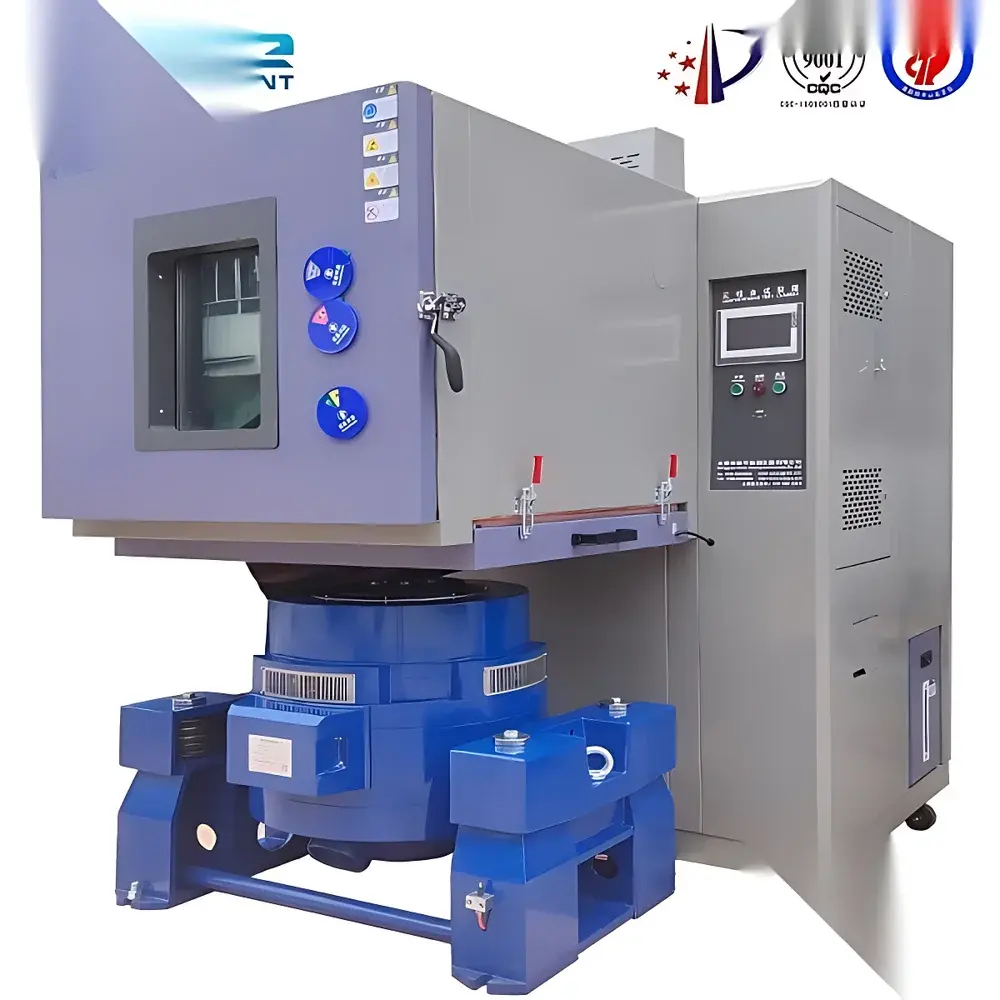
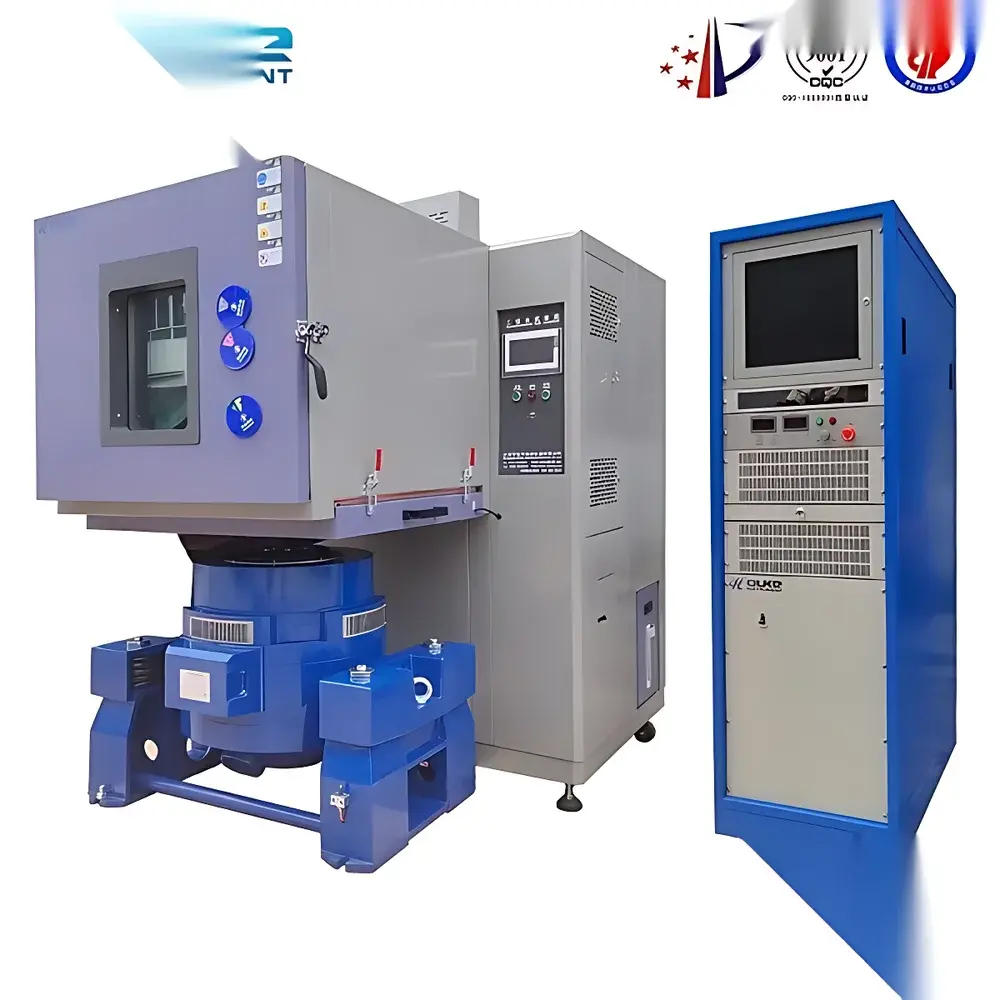
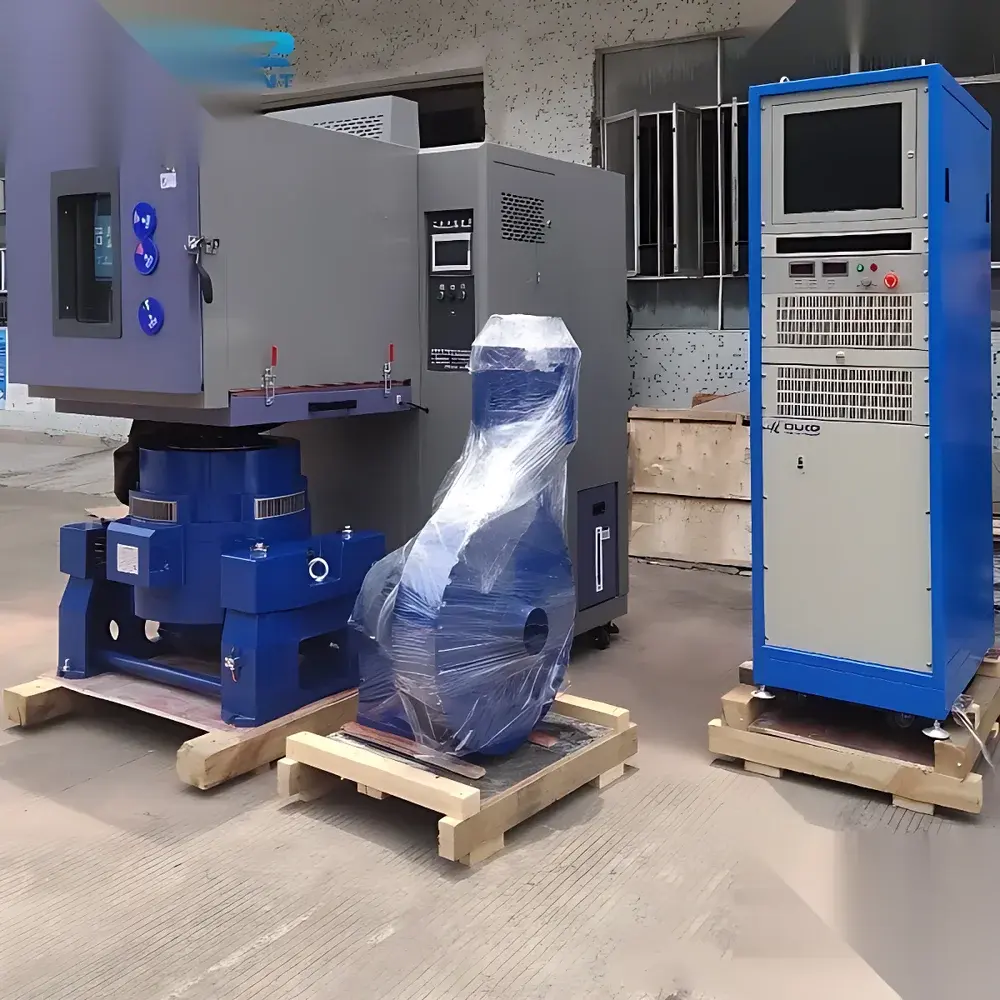
OK-ZTH Series Combined Temperature-Humidity-Vibration Environmental Test Chamber
| Brand | Other Brands |
|---|---|
| Origin | Imported |
| Manufacturer Type | General Distributor |
| Temperature Range | -70 °C to +150 °C |
| Temperature Uniformity | ≤2 °C |
| Temperature Fluctuation | ≤±0.5 °C |
| Temperature Deviation | ≤±2 °C |
| Humidity Range | 20–98 %RH (at +20 °C to +80 °C) |
| Humidity Deviation | ≤±3 %RH (≤75 %RH), ≤±5 %RH (>75 %RH) |
| Rapid Temperature Range | -55 °C to +85 °C |
| Ramp Rate | 5 °C/min or 10 °C/min |
| Ramp Mode | Average or Linear Profile |
| Compliance | GB/T 5170.2, GB/T 2423.1, GB/T 2423.2, GB/T 2423.3, GJB 150.3, GJB 150.4 |
Overview
The OK-ZTH Series Combined Temperature-Humidity-Vibration Environmental Test Chamber is an integrated reliability validation platform engineered for simultaneous multi-stress environmental simulation. It combines precision-controlled thermal conditioning (cryogenic to high-temperature extremes), regulated humidity modulation, and electrodynamic or servo-hydraulic vibration excitation within a single chamber enclosure. This triaxial stress coupling enables accelerated life testing, failure mode identification, and design verification under realistic field-representative conditions—critical for aerospace components, automotive ECUs, military-grade electronics, and medical device packaging systems. The chamber operates on a closed-loop PID control architecture with independent sensor feedback loops for temperature, humidity, and vibration acceleration, ensuring traceable, repeatable, and ISO/IEC 17025-aligned test execution.
Key Features
- Triple-stress integration: Concurrent operation of temperature (-70 °C to +150 °C), relative humidity (20–98 %RH within +20 °C to +80 °C range), and broadband vibration (typically 5–2000 Hz, depending on configured shaker system)
- High-fidelity thermal control: Dual-stage refrigeration with cascade compressor system; electric heating elements with proportional-integral-derivative (PID) tuning; temperature uniformity maintained at ≤2 °C across working volume
- Precision humidity generation: Steam injection or ultrasonic humidification with desiccant-assisted dehumidification; real-time RH monitoring via calibrated capacitive hygrometers
- Rapid thermal transition capability: Programmable ramp rates up to 10 °C/min over the -55 °C to +85 °C range, supporting MIL-STD-810G Method 503.5 and IEC 60068-2-14 thermal shock profiles
- Structural integrity: Stainless steel inner chamber with insulated double-wall construction; reinforced floor mounting interface for vibration shaker coupling; seismic-grade anchoring provisions
- Compliance-ready instrumentation: Built-in data logging with timestamped sensor readings (temperature, RH, vibration acceleration in X/Y/Z axes); optional calibration certificate per ISO/IEC 17025 requirements
Sample Compatibility & Compliance
The OK-ZTH chamber accommodates test specimens ranging from small PCB assemblies to full-size avionics enclosures, with internal volume fully customizable per user specification. Its operational envelope satisfies key international and industry-specific standards including GB/T 5170.2 (calibration methodology for temperature chambers), GB/T 2423.1 (cold testing), GB/T 2423.2 (dry heat), GB/T 2423.3 (damp heat, cyclic), and GJB 150.3/150.4 (military high-/low-temperature testing). While not certified to UL or CE as a complete system (as configuration depends on end-user integration), all subsystems—including refrigeration units, humidifiers, and vibration exciters—are supplied with manufacturer-declared conformity to relevant IEC, EN, and RoHS directives. The chamber supports audit-ready documentation packages required for GLP and GMP-regulated validation protocols.
Software & Data Management
Control and monitoring are executed via a dedicated Windows-based HMI software suite supporting profile programming, real-time parameter visualization, alarm management, and automated report generation (PDF/CSV). The software implements configurable data sampling intervals (down to 100 ms), event-triggered logging, and password-protected user roles aligned with FDA 21 CFR Part 11 principles—including electronic signatures, audit trail recording, and data integrity safeguards. Exported datasets include synchronized time-series records for all three stress domains, enabling post-test correlation analysis using MATLAB, Python (Pandas/SciPy), or JMP. Optional integration with enterprise LIMS or MES platforms is supported via OPC UA or Modbus TCP protocols.
Applications
- Accelerated reliability testing of embedded electronics subjected to thermal cycling, moisture ingress, and mechanical resonance
- Qualification of battery modules (Li-ion, solid-state) under combined thermal-vibrational stress to assess delamination, electrolyte leakage, and impedance drift
- Validation of hermetic seals and conformal coatings used in defense-grade sensors and communication hardware
- Environmental stress screening (ESS) for production lots prior to shipment, per IPC-J-STD-006 and JEDEC JESD22-A108 guidelines
- Material compatibility assessment of adhesives, gaskets, and polymer housings exposed to condensing humidity and dynamic loading
- Development of thermal management strategies for power converters operating in mobile or airborne platforms
FAQ
What vibration excitation systems are compatible with the OK-ZTH chamber?
Standard configurations integrate electrodynamic shakers rated for 100–500 kg payload capacity and 100–1000 N force output; hydraulic shakers are available upon request for higher displacement or low-frequency (<5 Hz) requirements.
Can the chamber operate vibration-only or temperature-only modes independently?
Yes—each stress domain (thermal, humidity, vibration) can be activated or deactivated individually, allowing isolated stress testing or sequential multi-step profiles.
Is remote monitoring and control supported?
The system includes Ethernet connectivity and supports secure remote access via VPN-configured client terminals, with role-based permissions enforced through the embedded web server module.
How is calibration traceability ensured?
All primary sensors (PT100 temperature probes, capacitive RH transducers, piezoelectric accelerometers) are supplied with NIST-traceable calibration certificates; on-site recalibration services are available under annual maintenance agreements.
What safety interlocks are implemented?
Hardware-level interlocks include door-open cutoff for heating/humidification/vibration, over-temperature/over-humidity shutdown, emergency stop circuitry compliant with ISO 13850, and shaker motion limit switches.



