
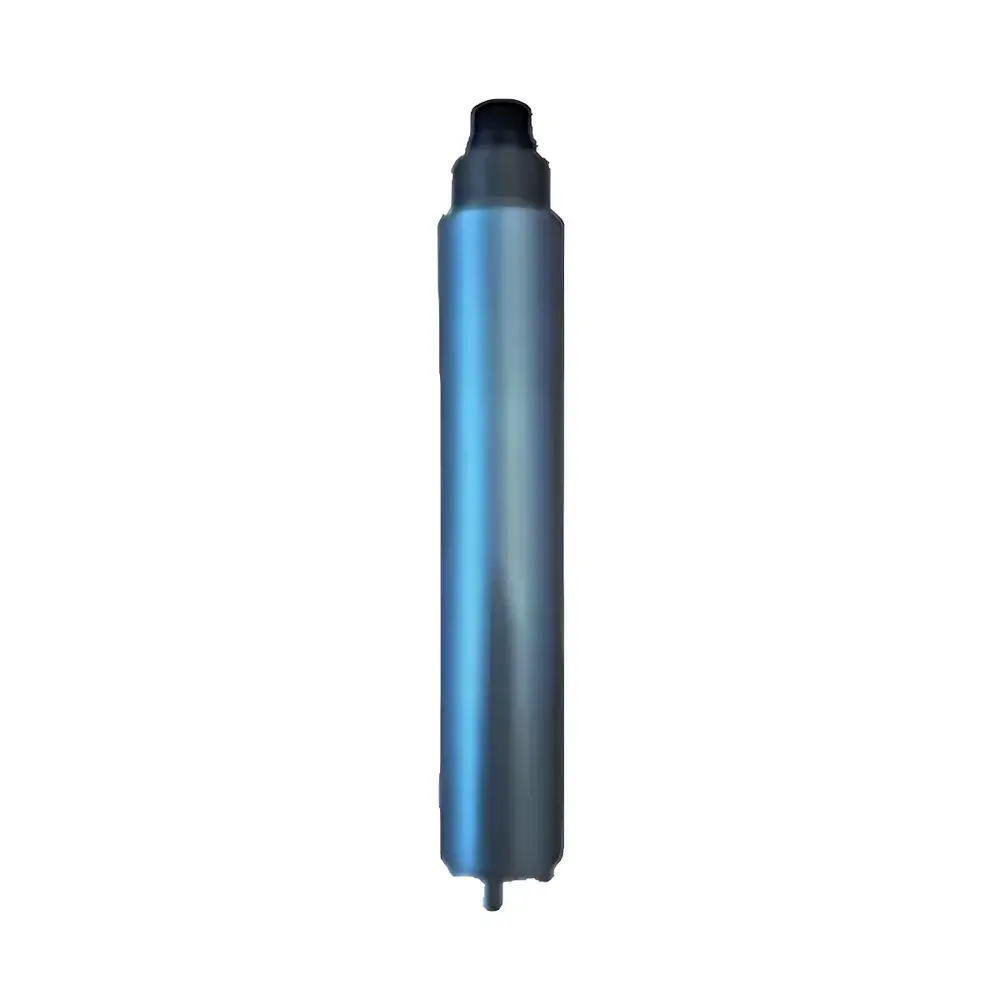
ZWIN-CHL1006 Digital Chlorophyll-a Fluorescence Sensor
| Brand | ZWINSoft |
|---|---|
| Origin | Tianjin, China |
| Manufacturer Type | OEM/ODM Manufacturer |
| Country of Origin | China |
| Model | ZWIN-CHL1006 |
| Application | Online Chlorophyll-a Monitoring |
| Measurement Principle | Chlorophyll Fluorescence Detection |
| Chlorophyll-a Range | 0–500 µg/L |
| Limit of Detection (LOD) | 0.01 µg/L |
| Accuracy | <5% FS |
| Resolution | 0.01 µg/L |
| Response Time | <15 s |
| Operating Temperature | 0–50 °C |
| Dimensions (Ø × L) | 34 × 225 mm |
| Housing Materials | POM + Titanium Alloy + 316L Stainless Steel |
| Ingress Protection | IP68 (1 bar) |
| Power Supply | 12–24 VDC |
| Output Interface | RS485 with Modbus RTU Protocol |
| Self-Cleaning Function | Yes |
| Light Source | High-Brightness LED |
Overview
The ZWIN-CHL1006 Digital Chlorophyll-a Fluorescence Sensor is an in-situ, real-time analytical instrument engineered for continuous monitoring of phytoplankton biomass in natural and engineered water systems. It operates on the principle of excitation-emission fluorescence spectroscopy: a high-stability, narrow-band LED emits light at ~470 nm (blue), selectively exciting chlorophyll-a molecules in living algal cells. The subsequent fluorescence emission at ~685 nm (red) is detected by a calibrated photodiode, with signal intensity linearly proportional to chlorophyll-a concentration within the validated dynamic range. This non-invasive, reagent-free methodology enables direct field deployment without sample filtration, extraction, or chemical treatment—preserving ecological integrity while delivering rapid, quantitative data aligned with established optical proxy standards (e.g., ASTM D7212–22 for chlorophyll-a quantification by fluorescence). Designed for long-term submersion, the sensor integrates thermal compensation and optical drift correction algorithms to maintain measurement fidelity across seasonal temperature gradients and biofouling-prone environments.
Key Features
- True digital output via RS485 interface compliant with Modbus RTU protocol—enabling seamless integration into SCADA, PLC, and IoT-based telemetry platforms.
- Robust multi-material housing: POM polymer body for chemical resistance, titanium alloy mounting collar for marine-grade corrosion resilience, and 316L stainless steel optical window housing for mechanical durability under hydrostatic pressure up to 1 bar (10 m depth).
- Integrated electro-mechanical self-cleaning mechanism—programmable cycle intervals remove biofilm and particulate accumulation from the optical path, minimizing manual intervention and sustaining optical transmission stability over extended deployments.
- High signal-to-noise ratio enabled by ultra-bright, thermally stabilized LED excitation source and optimized optical filtering—reducing spectral interference from humic substances, turbidity, and background fluorescence.
- Factory-calibrated against NIST-traceable chlorophyll-a reference standards; calibration coefficients stored onboard with optional user-accessible recalibration via serial command set.
Sample Compatibility & Compliance
The ZWIN-CHL1006 is validated for use in freshwater, brackish, and low-salinity marine environments—including raw intake water, reservoirs, rivers, wastewater effluents, aquaculture ponds, and tertiary treatment basins. It exhibits minimal cross-sensitivity to pheophytin-a and other chlorophyll derivatives when operated within specified temperature and turbidity limits (<100 NTU). While not certified to ISO/IEC 17025 for laboratory accreditation, its performance characteristics conform to methodological expectations outlined in EPA Method 445.0 (in vivo chlorophyll-a fluorescence) and support data quality objectives aligned with GLP-compliant environmental monitoring programs. No consumables, reagents, or hazardous waste generation are associated with operation—supporting sustainable instrumentation lifecycle requirements.
Software & Data Management
Sensor output is compatible with standard industrial data acquisition systems supporting Modbus RTU over RS485 (ASCII or RTU frame format). Configuration, diagnostics, and firmware updates are performed via ASCII command protocol using terminal emulation software or vendor-provided configuration utility. Raw fluorescence intensity (counts), temperature-compensated chlorophyll-a concentration (µg/L), internal sensor temperature (°C), and self-cleaning status flags are transmitted as discrete 16-bit registers. For regulatory traceability, time-stamped data logs may be synchronized with external GPS or NTP-enabled controllers. While the sensor itself does not embed audit trail or electronic signature functionality, its deterministic output stream supports integration into FDA 21 CFR Part 11–compliant data historians when deployed within validated system architectures.
Applications
- Early-warning detection of cyanobacterial blooms in drinking water source protection zones.
- Process optimization and effluent compliance monitoring at municipal and industrial wastewater treatment plants.
- Real-time assessment of trophic status and primary productivity in lake and reservoir management programs.
- Feed optimization and health surveillance in recirculating aquaculture systems (RAS) and marine hatcheries.
- Long-term trend analysis in climate-sensitive watersheds under national water quality monitoring networks (e.g., China’s National Surface Water Quality Monitoring Network).
FAQ
Does the ZWIN-CHL1006 require periodic calibration in the field?
Field recalibration is not mandatory under stable environmental conditions; however, biannual verification against a known chlorophyll-a standard solution (e.g., extracted from cultured Chlorella vulgaris) is recommended for QA/QC compliance.
Can it operate reliably in highly turbid or colored water?
Performance remains robust up to 100 NTU turbidity; above this threshold, empirical correction using concurrent turbidity sensor data is advised to mitigate scattering-induced signal attenuation.
Is the sensor suitable for saltwater applications?
Yes—housing materials and sealing design meet IP68 at 1 bar, supporting deployment in estuarine and coastal zones with salinity ≤25 ppt; prolonged exposure to full seawater (>35 ppt) requires evaluation of long-term titanium passivation stability.
What maintenance intervals are recommended for the self-cleaning function?
Default cleaning cycle is 6 hours; programmable range spans 1–24 hours based on local fouling rates—observed in pilot studies across eutrophic reservoirs and aquaculture outfalls.
How is temperature compensation implemented?
An embedded PT1000 thermistor measures optical head temperature in real time; factory-derived polynomial coefficients correct fluorescence yield drift across 0–50 °C per ASTM D7212 Annex A guidelines.







