
ZWINsoft Environmental Data Center Platform V1.0
| Brand | ZWINsoft |
|---|---|
| Origin | Tianjin, China |
| Manufacturer Type | Manufacturer |
| Origin Category | Domestic |
| Model | ZWINsoft1.0 |
| Pricing | Upon Request |
Overview
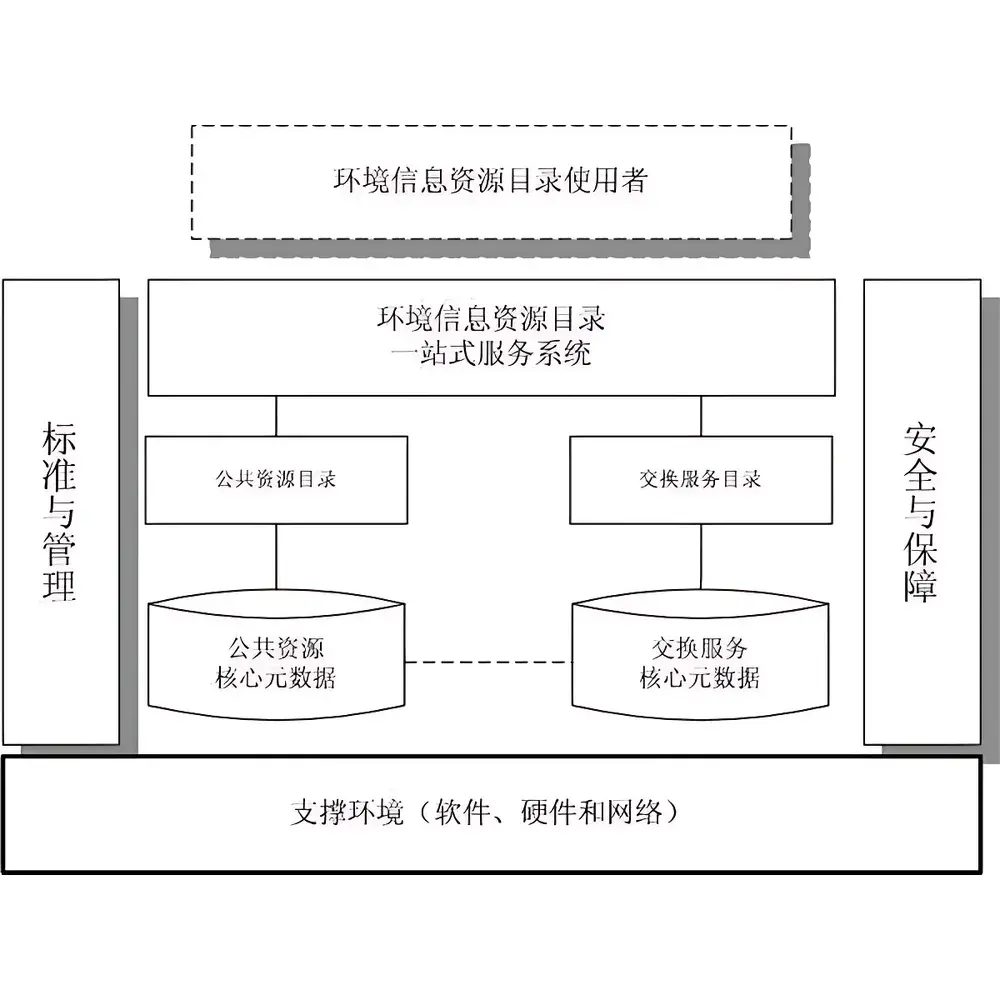
The ZWINsoft Environmental Data Center Platform V1.0 is a domain-specific enterprise data infrastructure solution engineered for environmental protection agencies and regulatory authorities. It operates as a centralized, standards-compliant data integration and management system—designed to resolve systemic fragmentation across heterogeneous environmental monitoring systems. Built upon principles of interoperability, metadata-driven governance, and service-oriented architecture, the platform implements a unified environmental information resource catalog aligned with China’s Environmental Information Resource Catalog Specification (HJ 938–2017) and national e-government metadata standards. Its core function is to ingest, normalize, reconcile, and serve multi-source environmental data—including real-time emissions monitoring (CEMS), ambient air quality (AQMS), water quality sensor networks, pollution source inventories, enforcement records, and GIS-linked spatial datasets—into a coherent, time-series-anchored information ecosystem. Unlike generic data warehousing tools, ZWINsoft V1.0 embeds domain-specific ontologies for pollutant classification (e.g., PM2.5, SO2, COD, NH3-N), emission factor libraries, and regulatory threshold logic (e.g., GB 3095–2012, GB 3838–2002), enabling policy-relevant analytics without external configuration.
Key Features
- Standardized Environmental Resource Catalog: Implements hierarchical metadata schemas compliant with ISO/IEC 11179 and China’s HJ 938–2017, supporting automated discovery, access control tagging, lineage tracking, and cross-system semantic mapping of datasets.
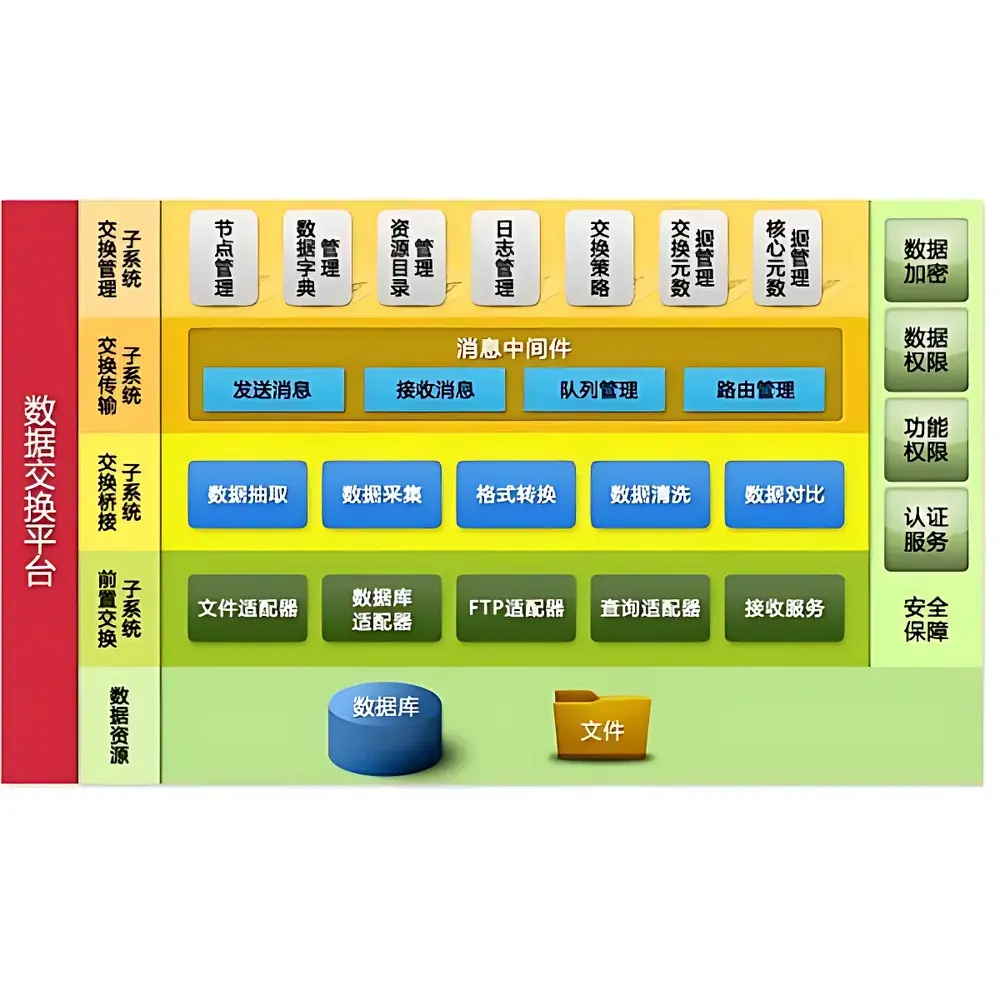
- Heterogeneous Data Exchange Engine: Supports bi-directional synchronization across relational databases (Oracle, SQL Server, PostgreSQL), flat files (CSV, Excel), REST/SOAP APIs, and legacy SCADA protocols (Modbus TCP, OPC UA). Includes built-in transformation rules for unit harmonization (e.g., mg/m³ ↔ ppm), temporal alignment, and outlier flagging per HJ 630–2011 QA/QC guidelines.
- Regulatory Analytics Framework: Integrates statistical aggregation (min/max/mean/exceedance rate over user-defined intervals) and advanced modeling modules—neural networks for trend forecasting, decision trees for source attribution, and k-nearest neighbor algorithms for anomaly detection—calibrated against historical compliance datasets.
- GIS-Integrated Visualization Layer: Native support for ArcGIS, SuperMap, and Baidu/AMap basemaps; enables dynamic overlay of point-source emissions, ambient monitoring stations, administrative boundaries, and land-use layers with attribute-driven symbology and time-slider playback.
- Modular Extensibility Architecture: Containerized microservices (Docker/Kubernetes-ready) allow incremental deployment of new modules—such as mobile inspection reporting or public data portals—without disrupting core data ingestion pipelines.
Sample Compatibility & Compliance
ZWINsoft V1.0 is designed for operational use in municipal and provincial ecological environment bureaus, third-party environmental monitoring institutions, and industrial park environmental management offices. It accepts structured and semi-structured inputs from certified CEMS vendors (e.g., Thermo Fisher, Horiba, local Class-A suppliers), national AQMS networks (CNEMC), and provincial water quality telemetry systems. The platform conforms to China’s Information Security Technology – Basic Requirements for Cybersecurity Level Protection 2.0 (GB/T 22239–2019) at Level 3, supports audit logging per GB/T 28181–2016, and provides traceable data provenance required under the Environmental Monitoring Data Quality Management Measures (MEP Order No. 39). While not FDA 21 CFR Part 11-certified (as it does not handle clinical or pharmaceutical data), its role-based access control, electronic signature workflows, and immutable audit trails align with GLP/GMP-aligned data integrity expectations for environmental compliance reporting.
Software & Data Management
The platform utilizes a Java-based backend with Spring Boot and MyBatis, PostgreSQL 14+ for transactional metadata storage, and TimescaleDB for time-series telemetry ingestion. All data transformations are logged with timestamps, operator IDs, and before/after checksums. Role-based permissions enforce separation between data stewards (catalog curation), analysts (query execution), and auditors (read-only log review). Export functions generate PDF/Excel reports with embedded digital signatures and ISO 8601-compliant timestamps. System backups follow a 3-2-1 strategy (three copies, two media types, one offsite), with recovery point objectives (RPO) ≤ 5 minutes for streaming data and RTO ≤ 30 minutes for full instance restoration. API documentation adheres to OpenAPI 3.0 specifications, enabling integration with national environmental big-data platforms (e.g., MEE’s “Blue Sky” cloud).
Applications
- Consolidating disparate county-level air/water monitoring feeds into provincial dashboards for real-time compliance assessment against GB standards.
- Supporting “dual-control” (energy consumption & carbon emission) target allocation by correlating facility-level CEMS data with production output logs.
- Powering environmental impact assessment (EIA) reviews via historical baseline construction and predictive dispersion modeling inputs.
- Enabling public transparency portals (e.g., city-level air quality indexes) with automated data refresh cycles and SLA-bound uptime guarantees.
- Facilitating inter-departmental coordination (e.g., Ecology Bureau + Emergency Management) through shared incident response workspaces with synchronized geotagged sensor alerts.
FAQ
Does ZWINsoft V1.0 support integration with non-Chinese environmental monitoring hardware?
Yes—via configurable protocol adapters and CSV/API import templates; however, calibration metadata and certification status must be manually validated against local metrological requirements.
Can the platform generate reports compliant with China’s annual Environmental Statistics Reporting System (HJ 630–2011)?
Yes—the reporting module includes pre-built templates aligned with Form E1–E8, auto-populated from normalized source data and exportable in the mandated XML schema.
Is on-premise deployment the only option?
No—hybrid cloud deployment is supported, though sensitive data (e.g., pollution source lists) must reside in government-approved secure zones per GB/T 22239–2019 Level 3 requirements.
What training and documentation are provided?
Comprehensive Chinese-language administrator guides, SOPs for catalog curation and QA/QC workflows, and role-based video tutorials are included; English documentation is available upon request for international partners.
How frequently are regulatory logic updates (e.g., new emission limits) deployed?
Rule engine updates are delivered quarterly via signed patch packages, requiring administrator approval prior to activation—ensuring traceability and rollback capability.
Related Products







