
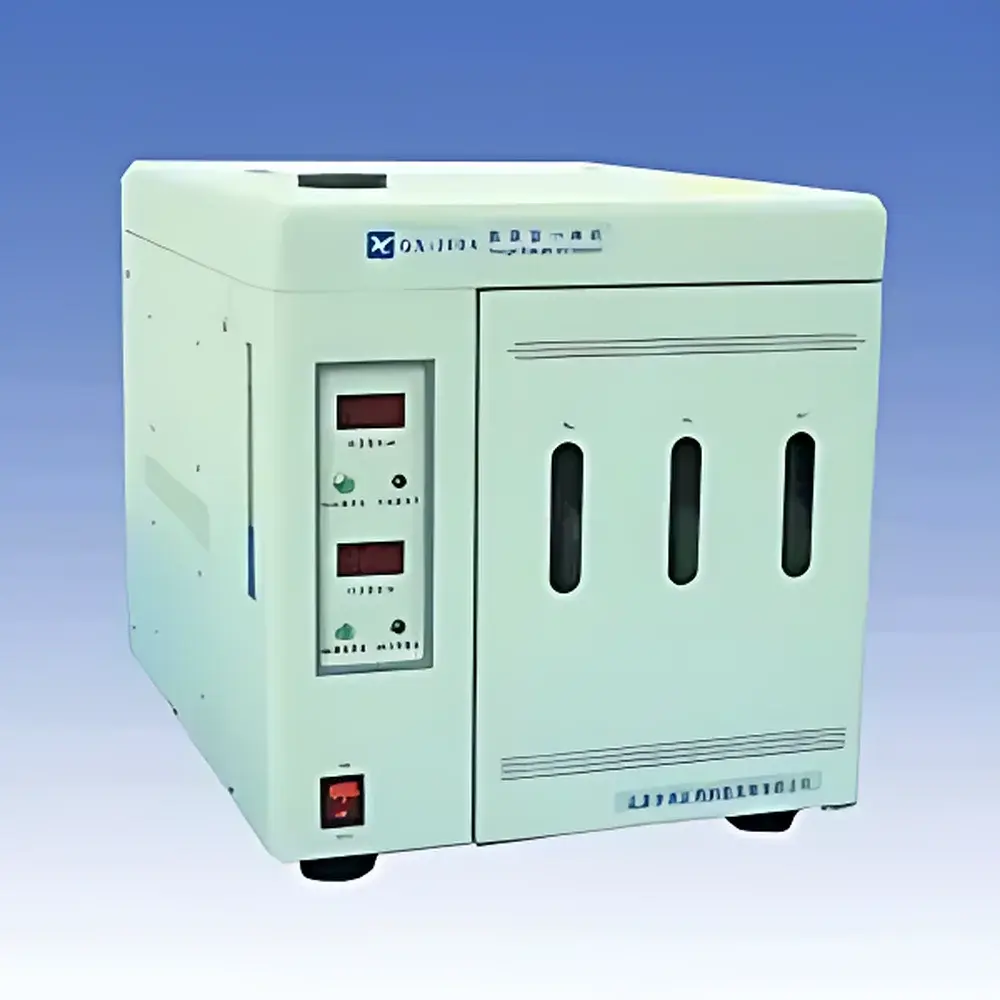
Zxhl GX-300A Nitrogen-Hydrogen-Air Integrated Gas Generator
| Brand | Zxhl |
|---|---|
| Model | GX-300A |
| Nitrogen Output | 0–300 mL/min |
| Hydrogen Output | 0–300 mL/min |
| Air Output | 0–2000 mL/min |
| Electrolytic Cell Type | Flat-plate |
| Alkali-backflow Prevention | Integrated |
| Flow Tracking | Automatic |
| Display | Digital LED |
| Air Stabilization | Dual-stage pressure regulation |
| Air Filtration | Triple-stage (particulate, hydrocarbon, moisture) |
Overview
The Zxhl GX-300A Nitrogen-Hydrogen-Air Integrated Gas Generator is an engineered solution for laboratories requiring simultaneous, on-demand supply of high-purity nitrogen, hydrogen, and zero-air—eliminating dependency on high-pressure gas cylinders. Designed around a membrane-separated alkaline electrolytic system, the unit generates hydrogen and oxygen via water electrolysis; nitrogen is produced through pressure swing adsorption (PSA) using a carbon molecular sieve (CMS) module, while compressed ambient air is conditioned to meet analytical-grade zero-air specifications. This integrated architecture supports dual- or triple-gas operation in GC, GC-MS, FID, TCD, ECD, and AED applications—where consistent flow stability, low particulate count, and trace-level hydrocarbon/moisture removal are critical for baseline integrity and detector longevity.
Key Features
- Flat-plate alkaline electrolytic cell: Optimized electrode geometry and nickel-based catalysts ensure stable H₂ generation at rated flow with minimal maintenance and extended service life (>5,000 operating hours).
- Integrated alkali-backflow prevention: Passive check-valve design and capillary barrier layers eliminate risk of KOH migration into downstream instrumentation—protecting sensitive detectors and GC columns.
- Automatic real-time flow tracking: Closed-loop mass flow control dynamically adjusts electrolysis current and PSA cycle timing to maintain user-set output within ±2% of setpoint across ambient temperature fluctuations (15–30 °C).
- Digital LED interface: Simultaneous display of actual N₂, H₂, and air flow rates, system pressure, and operational status codes—enabling rapid diagnostics without external software.
- Dual-stage air pressure regulation: First-stage regulator stabilizes compressor output; second-stage precision regulator delivers constant 0–100 psi (0–6.9 bar) air supply independent of inlet pressure variation.
- Triple-stage air filtration: Compressed air passes sequentially through sintered stainless-steel particulate filter (0.01 µm), activated carbon bed (hydrocarbon adsorption <0.1 ppb), and desiccant cartridge (dew point ≤−40 °C @ 100 psi).
Sample Compatibility & Compliance
The GX-300A is compatible with all major GC and GC-MS platforms requiring ultra-high-purity carrier, fuel, and make-up gases—including Agilent, Thermo Fisher, Shimadzu, PerkinElmer, and Waters systems. Its gas purity meets or exceeds ASTM D6299 (for laboratory gas purity), ISO 8573-1 Class 1:2:1 (compressed air quality), and USP requirements for instrumental gas use in pharmaceutical QC labs. The generator operates under ambient lab conditions (15–30 °C, 30–80% RH, non-condensing); no external cooling or ventilation ducting is required. All internal wetted materials comply with FDA 21 CFR Part 11-compliant audit trail readiness when interfaced with validated LIMS or chromatography data systems (CDS).
Software & Data Management
While the GX-300A operates autonomously via its front-panel interface, optional RS-232/USB connectivity enables integration with third-party CDS for remote monitoring of runtime, total gas volume dispensed, and fault log timestamps. System event logs—including overpressure events, filter saturation alerts, and electrolyte level warnings—are timestamped and stored internally for up to 30 days. When deployed in GLP/GMP environments, the unit supports electronic signature workflows via external CDS validation packages; raw log exports are provided in CSV format for regulatory review. Firmware updates are performed offline via USB drive to maintain network isolation per cybersecurity best practices.
Applications
- Gas chromatography: N₂ as carrier gas for TCD/ECD; H₂ as fuel for FID; zero-air as oxidant for FID and make-up gas for ECD/NPD.
- GC-MS systems requiring ultra-low hydrocarbon background in ion source regions.
- Trace VOC analysis in environmental labs where cylinder-derived air introduces variable blank interference.
- Pharmaceutical stability testing per ICH Q1/Q5 guidelines, where consistent gas composition ensures reproducible degradation kinetics.
- Research labs performing method development with multi-detector configurations—enabling synchronized gas delivery without cross-contamination risk.
FAQ
What is the typical lifetime of the electrolytic cell and CMS module?
Under standard operating conditions (≤300 mL/min H₂/N₂, 8 h/day), the flat-plate electrolytic cell maintains ≥95% efficiency for ≥5,000 hours; the CMS column requires replacement every 2–3 years depending on ambient humidity exposure.
Does the unit require deionized water feed?
Yes—Type II deionized water (resistivity ≥1 MΩ·cm, silica <50 ppb) is mandatory to prevent scaling and maintain electrolyte conductivity.
Can nitrogen and hydrogen be operated simultaneously at maximum flow?
Yes—the power supply and thermal management system are rated for concurrent full-load operation of all three gas streams without derating.
Is the air output suitable for FTIR purge applications?
Yes—triple-stage filtration achieves hydrocarbon levels <0.1 ppb and dew point ≤−40 °C, meeting ASTM E1738 specifications for spectroscopic purge gas.
How often must the air filters be replaced?
Particulate filter: 12 months; carbon bed: 18 months; desiccant cartridge: 24 months—assuming average lab air quality (ISO 8573-1 Class 4 particulate, Class 3 moisture).



