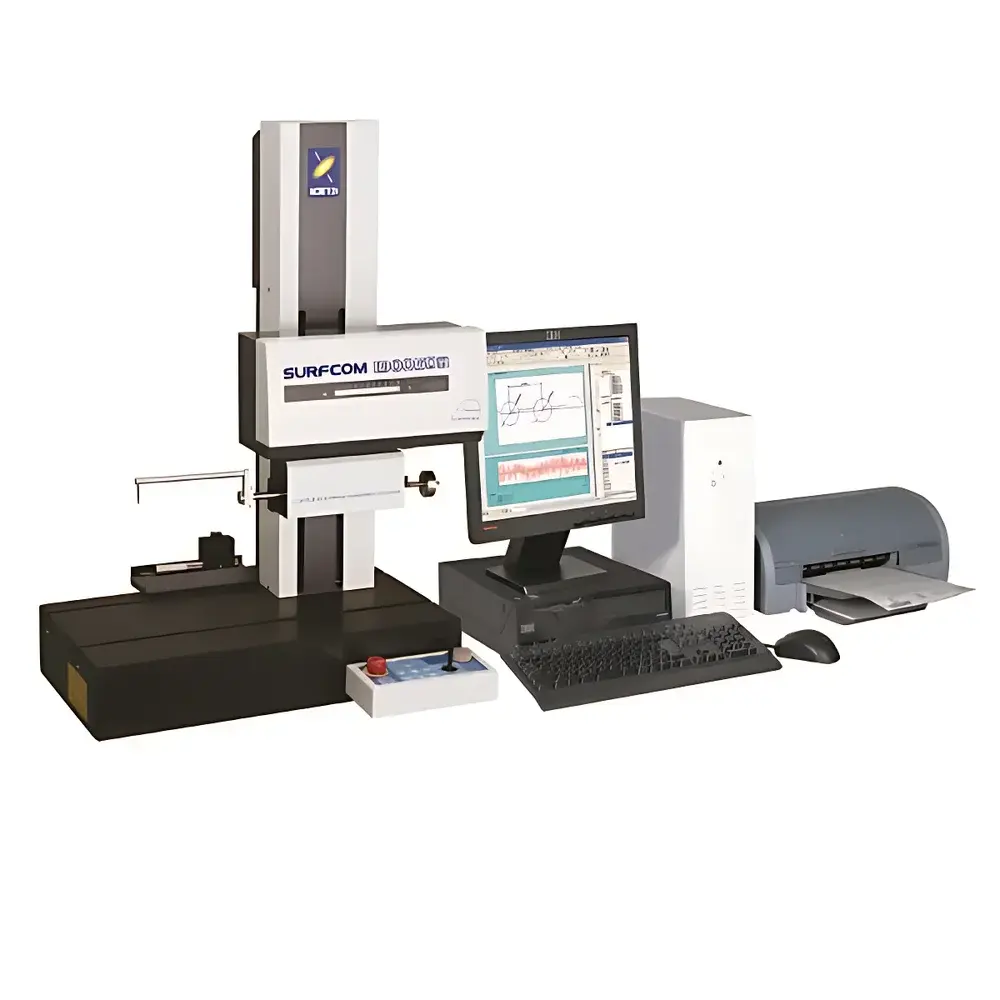
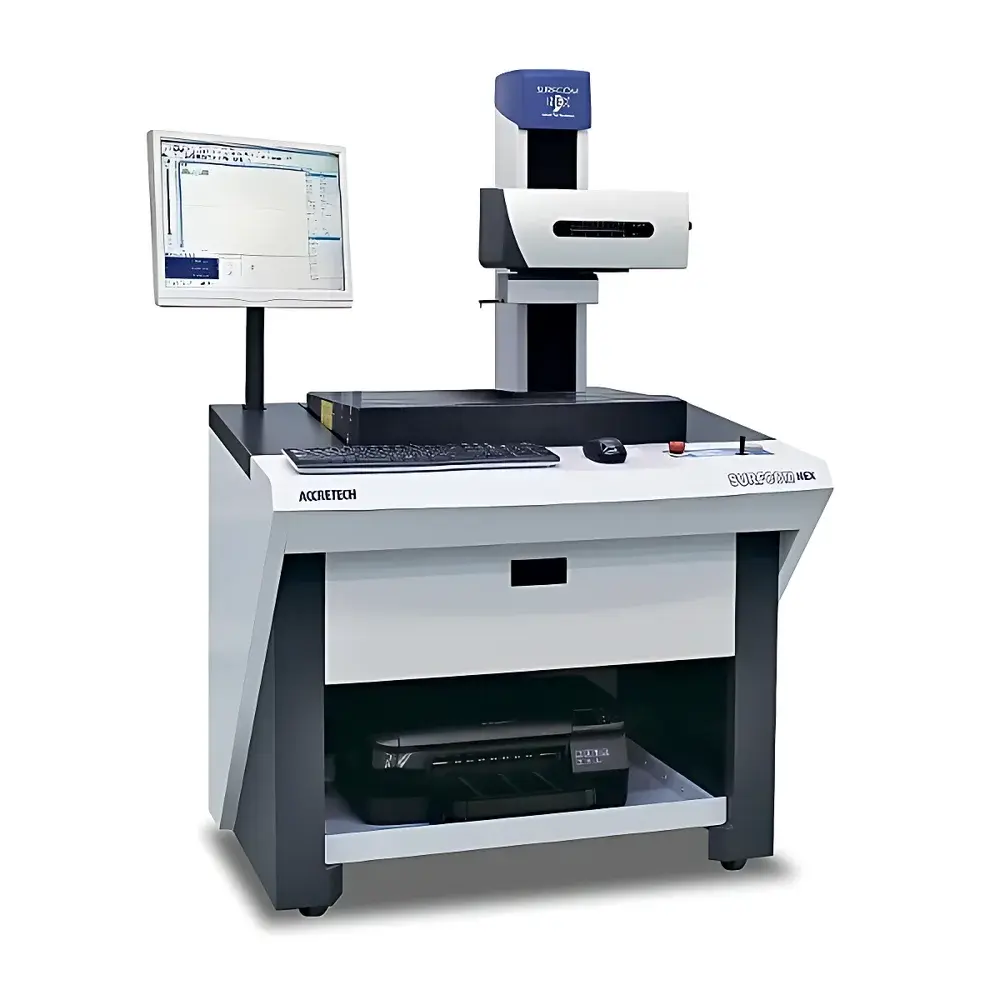
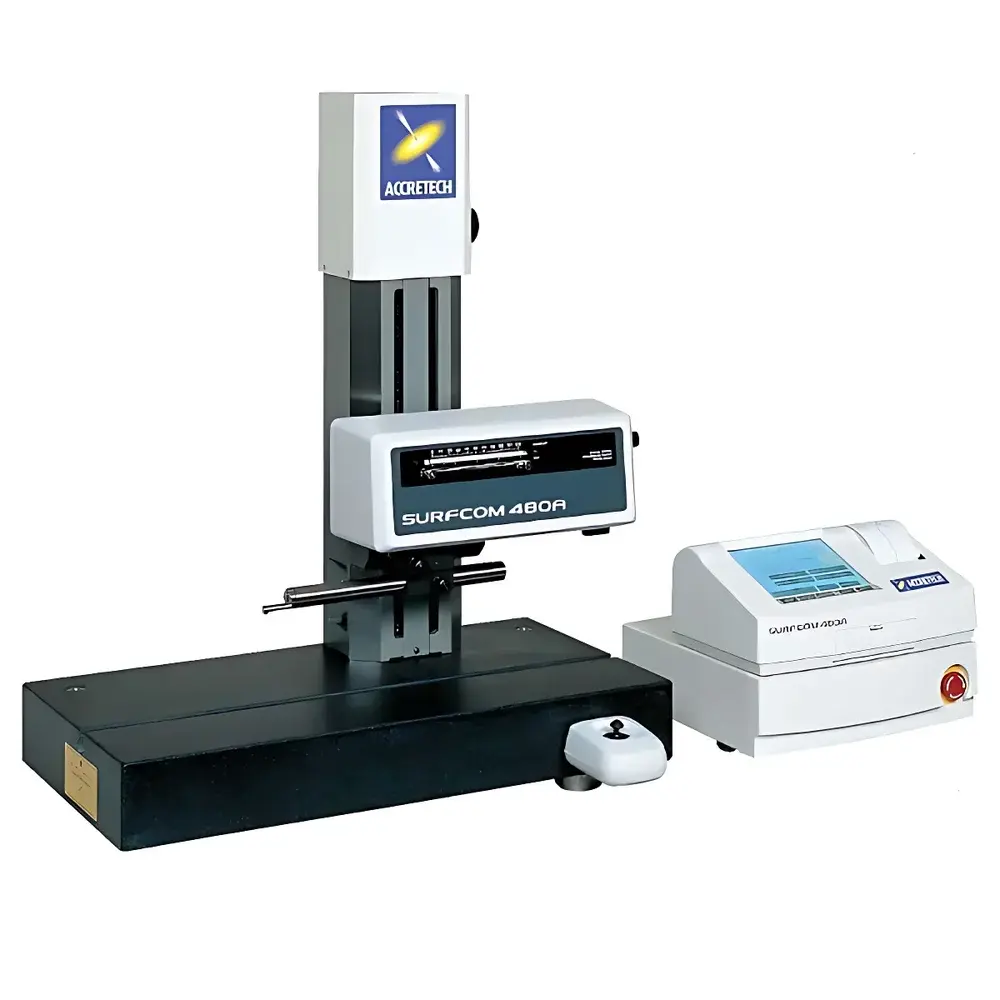
Accretech SURFCOM Series Precision Contact Profilometer & Surface Roughness Tester
| Brand | Accretech (Tokyo Seimitsu) |
|---|---|
| Origin | Japan |
| Model | SURFCOM Series |
| Type | CNC-Controlled Contact Profilometer with Dual-Mode Sensor Architecture |
| Axes | Up to 5-Axis Synchronized Motion |
| Max. Traverse Speed | 100 mm/s |
| Z-Range | Up to 60 mm (NEX040), 10 mm (CREST LP), 13 mm (CREST DX) |
| X-Range | Up to 200 mm |
| Vertical Resolution | 0.31 nm (CREST DX, laser interferometric sensor) |
| Z-Axis Resolution | 0.02 µm (NEX040, laser diffraction grating encoder) |
| Measurement Modes | Simultaneous roughness & contour (dual-sensor hybrid), upward measurement (with auto-stop), lateral tracing |
| Compliance | ISO 25178-605 (areal surface texture), ISO 4287/4288 (profile-based roughness), ISO 11562 (filtering), ISO 12781 (flatness), ISO 12780 (straightness) |
| Sensor Options | NEX001 (1000 µm range, 500,000× magnification), NEX030 (universal profilometry, high-accuracy linear scale), NEX040 (high-precision, auto-force adjustment), CREST LP (non-contact autofocus mode for low-reflectivity/color-insensitive surfaces) |
Overview
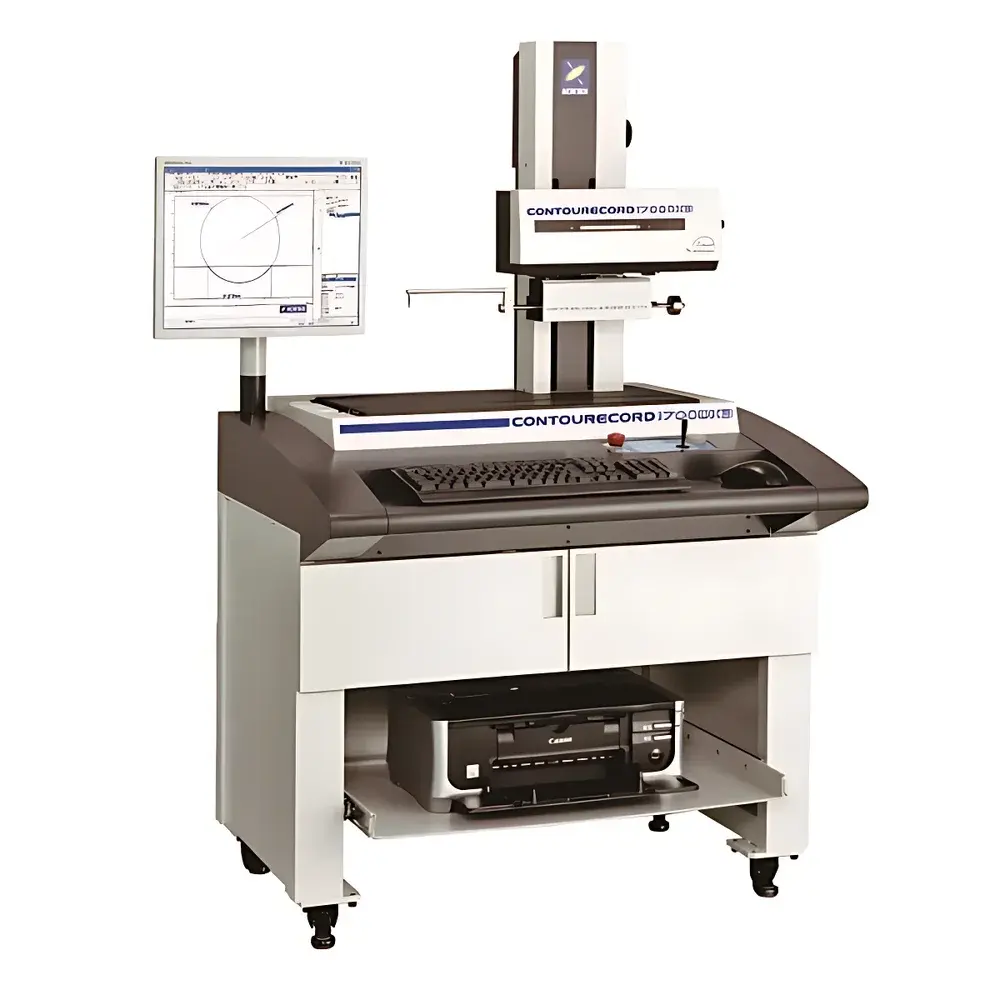
The Accretech SURFCOM Series represents a class of high-precision, CNC-controlled contact profilometers engineered for metrological-grade evaluation of both surface topography and geometric form. Operating on the principle of stylus-based tactile scanning, the system employs a diamond-tipped probe to physically trace surface profiles along defined measurement paths (X-Z or X-Y-Z), converting mechanical displacement into nanometer-resolved digital elevation data. Unlike optical methods limited by reflectivity or material contrast, contact profilometry delivers traceable, SI-referenced height measurements independent of surface finish, color, or coating—making it indispensable for regulated manufacturing environments where dimensional accountability is mandated. The SURFCOM platform integrates modular sensor architecture, multi-axis motion control, and interferometric or laser-grating-based position feedback to support simultaneous acquisition of ISO-compliant roughness parameters (Ra, Rz, Rq, etc.) and macro/micro-contour features (radius, angle, step height, flatness, straightness) within a single setup. Designed for integration into production-line quality assurance workflows, the series meets the stringent repeatability and reproducibility requirements of automotive Tier-1 suppliers, medical device manufacturers, and precision optics fabricators.
Key Features
- Modular 5-axis CNC motion architecture enabling synchronized X, Y, Z, tilt, and rotation control for complex part geometry access
- Dual-sensor hybrid configuration (e.g., NEX 100 DX/SD): concurrent capture of sub-nanometer roughness and millimeter-scale contour in one scan—eliminating sensor exchange and repositioning errors
- Laser interferometric vertical sensor (CREST DX): 0.31 nm resolution over 13 mm Z-range; certified linearity ±0.1 µm within full stroke
- Auto-force-adjusting probe (NEX040): dynamically regulates stylus load (0.5–5 mN) across varying surface hardnesses to prevent plastic deformation while maintaining signal fidelity
- Universal probe arm system with rapid-swappable interface: supports upward, lateral, and dual-side (top/bottom) measurement configurations
- Non-contact autofocus mode (CREST LP): compliant with ISO 25178-605; uses confocal chromatic sensing to establish focal plane on matte, transparent, or multilayered surfaces without reliance on reflectivity
- High-stability optical path design: thermally compensated beam-splitter and retroreflector array minimizes drift during extended thermal soak cycles
Sample Compatibility & Compliance
The SURFCOM Series accommodates a broad spectrum of industrial components—from micro-machined silicon wafers and orthopedic implant surfaces to large-diameter engine cylinder bores and aerospace turbine blades. Its 200 mm horizontal travel and up to 60 mm Z-range enable full-profile inspection of mid-size castings and extrusions. All measurement algorithms adhere strictly to ISO 4287 (surface roughness), ISO 11562 (Gaussian filtering), ISO 12781 (flatness), and ISO 25178-2 (areal texture parameters). Data integrity is maintained through hardware-level audit trails, timestamped raw waveform storage, and full compliance with FDA 21 CFR Part 11 electronic record requirements when paired with optional validation packages. System calibration is traceable to NIST and PTB standards via certified step-height artifacts and roughness reference samples.
Software & Data Management
SURFCOM instruments operate under Accretech’s proprietary SURFPAK software suite—a validated, GxP-ready platform supporting automated report generation (PDF, CSV, XML), statistical process control (SPC) charting, GD&T overlay analysis, and comparative deviation mapping against CAD models. Raw profile data is stored in vendor-neutral ASCII format with metadata headers including environmental conditions (temperature, humidity), calibration status, and operator ID. Version-controlled software updates are delivered via secure HTTPS channel with SHA-256 signature verification. Optional modules include multi-instrument fleet monitoring, remote diagnostics via TLS-encrypted API, and integration with MES/ERP systems using OPC UA protocol.
Applications
- Automotive: Cylinder bore honing analysis, valve seat surface integrity, gear tooth flank evaluation, brake pad interface characterization
- Medical Devices: Surface texture verification of titanium hip stems per ASTM F2129, stent strut edge radius assessment, dental implant abutment finish validation
- Semiconductors: Wafer edge profile metrology, CMP endpoint detection, MEMS structural height uniformity
- Aerospace: Turbine blade leading-edge radius, thermal barrier coating roughness prior to EB-PVD, fastener thread form verification
- Optics & Photonics: Mold insert surface fidelity for aspheric lens replication, AR-coating interface roughness impact on scatter
FAQ
Does the SURFCOM Series support non-contact measurement modes?
Yes—the CREST LP variant implements ISO 25178-605–compliant confocal autofocus for surfaces where stylus contact is prohibited (e.g., soft polymers, thin films, or delicate coatings).
Can roughness and contour be measured simultaneously without repositioning?
Yes—hybrid sensors such as the NEX 100 DX/SD integrate co-located high-range and high-resolution transducers, enabling concurrent acquisition of Ra/Rz and radius/angle data in a single pass.
Is the system suitable for regulated industries requiring audit trails?
Yes—SURFPAK software provides full 21 CFR Part 11 compliance with electronic signatures, immutable audit logs, and role-based access control.
What is the minimum resolvable feature size for contour measurement?
With the NEX040 sensor and laser diffraction grating, vertical resolution is 0.02 µm over 60 mm Z-travel; lateral resolution is governed by stylus tip radius (typically 2 µm standard, down to 0.5 µm optional).
How is thermal drift mitigated during long-duration measurements?
All CREST-series instruments incorporate temperature-compensated optical paths and real-time ambient drift correction using embedded Pt100 sensors and predictive algorithmic compensation.