
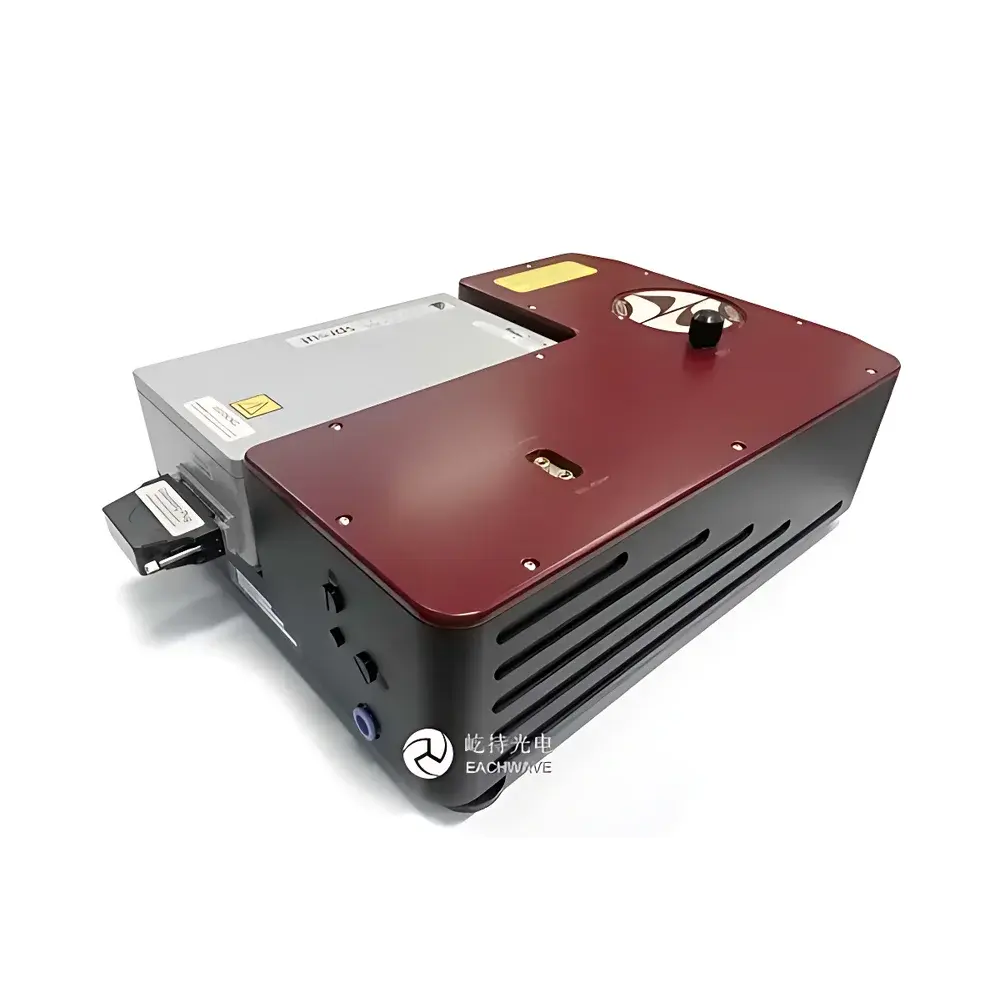
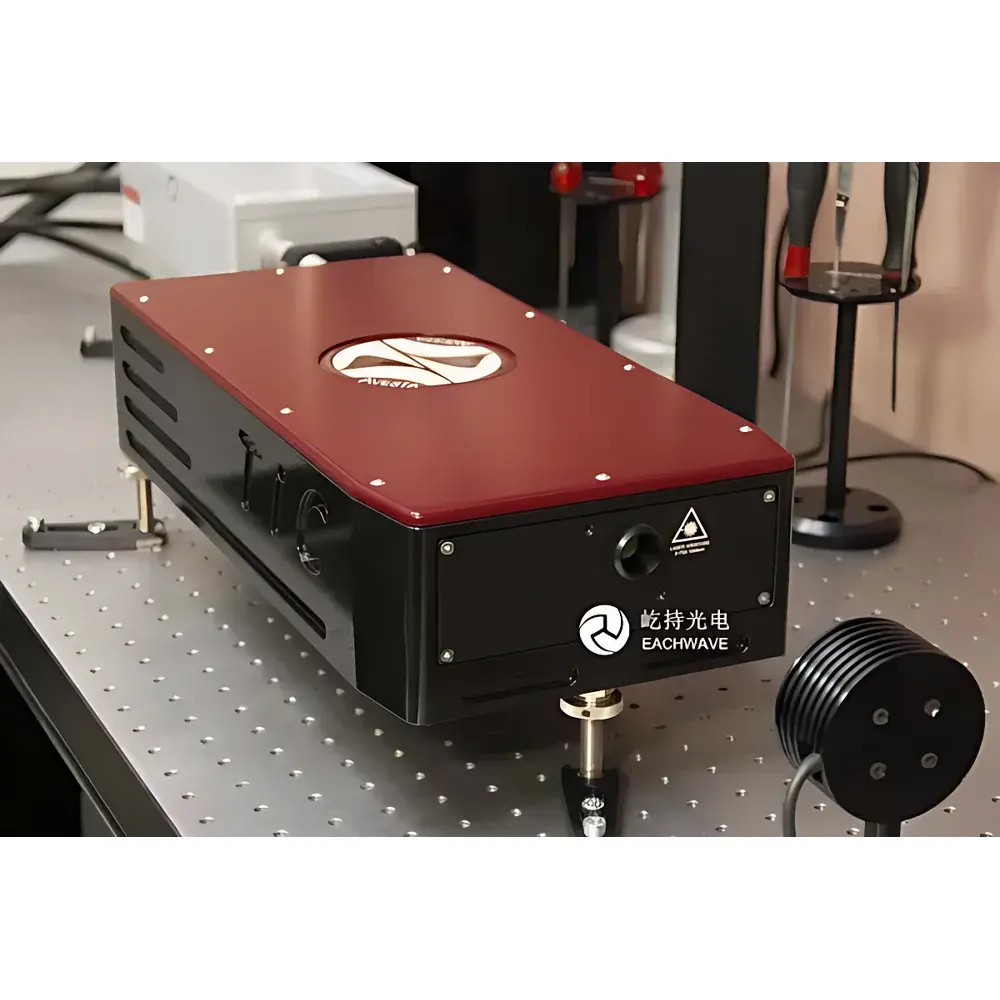
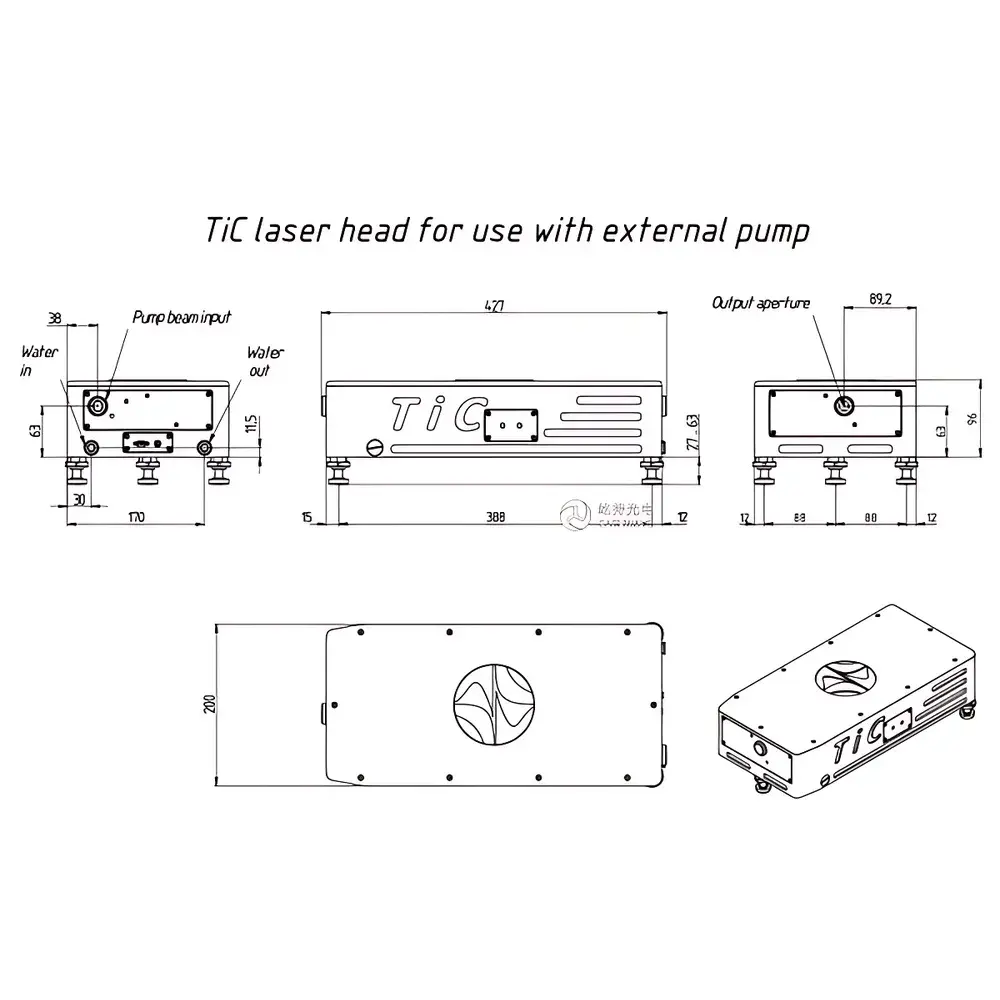
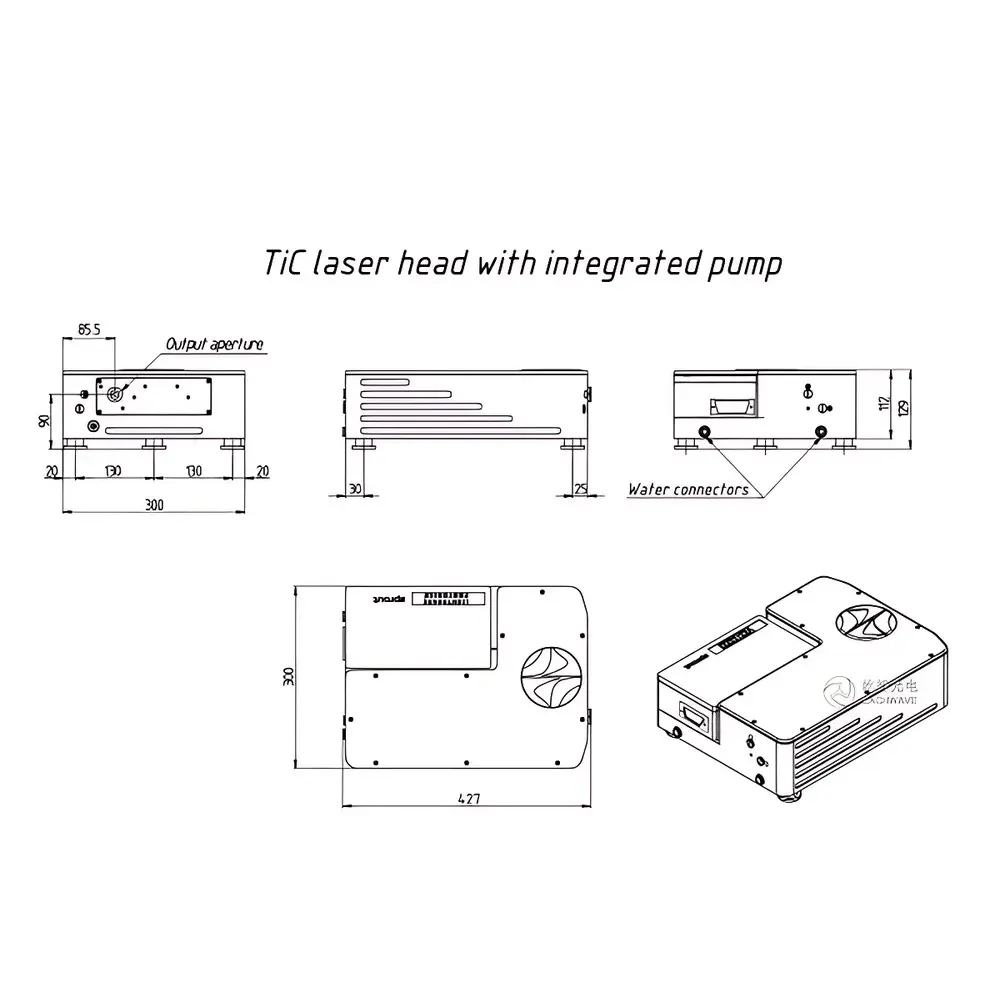
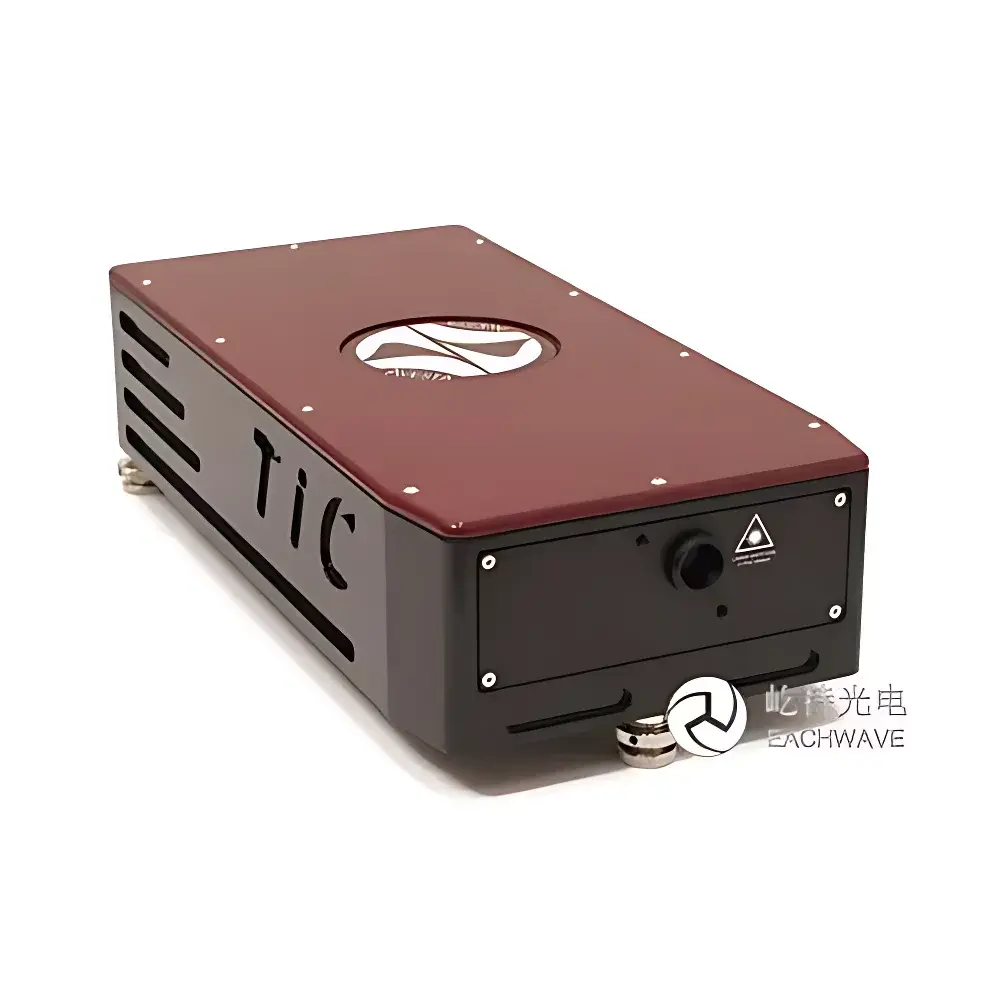
ATSEVA TiC Continuous-Wave Tunable Ti:Sapphire Laser
| Brand | ATSEVA |
|---|---|
| Origin | Russia |
| Model | TiC |
| Type | Solid-State CW Tunable Laser Oscillator |
| Tuning Range | 700–1000 nm (standard), extendable to 690–1060 nm |
| Output Power | >1.8 W @ 800 nm (free-space), up to 1.2 W (fiber-coupled, 4 µm core) |
| Linewidth | <45 GHz (default), <20 GHz (with one intra-cavity etalon), <2 GHz (with two intra-cavity etalons) |
| Pump Requirement | CW DPSS or Ar⁺-Ion laser at 480–550 nm (typically 532 nm), 2–10 W |
| Beam Quality | TEM₀₀, M² < 1.2 |
| Polarization | Linear, horizontal, PER > 100:1 |
| Power Stability | <0.2 % rms (12 h, after 30-min warm-up, with closed-loop chiller & certified pump laser) |
| Control Interface | USB-connected stepper motor actuation, Windows-based software suite (Basic/AU/Automatic packages) |
| Optional Features | Integrated spectrometer, power meter, active power stabilization, fiber coupling (SMF, FC connector), BRF control |
Overview
The ATSEVA TiC is a high-stability, continuous-wave (CW) tunable titanium-doped sapphire (Ti:Sapphire) laser oscillator engineered for precision spectroscopic and ultrafast seeding applications. Operating on the fundamental principle of broadband gain in Ti:Sapphire crystals pumped by visible-wavelength solid-state lasers (typically 532 nm), the TiC delivers narrow-linewidth, single-longitudinal-mode output across an exceptionally wide tuning range—from 700 nm to 1000 nm as standard, with custom configurations extending coverage to 690–1060 nm. Its optical architecture employs a birefringent Lyot filter for coarse wavelength selection, complemented by intra-cavity Fabry–Pérot etalons for fine spectral narrowing—enabling linewidths down to <2 GHz when two etalons are deployed. Designed for integration into demanding research environments—including ultrafast amplifier seeding, high-resolution absorption spectroscopy, and coherent Raman microscopy—the TiC meets rigorous requirements for long-term amplitude and frequency stability, low spatial noise, and reproducible alignment.
Key Features
- Wide continuous tuning range: 700–1000 nm (standard), with optional extension to 690–1060 nm via custom optics
- High average output power: >1.8 W at 800 nm in free-space configuration; up to 1.2 W with SMF-28-compatible fiber coupling (4 µm core, FC connector)
- Configurable spectral purity: Default linewidth <45 GHz; <20 GHz with one intra-cavity etalon; <2 GHz with dual etalons (motorized or manual adjustment)
- Flexible pumping architecture: Compatible with external CW DPSS or argon-ion lasers (480–550 nm, 2–10 W), or available with integrated low-noise, TEM₀₀ pump modules
- Beam specifications: Diffraction-limited TEM₀₀ mode (M² 100:1), beam diameter <2 mm (1/e²), divergence <1 mrad
- Robust thermal and mechanical design: Monolithic, thermally stabilized housing; long-term power stability <0.2 % rms under GLP-compliant operating conditions
- Three factory-configured control packages: “Manual” (micrometer-driven Lyot filter), “Basic” (motorized tuning + Windows GUI), and “Automatic” (integrated spectrometer, power meter, active power lock, BRF control)
Sample Compatibility & Compliance
The TiC laser is designed for laboratory use in ISO/IEC 17025-accredited analytical facilities and academic research centers adhering to Good Laboratory Practice (GLP). Its stable CW output supports traceable calibration workflows compliant with ASTM E275, ISO 13694, and USP for optical source characterization. When operated with certified low-noise pump lasers and factory-recommended closed-loop chillers (±0.1 °C stability), the system satisfies requirements for 12-hour uninterrupted operation per IEC 61000-4-30 (power quality) and maintains spectral fidelity suitable for NIST-traceable wavelength referencing. The device complies with CE marking directives (2014/35/EU Low Voltage Directive, 2014/30/EU EMC Directive) and RoHS 2011/65/EU material restrictions. No FDA 21 CFR Part 11 compliance is claimed, as the TiC is not a medical device; however, its audit-trail-capable software (in “Automatic” package) supports ALCOA+ data integrity principles for regulated R&D environments.
Software & Data Management
Control is implemented via a native Windows application supporting USB 2.0 communication with onboard stepper motor drivers and optional sensors. The “Basic” package provides remote wavelength scanning, preset recall, and real-time power monitoring. The “Automatic” package extends functionality with synchronized acquisition from the integrated miniature spectrometer (resolution ≤0.1 nm) and calibrated photodiode power meter (±2 % uncertainty), enabling closed-loop power stabilization and automated wavelength calibration against reference lines (e.g., Hg/Ne spectral lamps). All software versions log timestamped operational parameters—including cavity temperature, pump power, filter position, and output intensity—to CSV files for post-processing in MATLAB, Python, or LabVIEW. Audit trails include user ID, action timestamp, and parameter deltas—supporting internal QA review and external inspection readiness.
Applications
- Ultrafast laser seeding: Precise, narrow-linewidth CW seed source for regenerative amplifiers and OPAs requiring sub-100-fs pulse generation
- High-resolution spectroscopy: Absorption, fluorescence excitation, and cavity ring-down measurements in atomic/molecular physics and atmospheric science
- Biophotonics: Multiphoton microscopy excitation (e.g., SHG, THG) and optogenetic stimulation protocols requiring tunable near-IR illumination
- Raman and CARS spectroscopy: Coherent anti-Stokes Raman scattering with pump-probe synchronization and linewidth-matched excitation
- Semiconductor metrology: Photoluminescence mapping and defect analysis in III-V and 2D materials under tunable excitation
- Telecom component testing: Characterization of wavelength-selective filters, AWGs, and tunable receivers across O-, E-, S-, C-, and L-bands
FAQ
What pump lasers are compatible with the TiC oscillator?
The TiC requires a CW visible pump source between 480 nm and 550 nm, typically 532 nm. Compatible options include low-noise DPSS lasers (e.g., Coherent Verdi, Spectra-Physics Millennia) and argon-ion lasers. For integrated configurations, ATSEVA offers certified pump modules rated 2–10 W with TEM₀₀ output and amplitude noise <0.3 % rms.
Can the TiC be fiber-coupled without performance loss?
Yes—optional single-mode fiber coupling (4 µm core, FC/PC connector) preserves beam quality and enables flexible beam delivery. Coupling efficiency exceeds 70 % with proper mode matching; output divergence and M² remain consistent with free-space specs.
Is the “Automatic” package required for spectral calibration?
No—wavelength calibration can be performed externally using a calibrated wavemeter or high-resolution spectrometer. However, only the “Automatic” package includes the built-in spectrometer and software-assisted auto-calibration routine.
Does the TiC support remote operation in automated test benches?
Yes—USB-based SCPI-like command set enables integration into LabVIEW, Python (PyVISA), or MATLAB environments. Full control of tuning, etalon positioning, power monitoring, and stabilization loops is supported via documented ASCII protocol.
What cooling infrastructure is mandatory?
A factory-specified closed-loop chiller with ±0.1 °C temperature stability and ≥1.5 kW heat removal capacity is required for specified power stability and lifetime. Air-cooled operation is not supported.





