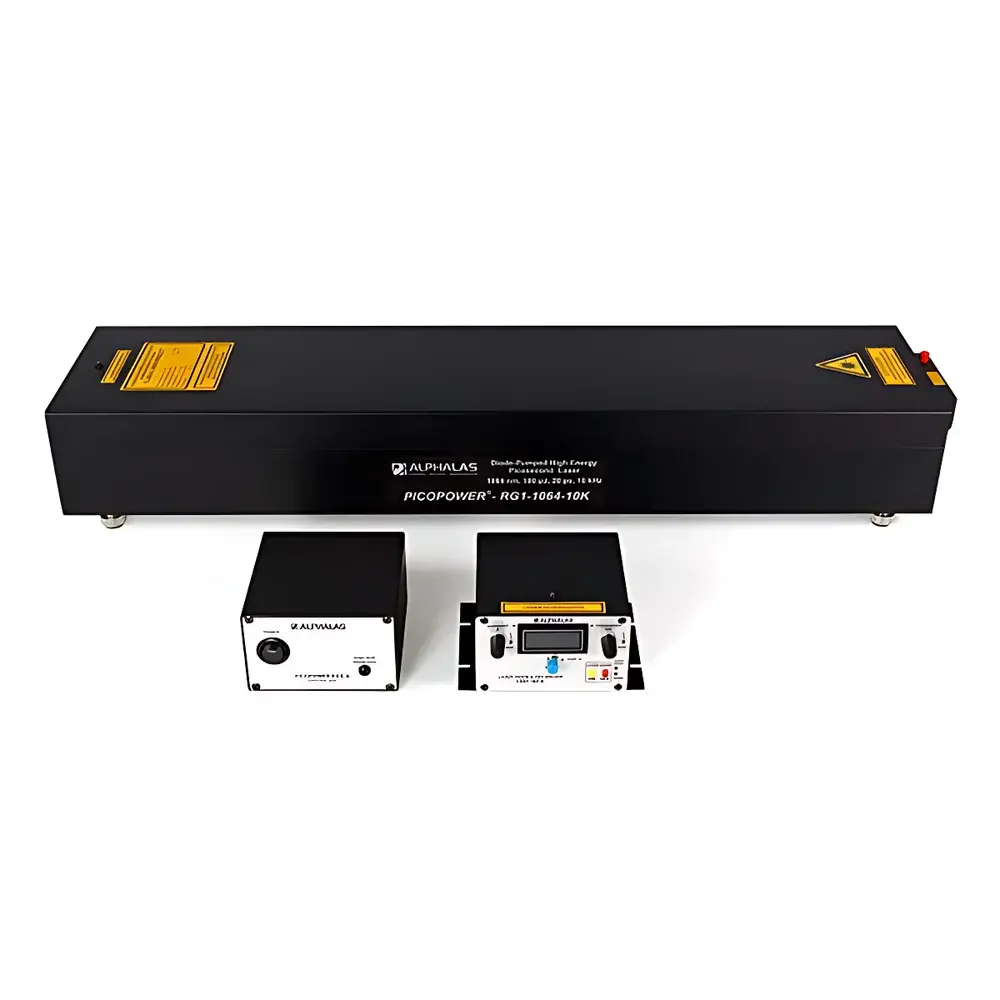
AlphaLas PICOPOWER-RG1-1064-10K High-Energy Picosecond Laser System
| Brand | AlphaLas |
|---|---|
| Origin | Germany |
| Model | PICOPOWER-RG1-1064-10K |
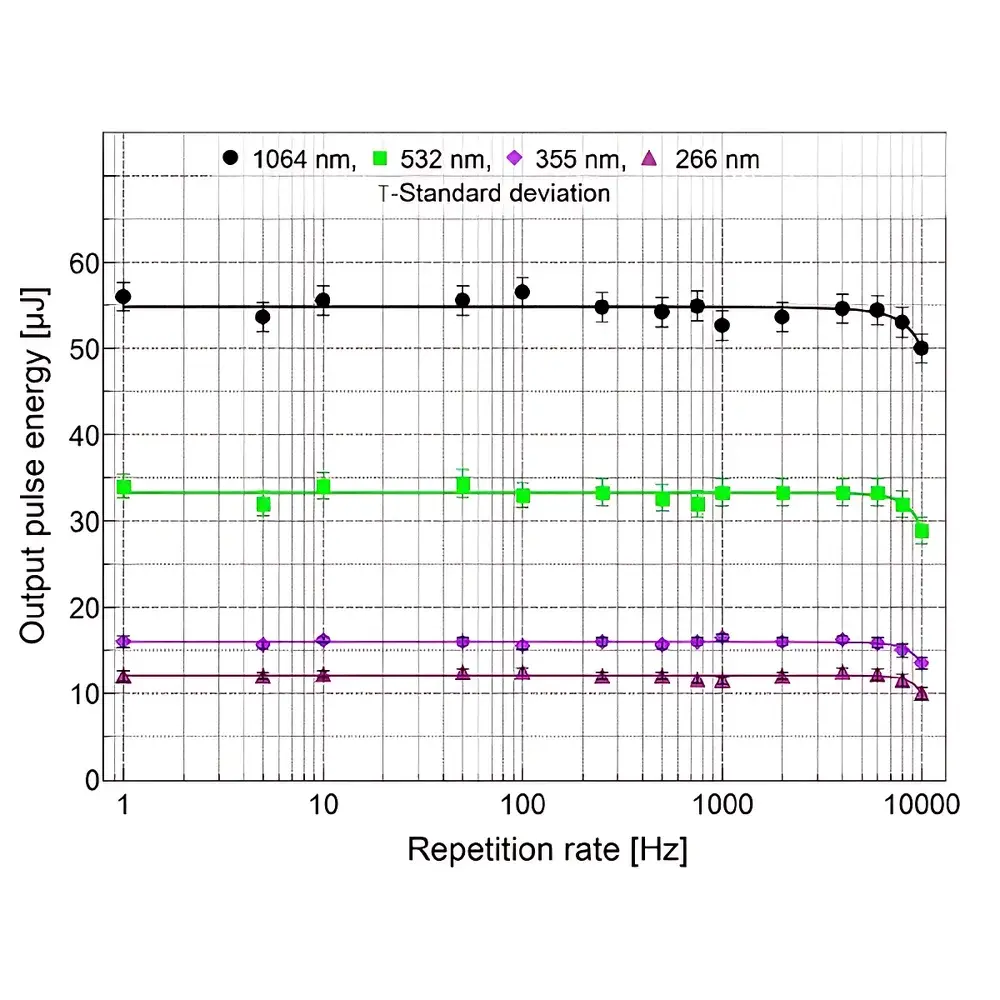
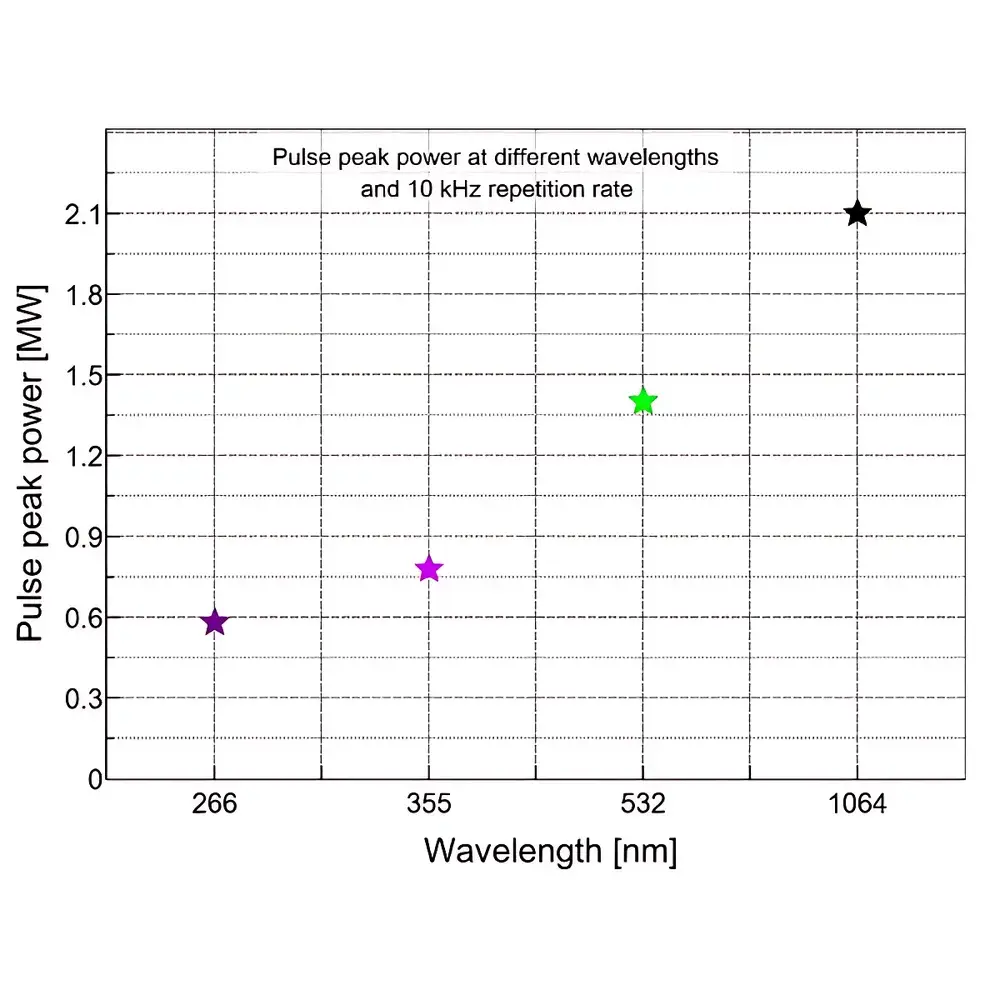
| Wavelength | 1064 nm (fundamental), optional harmonics at 532 nm, 355 nm, and 266 nm |
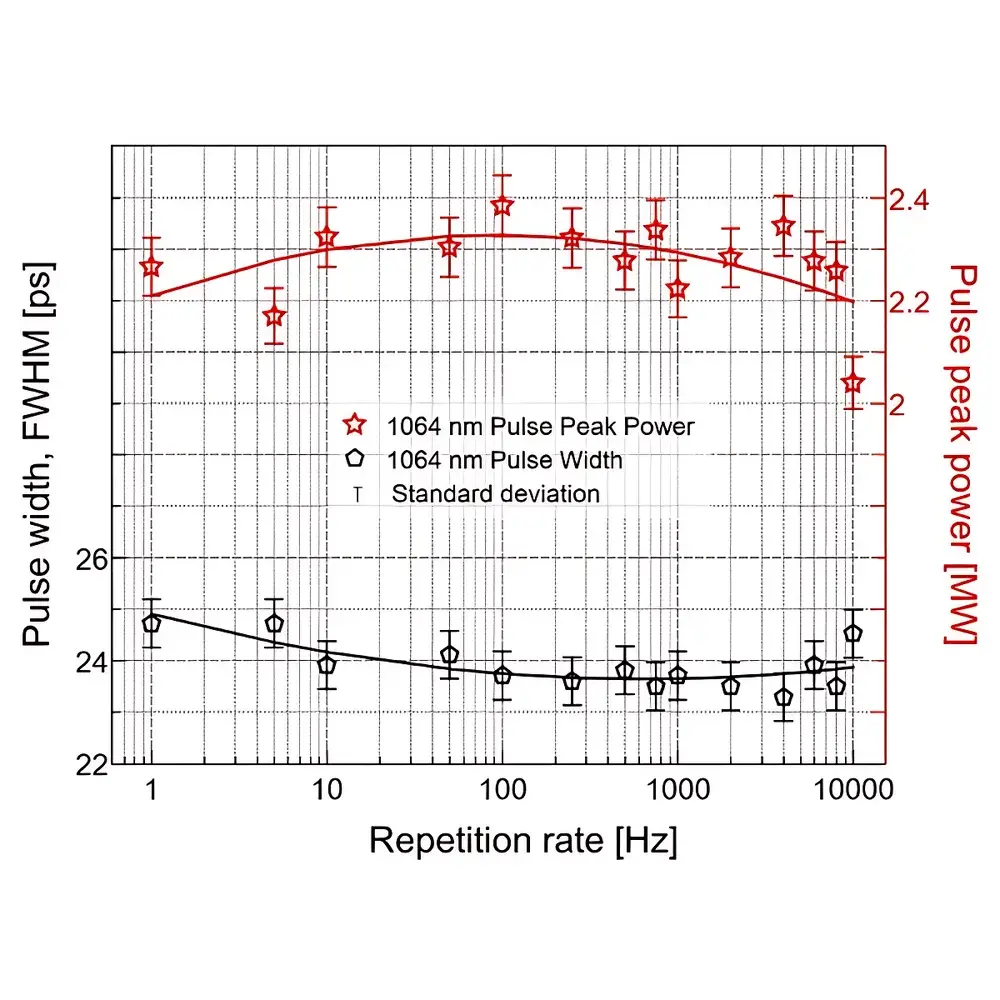
| Pulse Width | < 30 ps (FWHM) |
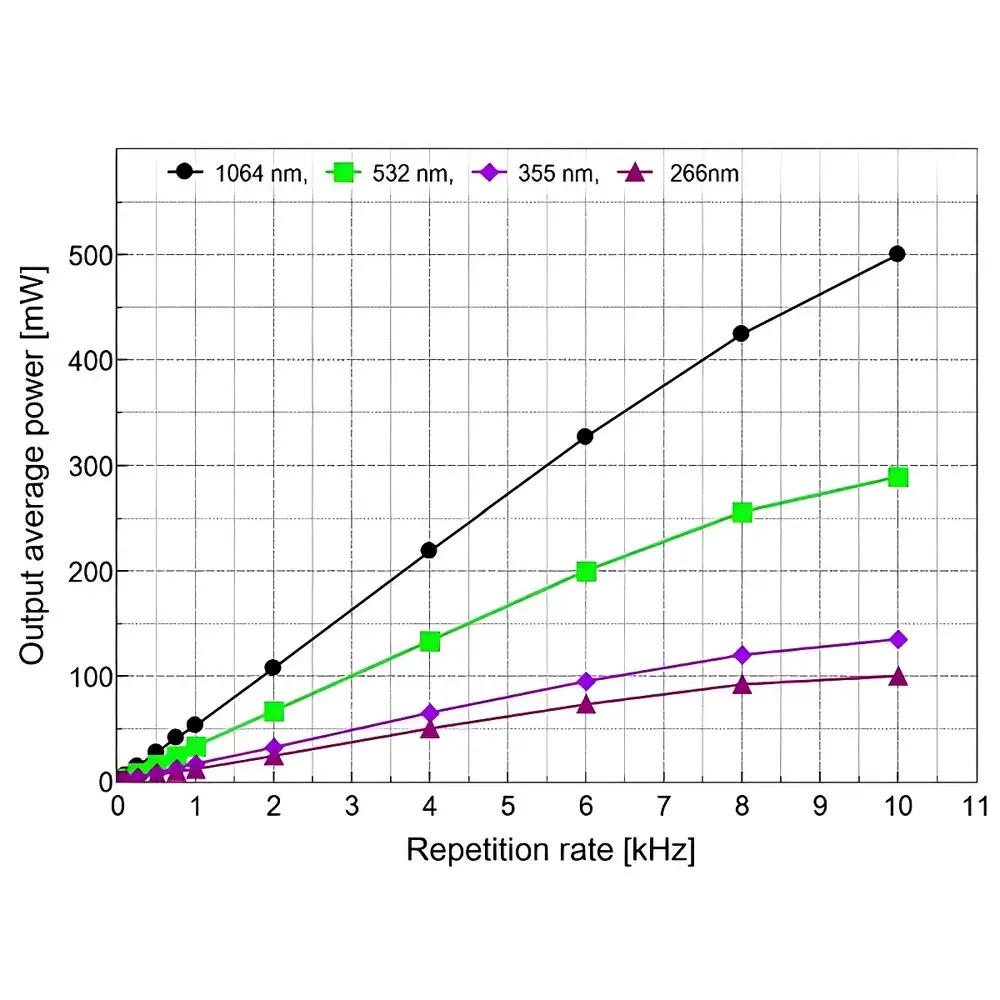
| Repetition Rate | Single-shot to 10 kHz |
| Pulse Energy @ 1064 nm | 50 µJ @ 10 kHz (up to 100 µJ @ lower rep rates) |
| Peak Power @ 1064 nm | > 2 MW |
| RMS Timing Jitter (external trigger) | 3.5 ps |
| Beam Quality | TEM₀₀, M² < 1.2 |
| Beam Pointing Stability | < 30 µrad (8 h) |
| Power Stability (8 h) | < 1.0% rms @ 1064 nm |
| Cooling | Air-cooled |
| Compliance | CE, RoHS |
Overview
The AlphaLas PICOPOWER-RG1-1064-10K is a diode-pumped, solid-state (DPSS), passively mode-locked picosecond laser system engineered for high-repetition-rate, high-energy ultrafast applications. Operating at a fundamental wavelength of 1064 nm, it delivers sub-30 ps pulses with exceptional temporal fidelity, spatial coherence, and long-term power stability. Its core architecture integrates a regenerative amplifier stage with a low-noise, high-stability oscillator, enabling precise control over pulse timing, energy, and synchronization. The system supports harmonic generation via external or integrated nonlinear crystals—yielding stable outputs at 532 nm (SHG), 355 nm (THG), and 266 nm (FHG)—with maintained beam quality and pulse-to-pulse consistency. Designed for integration into demanding scientific and industrial platforms, the RG1 series meets stringent requirements for time-resolved spectroscopy, nonlinear optics, and precision micromachining where deterministic photon delivery, minimal timing jitter, and diffraction-limited focusability are non-negotiable.
Key Features
- Sub-30 ps pulse width (FWHM) across full repetition range (single-shot to 10 kHz)
- Ultra-low external trigger jitter: ≤ 3.5 ps RMS—critical for pump-probe and time-of-flight experiments
- High pulse energy: 50 µJ @ 1064 nm at 10 kHz; scalable up to 100 µJ at reduced repetition rates
- Peak power exceeding 2 MW at 1064 nm enables efficient nonlinear frequency conversion and ablation
- TEM₀₀ Gaussian beam profile with M² < 1.2 and beam pointing stability < 30 µrad over 8 hours
- Integrated internal/external triggering with TTL-compatible input and programmable delay (–100 to +1000 ns)
- Air-cooled design with compact footprint (< 350 × 250 × 120 mm) and low power consumption (< 30 W)
- Optical and electrical sync outputs available with < 1 ps jitter (optical) and < 50 ps rise time
Sample Compatibility & Compliance
The PICOPOWER-RG1-1064-10K is compatible with a broad spectrum of optically transparent and absorbing materials—including fused silica, sapphire, silicon wafers, polymers (e.g., PI, PET), and metals—enabling clean, non-thermal ablation in micromachining and surface structuring. Its high peak intensity and short interaction time minimize heat-affected zones (HAZ), making it suitable for GLP-compliant semiconductor inspection and medical device prototyping. The system conforms to EU Directive 2014/30/EU (EMC), 2014/35/EU (LVD), and RoHS 2011/65/EU. All optical output ports comply with IEC 60825-1:2014 Class 4 laser safety standards, and interlock-ready interfaces support integration into ISO 13849-1–compliant machinery control architectures.
Software & Data Management
AlphaLas provides the PICOCONTROL software suite for comprehensive remote operation via USB 2.0 or RS-232. Users can configure repetition rate, pulse energy (via internal attenuation), trigger mode (internal/external), delay settings, and monitoring of real-time power feedback. The software logs timestamped operational parameters—including pulse energy, temperature, and diode current—with CSV export for traceability. Audit trails comply with FDA 21 CFR Part 11 requirements when deployed with validated IT infrastructure. Optional LabVIEW™ and MATLAB® drivers enable seamless integration into custom automation workflows for high-throughput metrology or closed-loop process control.
Applications
- Precision micromachining of brittle materials (glass, ceramics, SiC) and polymers at µm-scale resolution
- Time-resolved fluorescence lifetime imaging (FLIM) and multi-photon excited fluorescence (MPEF) microscopy
- Terahertz (THz) generation and electro-optic sampling in pump-probe configurations
- Nonlinear optical parametric amplification (OPA) seeding and ultrafast spectroscopy (transient absorption, CARS)
- Laser-induced breakdown spectroscopy (LIBS) with improved signal-to-noise ratio due to reduced plasma shielding
- High-resolution laser marking, engraving, and subsurface 3D structuring of transparent substrates
- Calibration of streak cameras, single-photon avalanche diodes (SPADs), and fast photodetectors
FAQ
What is the minimum pulse energy stability achievable at 10 kHz?
Pulse-to-pulse energy stability is < 1.0% RMS at 1064 nm under continuous operation, verified per ISO 13697:2019 methodology.
Can the laser be synchronized to an external femtosecond oscillator?
Yes—the system accepts TTL triggers with < 10 ns rise time and offers adjustable optical sync output with < 1 ps jitter, enabling phase-locked operation with fs oscillators for hybrid ultrafast setups.
Is harmonic generation included by default?
The base configuration operates at 1064 nm. Harmonic modules (532/355/266 nm) are optional add-ons with specified conversion efficiency and beam parameter preservation.
How is long-term power stability validated?
All units undergo 8-hour continuous power monitoring per ISO 11554 Annex B; stability data is provided in individual calibration certificates.
Does the system support OEM integration into vacuum or cleanroom environments?
Yes—optional hermetically sealed housing and low-outgassing materials (per ASTM E595) are available upon request for UHV-compatible deployment.