
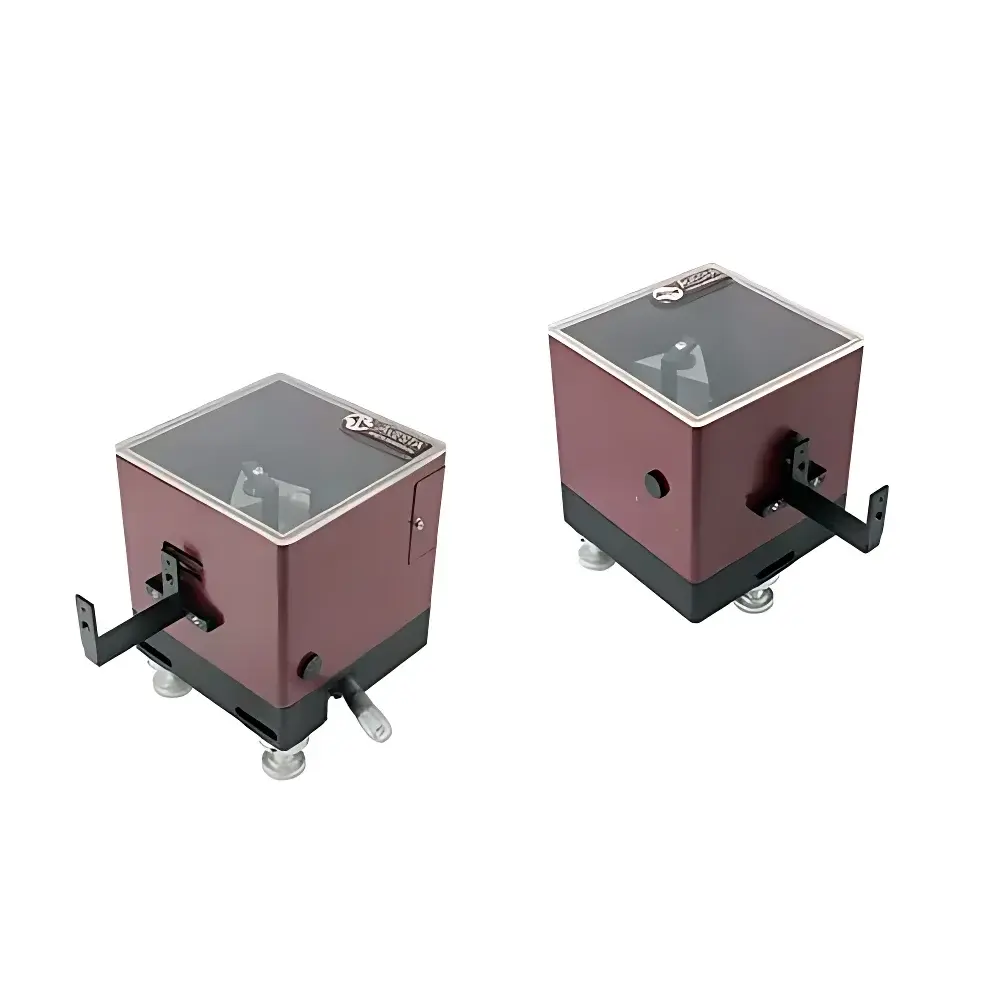
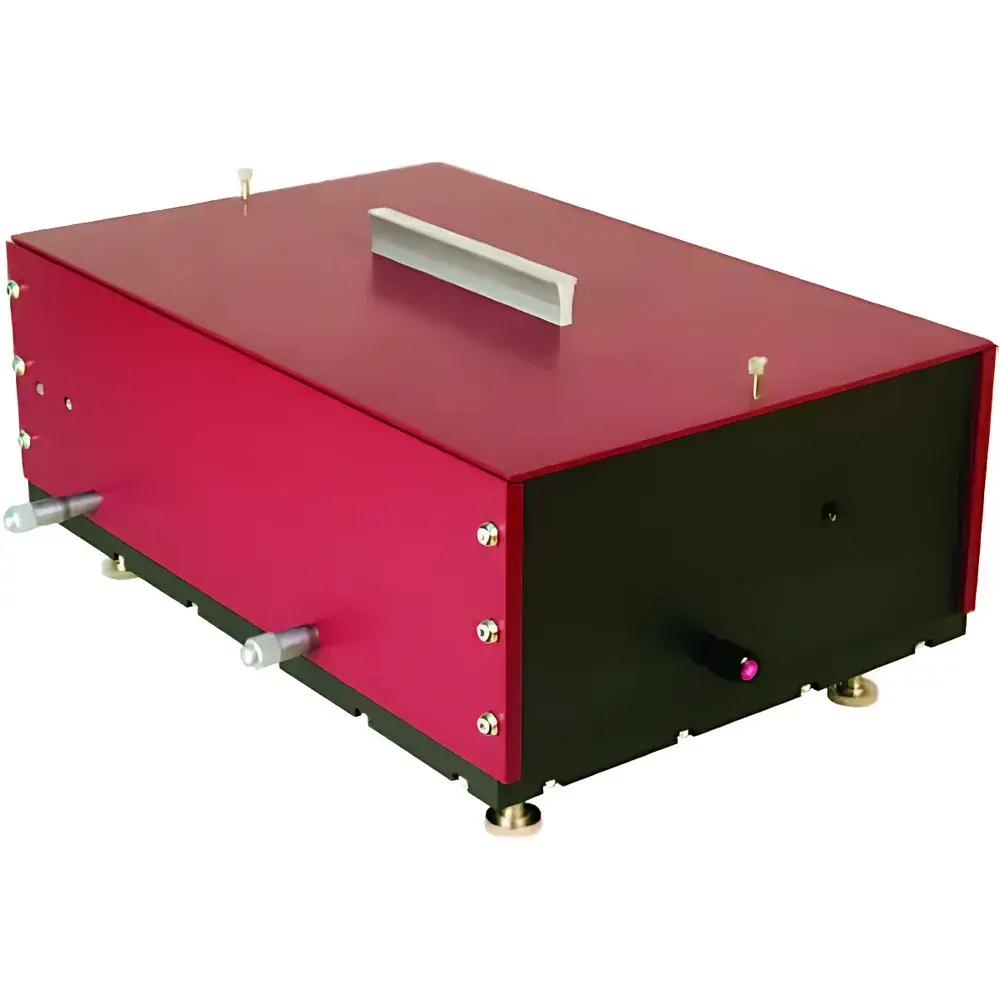
ATSEVA APC Femtosecond Pulse Compressor Prism Pair
| Brand | ATSEVA |
|---|---|
| Origin | Russia |
| Manufacturer Type | Authorized Distributor |
| Product Category | Imported |
| Model | APC Femtosecond Pulse Compressor |
| Core Component | Prism-Based Dispersion Compensation Unit |
| Wavelength Range | 700–900 nm (customizable) |
| GVD Tuning Range @ 800 nm | +16,500 to −13,800 fs² (APC Pro DF) |
| Transmission | >90% @ 800 nm |
| Beam Diameter | Up to 4 mm |
| Polarization | Linear, horizontal (vertical optional) |
| Prism Materials | Fused Silica & Dense Flint Glass |
| Dimensions (APC Pro DF) | 410 × 324 × 186 mm |
| Compliance | Designed for ultrafast laser systems compliant with ISO 11146 (laser beam parameters) and IEC 60825-1 (laser safety) |
Overview
The ATSEVA APC Femtosecond Pulse Compressor Prism Pair is a precision optical dispersion management system engineered for real-time, high-dynamic-range group velocity dispersion (GVD) compensation in ultrafast Ti:sapphire and other broadband femtosecond laser systems. Based on the classic prism-pair configuration, the APC leverages controlled angular dispersion and path-length differential between two prisms—fabricated from fused silica and dense flint glass—to introduce tunable negative or positive second-order dispersion. This enables precise pre-compensation of accumulated positive dispersion from microscope objectives, scan lenses, dichroics, and other downstream optics—restoring transform-limited pulse duration at the sample plane. Unlike grating-based compressors, the APC offers inherently low third-order dispersion (TOD), minimal spatial chirp, and collinear input/output beam geometry—critical for integration into multiphoton microscopy, pump-probe spectroscopy, and nonlinear optical setups where beam alignment stability and spatial overlap are non-negotiable.
Key Features
- Wide GVD tuning range: ±16,500 fs² at 800 nm (APC Pro DF variant), enabling full compensation of typical microscope-induced dispersion (e.g., 8,000–12,000 fs²)
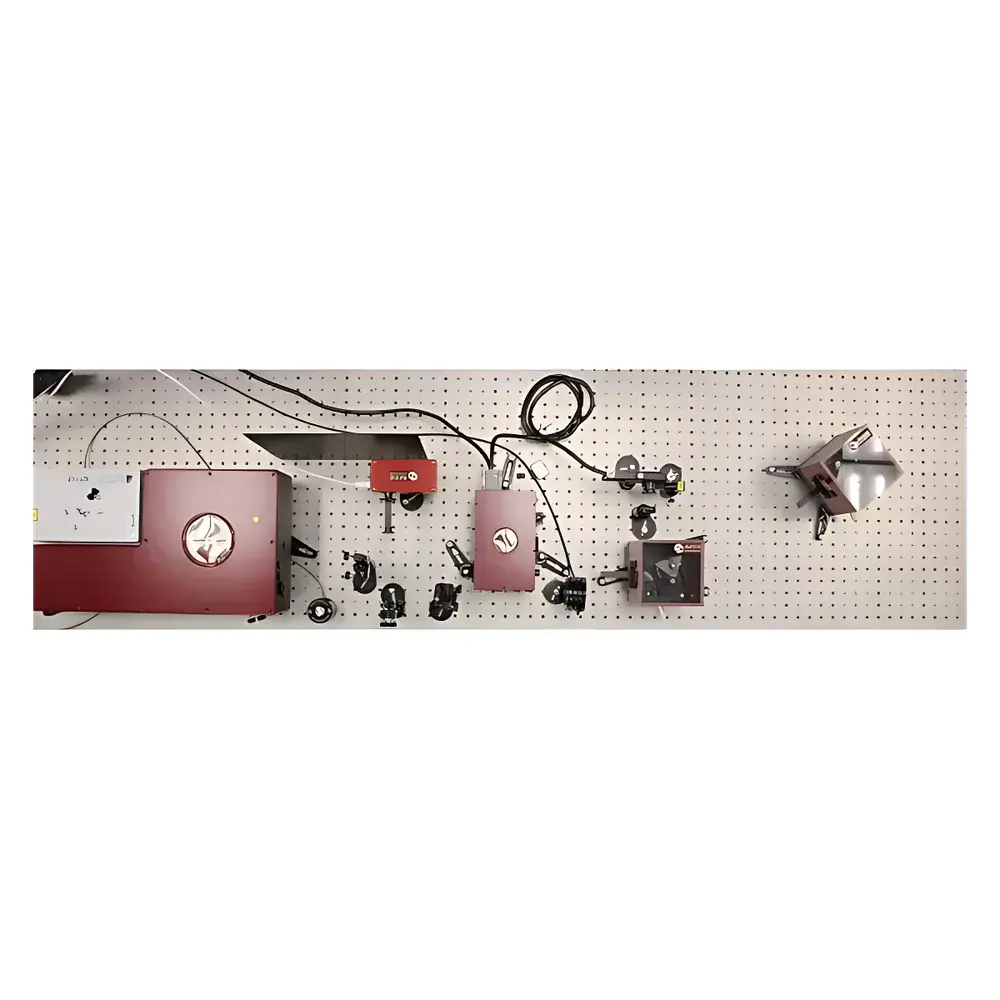
- Collinear input/output beam path: Identical height and direction simplify alignment and facilitate seamless integration into existing beamlines
- Bypass mode capability: Optical path can be routed around dispersive elements without realignment—essential for system diagnostics and reference measurements
- Modular design: Two independent variants—APC Kit (compact, user-assembled) and APC Pro (pre-aligned, motorized tuning option available)—support diverse experimental scalability
- High transmission efficiency: >90% at 800 nm with AR-coated fused silica and dense flint prisms; optimized for low-loss operation in high-repetition-rate oscillators (e.g., Ti:sapphire, Yb-fiber)
- Polarization-maintaining architecture: Standard horizontal linear polarization; vertical orientation available upon request for polarization-sensitive applications
Sample Compatibility & Compliance
The APC is compatible with femtosecond laser sources operating across 700–900 nm, including Ti:sapphire oscillators (e.g., Avesta TiF-15F, 15–30 fs), Yb-based amplifiers, and OPA-pumped systems. Its mechanical stability and thermal insensitivity ensure long-term repeatability under continuous laboratory operation. The unit meets ISO 11146-1/2 standards for laser beam parameter measurement and conforms to IEC 60825-1:2014 Class 4 laser product safety requirements when integrated into properly interlocked ultrafast systems. All optical mounts and kinematic adjustments are designed for sub-microradian angular stability—enabling reliable use in GLP-compliant imaging labs and academic ultrafast facilities where traceable dispersion calibration is required.
Software & Data Management
While the APC operates as a manual or semi-automated optical element, its GVD setting can be precisely correlated with physical prism separation and insertion depth using Avesta’s published calibration curves (supplied with each unit). For closed-loop dispersion control, the APC integrates natively with Avesta’s AA-20DD scanning autocorrelator (microscope-adapted version) and ASP-75 spectrometer—allowing simultaneous temporal and spectral characterization. Experimental metadata—including prism position, measured pulse width, and spectral phase reconstruction—can be logged via LabVIEW or Python-based acquisition frameworks supporting NI DAQ or Thorlabs Kinesis drivers. Full audit trails for GVD adjustment history are supported in environments adhering to FDA 21 CFR Part 11 when paired with validated electronic lab notebook (ELN) systems.
Applications
- Multiphoton fluorescence microscopy: Restores sub-100-fs pulses at the objective back aperture to maximize excitation efficiency and minimize photodamage
- Transient absorption and time-resolved Raman spectroscopy: Enables precise pump-probe delay synchronization with dispersion-balanced pulses
- Coherent anti-Stokes Raman scattering (CARS) and stimulated Raman scattering (SRS): Maintains spectral fidelity and temporal overlap between pump, Stokes, and probe beams
- Ultrafast optogenetics and laser microdissection: Delivers peak intensity consistency across heterogeneous tissue samples
- Development of dispersion-managed fiber lasers and OPCPA systems: Serves as a reference-grade GVD tuning stage during amplifier optimization
FAQ
Can the APC be used outside the 700–900 nm range?
Yes—custom configurations are available for wavelengths from 500 nm to 1600 nm, with prism material and coating selection optimized for transmission and dispersion linearity.
Is motorized GVD tuning available?
The APC Pro DF platform supports optional motorized translation stages (with encoder feedback) for remote-controlled, repeatable dispersion adjustment—compatible with TTL and RS-232 interfaces.
How does the APC compare to grating compressors in terms of higher-order dispersion?
Prism pairs intrinsically generate significantly lower third-order dispersion (TOD) than grating compressors—reducing pulse asymmetry and pedestals, especially critical for <30-fs pulses.
What beam diameter and divergence specifications must be observed?
Maximum input beam diameter is 4 mm (1/e²); divergence should remain below 0.5 mrad to avoid vignetting and maintain GVD linearity across the tuning range.
Does ATSEVA provide calibration certificates or GVD vs. position lookup tables?
Each APC unit ships with a factory-measured GVD calibration curve referenced to 800 nm, traceable to NIST-traceable autocorrelation and spectral interferometry methods.





