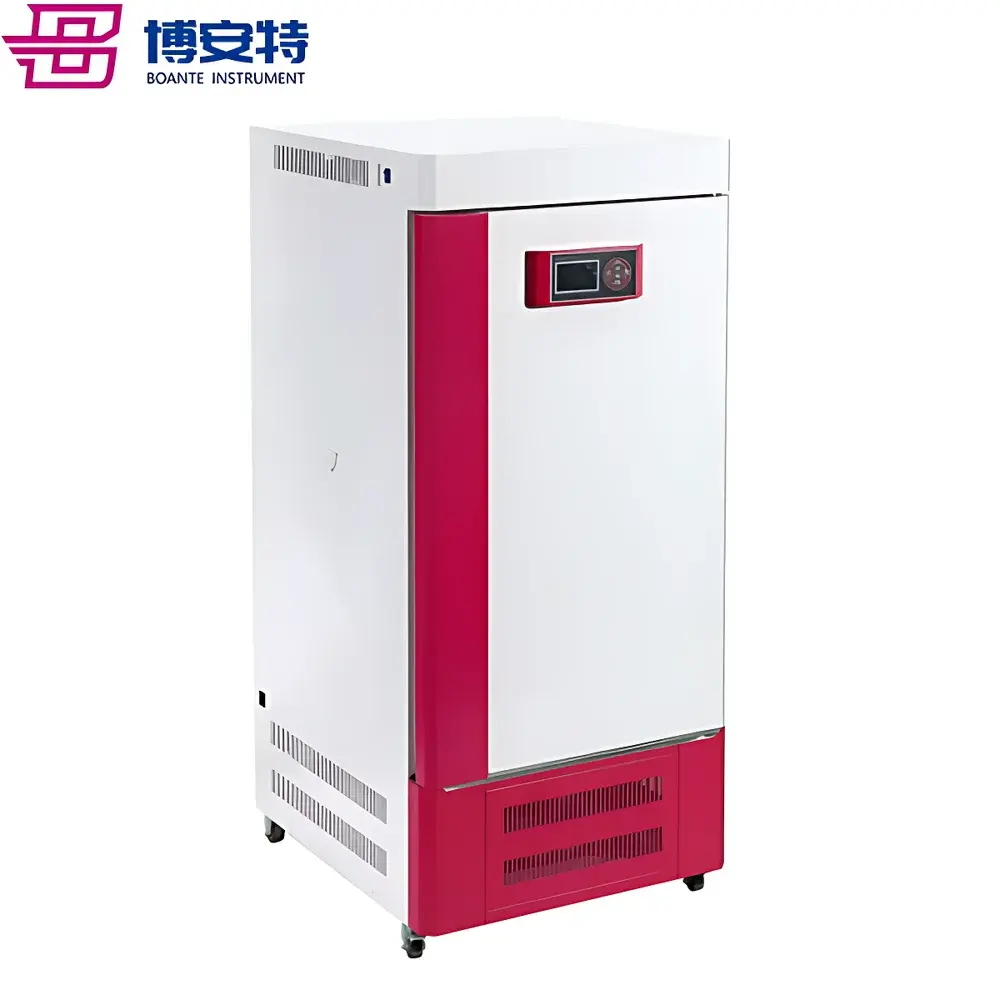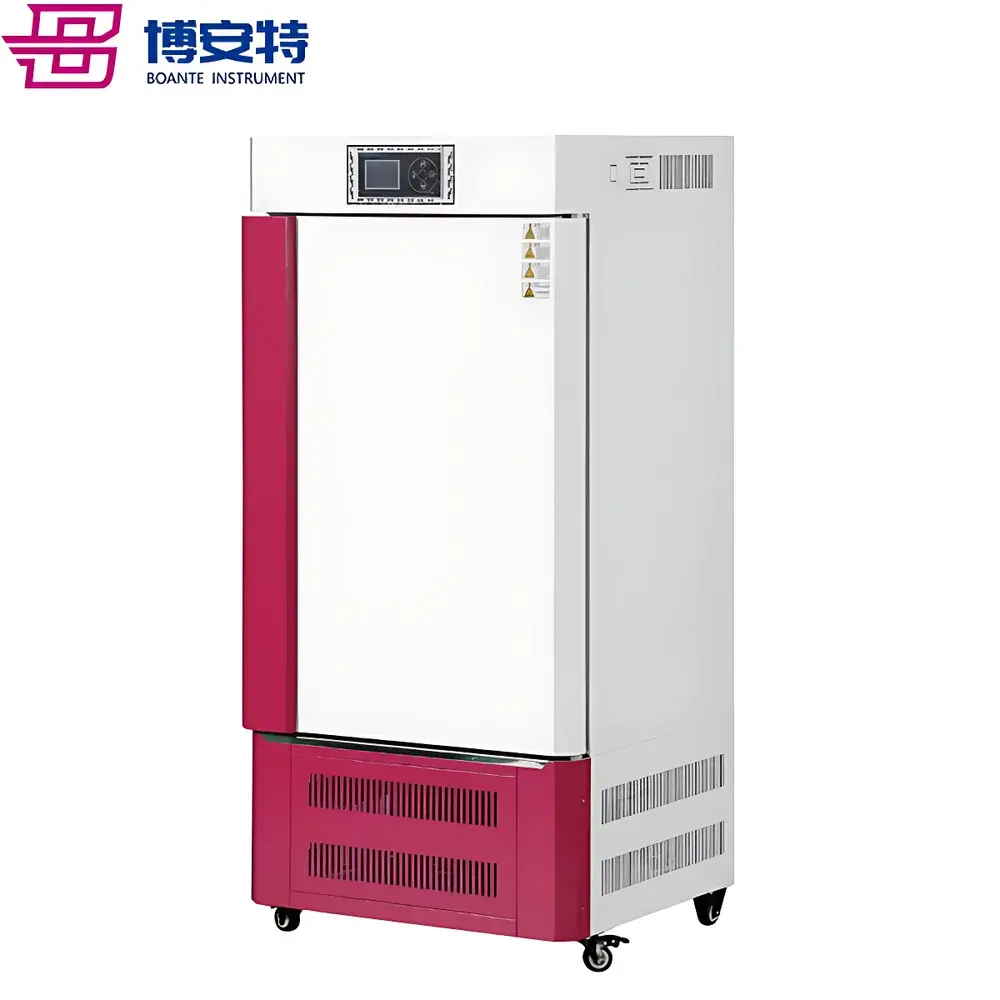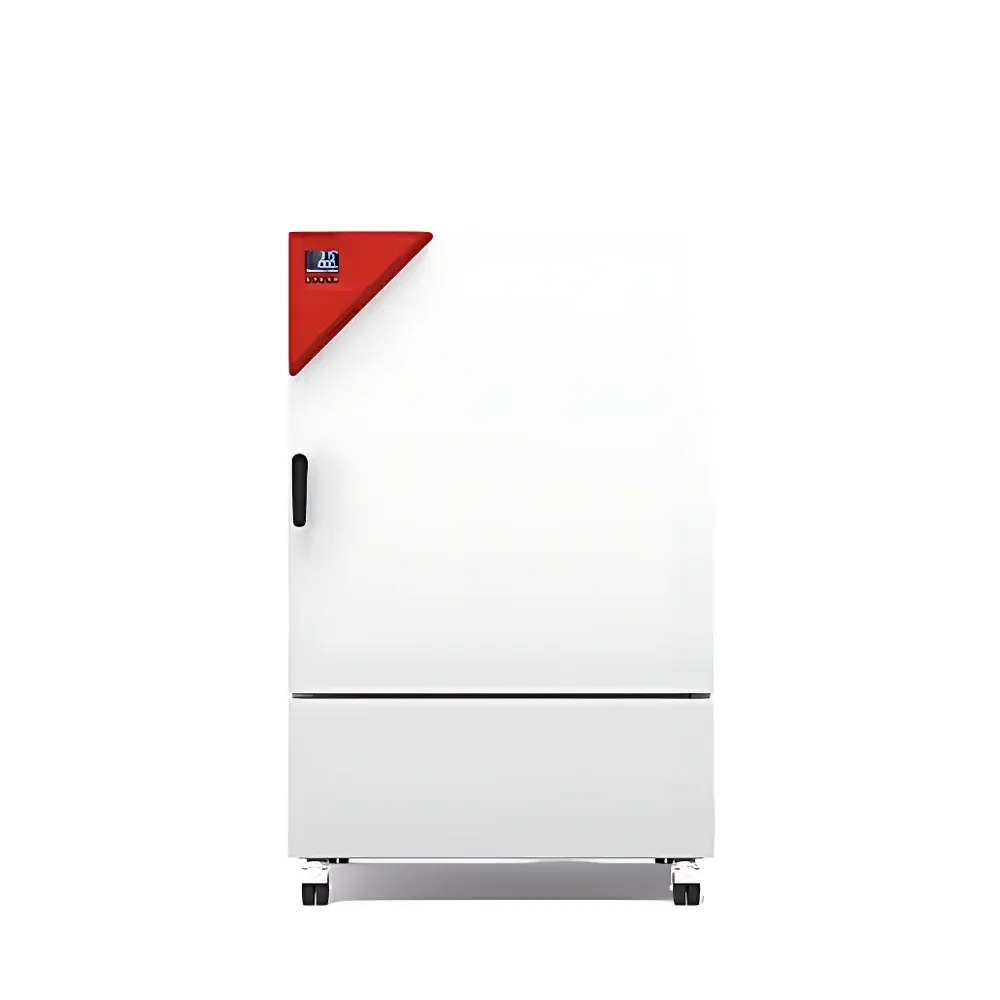
BINDER KB ECO Peltier-Cooled Biochemical Incubator
| Brand | BINDER |
|---|---|
| Origin | Germany |
| Model | KB ECO 240 / KB ECO 400 / KB ECO 720 / KB ECO 1020 |
| Temperature Range | 0–70 °C (up to 28 K below ambient) |
| Temp. Uniformity at 37 °C | ±0.1 K |
| Temp. Stability at 37 °C | ±0.1 K |
| Max. Heat Compensation at 40 °C | 350–500 W |
| Recovery Time (30 s door open, 37 °C) | 3–6 min |
| Rated Power | 1.2 kW |
| Internal Volume | 247–1020 L |
| Net Weight | 152–327 kg |
| Max. Load per Shelf | 30–45 kg |
| Max. Total Load | 100–150 kg |
| Wall Clearance (rear/side) | 100 mm |
| External Dimensions (W×H×D) | 925×1461×796 mm to 1250×1925×1149 mm |
| Internal Dimensions (W×H×D) | 650×785×485 mm to 973×1250×836 mm |
| Shelf Capacity (standard/max) | 2/9 to 2/15 |
| Sound Pressure Level | 43–47 dB(A) |
| Energy Consumption at 37 °C | 65–105 Wh/h |
| Interface | Ethernet, USB |
| Display | LCD with alarm and data logging |
Overview
The BINDER KB ECO Peltier-Cooled Biochemical Incubator is a precision-engineered, energy-optimized platform for low-temperature biological and biochemical applications requiring stable thermal environments from 0 °C to +70 °C — with active cooling capacity up to 28 K below ambient temperature. Unlike conventional compressor-based incubators, the KB ECO series employs solid-state thermoelectric (Peltier) modules for both heating and cooling, enabling silent operation, exceptional temperature stability (±0.1 K at 37 °C), and rapid thermal recovery following door openings. Its APT.line™ preheating chamber technology ensures uniform heat distribution across the entire stainless-steel interior, eliminating cold spots and minimizing thermal gradients during ramping or steady-state operation. Designed for continuous, unattended use in regulated laboratory environments, the KB ECO meets foundational requirements for GLP-compliant workflows and supports traceable temperature monitoring via integrated data logging.
Key Features
- Thermoelectric (Peltier) temperature control: Enables bidirectional heating/cooling without refrigerants, compressors, or oil-lubricated components — resulting in near-silent operation (as low as 43 dB(A)) and reduced mechanical wear.
- APT.line™ preheating chamber: Patented inner chamber geometry with optimized airflow and integrated heating elements ensures ±0.1 K temperature uniformity at critical setpoints such as 37 °C.
- Stainless-steel interior (AISI 304) with double-glazed, safety-glass inner doors: Provides corrosion resistance, easy decontamination, and visual access without compromising thermal integrity.
- Intelligent condensation management: Adjustable dew point control and dedicated condensate drainage pathways prevent moisture accumulation under all operating conditions — including sub-ambient cooling in humid environments.
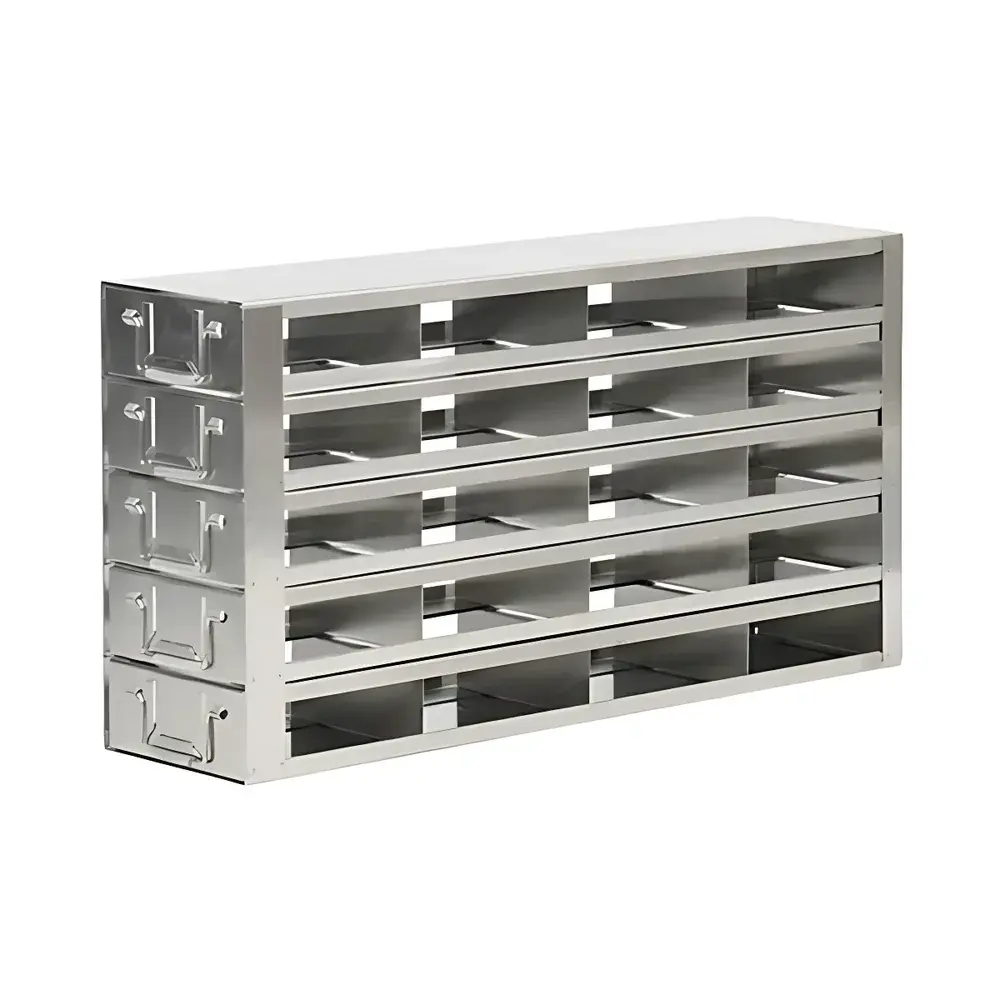
- Modular shelf system: Standard configuration includes two adjustable stainless-steel shelves; up to 15 shelves (model-dependent) can be installed while maintaining full load capacity (100–150 kg total) and airflow integrity.
- Dual-port access: Ø30 mm port with silicone plug enables integration of external sensors, gas lines, or probes without thermal leakage or seal compromise.
- Self-diagnostic firmware: Performs automated system checks on startup and during operation, reporting status codes for fan function, Peltier module integrity, sensor calibration drift, and door seal integrity.
Sample Compatibility & Compliance
The KB ECO accommodates a broad range of sample formats — including stacked Petri dishes, multiwell plates, flasks, and bioreactor vessels — across its four volume variants (247–1020 L). Its stainless-steel construction and smooth, crevice-free interior meet ISO 14644-1 Class 5 cleanroom compatibility guidelines when operated under laminar airflow hoods. While not certified for IEC 61010-1 Class II medical device use, the incubator complies with EN 61000-6-3 (EMC emissions) and EN 61000-6-2 (immunity), and its temperature control architecture supports audit-ready documentation per FDA 21 CFR Part 11 when paired with BINDER’s optional software suite. All models are CE-marked and manufactured in accordance with German DIN EN ISO 9001 quality management standards.
Software & Data Management
Internal data logging records temperature, setpoint, door-open events, and system alarms at user-defined intervals (1 s to 60 min resolution) into non-volatile memory (≥30 days at 1-min intervals). Logged data is exportable via USB 2.0 in CSV format — compatible with LIMS, ELN, and statistical process control platforms. Optional Ethernet connectivity enables remote monitoring and control through BINDER’s C-Control software, which supports role-based user accounts, electronic signatures, and configurable alarm escalation (email/SNMP). The system maintains full audit trails for all parameter changes, including timestamps, operator IDs, and pre/post-change values — satisfying core ALCOA+ principles for data integrity in GxP environments.
Applications
- Low-temperature microbial culture (e.g., psychrophilic bacteria, lactic acid fermentation)
- Enzyme kinetics studies requiring precise sub-37 °C thermal control
- Cell line maintenance during cryopreservation recovery protocols
- Long-term stability testing of biologics and diagnostic reagents per ICH Q5C
- Environmental simulation for plant tissue culture and seed germination assays
- Controlled cooling of post-hybridization nucleic acid samples prior to electrophoresis
- Quality control incubation for pharmaceutical raw materials under USP storage conditions
FAQ
Does the KB ECO require external ventilation or exhaust ducting?
No — the Peltier modules dissipate heat exclusively through rear-mounted passive heatsinks and low-noise axial fans. A minimum 100 mm clearance at rear and sides is mandatory for unrestricted convective cooling.
Can the incubator operate reliably at 4 °C in a 30 °C ambient lab?
Yes — the KB ECO 720 and KB ECO 1020 models provide up to 26 K of active cooling below ambient, supporting stable 4 °C operation even in warm environments, provided humidity is controlled to prevent internal condensation.
Is temperature calibration traceable to national standards?
Factory calibration uses NIST-traceable reference sensors. Users may perform field verification with external Class A PT100 probes; deviation logs are stored in the internal audit trail.
What is the maximum allowable humidity level for uninterrupted sub-ambient operation?
Operation below ambient is supported up to 70% RH. Above this threshold, condensation risk increases — the intelligent dew point algorithm automatically adjusts heater duty cycle to mitigate frost formation on Peltier cold plates.
Are third-party validation protocols (IQ/OQ/PQ) available?
BINDER provides standardized validation templates compliant with ASTM E2500 and EU Annex 15. Full protocol execution requires engagement with authorized BINDER Service Engineers.