
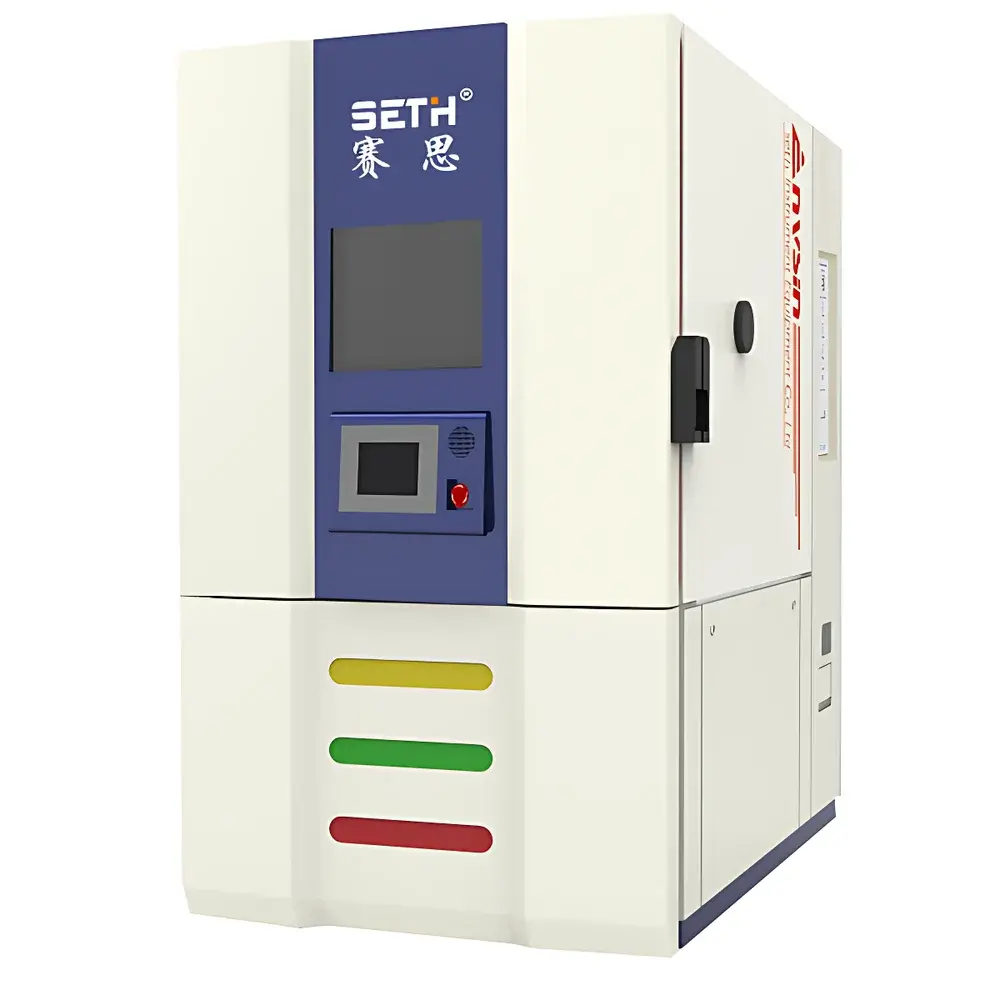
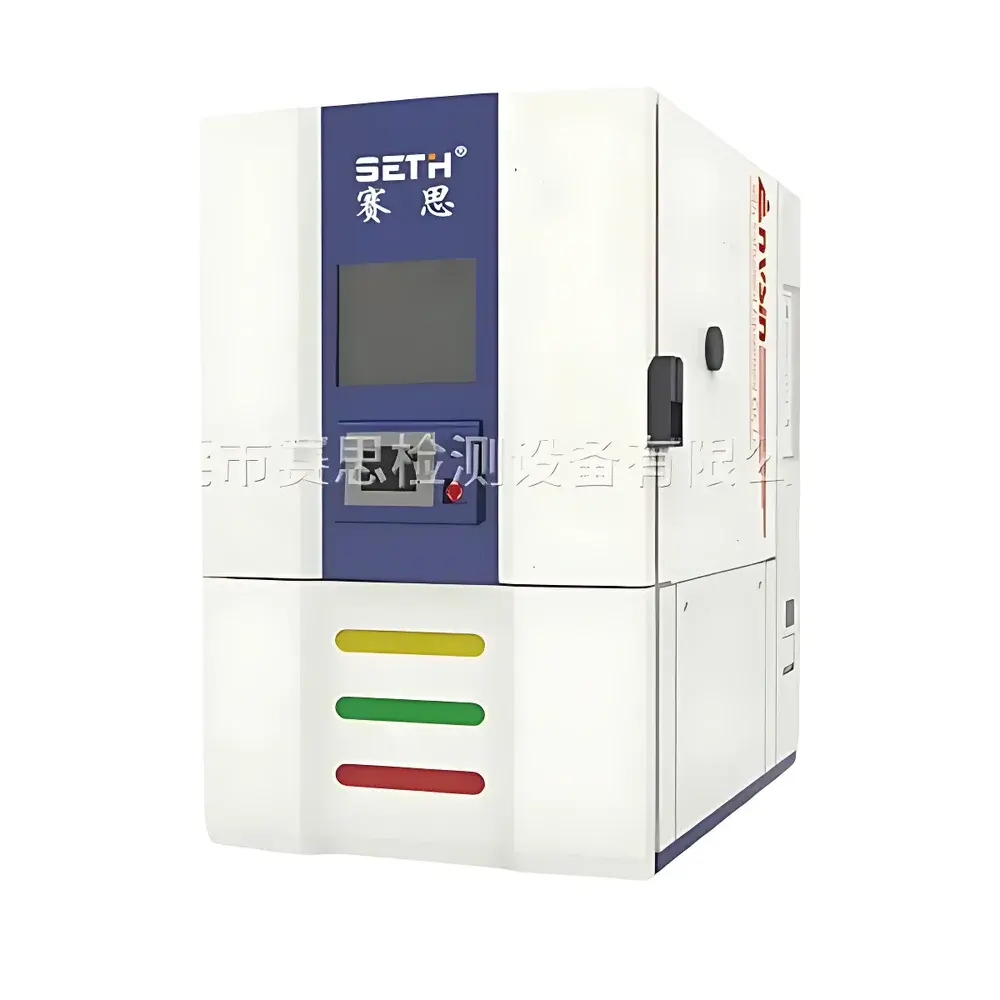
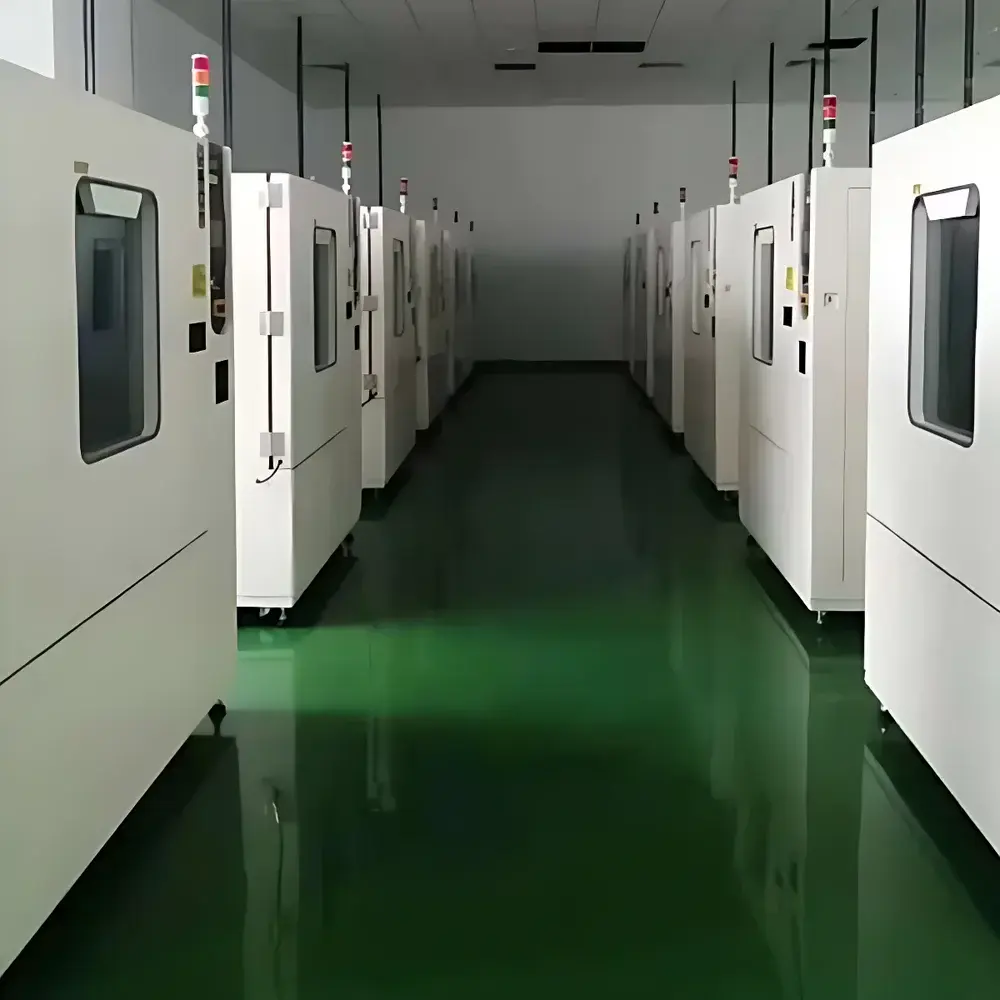
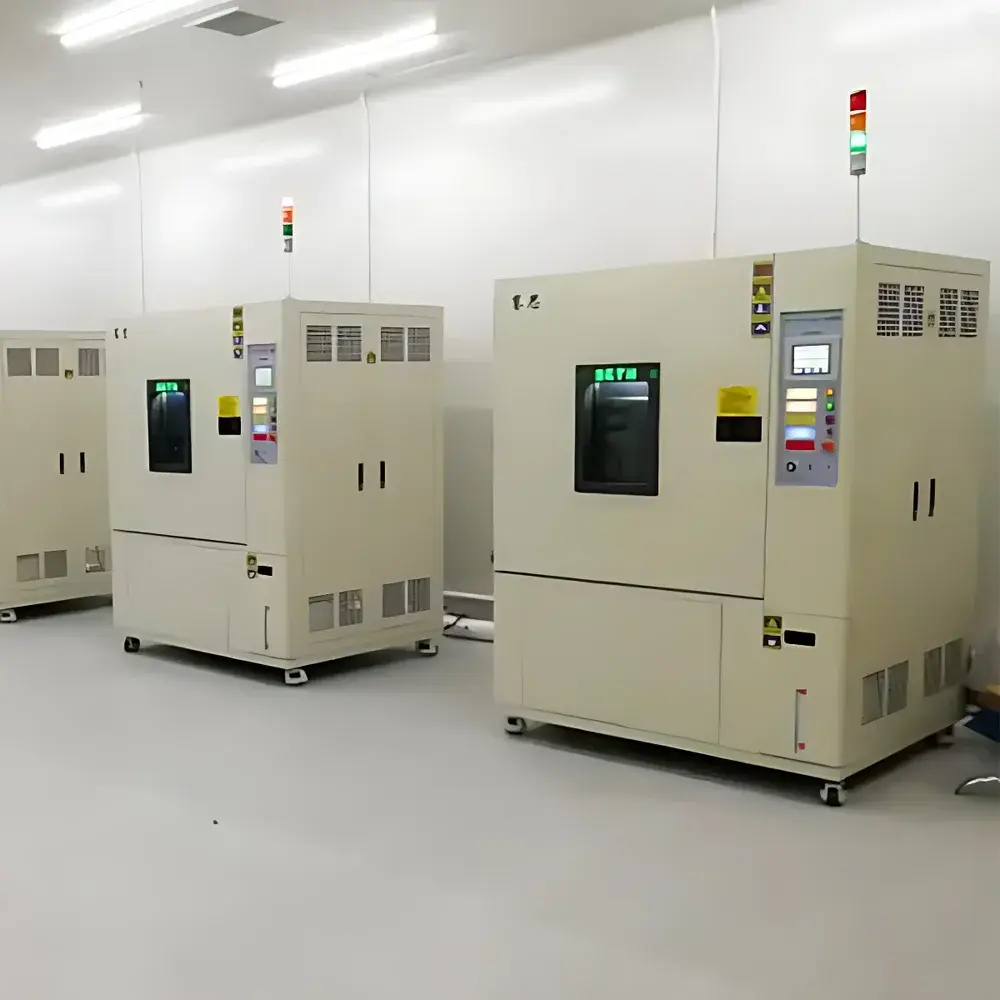
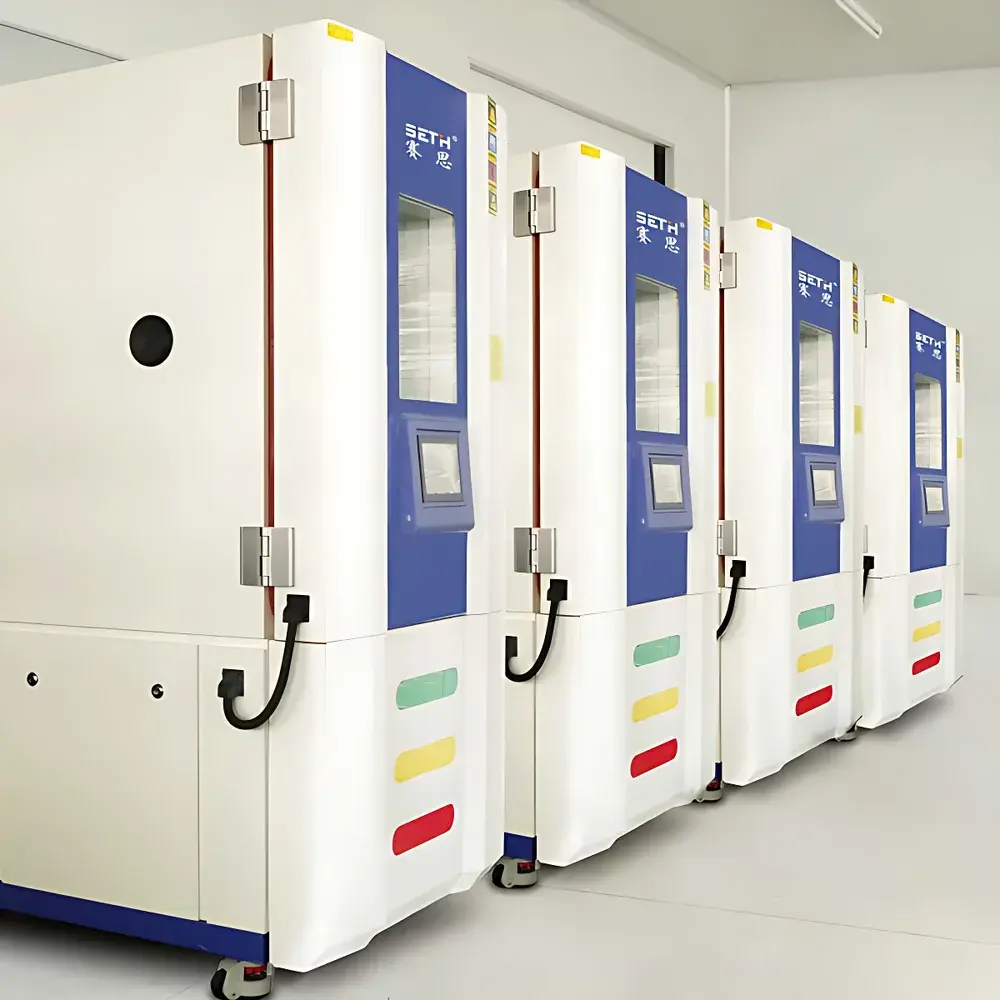
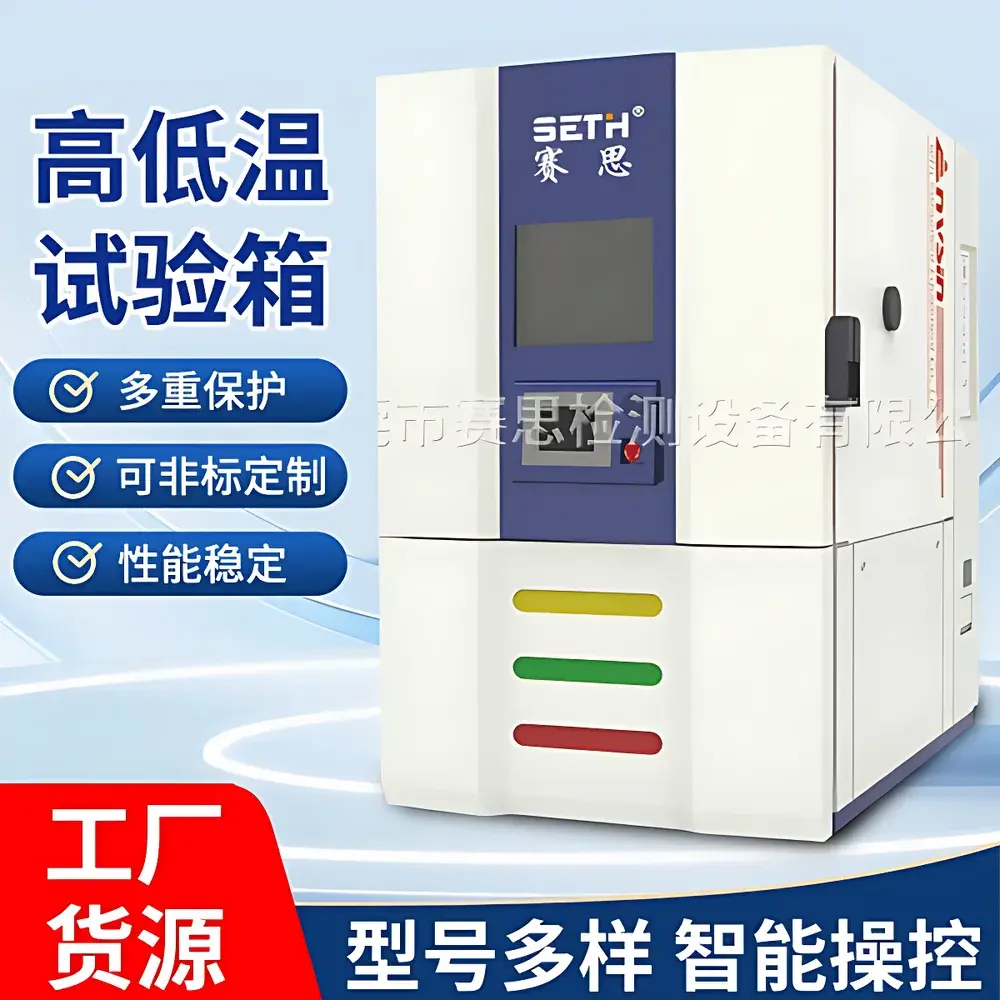
SETH SED-408CS Low Temperature Environmental Test Chamber
| Brand | SETH |
|---|---|
| Origin | Guangdong, China |
| Manufacturer Type | Direct Manufacturer |
| Model | SED-408CS |
| Temperature Range | −40 °C to +150 °C |
| Temperature Uniformity & Stability | ≤ ±2 °C |
| Cooling Rate | 1 °C/min |
| Heating Rate | 3 °C/min |
| Temperature Control Resolution | 0.1 °C |
Overview
The SETH SED-408CS Low Temperature Environmental Test Chamber is a rigorously engineered climatic test system designed for precise thermal stress evaluation of electronic components, automotive modules, aerospace hardware, and industrial materials under controlled sub-zero and elevated temperature conditions. Operating on the principle of forced-air convection with dual-stage refrigeration and independent PID-controlled heating, the chamber delivers stable, repeatable thermal profiles across its full operating range (−40 °C to +150 °C). Its architecture complies with fundamental thermodynamic requirements for environmental simulation—ensuring minimal thermal lag, low internal airflow turbulence, and high spatial uniformity—critical for validating product reliability per international environmental testing standards.
Key Features
- High-efficiency PWM (Pulse Width Modulation) refrigerant control system—originally developed in the U.S.—enables optimized compressor cycling and reduced energy consumption during prolonged low-temperature operation.
- Dual-layer insulation: 125 mm total thickness comprising rigid polyurethane foam (core) and non-asbestos mineral fiber (outer layer), minimizing heat transfer and condensation risk on external surfaces.
- Robust stainless-steel interior (SUS304, 1.5 mm, fully welded seams) ensures corrosion resistance, cleanability, and long-term dimensional stability—even under repeated thermal cycling.
- Integrated anti-condensation logic prevents moisture accumulation on test specimens during ramp-down or hold phases, supporting IEC 60068-2-1-compliant cold storage preconditioning.
- Comprehensive multi-level safety architecture: triple over-temperature protection (controller-based, mechanical backup, and independent sensor cutoff), refrigeration system safeguards (high/low pressure, oil loss, overload), heater short-circuit detection, fan motor thermal monitoring, and leakage current protection.
- Standard RS232 serial interface and USB data export port enable direct connection to host PCs for real-time logging, script-driven test sequencing, and audit-ready data capture.
Sample Compatibility & Compliance
The SED-408CS accommodates test specimens up to 60 cm (W) × 80 cm (D) × 85 cm (H), with a usable internal volume of 408 L. Its chamber design supports simultaneous thermal loading from active devices (e.g., powered ECUs, battery packs) without compromising temperature stability—validated under no-load and 150 W internal heat load conditions. The unit meets or exceeds core regulatory and industry benchmarks including GB/T 2423.1–2001 (cold testing), GB/T 2423.22–2001 (temperature change), IEC 60068-2-1:1990, and GJB 150.4 (military cold exposure). All control algorithms and alarm thresholds are traceable to factory calibration records aligned with ISO/IEC 17025 metrological practices.
Software & Data Management
Equipped with an imported programmable LCD controller featuring bilingual (English/Chinese) touch interface, the system supports up to 99 programmable segments with ramp-hold cycles, user-defined dwell times, and automatic restart after power interruption. Data logging resolution is 0.1 °C for both setpoint and actual chamber temperature. Exported CSV files include timestamped readings, alarm event logs, and controller operational status—structured for compatibility with LIMS platforms and FDA 21 CFR Part 11-compliant electronic record systems when paired with validated third-party software. Optional Ethernet or Wi-Fi modules support remote monitoring via secure HTTPS endpoints with role-based access control.
Applications
- Qualification testing of avionics enclosures per DO-160 Section 4 (low-temperature operational limits).
- Thermal shock pre-conditioning of lithium-ion battery cells prior to safety abuse testing (UN 38.3, IEC 62133).
- Material embrittlement assessment of polymer housings, gaskets, and cable insulation used in automotive under-hood applications.
- Validation of solder joint integrity in PCB assemblies subjected to extended −40 °C storage per IPC-J-STD-006.
- Stability studies of pharmaceutical packaging under ICH Q1A(R2) accelerated storage conditions.
FAQ
What is the maximum internal heat load the SED-408CS can stabilize at −40 °C?
At −40 °C setpoint, the chamber maintains ≤ ±2 °C uniformity with up to 150 W continuous internal heat dissipation—verified per GB/T 2423.1 Annex B.
Does the system support automated test sequence execution?
Yes—the built-in controller supports multi-step programs with up to 99 segments; optional PC software enables GMP-compliant batch reporting and digital signature workflows.
Is the chamber suitable for humidity-controlled testing?
No—the SED-408CS is a dry-temperature-only chamber. For combined temperature/humidity profiling, refer to SETH’s SHD series environmental chambers.
How is temperature uniformity verified during factory calibration?
Using nine calibrated PT100 sensors positioned per IEC 60068-3-5:2018, with measurements taken at center and eight symmetrical locations across three horizontal planes.
Can the unit be integrated into a central facility monitoring network?
Yes—via optional Modbus RTU (RS485) or Ethernet/IP protocols, enabling integration with BMS or MES platforms for centralized alarm aggregation and preventive maintenance scheduling.



