
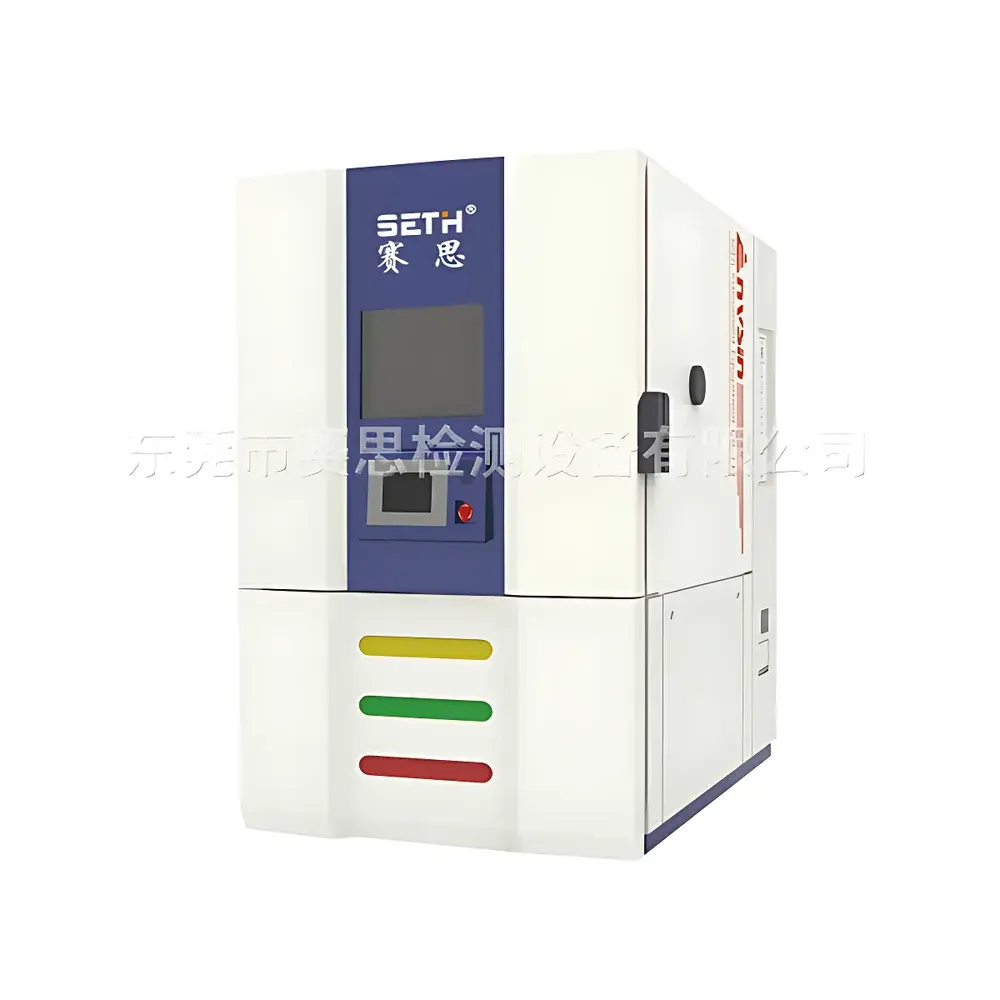
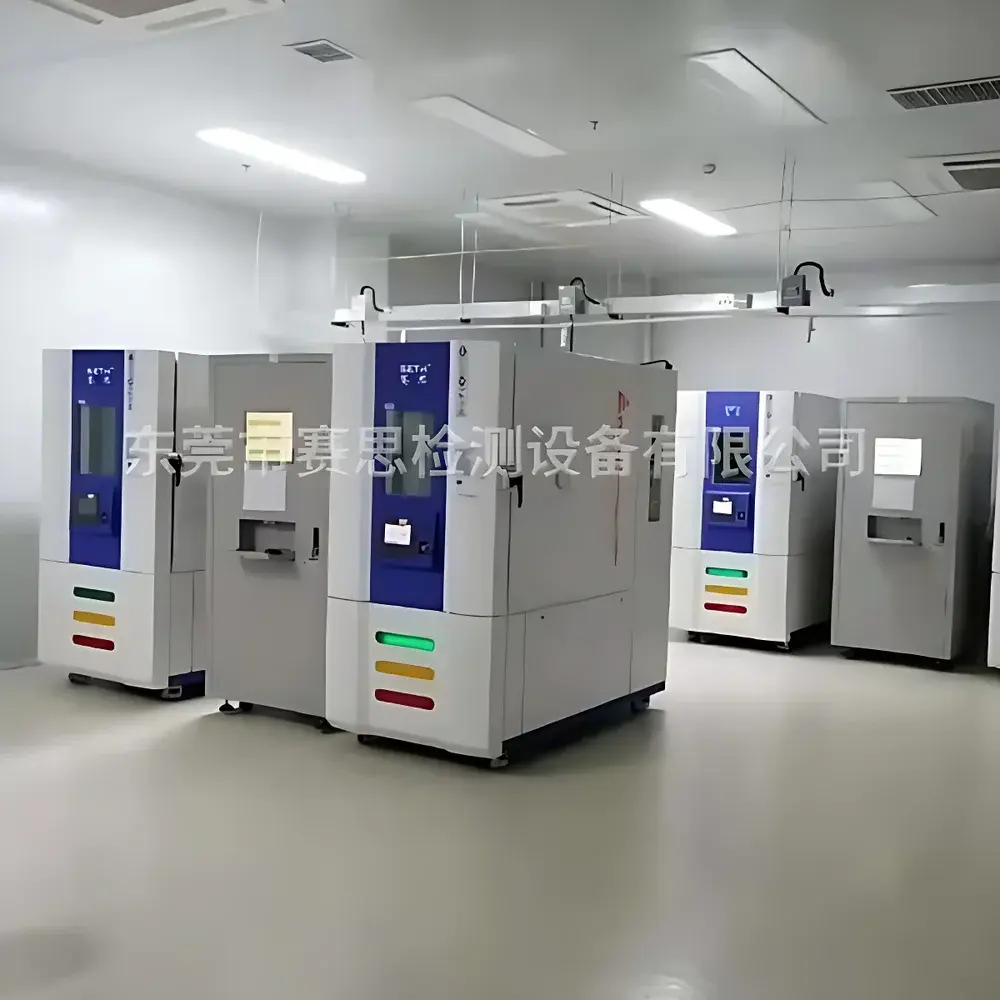
SETH SD-225CS Compact Low-Temperature Environmental Test Chamber
| Brand | SETH |
|---|---|
| Origin | Guangdong, China |
| Manufacturer Type | Direct Manufacturer |
| Product Origin | Domestic (China) |
| Model | SD-225CS |
| Temperature Range | −70 °C to +150 °C |
| Temperature Fluctuation/Uniformity | ±0.5 °C / ≤2 °C |
| Cooling Rate | 0.7–1 °C/min |
| Heating Rate | 1–3 °C/min |
| Set/Indication Accuracy | ±0.1 °C |
Overview
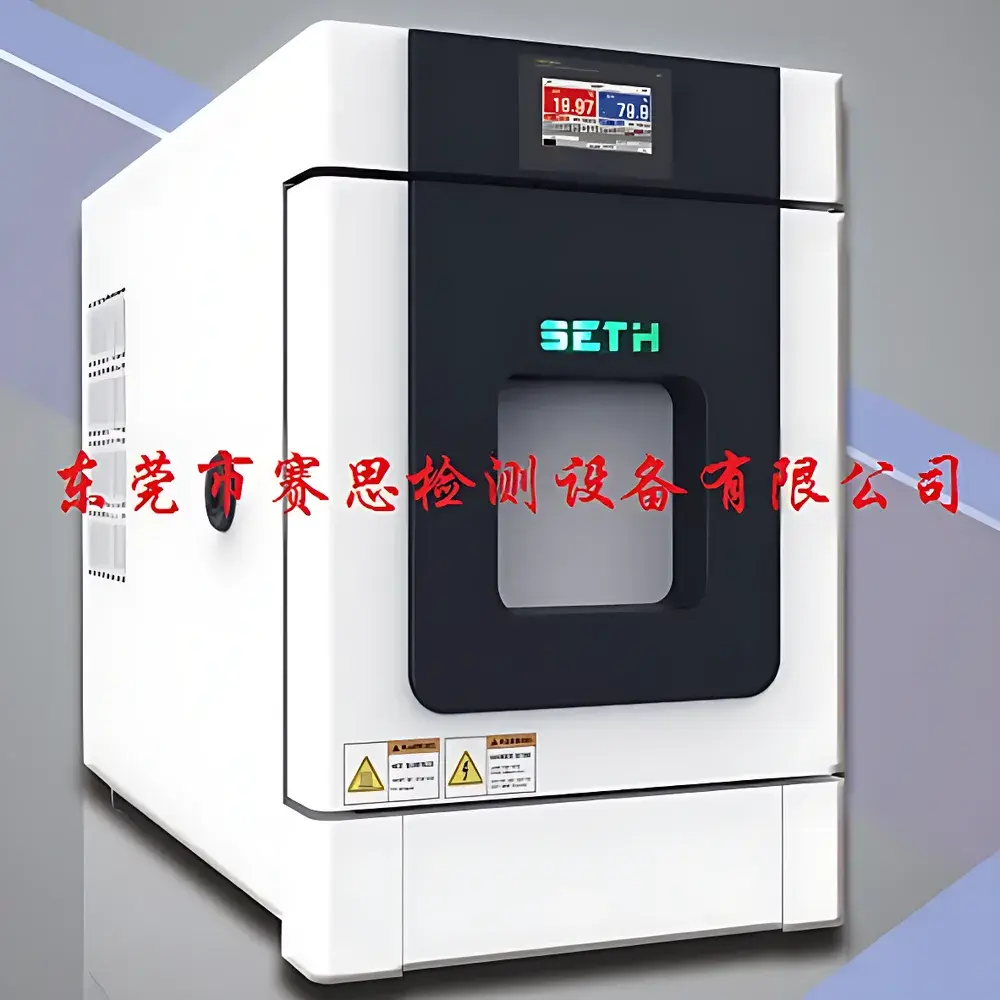
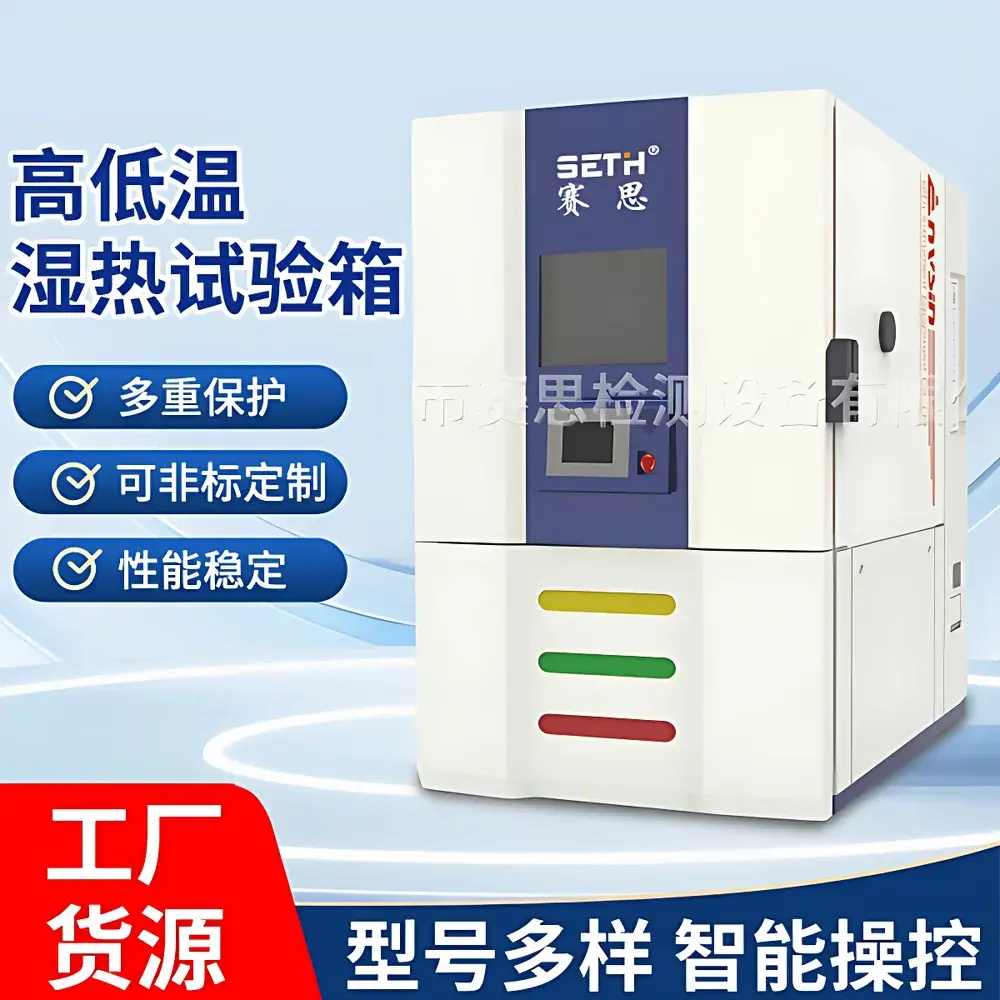
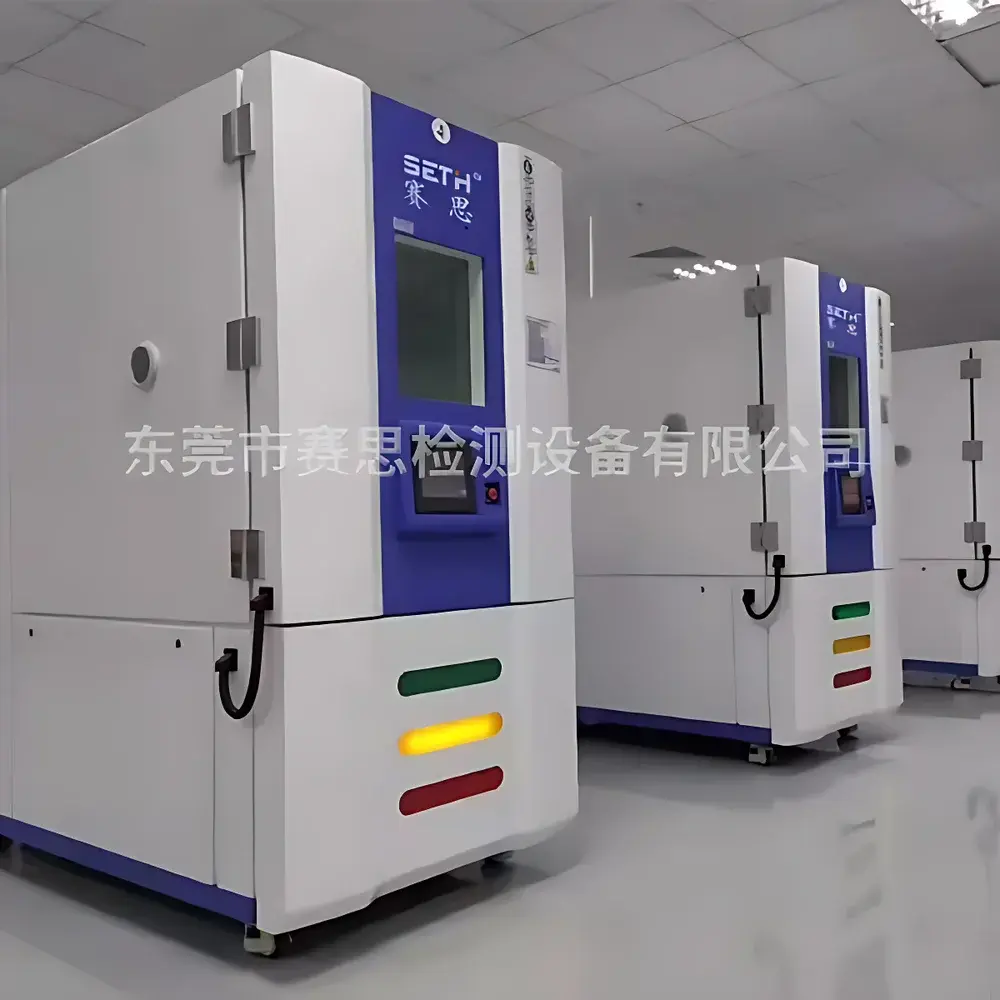
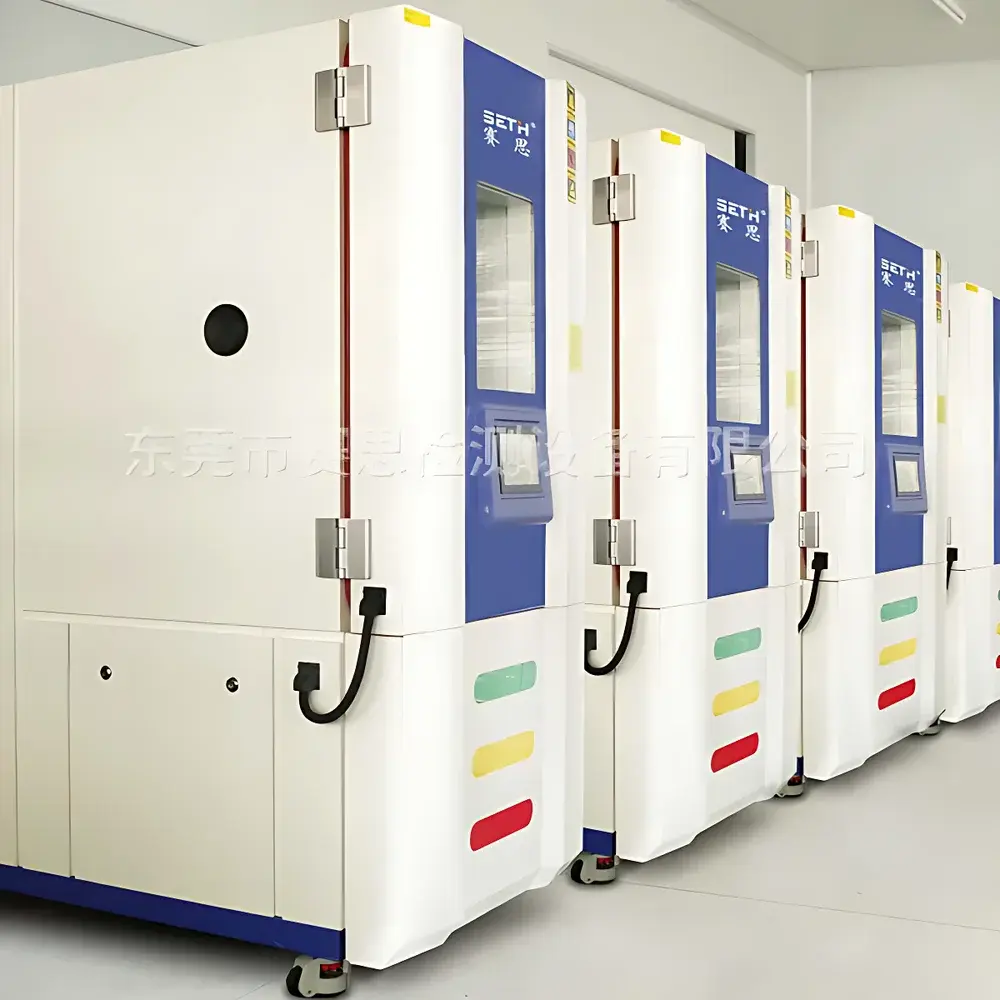
The SETH SD-225CS Compact Low-Temperature Environmental Test Chamber is a precision-engineered thermal stress testing system designed for controlled simulation of extreme low-temperature environments in accordance with international environmental testing standards. It operates on a forced-air convection principle, utilizing a dual-stage cascade refrigeration system with imported Tecumseh/Tecumseh-derived compressors and advanced PWM (Pulse Width Modulation) refrigerant control technology to achieve stable, energy-efficient operation across the full −70 °C to +150 °C range. The chamber’s thermally insulated structure—featuring high-density polyurethane foam (≥80 mm thickness) and SUS304 stainless steel inner walls—ensures minimal thermal leakage and exceptional temperature uniformity. Its compact 225 L internal volume (500 × 600 × 750 mm W×H×D) is optimized for laboratory-scale validation of electronic components, automotive ECUs, aerospace sensors, and polymer-based materials under defined cold-soak, thermal cycling, and storage condition protocols per IEC 60068-2-1, GB/T 2423.1, and MIL-STD-810G Method 502.4.
Key Features
- High-efficiency cascade refrigeration system with French-manufactured “Tecumseh” hermetic compressors and optimized refrigerant circuit design for reliable −70 °C operation.
- PWM-controlled expansion valve modulation enabling precise refrigerant flow regulation, reduced energy consumption, and improved long-term stability during extended low-temperature dwell cycles.
- Microprocessor-based programmable controller with 7-inch color LCD touchscreen interface supporting bilingual (English/Chinese) operation, real-time trend graphs, and up to 999 segments of multi-step temperature profiles.
- Integrated RS232 serial interface and USB data logging port for external PC connectivity, automated test report generation, and firmware updates.
- Comprehensive safety architecture including over-temperature cutoff, compressor high-pressure protection, motor overheat detection, phase failure monitoring, and door-open alarm with automatic power cut-off.
- Anti-condensation control logic prevents moisture accumulation on test specimens during ramp-to-low-temperature transitions—critical for evaluating hygroscopic materials and sealed electronic assemblies.
- Electrostatic discharge (ESD)-mitigated internal airflow design compliant with ANSI/ESD S20.20 requirements for static-sensitive device testing.
Sample Compatibility & Compliance
The SD-225CS accommodates standard test specimens up to 400 × 500 × 600 mm (W×H×D) with two adjustable stainless steel shelves included as standard. Its internal geometry supports simultaneous evaluation of multiple small-form-factor components—including PCBs, connectors, lithium-ion battery cells, optical lenses, and elastomeric seals—without compromising thermal homogeneity. The chamber meets mandatory compliance requirements for environmental qualification testing under GB 10589 (Technical Requirements for Low-Temperature Test Chambers), GB/T 2423.22 (Temperature Change Testing), GJB 150.4 (Military Standard Low-Temperature Testing), and IEC 60068-2-1 (Cold Testing). Optional calibration certificates traceable to NIM (National Institute of Metrology, China) are available upon request to support ISO/IEC 17025-accredited laboratory workflows.
Software & Data Management
The embedded controller supports full audit trail functionality with timestamped event logging (e.g., setpoint changes, alarm triggers, door openings) compliant with GLP and FDA 21 CFR Part 11 Annex 11 principles when used with validated third-party data acquisition software. USB export enables CSV-formatted temperature/time datasets for post-test statistical analysis in MATLAB, JMP, or Minitab. Optional Ethernet-enabled remote monitoring allows secure web-based access to real-time chamber status, historical trends, and alarm history via HTTPS—facilitating centralized lab management across multi-site R&D facilities. All firmware revisions maintain backward compatibility with existing test programs and user-defined profiles.
Applications
- Pre-qualification screening of automotive infotainment modules and ADAS sensors at −40 °C startup conditions.
- Accelerated aging studies of lithium-ion battery electrolytes and separator membranes under sub-zero thermal stress.
- Verification of cold-start performance for industrial control relays and solenoid valves in HVAC systems.
- Material brittleness assessment of thermoplastics (e.g., ABS, PC, POM) per ASTM D746 and ISO 974.
- Reliability validation of medical device enclosures and sterilization packaging under simulated transport cold-chain conditions (−25 °C to −30 °C).
- Environmental stress screening (ESS) of avionics hardware per RTCA DO-160 Section 4.2 (Low Temperature).
FAQ
What is the certified temperature uniformity specification at −70 °C?
At steady-state −70 °C, the chamber achieves ≤2 °C spatial uniformity across the working volume (per GB/T 2423.1-2001 Annex B), verified using nine calibrated PT100 sensors positioned per IEC 60068-3-5.
Does the SD-225CS support thermal shock testing?
No—the SD-225CS is configured for single-zone controlled-temperature exposure only. For thermal shock applications, SETH offers dedicated two-chamber (hot/cold) or single-chamber rapid-transition models (e.g., SD-TS series).
Is remote diagnostic capability included as standard?
Basic RS232 communication is standard; Ethernet-based remote diagnostics and cloud telemetry require optional firmware license and hardware add-on module.
What maintenance intervals are recommended for optimal long-term performance?
Compressor oil and refrigerant filter replacement every 24 months; condenser coil cleaning every 3 months in non-laminar cleanroom environments; annual calibration verification of PT100 sensor array.
Can the chamber be integrated into an automated test system using LabVIEW or Python?
Yes—full SCPI-compatible command set is documented in the Programmer’s Manual; TCP/IP socket interface and Modbus RTU over RS232 enable seamless integration with NI LabVIEW, Keysight VEE, or custom Python scripts using PySerial or PyModbus libraries.



