
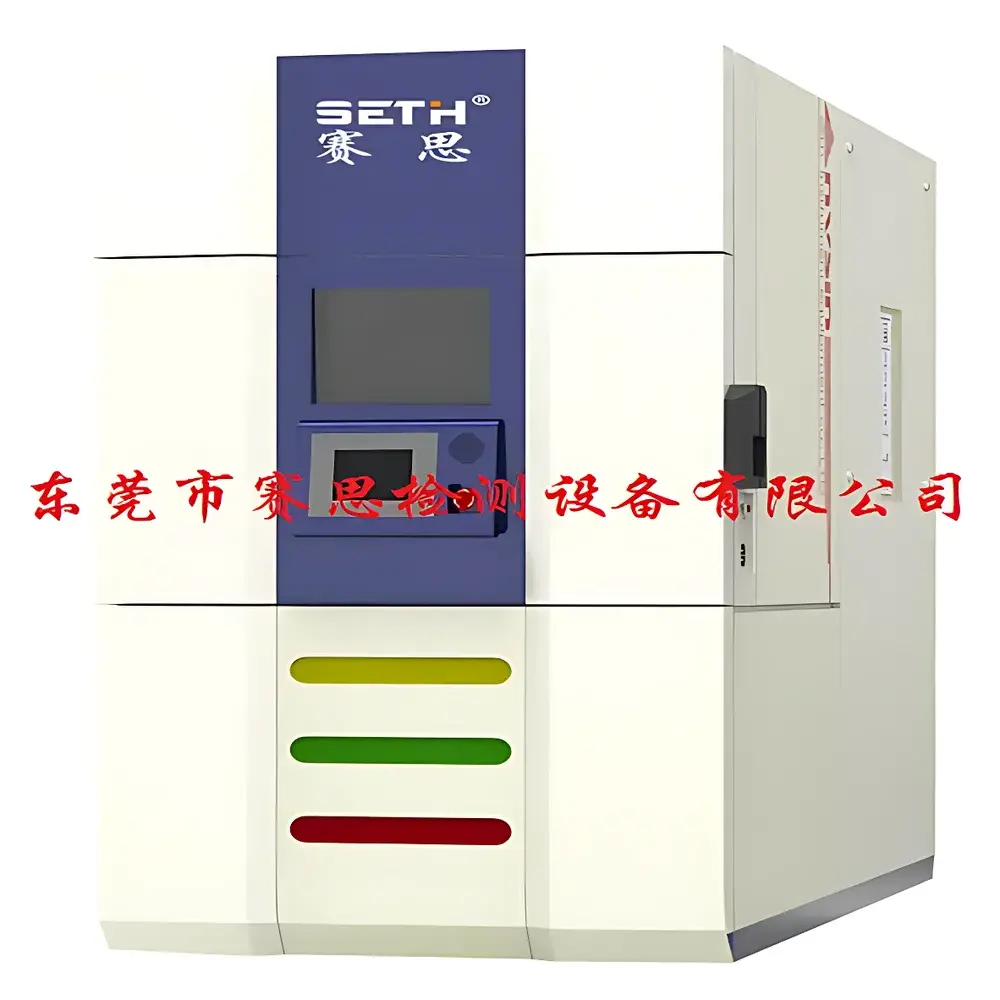
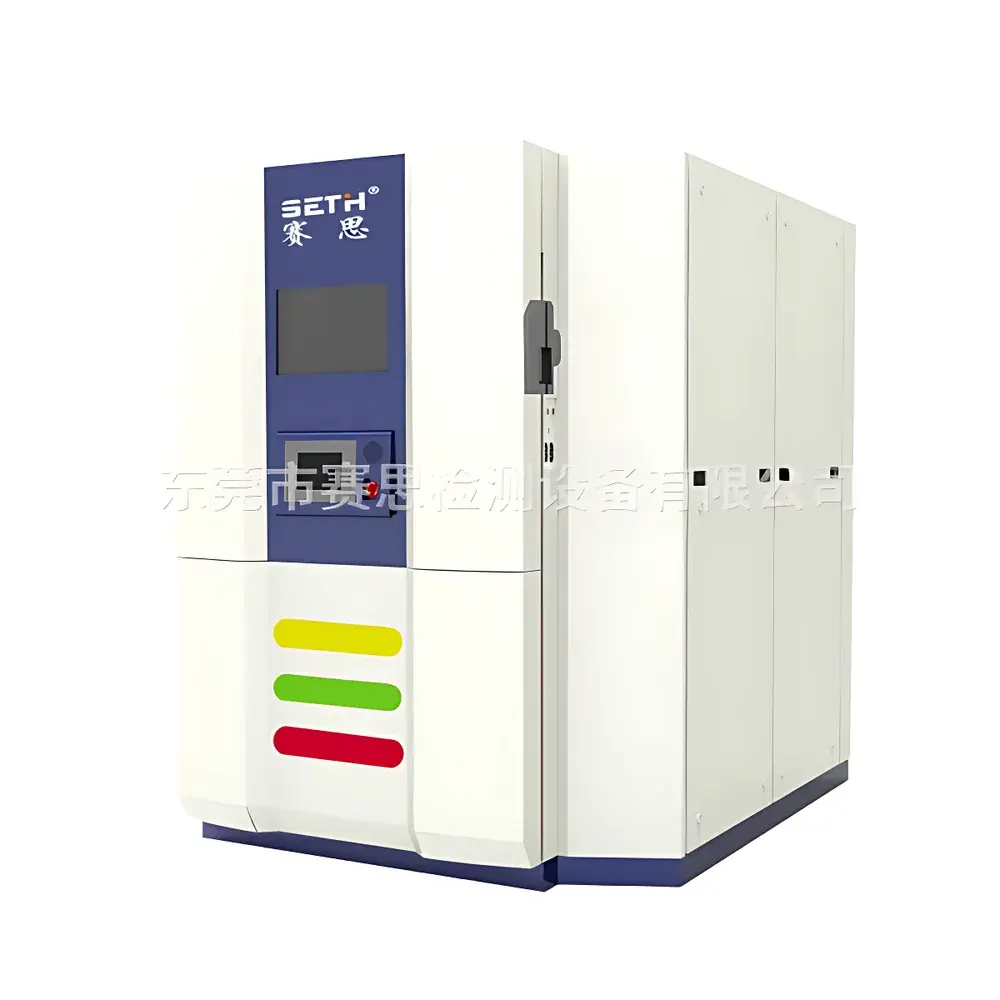
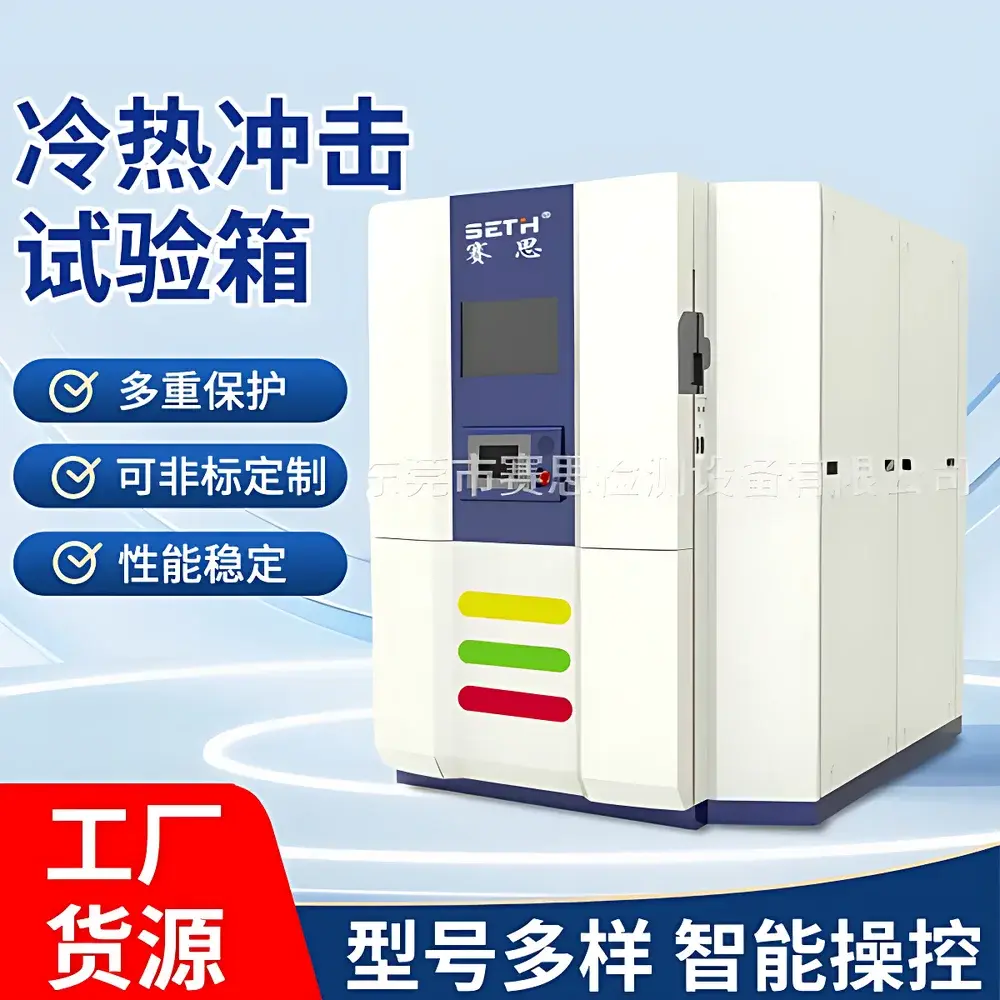
SETH SET-B31 Three-Zone Thermal Shock Test Chamber
| Brand | SETH |
|---|---|
| Origin | Guangdong, China |
| Manufacturer Type | Direct Manufacturer |
| Model | SET-B31 |
| High-Temperature Range | +150 °C |
| Low-Temperature Range | −65 °C |
| Thermal Shock Range | −65 °C to +150 °C |
| Temperature Stability | ±2 °C |
| Heating Rate | 30 °C/min |
| Cooling Rate | 30 °C/min |
Overview
The SETH SET-B31 Three-Zone Thermal Shock Test Chamber is an engineered environmental test system designed to evaluate the reliability and structural integrity of materials and electronic components under rapid, repetitive transitions between extreme high and low temperatures. Operating on a three-chamber architecture—comprising independent high-temperature, low-temperature, and test zones—the SET-B31 eliminates thermal inertia associated with single- or dual-zone systems, enabling precise, repeatable thermal shock profiles without subjecting specimens to mechanical movement or airflow-induced stress. The chamber employs forced-air thermal transfer via high-speed pneumatic valves (switching completed in ≤10 seconds), delivering temperature recovery within ≤5 minutes per transition—critical for compliance with accelerated life testing protocols. Its core measurement principle relies on controlled thermal displacement induced by rapid expansion and contraction, allowing detection of latent defects such as interfacial delamination, solder joint fatigue, seal failure, or microcrack propagation in metals, polymers, elastomers, PCBs, and aerospace composites.
Key Features
- Three-zone segregated design (pre-heating chamber, pre-cooling chamber, and test chamber) ensures zero specimen motion during thermal cycling—eliminating vibration artifacts and enabling true static-stress evaluation.
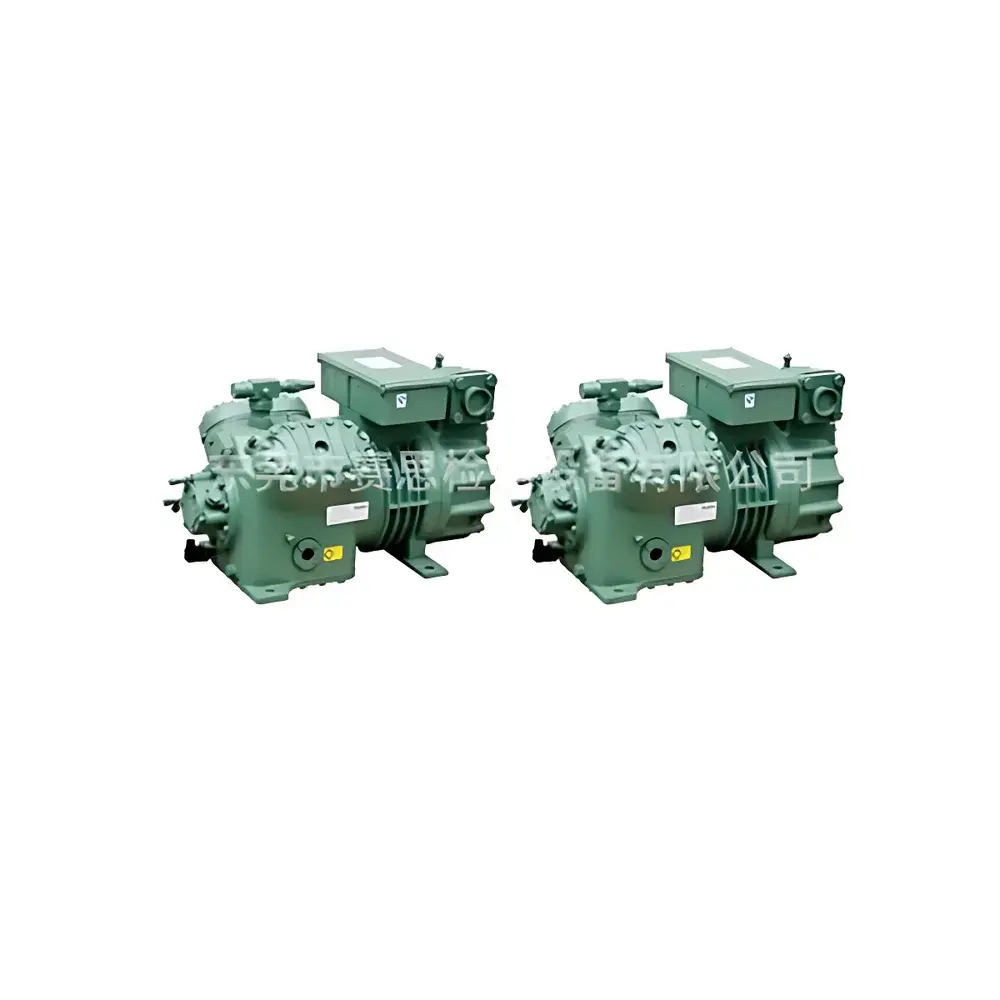
- Servo-controlled refrigerant flow regulation reduces energy consumption by >40% versus conventional fixed-orifice systems, validated per ISO 50001-aligned efficiency benchmarks.
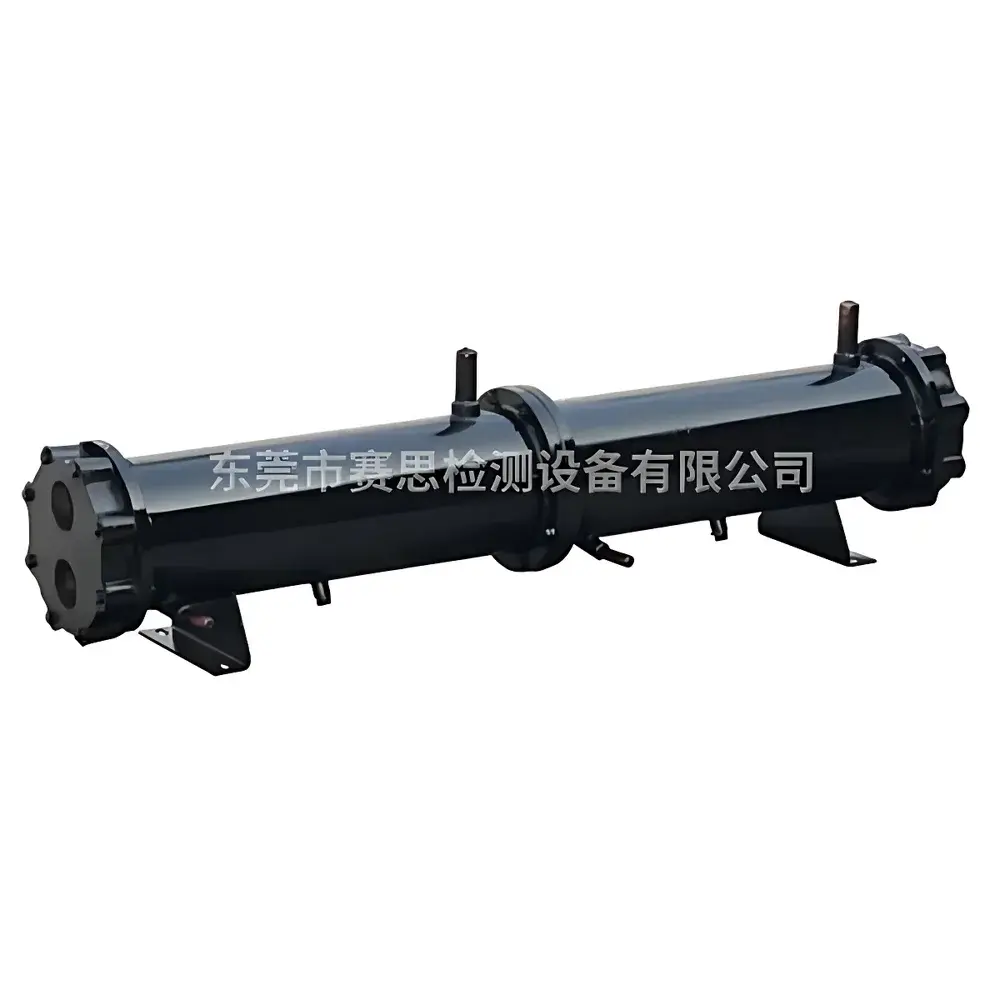
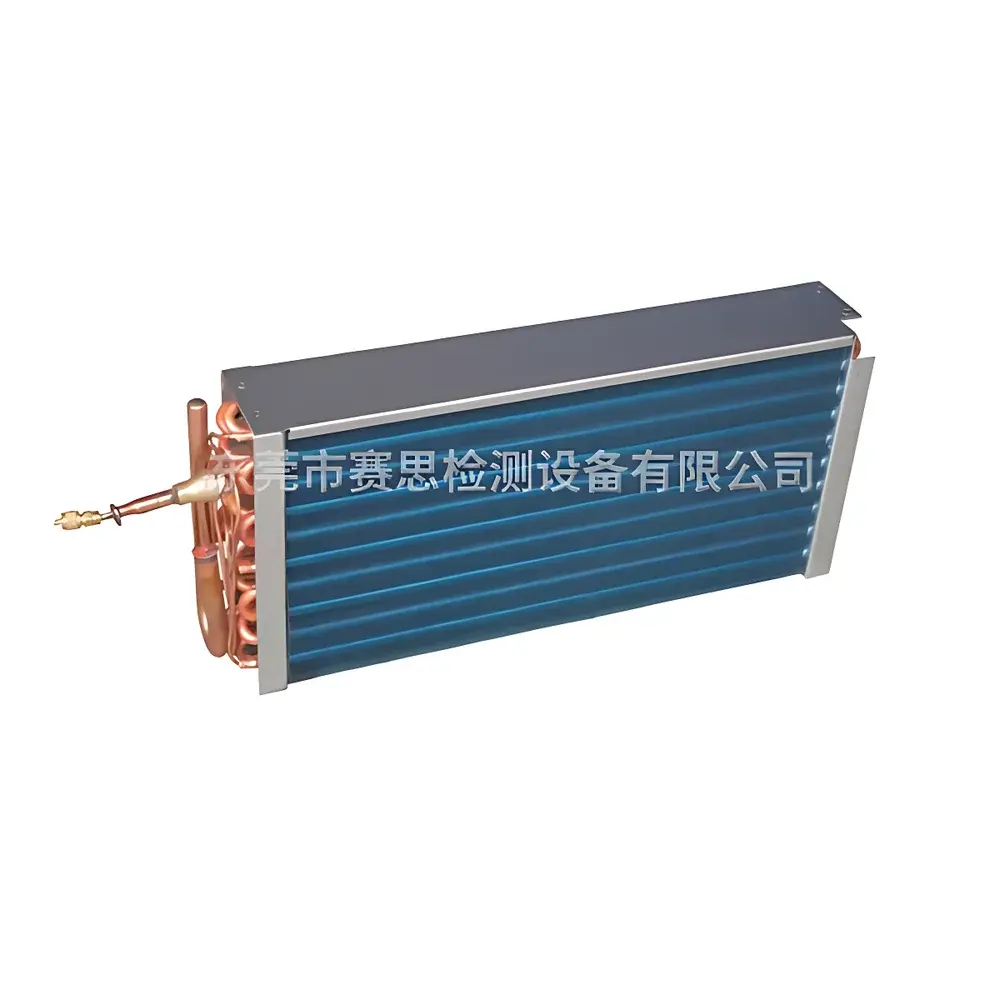
- Aluminum finned evaporator assembly minimizes thermal mass and shortens cold-energy storage time, improving cycle repeatability and reducing standby power draw.
- High-speed air damper actuation (≤10 s switching time) and optimized duct geometry achieve ≤5 min temperature stabilization post-transfer—meeting stringent requirements of MIL-STD-202G Method 107 and IEC 60068-2-14.
- Integrated LED-backlit 7-inch color touchscreen HMI with PLC-based control logic supports multi-language UI (English/Chinese), real-time curve plotting, and PID + PWM + SSR balanced temperature regulation.
- Automated defrost cycle every 72 hours (duration ≤2 h), triggered only when condensation thresholds exceed preset dew-point limits—preserving test continuity and minimizing operator intervention.
- Fail-safe protection suite includes over-temperature cutoff, compressor high-pressure shutdown, phase-loss detection, water-flow monitoring (for water-cooled condenser variants), and ground-fault interruption—all logged with timestamped event records.
Sample Compatibility & Compliance
The SET-B31 accommodates specimens up to 50 × 50 × 40 cm (W×D×H), with two stainless-steel sample trays (SUS304) and one 50 mm diameter cable port for in-situ electrical monitoring. Its internal chamber lining uses mirror-finish SUS304 stainless steel; exterior construction features CNC-formed galvanized steel with epoxy-polyester powder coating for corrosion resistance. The system complies with international test standards including GB/T 2423.22–2012, IEC 60068-2-14:2016, EIA-364-32B, and MIL-STD-202G Method 107. Optional calibration certification per ISO/IEC 17025 is available through accredited third-party laboratories. All firmware and controller logs support audit-ready traceability for GLP/GMP environments, with configurable data retention policies and optional 21 CFR Part 11-compliant electronic signature modules.
Software & Data Management
Equipped with embedded RS-232 and USB 2.0 interfaces, the SET-B31 enables direct connection to host PCs running Windows-based test sequencing software (compatible with LabVIEW™ drivers and CSV export). Real-time temperature profiles—including individual chamber readings from three PT100 Class A RTD sensors—are continuously recorded at user-defined intervals (1–60 s resolution). Historical datasets are stored onboard (≥16 GB internal flash) and externally via USB mass storage. Alarm events trigger automatic screenshot capture and contextual diagnostic overlays (e.g., “Low refrigerant pressure – Compressor Stage 2 disabled”). Remote monitoring is supported via Modbus TCP/IP gateway integration for enterprise-level MES/SCADA interoperability.
Applications
- Qualification testing of automotive ECUs, battery modules, and ADAS sensors per AEC-Q200 and ISO 16750-4.
- Reliability screening of semiconductor packages (QFN, BGA, CSP) prior to burn-in and HAST validation.
- Material compatibility assessment for cryogenic seals, thermal interface materials (TIMs), and conformal coatings.
- Accelerated aging studies of polymer encapsulants, optical adhesives, and flexible printed circuits.
- Process validation for reflow soldering profile development and lead-free alloy qualification.
- Failure analysis root-cause correlation using cross-sectional SEM/EDS after defined shock cycles.
FAQ
What is the difference between two-zone and three-zone thermal shock configurations?
A three-zone system isolates thermal energy storage from the test zone, eliminating specimen movement and ensuring faster, more stable transitions. Two-zone designs require physical transfer of samples—introducing mechanical stress and longer recovery times.
Does the SET-B31 support programmable dwell times and ramp rates?
Yes—users can define independent dwell durations (1–9999 minutes), transition modes (high→low, low→high, or alternating), and enforce rate limits (0.1–30 °C/min) per phase via the touch HMI or PC software.
Is water cooling mandatory for operation?
Water cooling is required for continuous operation above 8 hr/day or ambient temperatures exceeding 30 °C. Air-cooled variants are available for intermittent use in climate-controlled labs.
How is temperature uniformity verified across the test zone?
Uniformity is validated per IEC 60068-3-5 using nine calibrated PT100 probes arranged in a 3×3 grid at mid-height. Typical deviation is ≤±1.5 °C at steady state (−65 °C/+150 °C), documented in factory acceptance test reports.
Can the system be integrated into an automated test cell?
Yes—digital I/O ports (8 in / 8 out), Ethernet/IP support, and Modbus RTU/TCP protocols enable seamless coordination with robotic handlers, power supplies, and parametric testers.
Related Products



