
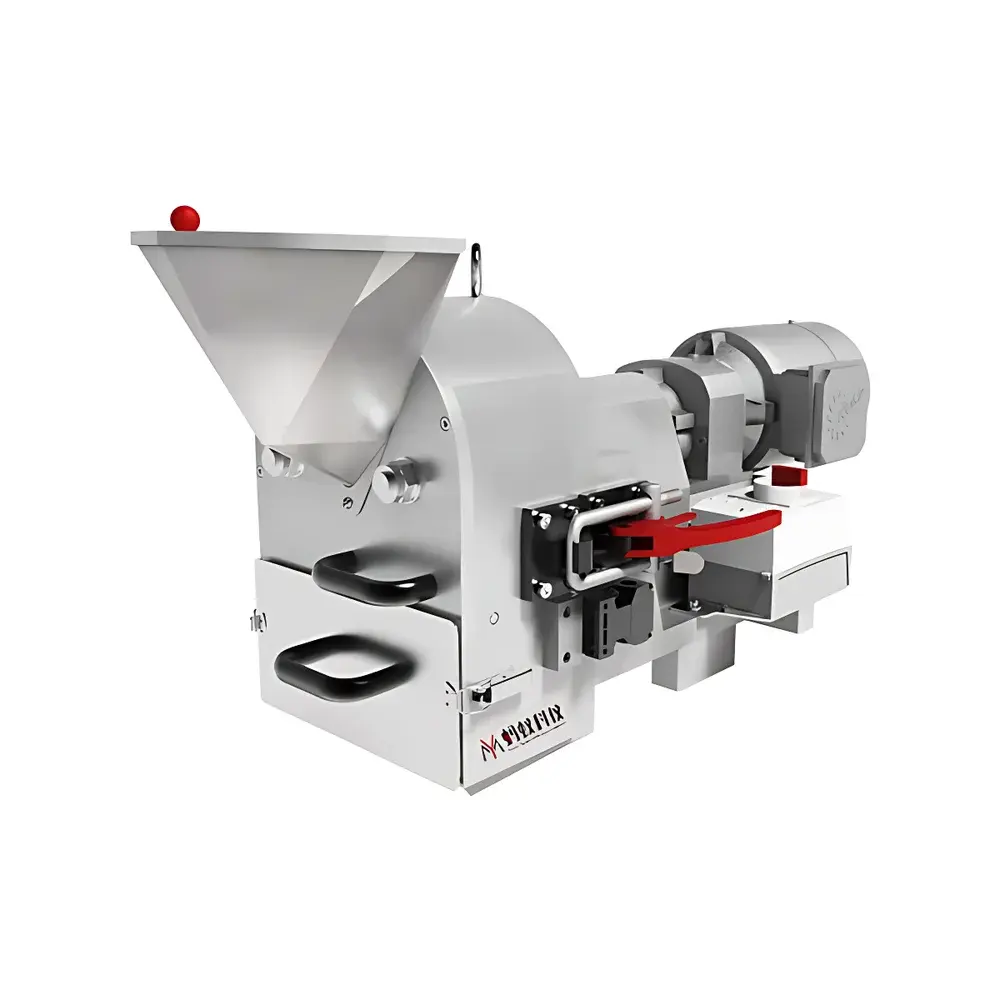
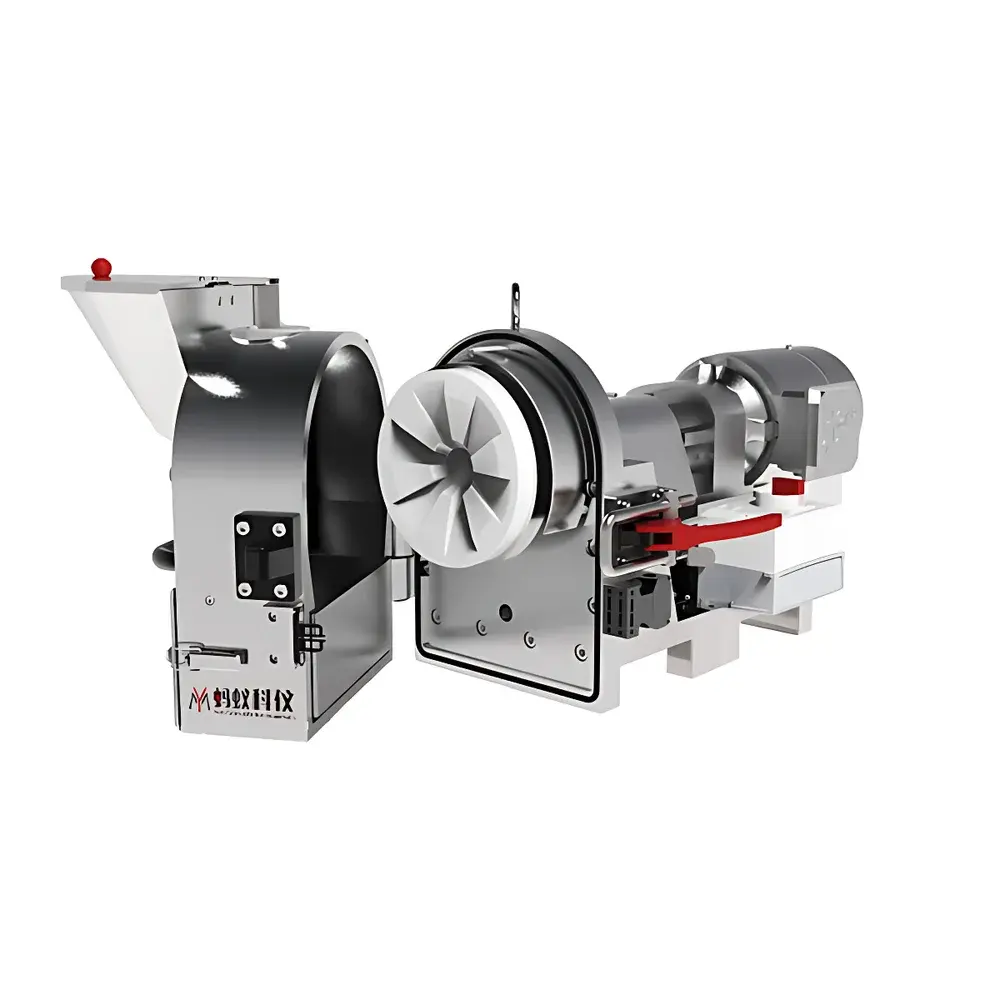
Ants Scientific Instruments AM800 Disc Grinder
| Brand | Ants Scientific Instruments |
|---|---|
| Origin | Beijing, China |
| Model | AM800 |
| Instrument Type | Disc Grinder |
| Sample Type | Hard to brittle solids |
| Max Feed Size | ≤20 mm |
| Output Particle Size (D90) | <100 µm |
| Grinding Chamber Capacity | 3 L |
| Batch Processing Weight | up to 150 kg/h |
| Disc Gap Adjustment Range | 0.1–12 mm (0.1 mm increments) |
| Rotational Speed | 470 rpm (customizable) |
| Disc Material Options | Tungsten carbide, hardened steel, ceramic, stainless steel |
| Dust Extraction Port | Yes |
| Safety Interlock | Integrated door-activated lock |
| Compliance | Designed for GLP-compliant laboratories |
Overview
The Ants Scientific Instruments AM800 Disc Grinder is an industrial-grade, vertically oriented disc grinding system engineered for high-reproducibility size reduction of hard and brittle solid materials. It operates on the principle of controlled compression and shear between two precisely aligned, counter-rotating (or one rotating/one fixed) disc surfaces—utilizing progressive tooth geometry to achieve sequential pre-crushing and fine grinding in a single pass. Unlike planetary ball mills or jaw crushers, the AM800 delivers deterministic particle size distribution through mechanical gap control rather than stochastic impact energy. Its architecture supports both batch and continuous feed modes, making it suitable for preparatory grinding prior to XRF, XRD, SEM-EDS, or laser diffraction analysis where sample homogeneity and minimal contamination are critical.
Key Features
- Precision-adjustable disc gap (0.1–12 mm in 0.1 mm increments) ensures repeatable D90 output across multiple batches, essential for method validation under ISO/IEC 17025 or ASTM E11 standards.
- Robust dual-disc configuration with optional tungsten carbide, ceramic, hardened steel, or stainless-steel grinding surfaces—selected based on sample abrasivity and elemental contamination requirements.
- Integrated safety interlock system automatically deactivates drive motor when the grinding chamber door is opened, complying with IEC 61000-6-2 and EN 60204-1 machinery safety directives.
- Dust extraction interface (standard 100 mm port) enables direct coupling to central vacuum systems or HEPA-filtered local exhaust ventilation—critical for occupational exposure control (OSHA PEL & ACGIH TLV compliance).
- Open-access grinding chamber design allows full visual inspection and tool-free cleaning, minimizing cross-contamination risk during multi-sample workflows.
- Stable 470 rpm operation (custom speed variants available) balances throughput and thermal load—preventing polymorphic transitions or organic degradation in temperature-sensitive matrices.
Sample Compatibility & Compliance
The AM800 accepts feed particles up to 20 mm in maximum dimension and consistently reduces them to a D90 < 100 µm without requiring pre-sieving or secondary milling. Verified applications include sintered ceramics, fused quartz, metallurgical slags, granitic aggregates, dried clay soils, coal briquettes, and pharmaceutical excipients. All wetted components meet USP Class VI biocompatibility criteria when configured with stainless-steel or ceramic discs. The system supports audit-ready documentation per FDA 21 CFR Part 11 when integrated with compliant LIMS or ELN platforms—particularly for regulated environmental testing (EPA Method 6010D, TCLP preparation) and construction material certification (ASTM C110, C311).
Software & Data Management
While the AM800 operates via analog/manual controls (gap setting dial, mechanical start/stop), its operational parameters—including disc gap position, runtime, and batch weight—are designed to be logged externally in laboratory information management systems (LIMS). Optional digital retrofit kits provide RS-485 Modbus RTU output for integration into SCADA environments or automated QA/QC dashboards. All parameter settings are traceable via physical calibration logs maintained per ISO/IEC 17025 Clause 7.7, supporting GMP Annex 11 and GLP Principle 5 requirements for equipment qualification (IQ/OQ/PQ).
Applications
- Ceramic & glass R&D: Homogenization of glaze frits, refractory mixes, and optical glass cullet prior to XRF fusion bead preparation.
- Geochemical analysis: Preparation of certified reference materials (CRMs) such as NIST SRM 2710a or GBW07401 for ICP-MS quantification.
- Construction materials testing: Crushing of concrete cores, asphalt aggregates, and gypsum board fragments to <100 µm for sulfate content determination (ASTM C114).
- Environmental monitoring: Dry grinding of archived soil samples for heavy metal leaching studies (TCLP, SPLP) without moisture-induced aggregation artifacts.
- Metallurgical process control: Size reduction of coke, blast furnace slag, and ferroalloy residues for phase identification by XRD and automated mineralogy (QEMSCAN®).
FAQ
What is the maximum allowable feed size for the AM800?
The AM800 accepts feed particles up to 20 mm in largest dimension, provided they are non-fibrous and free of embedded metals that could damage disc surfaces.
Can the AM800 be used for cryogenic grinding?
No—the system is not rated for sub-ambient operation; thermal contraction may compromise disc alignment and gap repeatability.
Is the 100 µm output specification guaranteed for all materials?
D90 < 100 µm is typical for brittle, homogeneous samples (e.g., quartz, limestone); ductile or laminar materials (e.g., aluminum chips, mica) may require secondary processing.
How often must the grinding discs be replaced?
Service life varies by material hardness and throughput; tungsten carbide discs typically exceed 500 hours of cumulative operation under standard conditions.
Does the AM800 support 21 CFR Part 11 compliance?
The base unit does not include electronic audit trails, but its mechanical parameters are fully documentable—and digital add-ons enable electronic signature and change-control functionality.



