
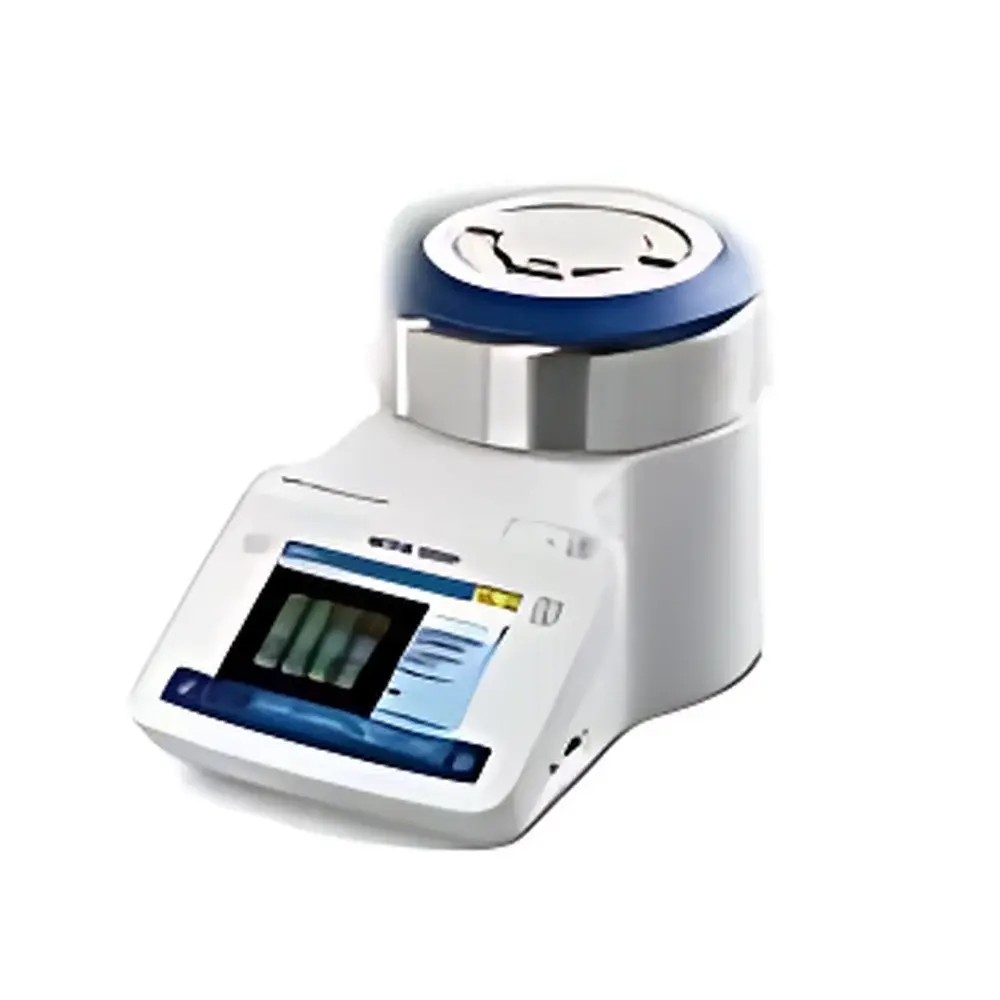
METTLER TOLEDO MP55/80 Automated Melting Point Apparatus
| Brand | METTLER TOLEDO |
|---|---|
| Origin | Switzerland |
| Model | MP55/80 |
| Temperature Range | Ambient to 350 °C |
| Heating Rate | 4 °C/min (programmable) |
| Sample Capacity | 6 positions |
| Measurement Modes | Melting Point (MP), Melting Range (MR), Sliding Melting Point (SMP), Boiling Point (BP), Cloud Point (CP) |
| Video Recording Duration | 60 minutes |
| Maximum Results Storage | 50 entries |
| Compliance | USP <741>, Ph. Eur. 2.2.14, JP 17, ASTM D1565, ISO 4625 |
Overview
The METTLER TOLEDO MP55/80 Automated Melting Point Apparatus is a precision thermal analysis instrument engineered for reliable, reproducible determination of solid-phase transition temperatures in pharmaceutical, chemical, and materials science laboratories. Based on digital video microscopy coupled with controlled heating via Peltier elements, the system captures real-time optical changes during thermal transitions—enabling accurate detection of onset, clear point, and endpoint of melting, as well as related phenomena including boiling, clouding, and sliding behavior. Unlike traditional capillary-based analog instruments, the MP55/80 integrates high-resolution imaging, programmable heating profiles, and automated image analysis algorithms to eliminate subjective visual interpretation. Its dual-platform architecture supports both pharmacopoeial compliance workflows and thermodynamic research applications, making it suitable for QC release testing, stability studies, polymorph screening, and regulatory submissions.
Key Features
- One Click® operation: Intuitive touchscreen interface enables initiation of MP, MR, SMP, BP, or CP measurements with a single tap—minimizing training time and operator variability.
- Simultaneous 6-sample analysis: Independent temperature control per sample position ensures parallel processing without cross-contamination or thermal interference.
- Full 60-minute HD video recording: Captures complete thermal events at 30 fps; stored videos are timestamped and metadata-tagged for audit-ready traceability.
- Programmable heating rate: Fixed or ramped heating up to 4 °C/min, with optional isothermal holds for stepwise characterization of complex phase transitions.
- Ergonomic design: Tilt-adjustable display, integrated LED illumination, and optimized sample loading geometry reduce physical strain during high-throughput operation.
- Robust mechanical architecture: Precision-machined aluminum housing with thermal shielding minimizes ambient drift and ensures long-term calibration stability.
Sample Compatibility & Compliance
The MP55/80 accommodates standard 1-mm OD glass capillaries (length ≤ 100 mm) and supports crystalline solids, semi-crystalline polymers, waxes, fats, and low-molecular-weight organic compounds. It is validated for use with pharmacopoeial reference standards (e.g., USP reference substances) and conforms to critical regulatory requirements including USP , European Pharmacopoeia 2.2.14, Japanese Pharmacopoeia 17, ASTM D1565 (for hydrocarbons), and ISO 4625 (for industrial chemicals). All measurement data—including raw video, thermal curves, and annotated frames—are stored with full electronic signatures and audit trail functionality compliant with FDA 21 CFR Part 11 and EU Annex 11 when operated within a validated LIMS or ELN environment.
Software & Data Management
The instrument runs METTLER TOLEDO’s dedicated *Mettler Toledo LabX™ Melting Point Software*, providing secure user management (role-based access control), automated report generation (PDF/CSV), and seamless integration with enterprise systems via OPC UA or REST API. Each result includes embedded metadata: operator ID, date/time stamp, instrument serial number, calibration status, environmental conditions (optional external sensor input), and video frame index markers for precise event localization. Data encryption at rest and in transit meets ISO/IEC 27001-aligned security protocols. Up to 50 measurement records—including all associated video clips and thermal profiles—can be retained onboard; external storage via USB or network share extends archival capacity indefinitely.
Applications
- Pharmaceutical QC: Release testing of active pharmaceutical ingredients (APIs) and excipients per ICH Q5A and Q6A guidelines.
- Polymorph identification: Discrimination between crystalline forms based on distinct melting onset and range characteristics.
- Stability-indicating assays: Monitoring degradation-induced shifts in melting behavior under accelerated storage conditions.
- Food & cosmetics R&D: Characterization of fat bloom, wax crystallization, and emulsion destabilization via cloud point analysis.
- Academic research: Teaching thermodynamic principles (e.g., eutectic behavior, solid solution formation) using real-time visualization.
- Contract manufacturing organizations (CMOs): Supporting GMP-compliant documentation packages for regulatory filings (e.g., DMF, CMC sections).
FAQ
Does the MP55/80 support GLP/GMP-compliant electronic records?
Yes—when configured with LabX software and appropriate IT infrastructure, it provides full 21 CFR Part 11 and Annex 11 compliance, including electronic signatures, audit trails, and data integrity controls.
Can I export raw video files for third-party analysis?
Yes—recorded videos are saved in MP4 format with embedded timecode and can be exported via USB or network transfer for offline review or integration into custom analytics pipelines.
Is calibration verification traceable to national standards?
Calibration is performed using NIST-traceable reference materials (e.g., indium, tin, bismuth); certificate of calibration includes uncertainty budget and traceability statement.
What maintenance is required for long-term accuracy?
Annual performance qualification (PQ) is recommended; routine cleaning of optical path and capillary holder, plus biannual verification with certified standards, ensures continued metrological reliability.
How does the system handle samples with broad or overlapping melting ranges?
The algorithm applies dynamic threshold detection across multiple image parameters (transparency, edge sharpness, particle mobility), enabling robust identification of onset even in samples exhibiting gradual phase transitions or partial decomposition.



