
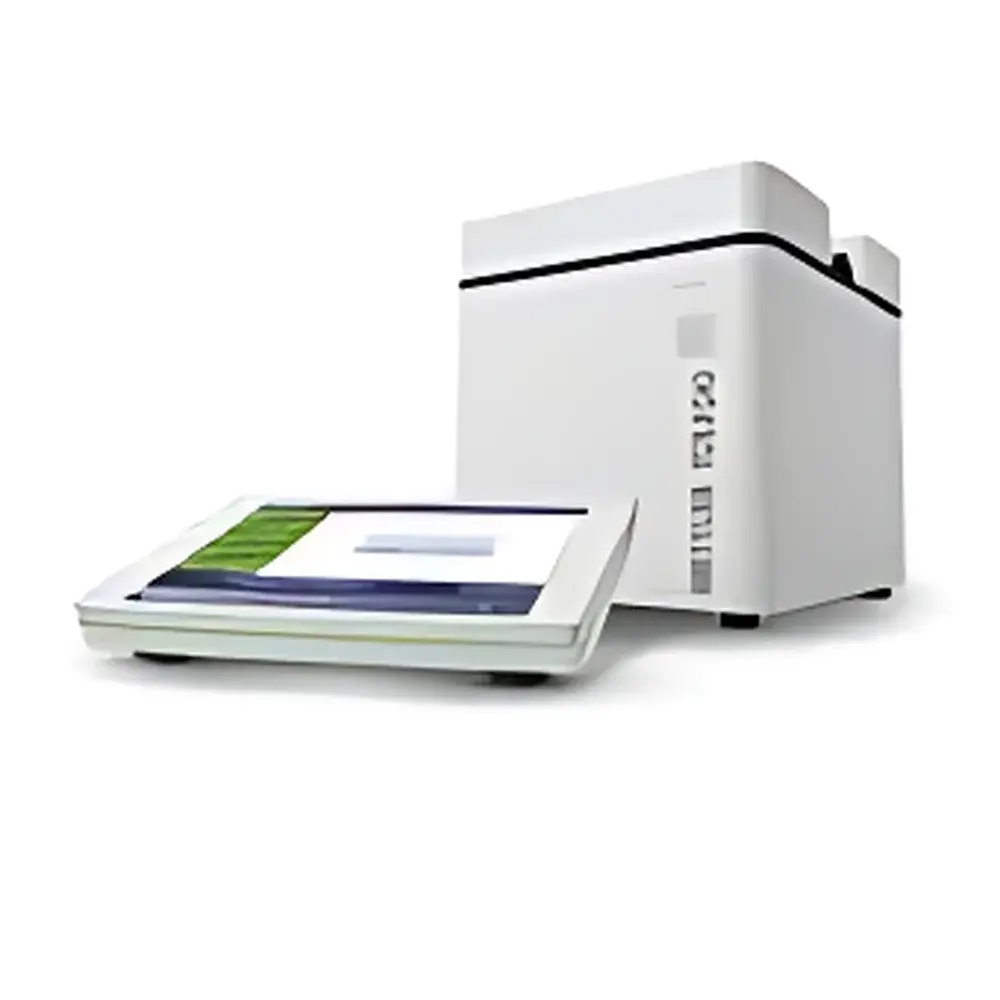
METTLER TOLEDO UV5Bio and UV5Nano FastTrack™ UV-Vis Spectrophotometers
| Brand | METTLER TOLEDO |
|---|---|
| Origin | Switzerland |
| Model | UV5Bio / UV5Nano |
| Optical Design | Dual-wavelength |
| Detector | CCD array |
| Wavelength Range | 190–1100 nm |
| Wavelength Accuracy | ±1.0 nm |
| Stray Light (at 198 nm, KCl) | >2.0 A |
| Scan Time (full spectrum) | 1 s |
| Automation | Automatic wavelength selection, integrated cuvette changer, FillPalMini peristaltic pump |
| Compliance | ASTM E275, ISO 6425, USP <857>, FDA 21 CFR Part 11 ready (via LabX®) |
Overview
The METTLER TOLEDO UV5Bio and UV5Nano are high-performance, life science–optimized UV-Vis spectrophotometers engineered for precision, speed, and operational robustness in demanding laboratory environments. Based on dual-beam optical architecture with pulsed xenon lamp excitation and a high-sensitivity CCD array detector, these instruments deliver rapid spectral acquisition (as fast as 1 second per full 190–1100 nm scan) without thermal drift or lamp warm-up delays. The core innovation—FastTrack™ technology—integrates intelligent optical path control, real-time signal processing, and hardware-level synchronization to ensure measurement repeatability across variable sample volumes and matrix conditions. Unlike conventional single-beam systems requiring frequent recalibration, the UV5 series employs stable solid-state optics and temperature-compensated electronics to maintain long-term photometric integrity. Both models comply with key international standards for analytical instrumentation, including ASTM E275 (spectrophotometer performance verification), ISO 6425 (optical instrument calibration traceability), and USP (UV-Vis spectroscopic analysis in pharmaceutical applications). Their design supports GLP/GMP workflows through audit-trail–capable software integration and hardware-level parameter locking.
Key Features
- FastTrack™ Technology: Enables rapid, reproducible measurements by synchronizing pulsed xenon illumination with CCD readout—eliminating lamp aging effects and enabling consistent photometric response over time.
- LockPath™ Precision Optical Path Control: For UV5Nano, an automated, motorized measurement arm adjusts and locks optical pathlength to either 0.1 mm or 1.0 mm with sub-micron repeatability; eliminates manual alignment errors and prevents pathlength drift during operation.
- One Click™ Workflow Acceleration: Up to 12 user-defined method shortcuts can be assigned to the 7” QVGA touchscreen interface (400 × 800 resolution), reducing operator steps for routine assays such as nucleic acid quantification, protein A280, or enzyme kinetics.
- Dual-Detection Capability: UV5Nano combines microvolume (1 µL sample volume, no dilution required) and standard cuvette-based analysis in a single compact platform; UV5Bio focuses on high-throughput cuvette workflows with optional CuvetteChanger (up to 12 positions) and FillPalMini peristaltic pump for automated liquid handling.
- CertiRef™ Certified Reference Standards: Pre-packaged, NIST-traceable calibration kits enable on-site verification of wavelength accuracy (Ho₂O₃ filter), photometric linearity (K₂Cr₂O₇), and stray light performance (KCl solution at 198 nm).
Sample Compatibility & Compliance
The UV5Bio and UV5Nano accommodate diverse life science sample formats: standard 10-mm square or rectangular cuvettes (quartz, UV-grade plastic, or disposable), capillary cells, and direct microvolume deposition on the LockPath™ measurement stage. Sample compatibility extends to viscous biological matrices—including lysates, serum, cell culture supernatants, and purified nucleic acid solutions—without risk of carryover or cross-contamination due to non-contact measurement geometry and integrated cleaning protocols. Both instruments meet regulatory expectations for data integrity: LabX® UV/VIS software provides full 21 CFR Part 11 compliance with electronic signatures, role-based access control, and immutable audit trails. Instrument firmware logs all critical events—including wavelength calibration cycles, detector gain adjustments, and method execution history—with timestamped metadata exportable via USB or TCP/IP.
Software & Data Management
LabX® UV/VIS is the native, PC-based software platform supporting both instruments. It enables method development, result visualization, statistical reporting (e.g., %CV, linear regression R²), and automated report generation in PDF or Excel format. All methods—including preconfigured life science templates (dsDNA, ssDNA, RNA, BSA, IgG, Bradford, Lowry)—are fully editable using the built-in Method Editor. Up to 50 user-defined methods can be stored onboard; results (up to 50 per instrument memory) are exportable via USB drive or network transfer. LabX® supports multi-language UI (English, German, French, Spanish, Italian, Chinese, Russian, Portuguese) and integrates seamlessly with LIMS via standardized TCP/IP communication. Raw spectral data (absorbance vs. wavelength) is saved in vendor-neutral ASCII format for third-party analysis.
Applications
These spectrophotometers serve as primary analytical tools in molecular biology, biopharmaceutical QC, and academic research labs. Typical use cases include: quantification of dsDNA (6–15,000 ng/µL), RNA integrity assessment (A260/A280, A260/A230), protein concentration determination (A280, BCA, Bradford), enzyme activity monitoring (NADH/NADPH kinetics), and purity evaluation of oligonucleotide synthesis products. The UV5Nano’s microvolume capability eliminates dilution-related errors in precious samples—such as CRISPR guide RNAs or patient-derived exosomes—while the UV5Bio’s cuvette automation supports batch analysis of ELISA plates or stability studies under ICH Q5C guidelines. Both models support kinetic measurements up to 60 Hz sampling rate for real-time reaction monitoring.
FAQ
What is the difference between UV5Bio and UV5Nano?
The UV5Nano integrates microvolume (1 µL) and cuvette-based analysis using LockPath™ technology; the UV5Bio is optimized for high-throughput cuvette workflows with automatic sample changers and peristaltic pumping.
Does the instrument require warm-up time before use?
No—pulsed xenon lamp design eliminates warm-up delay; measurements can begin immediately after power-on.
Can I verify wavelength and photometric accuracy in-house?
Yes—CertiRef™ reference standards allow full performance verification per ASTM E275 and USP without external service.
Is remote data export supported?
Yes—results and spectra can be transmitted in real time via Ethernet to LabX® server or exported to USB storage in ASCII or CSV format.
How is data integrity ensured for regulated environments?
LabX® UV/VIS provides full 21 CFR Part 11 compliance, including electronic signatures, audit trail logging, and secure user authentication.





