
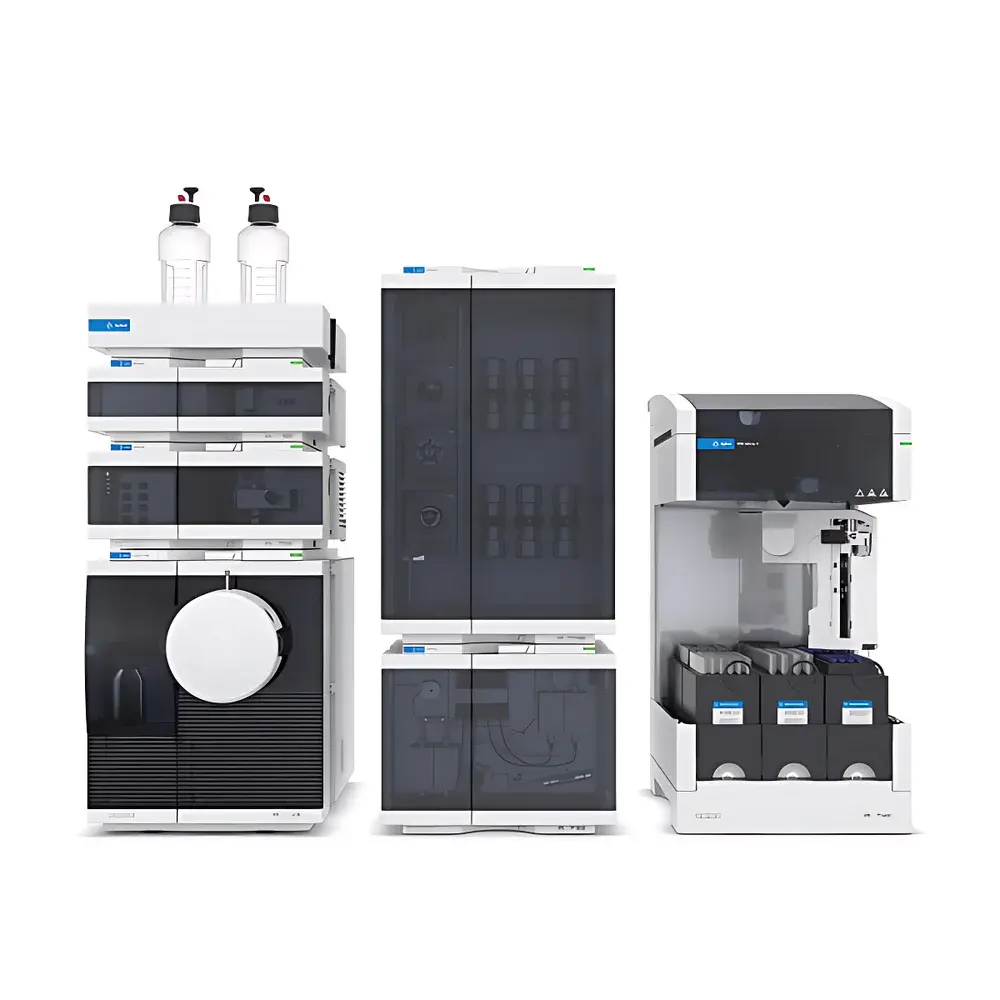
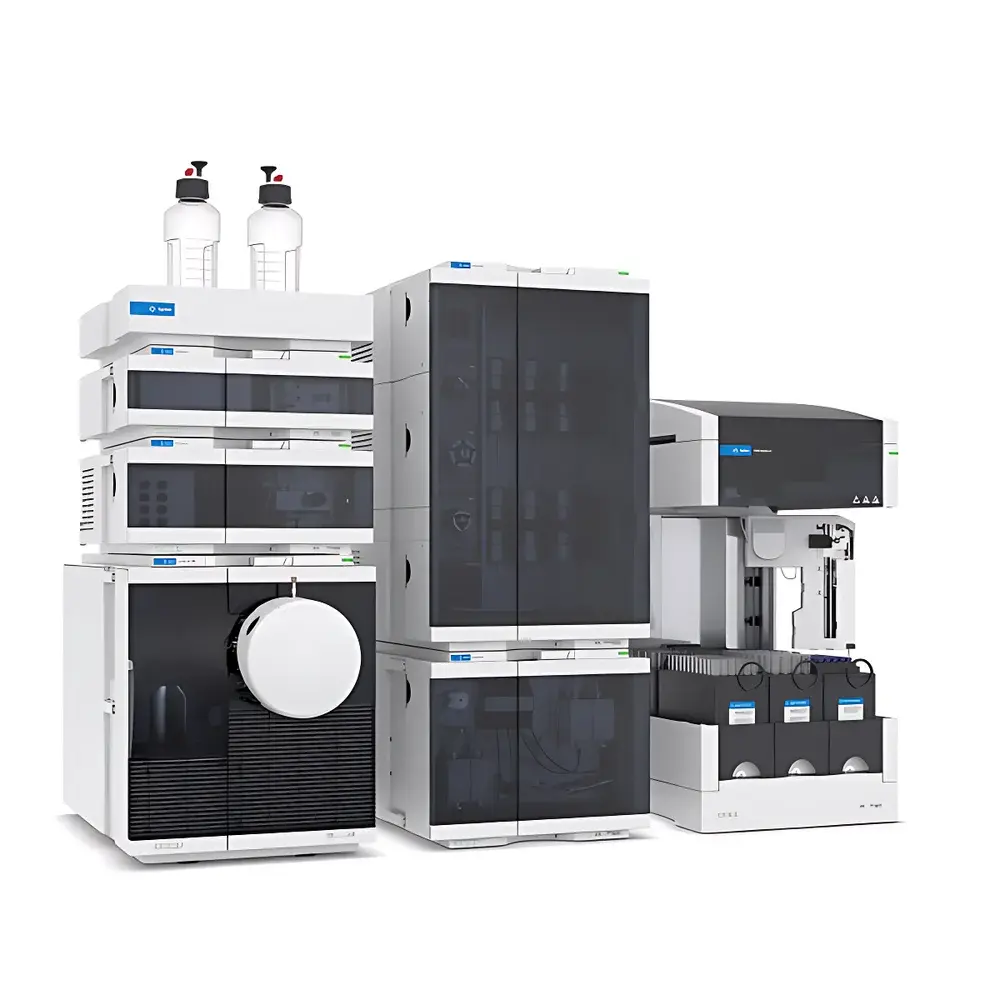
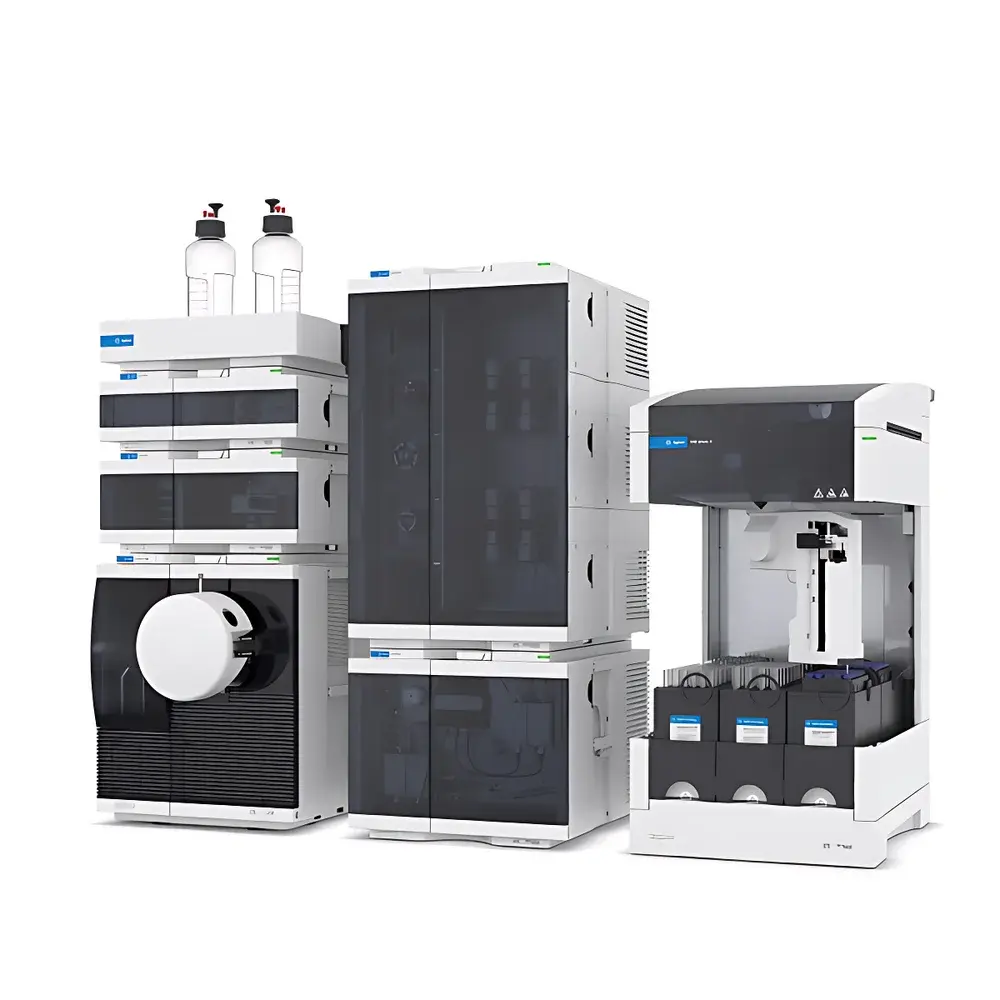
Agilent 1290 Infinity II Preparative LC/MSD System
| Brand | Agilent Technologies |
|---|---|
| Origin | Germany |
| Manufacturer Type | Original Equipment Manufacturer (OEM) |
| Product Origin | Imported |
| Model | 1290 Infinity II Preparative LC/MSD |
| Application Level | Laboratory Grade |
| Instrument Type | High-Pressure Preparative Liquid Chromatography |
| Flow Rate Range | 1–200 mL/min |
| Maximum Operating Pressure | 20–600 bar |
Overview
The Agilent 1290 Infinity II Preparative LC/MSD System is a fully integrated, mass-directed preparative liquid chromatography platform engineered for high-throughput compound purification in early-stage drug discovery and synthetic chemistry workflows. It combines the robustness of Agilent’s 1290 Infinity II high-pressure liquid chromatography architecture with real-time mass spectrometric detection (MSD) to enable selective, on-the-fly fraction collection based on exact mass, isotopic pattern, or extracted ion chromatogram (EIC) triggers. The system operates on a Couette-type flow cell design for stable gradient delivery at elevated pressures and employs dual-piston parallel pumping with active solvent compressibility compensation—ensuring exceptional retention time reproducibility (<0.15% RSD) and peak shape fidelity across variable flow rates and mobile phase compositions. Its core architecture supports both reversed-phase and normal-phase purification protocols, accommodating column diameters from 10 mm to 50 mm ID and enabling scalable method transfer from analytical to semi-preparative and preparative formats.
Key Features
- Mass-directed fraction collection using real-time MS signal triggering, supporting single-ion monitoring (SIM), multiple reaction monitoring (MRM), and full-scan acquisition modes
- Agilent 1290 Infinity II Open-Bed Autosampler/Collector with modular tray configuration—supports up to 48 vials per rack and accommodates diverse container types (e.g., 4–50 mL glass vials, 96-well plates, custom reservoirs)
- High-pressure binary pump capable of delivering 1–200 mL/min with dynamic pressure control up to 600 bar; swappable pump heads allow rapid adaptation to low- or high-flow purification regimes
- Five configurable valve slots enabling precise integration of fraction delay lines, MS flow diverters, and the Agilent 1290 Infinity II MS Flow Modulator for optimized ion transmission efficiency
- Minimal system dwell volume (<1.2 mL) achieved via low-dispersion tubing, short-path flow cells, and integrated post-column mixing reduction—critical for preserving peak integrity and minimizing carryover between injections
- Modular detector interface compliant with Agilent MSD models including the 6140, 6230, and 6545 Q-TOF systems, with hardware-level synchronization for sub-second trigger latency
Sample Compatibility & Compliance
The system accommodates a broad range of sample matrices—including crude reaction mixtures, natural product extracts, peptide digests, and small-molecule libraries—without requiring extensive pre-filtration or derivatization. Column compatibility extends to silica-based C18, phenyl-hexyl, HILIC, and chiral stationary phases rated for >400 bar operation. From a regulatory standpoint, the platform is designed to support GLP- and GMP-aligned environments: audit trail functionality, electronic signature support, and user-access controls are embedded within the Agilent OpenLab CDS ChemStation software architecture. It meets key compliance requirements for FDA 21 CFR Part 11, ISO/IEC 17025:2017 (for testing laboratories), and ASTM D7251–18 (standard practice for LC-MS data acquisition in pharmaceutical analysis).
Software & Data Management
Control, method development, and data review are unified under Agilent OpenLab CDS ChemStation—a validated, 21 CFR Part 11-compliant chromatography data system. The software provides intuitive mass-trigger setup wizards, automated purity assessment algorithms (based on UV and MS spectral deconvolution), and batch processing tools for method replication across multiple instruments. All raw data—including MS spectra, chromatograms, and fraction metadata—are stored in vendor-neutral .d format with embedded calibration parameters and instrument configuration logs. Export options include CSV, PDF, and mzML for third-party informatics platforms such as MassHunter Quantitative Analysis or third-party ELN integrations. Full traceability is maintained through timestamped audit trails covering method edits, sequence changes, and fraction collection events.
Applications
- Targeted isolation of metabolites and impurities from biological matrices for structural elucidation (NMR, HRMS)
- Rapid purification of hit compounds from HTS and FBDD campaigns prior to SAR expansion
- Preparative-scale separation of diastereomers and enantiomers in asymmetric synthesis validation
- Generation of reference standards and certified calibrants for QC laboratories
- On-line coupling with microreactors for reaction optimization and intermediate capture
- Supporting DOE-driven method scouting for orthogonal purification strategies (e.g., pH-gradient vs. organic modifier ramp)
FAQ
What mass analyzers are compatible with this system?
The 1290 Infinity II Preparative LC/MSD supports Agilent single-quadrupole (6140), triple-quadrupole (6460), and Q-TOF (6545, 6550) mass spectrometers via standard LC/MS interfaces and synchronized digital I/O.
Can the system operate in recycling mode for difficult-to-resolve compounds?
Yes—when configured with the optional Agilent 1290 Infinity II Recycling Valve Kit, the system enables closed-loop re-injection of collected fractions for iterative purification without manual intervention.
Is method transfer from analytical to preparative scale supported?
The system includes built-in scaling calculators that automatically adjust gradient time, flow rate, and injection volume based on column geometry and particle size, ensuring linear velocity preservation and retention time predictability.
How is cross-contamination minimized during high-throughput runs?
The Open-Bed autosampler features positive-pressure wash stations with programmable solvent selection, while the flow path incorporates inert PEEK-sil tubing and zero-dead-volume fittings to reduce adsorption and carryover to <0.01%.
Does the system support unattended overnight operation?
Yes—the autosampler and fraction collector are fully robotic, and the OpenLab CDS scheduler allows multi-day sequences with automatic shutdown, solvent replenishment alerts, and error recovery protocols.




