
Agilent HLD MD30 Mobile Dry Helium Mass Spectrometer Leak Detector
| Brand | Agilent Technologies |
|---|---|
| Origin | USA |
| Manufacturer Type | Original Equipment Manufacturer (OEM) |
| Origin Category | Imported |
| Model | HLD MD30 |
| Pricing | Available Upon Request |
Overview
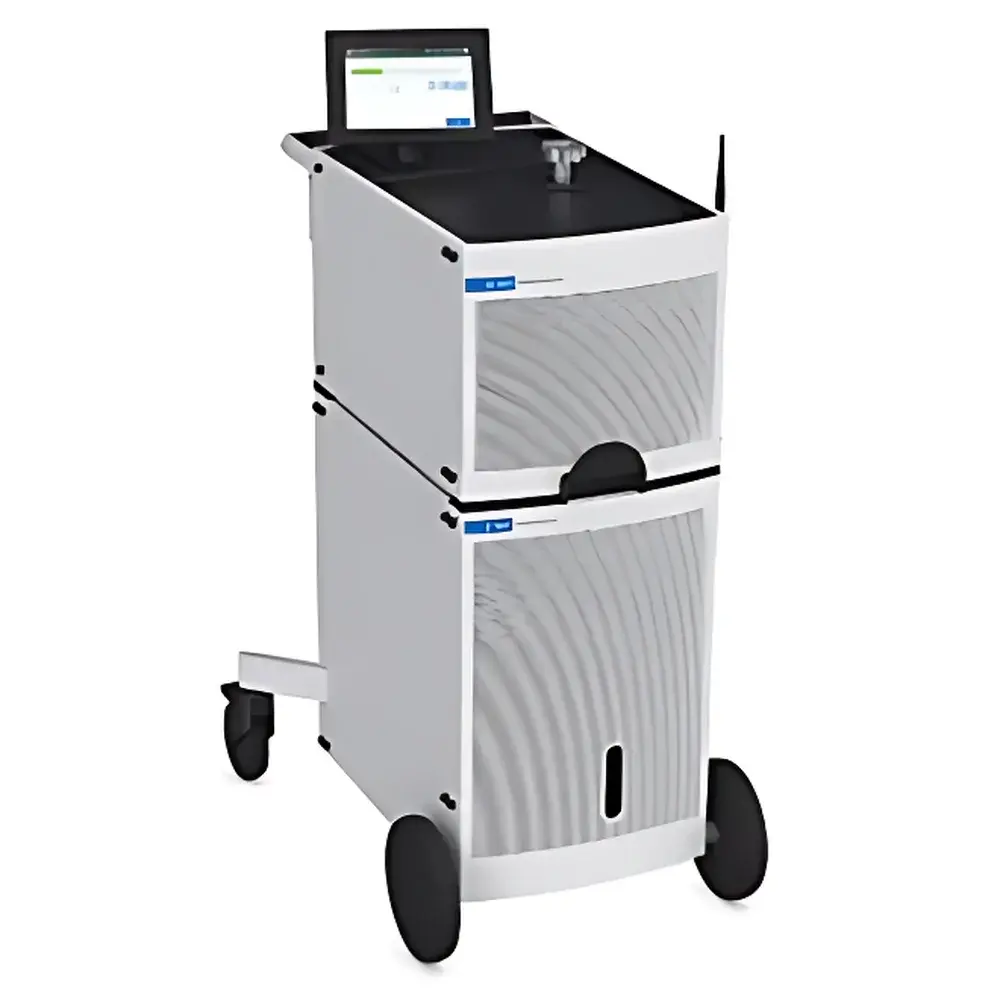
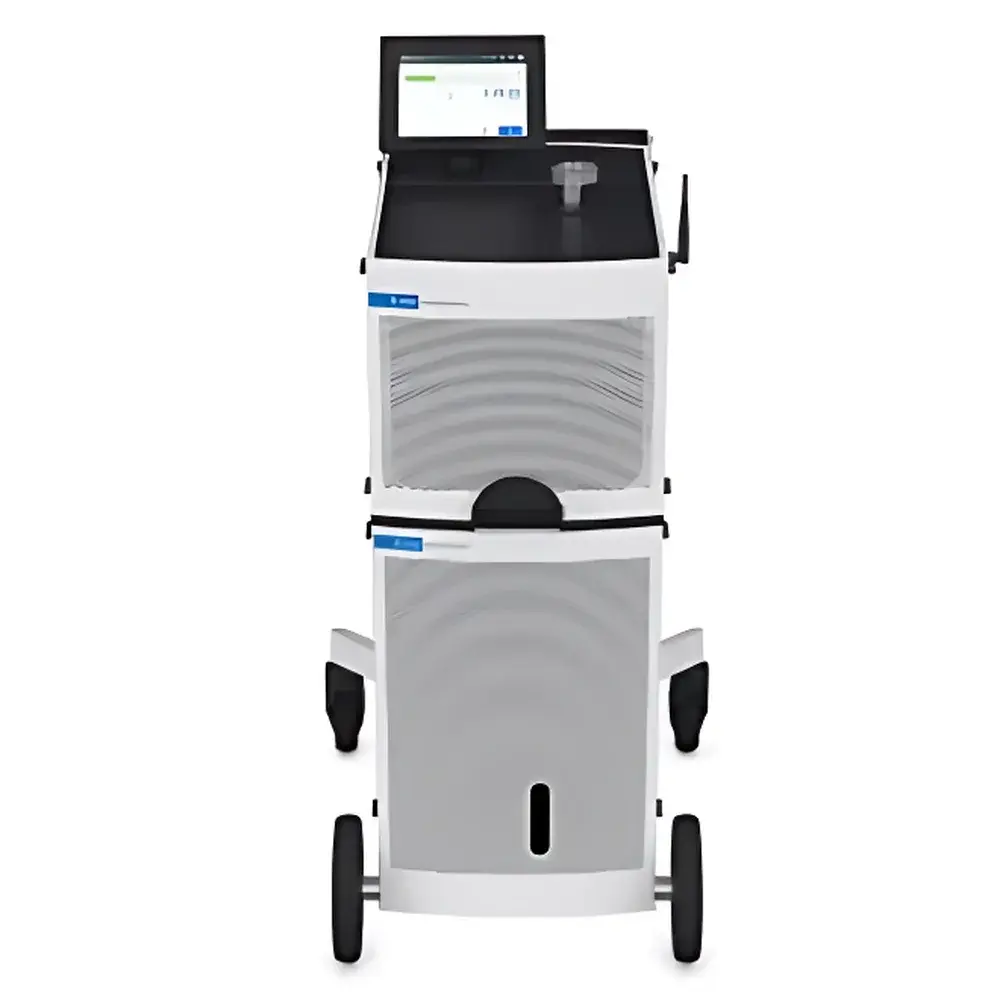
The Agilent HLD MD30 Mobile Dry Helium Mass Spectrometer Leak Detector is a high-performance, field-deployable instrument engineered for quantitative and qualitative detection of helium tracer gas in vacuum and pressurized systems. Based on quadrupole mass spectrometry operating at unit mass resolution (m/z = 4), the system identifies helium ions with high specificity and signal-to-noise ratio, enabling reliable leak detection down to 1 × 10⁻¹² mbar·L/s (typical sensitivity under optimized conditions). Unlike oil-lubricated systems, the HLD MD30 integrates a dry pumping architecture—centered on the Agilent TriScroll 620 scroll pump (30 m³/h pumping speed) and a turbomolecular pump—to eliminate hydrocarbon contamination risks during semiconductor chamber qualification, vacuum vessel integrity verification, or hermetic package testing. Its mobile design supports rapid repositioning across cleanrooms, fab tool bays, and R&D laboratories without requiring permanent installation or external roughing infrastructure.
Key Features
- Dry vacuum system featuring Agilent TriScroll 620 scroll pump (30 m³/h) and integrated turbomolecular pump—no oil vapor backstreaming, eliminating risk of sample or process chamber contamination
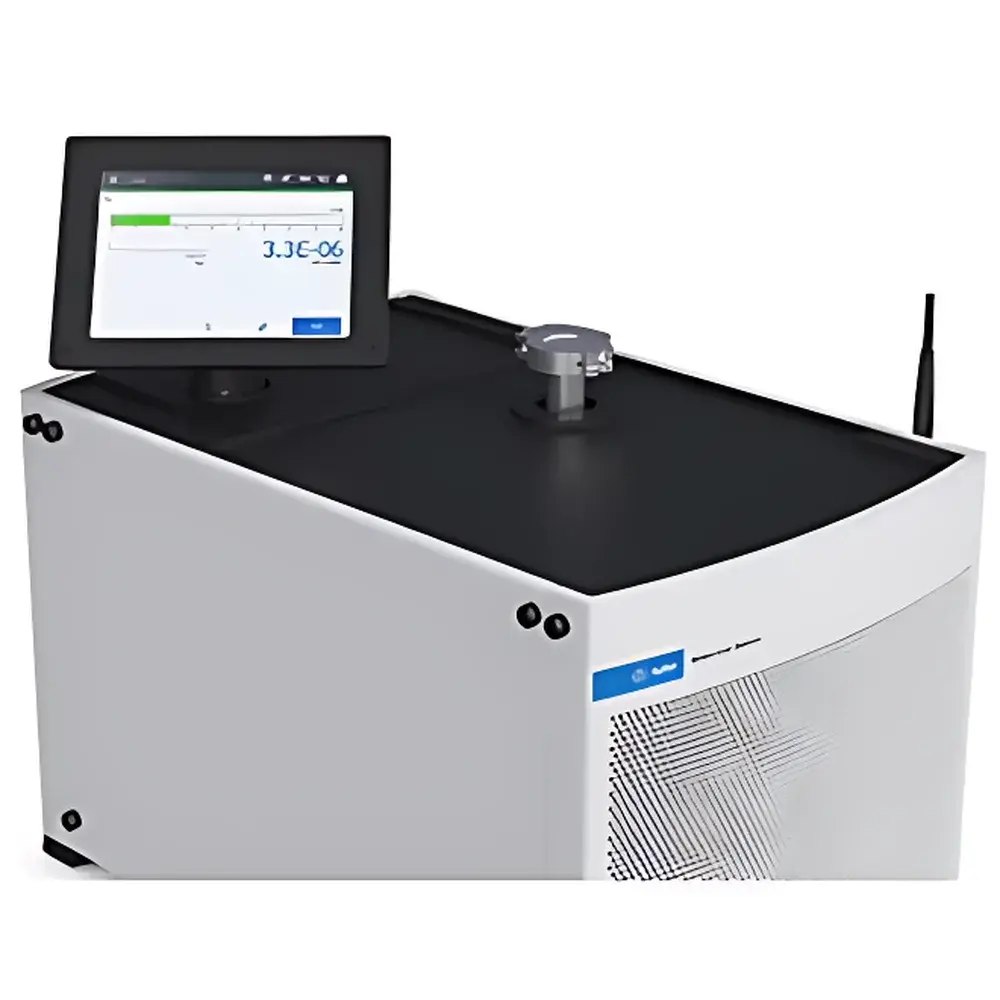
- 180° rotatable industrial-grade capacitive touchscreen with intuitive flat-menu navigation and context-sensitive soft keys for rapid parameter access
- Six preconfigured application wizards—including vacuum chamber, sealed component, pressure decay, sniffer mode, accumulation test, and residual gas analysis—each guiding users through optimal ion source tuning, detector gain, and scan parameters
- Enhanced data visualization: real-time color-coded time traces for leak rate (mbar·L/s) and chamber pressure (mbar), zoomable waveform display, and user-definable alarm thresholds with audible/visual alerts
- Expanded work surface (620 mm × 450 mm) accommodating large DUTs (e.g., MEMS packages, vacuum feedthroughs, or small-scale cryogenic components) and auxiliary tools such as helium spray probes and calibration leaks
- Intelligent shutdown protocol maintains turbomolecular pump vacuum integrity post-cycle, reducing restart time and extending pump lifetime; automatic bake-out readiness monitoring supports GLP-compliant operation
Sample Compatibility & Compliance
The HLD MD30 is compatible with metallic, ceramic, glass, and polymer-encapsulated components rated for vacuum service up to 10−7 mbar base pressure. It supports both vacuum-integrity testing (vacuum-side helium probing) and pressure-integrity testing (sniffer-mode helium tracing), conforming to ASTM E493, ISO 10648-2, and SEMI F27 standards for leak detection in microelectronics manufacturing environments. The instrument’s firmware and data handling architecture support audit trails, electronic signatures, and user-access level controls aligned with FDA 21 CFR Part 11 requirements for regulated QC/QA workflows. All calibration and performance verification procedures are traceable to NIST-certified helium leak standards.
Software & Data Management
The embedded firmware provides full local control without PC dependency, while optional Agilent OpenLab CDS integration enables centralized method deployment, remote monitoring, and automated report generation (PDF/CSV). Each test session logs timestamped metadata—including operator ID, DUT serial number, ambient temperature/pressure, pump status, and spectral background profiles—stored in encrypted SQLite databases with configurable retention policies. Data export supports ISO/IEC 17025-compliant certificate templates, including uncertainty estimation per EURACHEM/CITAC guidelines. Firmware updates are delivered via secure HTTPS and validated using SHA-256 checksums.
Applications
- Leak rate quantification of semiconductor process chambers, load locks, and vacuum transfer modules
- Hermeticity validation of medical device packaging (ISO 11607), MEMS sensors, and implantable electronics
- Pre-shipment verification of high-vacuum components (e.g., electron guns, X-ray tubes, particle accelerator beamlines)
- Routine maintenance diagnostics for cryogenic systems, superconducting magnets, and fusion research vessels
- Failure analysis labs performing root-cause investigation of vacuum degradation in sealed optical assemblies or laser cavities
- Automotive EV battery module enclosure testing per UL 2580 and GB/T 31467.3 requirements
FAQ
Does the HLD MD30 require liquid nitrogen or external cooling?
No—the quadrupole mass analyzer and ion source operate at ambient temperature; no cryogenic cooling is needed.
Can the instrument be used in Class 100 cleanroom environments?
Yes—its sealed dry-pump architecture and low particulate emission profile meet ISO 14644-1 Class 5 requirements when operated with HEPA-filtered inlet air.
Is helium calibration required before each test cycle?
Calibration is recommended daily or after major environmental shifts; the system supports auto-zero and span-check routines using built-in reference leak ports.
What vacuum level must the test chamber reach before initiating a helium probe test?
Optimal sensitivity is achieved below 1 × 10⁻⁴ mbar; the TriScroll 620 achieves this base pressure in ≤ 90 seconds for a 100 L volume.
How does the HLD MD30 handle background helium interference from ambient air?
The instrument employs dynamic background subtraction algorithms and real-time mass spectrum baseline correction, minimizing false positives during sniffer-mode operation in non-controlled atmospheres.




