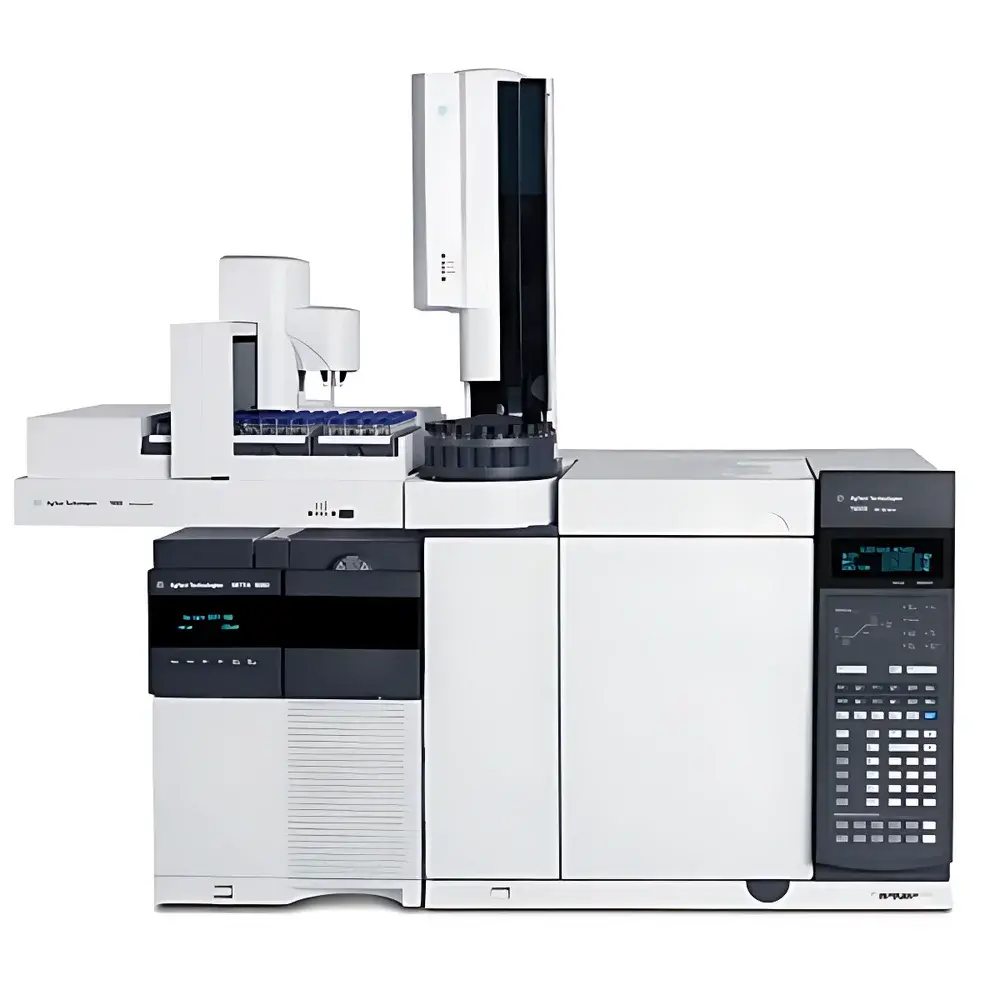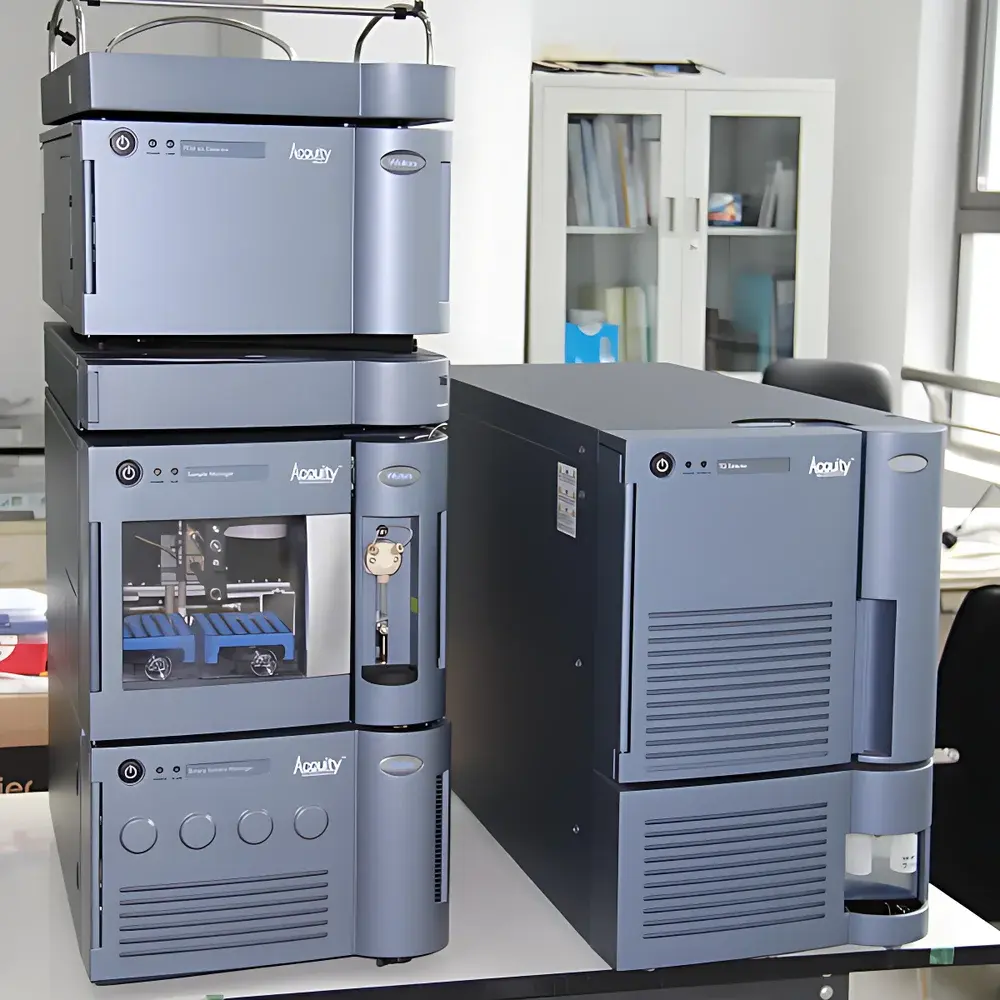
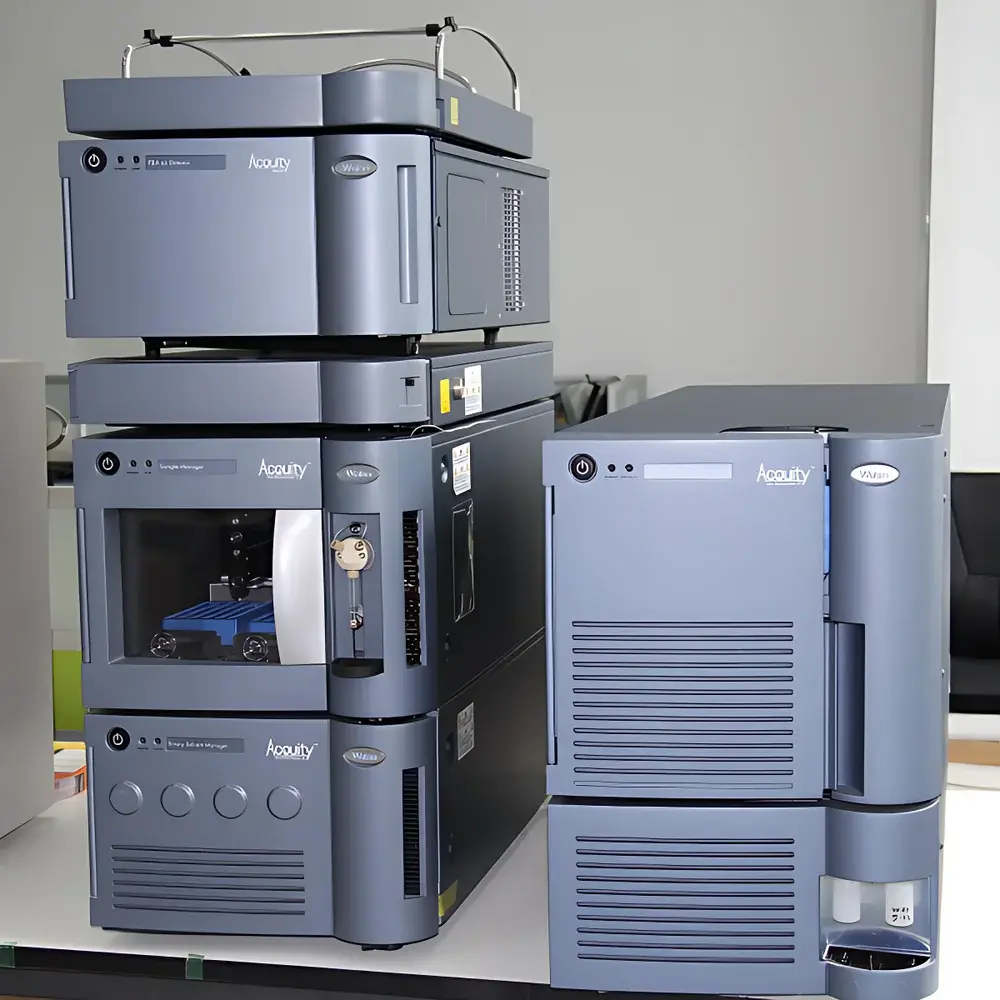
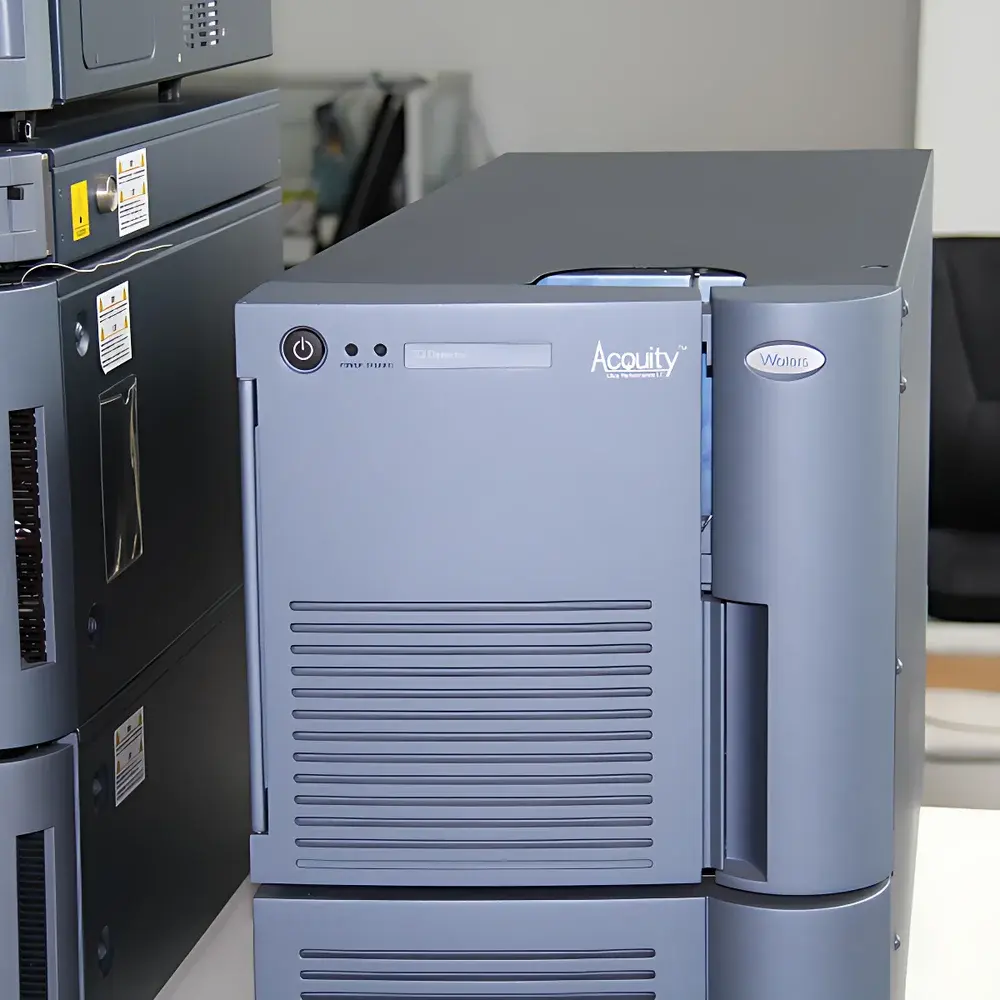
Waters TQD Triple Quadrupole Liquid Chromatography Mass Spectrometer (Used, 3–5 Years Operational History)
| Brand | Waters |
|---|---|
| Origin | USA |
| Instrument Type | Triple Quadrupole LC-MS/MS |
| Mass Range | m/z 10–2000 |
| Ionization Sources | ESI & APCI |
| Scan Modes | Full Scan, SIM, MRM |
| MRM Acquisition Rate | Up to 1000 transitions/sec |
| Dynamic Range | 10⁶–10⁷ |
| Detection Limit | Low pmol/L (ESI-MRM) |
| Software | MassLynx v4.2 or later |
| Compliance | Designed for GLP/GMP environments |
| Typical Service Life | 3–5 years (verified operational history, full service logs available upon request) |
Overview
The Waters TQD Triple Quadrupole Liquid Chromatography Mass Spectrometer is a purpose-engineered benchtop LC-MS/MS platform originally developed for high-sensitivity quantitative analysis in regulated and research laboratories. Operating on the principle of tandem mass spectrometry via three sequential quadrupole mass filters—Q1 (mass selection), Q2 (collision-induced dissociation cell), and Q3 (product ion analysis)—the TQD delivers robust, reproducible multiple reaction monitoring (MRM) performance. Its architecture enables selective detection of target analytes in complex matrices by isolating precursor ions in Q1, fragmenting them under controlled collision gas pressure in Q2, and detecting characteristic product ions in Q3. This orthogonal triple-quadrupole design provides superior specificity over single-stage instruments, especially critical in applications requiring low detection limits, high matrix tolerance, and regulatory-grade data integrity.
Key Features
- Triple quadrupole mass analyzer with independently tuned RF/DC voltage control for Q1 and Q3, enabling precise mass selection across m/z 10–2000
- Dual ionization capability: electrospray ionization (ESI) and atmospheric pressure chemical ionization (APCI), both fully integrated and switchable without venting the source chamber
- Collision-induced dissociation (CID) in Q2 using nitrogen or argon gas, with adjustable collision energy for optimized fragmentation efficiency and reproducible spectral output
- High-speed MRM acquisition supporting up to 1000 transitions per second—enabling simultaneous quantification of dozens of compounds within a single chromatographic run
- MassLynx software suite (v4.2 or later) providing instrument control, real-time data acquisition, peak integration, calibration curve generation, and customizable reporting templates compliant with analytical method validation requirements
- Modular design compatible with Waters Alliance HPLC systems and other LC platforms via standard analog/digital I/O interfaces
- Engineered for long-term stability: temperature-controlled ion optics, sealed detector housing, and vacuum system with dual-stage turbomolecular pumping
Sample Compatibility & Compliance
The TQD accommodates a broad range of sample types—including aqueous extracts, plasma/serum digests, environmental water filtrates, food homogenates, and pesticide-spiked standards—when coupled with appropriate LC separation methods (e.g., reversed-phase C18, HILIC, or mixed-mode columns). Its ESI source supports polar and thermally labile compounds (e.g., peptides, glycosides, nucleotides), while APCI excels for semi-volatile organics (e.g., PAHs, sterols, small-molecule pharmaceuticals). The system meets foundational design criteria aligned with ISO/IEC 17025:2017 for testing laboratories and supports implementation of FDA 21 CFR Part 11-compliant workflows when deployed with validated MassLynx configurations, electronic signatures, and audit-trail-enabled data storage. All units undergo functional verification per ASTM D7249-21 (Standard Practice for Verification of LC-MS Systems) prior to resale.
Software & Data Management
Data acquisition and processing are performed using Waters MassLynx software, which includes TargetLynx for quantitative MRM analysis, IntelliStart for automated system setup, and QuanLynx for calibration curve fitting (linear, quadratic, weighted least squares). Raw data files (.raw) are stored in vendor-native format with embedded metadata (instrument parameters, sequence logs, user annotations). Export options include CSV, ASCII, and mzML for interoperability with third-party tools (e.g., Skyline, OpenMS). For regulated environments, optional MassLynx Security Pack enables role-based access control, electronic signatures, and tamper-evident audit trails meeting GLP and GMP documentation standards. All used systems ship with licensed software media and activation keys corresponding to the installed version.
Applications
- Pharmaceutical QC/QA: Residual solvent analysis, impurity profiling, and pharmacokinetic bioanalysis (e.g., plasma drug/metabolite quantification per USP & ICH guidelines)
- Environmental monitoring: Quantification of pesticides, PCBs, dioxins, and emerging contaminants (e.g., PFAS) in wastewater, soil leachates, and air particulates
- Food safety: Multi-residue screening for mycotoxins, veterinary drug residues, and adulterants in dairy, meat, and produce matrices
- Clinical toxicology: Therapeutic drug monitoring (TDM) and forensic toxicology panels (e.g., opioids, benzodiazepines, stimulants)
- Academic research: Targeted metabolomics, lipidomics, and biomarker validation studies requiring high-precision absolute quantification
FAQ
What documentation accompanies the used TQD system?
Full service history logs, previous calibration certificates (if available), MassLynx license key, and a post-sale functional verification report are provided. Optional IQ/OQ documentation packages can be supplied upon request.
Is the system compatible with modern LC modules?
Yes—the TQD features standard analog trigger inputs, RS-232/USB connectivity, and time-synchronized data acquisition, allowing seamless integration with current-generation Waters ACQUITY UPLC or third-party HPLC systems.
Can this instrument support method transfer from newer Xevo or Vion platforms?
While not identical in hardware architecture, MRM transition lists, dwell times, and collision energies are directly transferable; minor optimization of source parameters and dwell times may be required due to differences in ion transmission efficiency.
What maintenance is recommended before commissioning?
We recommend replacement of the ESI/APCI capillary, cone, and detector multiplier—components included in our pre-delivery refurbishment package—alongside vacuum pump oil change and quadrupole tuning verification.
Do you offer extended warranty or service contracts?
Yes—comprehensive 12- or 24-month hardware and software support contracts are available, including remote diagnostics, priority parts dispatch, and on-site engineer response within 48 business hours.