
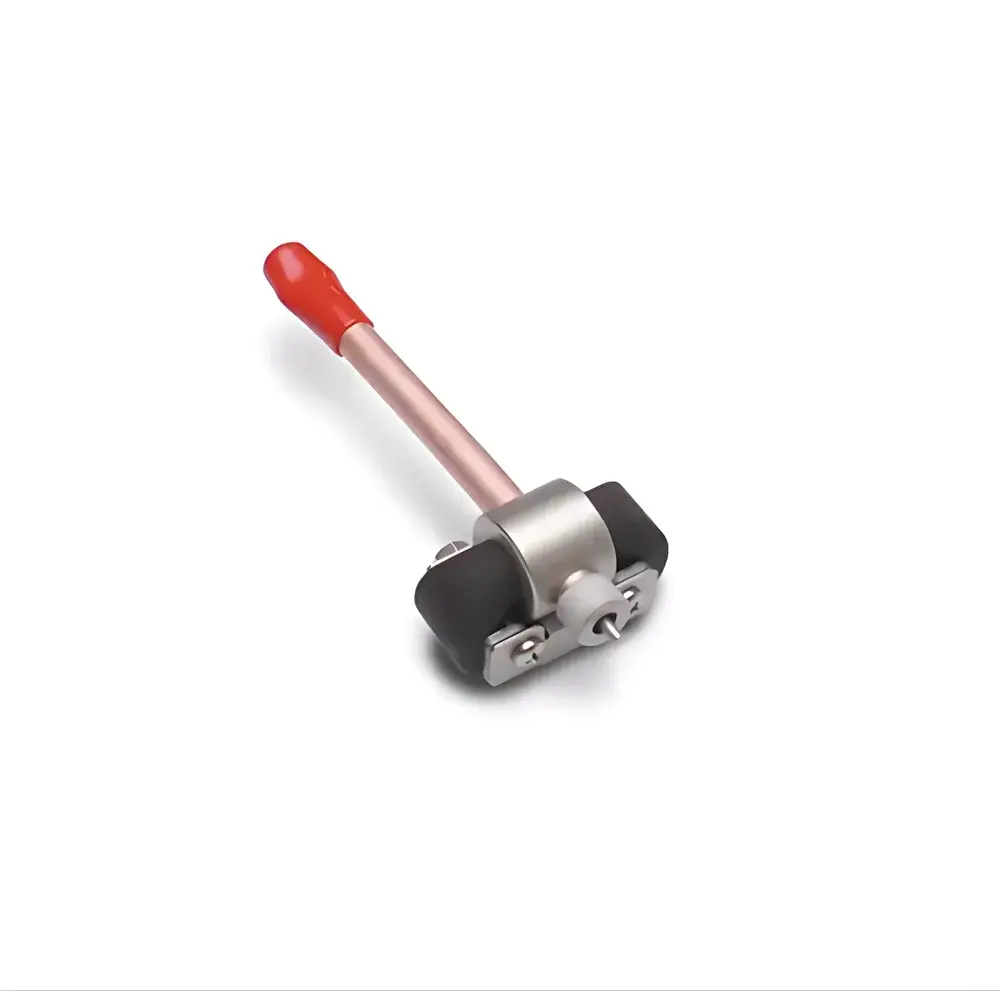
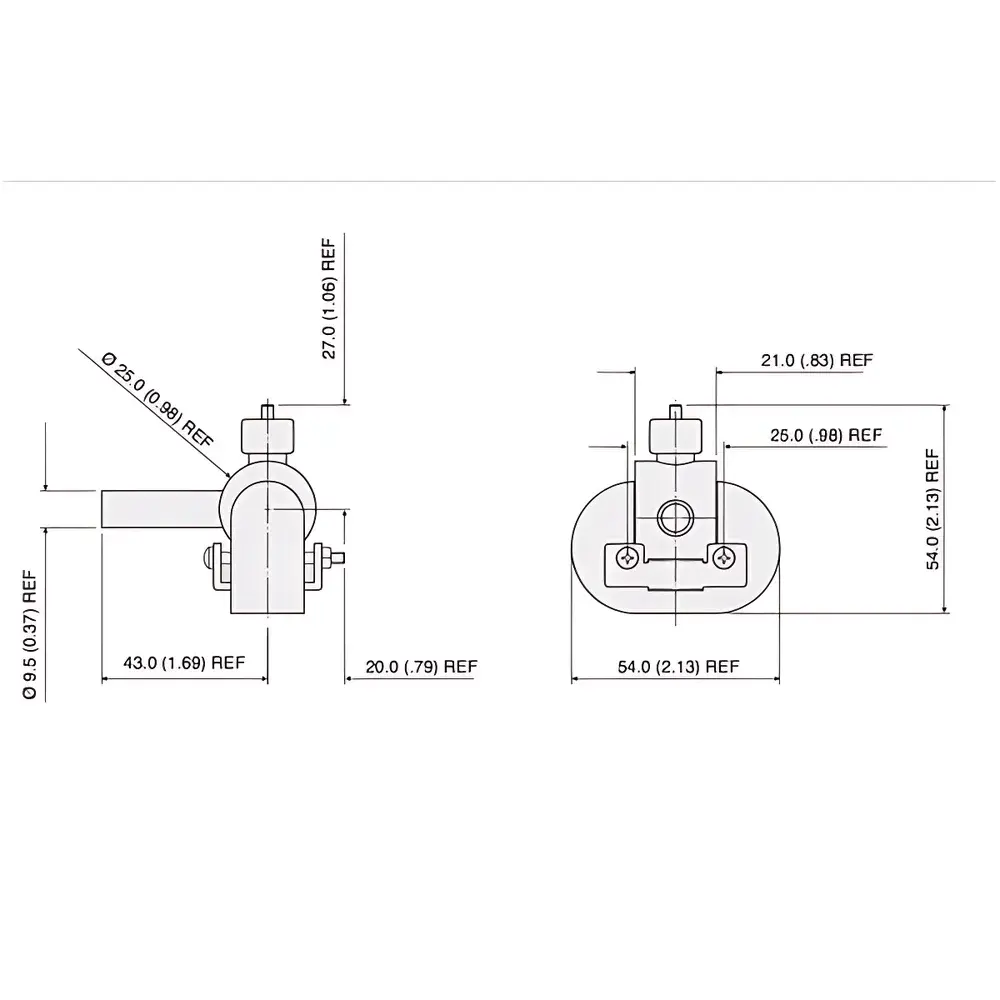
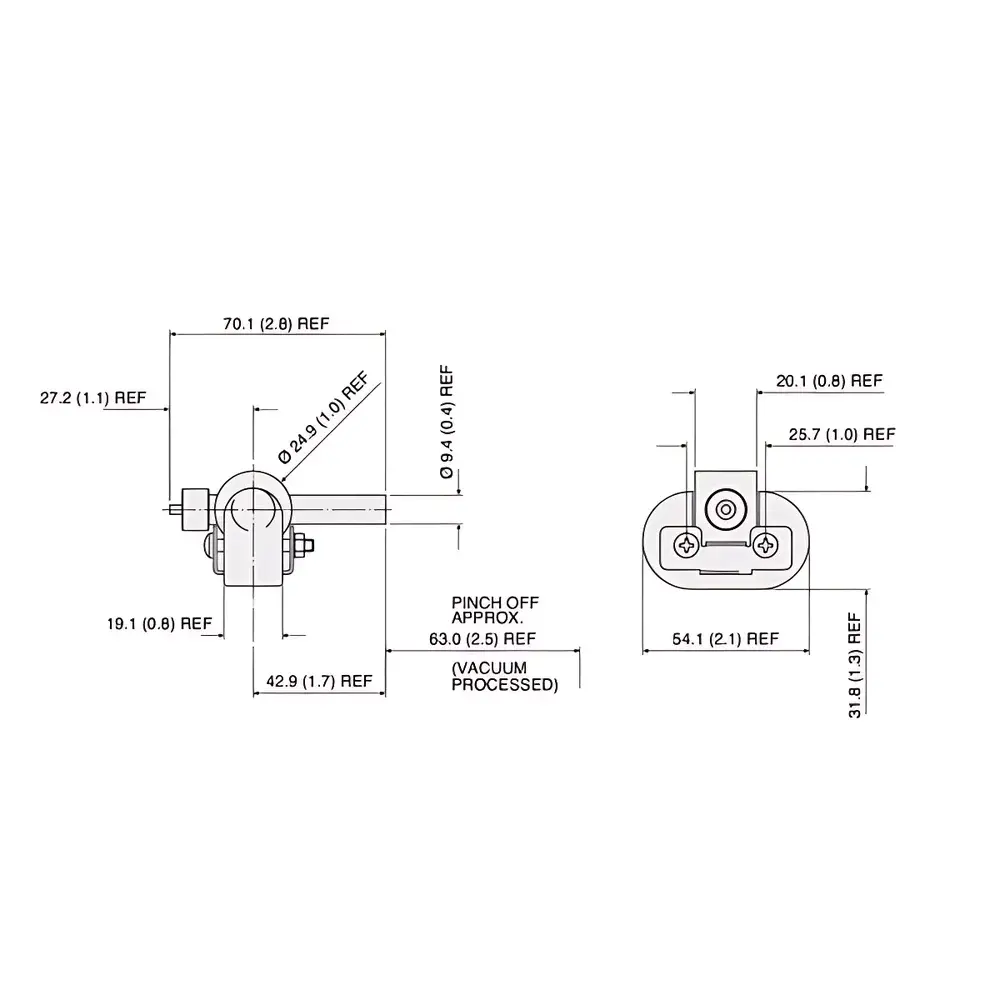
Agilent VacIon Miniature Ion Pump
| Brand | Agilent Technologies |
|---|---|
| Origin | USA |
| Manufacturer Type | Original Equipment Manufacturer (OEM) |
| Import Status | Imported |
| Model | VacIon Miniature Ion Pump |
| Pumping Speed | 0.4 L/s |
| Ultimate Vacuum | < 1 × 10⁻¹¹ mbar |
| Weight | 0.3 kg |
Overview
The Agilent VacIon Miniature Ion Pump is a compact, non-evaporable, sputter-ion vacuum pump engineered for sustained ultra-high vacuum (UHV) and extreme-high vacuum (XHV) maintenance in space-constrained, high-integrity systems. Operating on the principle of Penning discharge, it utilizes a strong permanent magnet field (optimized for minimal external flux) and high-voltage electrodes to ionize residual gas molecules—primarily noble gases, nitrogen, oxygen, hydrogen, and water vapor—which are then accelerated into a titanium cathode. Sputtered titanium deposits continuously form fresh getter films on chamber walls, enabling simultaneous ion burial and chemical pumping. Unlike turbomolecular or cryogenic pumps, the VacIon Miniature Ion Pump requires no moving parts, oil, or external cooling, making it ideal for bakeable, vibration-sensitive, and radiation-hardened environments such as satellite payload modules, electron optics columns, mass spectrometer analyzers, and sealed X-ray tube housings.
Key Features
- Compact footprint and ultra-lightweight design (0.3 kg) enables integration into miniaturized UHV subsystems including portable mass spectrometers and MEMS-based sensor enclosures.
- Pumping speed of 0.4 L/s at nitrogen — calibrated per ISO 3529-3 — with stable performance across the 10⁻⁴ to 10⁻¹¹ mbar pressure range.
- Ultimate vacuum capability < 1 × 10⁻¹¹ mbar under continuous operation after proper bakeout, verified per ASTM E576 standard test methods for residual gas analysis.
- Low magnetic stray field (< 0.5 mT at 50 mm distance), minimizing interference with electron beams, magnetic sensors, and Hall-effect devices.
- Full-system bakeability up to 400 °C in vacuum — compatible with UHV-compatible flanges (CF-16, KF-16) and compliant with ISO-UHV material outgassing specifications (e.g., ≤ 1 × 10⁻¹² mbar·L/(s·cm²) water-equivalent).
- Vacuum-isolated pinch-off capability allows pre-installation sealing and transport under inert atmosphere, preserving cleanliness and eliminating post-installation degassing delays.
- Customizable high-voltage feedthroughs (e.g., ceramic-metal hermetic seals rated to 5 kV DC), geometric variants (cylindrical, flat-profile, axial-inlet), and modular electrode layouts for OEM integration.
Sample Compatibility & Compliance
The VacIon Miniature Ion Pump is chemically compatible with stainless steel 316L, OFHC copper, and aluminum 6061-T6 vacuum chambers. It exhibits negligible outgassing after 24-hour bakeout at 300 °C and meets ASTM E595 low-total-mass-loss (TML < 1.0%) and collected-volatile-condensable-material (CVCM < 0.1%) requirements for spaceflight hardware. Its operation complies with ISO 27893 (vacuum technology — terminology and definitions) and supports GLP/GMP-aligned vacuum system validation protocols, including documented leak-check procedures, pressure-rise rate testing (per ISO 21360-1), and traceable calibration against reference capacitance manometers.
Software & Data Management
While inherently analog in control architecture, the VacIon Miniature Ion Pump interfaces seamlessly with industry-standard vacuum controllers (e.g., Agilent VACUUBRAND DCP 3000, Pfeiffer TPG300 series) via 0–10 V analog output for real-time current monitoring — a direct proxy for ion current and thus system pressure stability. Integrated diagnostics include over-current shutdown, arc suppression circuitry, and optional RS-485 Modbus RTU output for SCADA-level logging. All firmware and configuration data adhere to IEC 62443-3-3 security requirements for industrial automation systems, and operational logs support FDA 21 CFR Part 11-compliant audit trails when paired with validated LabVIEW or DeltaV control environments.
Applications
- Maintaining base pressure in electron microscopy sample chambers during beam-off periods.
- Back-up pumping for time-of-flight mass spectrometers in field-deployable environmental monitoring units.
- Long-term vacuum retention in hermetically sealed gyroscopes and atomic frequency standards (e.g., rubidium clocks).
- UHV hold-down in semiconductor metrology tools where vibration isolation is critical (e.g., ellipsometers, XPS surface analyzers).
- On-orbit vacuum stabilization for CubeSat-based plasma diagnostics and quantum sensor payloads.
- Medical device applications including vacuum-sealed radiation therapy collimators and miniature PET detector modules.
FAQ
What gases can the VacIon Miniature Ion Pump effectively remove?
It actively pumps reactive gases (O₂, N₂, H₂O, CO, CO₂) via ion burial and titanium gettering, and inert gases (Ar, He, Ne) via ion implantation. Pumping efficiency for helium is reduced (~30% of nitrogen speed); hydrogen is pumped rapidly but may exhibit transient backstreaming if exposed to sudden thermal shocks.
Can this pump be used as a primary pump?
No — it requires a pre-vacuum of ≤ 1 × 10⁻³ mbar (typically achieved by a diaphragm or scroll pump) to initiate stable discharge; it functions exclusively as a UHV/XHV maintenance pump.
Is the pump suitable for oxygen-rich environments?
Yes — titanium cathodes regenerate continuously during operation, sustaining pumping capacity even under repeated exposure to trace oxygen or water vapor, provided total pressure remains below 1 × 10⁻⁴ mbar during initial startup.
Does the pump require periodic maintenance or consumables?
No — it contains no replaceable parts, lubricants, or sacrificial anodes. Lifetime is limited only by cumulative sputter erosion of the cathode, typically exceeding 10 years under continuous 10⁻⁹ mbar operation.
How is pump performance validated prior to shipment?
Each unit undergoes full functional test in a certified UHV test station: 24-hr bakeout at 300 °C, pressure-rise-rate measurement (< 1 × 10⁻¹⁰ mbar/s), ion current linearity verification (0.1–5 mA range), and magnetic field mapping per IEC 61000-4-8.



