
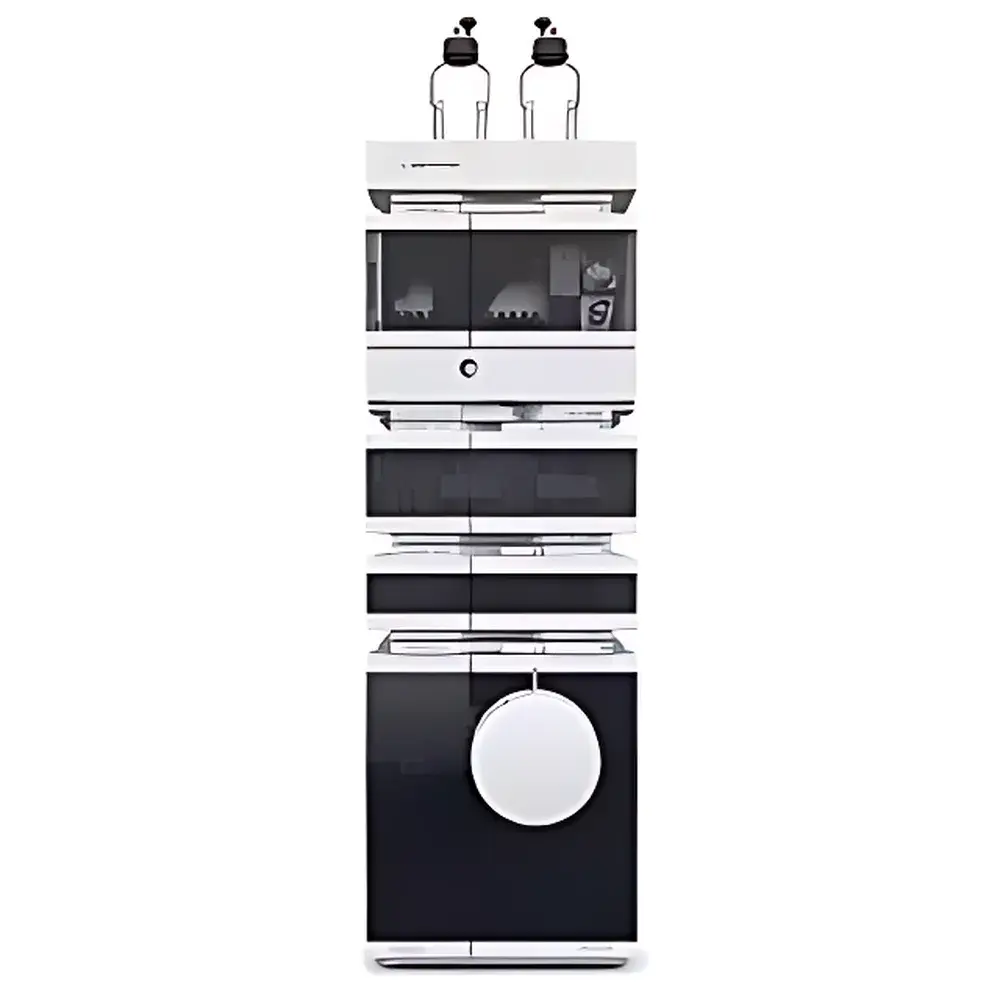
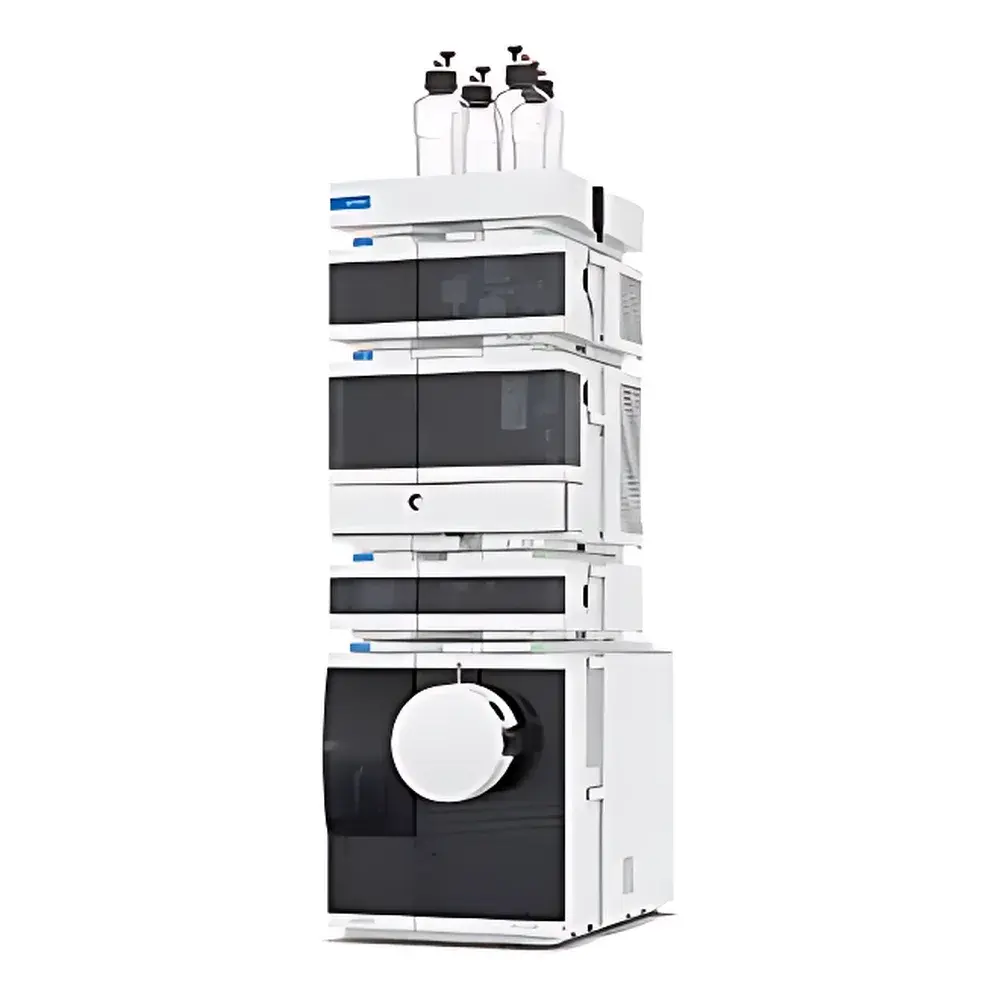
Agilent InfinityLab LC/MSD Single Quadrupole Liquid Chromatography-Mass Spectrometry System
| Brand | Agilent Technologies |
|---|---|
| Origin | Singapore |
| Manufacturer Type | Original Equipment Manufacturer (OEM) |
| Import Status | Imported |
| Model | LC/MSD |
| Instrument Type | Single Quadrupole |
| Application Scope | General-Purpose |
| Mass Range | m/z 10–2000 |
| Scan Speed | 10,400 Da/s |
| Minimum SIM Dwell Time | 5 ms |
| Polarity Switching Time | < 300 ms |
| Ion Sources | ESI, APCI, Multi-Mode (ESI + APCI) |
| Dimensions (W × D × H) | 44.3 cm × 63.5 cm × 47.0 cm |
| Compatible Software | OpenLab CDS, OpenLab ChemStation, MassHunter WalkUp, MassWorks Software |
Overview
The Agilent InfinityLab LC/MSD is a single quadrupole liquid chromatography–mass spectrometry (LC-MS) system engineered for robustness, reproducibility, and seamless integration into regulated and research-driven laboratories. It operates on the principle of mass-selective detection via radiofrequency (RF) and direct-current (DC) voltage-controlled ion transmission through a quadrupole mass filter, enabling selective monitoring of target ions based on their mass-to-charge ratio (m/z). Designed as a dedicated mass detector for Agilent’s 1260 and 1290 Infinity II LC platforms, the LC/MSD extends chromatographic separation with orthogonal mass-based identification and quantification capabilities—without requiring high-resolution or time-of-flight instrumentation. Its architecture supports ultra-high-performance liquid chromatography (UHPLC) workflows, delivering rapid scan speeds up to 10,400 Da/s while maintaining stable signal response across dynamic concentration ranges. The system is not a hybrid instrument (e.g., Q-TOF or QqQ); it is purpose-built as a cost-effective, high-sensitivity single quadrupole solution for routine qualitative and quantitative applications in pharmaceutical QC, synthetic chemistry verification, food safety screening, and environmental residue analysis.
Key Features
- Single quadrupole mass analyzer with mass range of m/z 10–2000, optimized for unit-mass resolution and high transmission efficiency
- Multi-mode ionization capability: electrospray ionization (ESI), atmospheric pressure chemical ionization (APCI), and combined ESI/APCI source—enabling broad compound coverage from polar to moderately non-polar analytes
- Sub-300 ms polarity switching for simultaneous positive/negative mode acquisition within a single run
- 5 ms minimum selected ion monitoring (SIM) dwell time for high-density multi-analyte quantitation
- Compact, stackable chassis (44.3 × 63.5 × 47.0 cm) designed for footprint efficiency alongside Infinity II LC modules
- MassWorks calibration technology from Cerno Bioscience integrated for enhanced mass accuracy without daily recalibration
- Open architecture supporting both OpenLab CDS and legacy OpenLab ChemStation software environments
Sample Compatibility & Compliance
The LC/MSD accommodates standard LC eluents—including aqueous buffers, acetonitrile, methanol, and isopropanol—and tolerates moderate levels of non-volatile additives when paired with appropriate source cleaning protocols. It complies with key regulatory frameworks governing analytical data integrity: U.S. FDA 21 CFR Part 11 (electronic records/signatures), EU Annex 11 (computerized systems), and ICH GCP/GLP-aligned audit trail requirements when deployed with OpenLab CDS. All method parameters, acquisition logs, and raw data files are stored with immutable timestamps and user attribution. The system supports 21 CFR Part 211-compliant workflows for pharmaceutical manufacturing environments, including electronic signature enforcement, role-based access control, and full revision history tracking for methods and sequences.
Software & Data Management
Data acquisition and processing are managed through two primary software platforms: OpenLab CDS (for fully compliant, audit-ready operations) and MassHunter WalkUp (for walk-up, multi-user environments requiring simplified method selection and report generation). MassWorks Software provides post-acquisition mass recalibration and formula prediction tools, improving confidence in elemental composition assignment. All software modules support standardized output formats (e.g., .d, .cdf, .mzML) compatible with third-party spectral libraries and LIMS interfaces. Raw data files include embedded metadata such as instrument configuration, sequence details, and calibration status—ensuring traceability from injection to final report.
Applications
The LC/MSD serves as a validated workhorse for targeted analysis across diverse sectors. In pharmaceutical quality control, it performs assay validation, impurity profiling, and stability-indicating assays per USP and ICH Q2(R2). In synthetic chemistry labs, it enables rapid reaction monitoring and product confirmation without full structural elucidation. Food testing laboratories apply it for pesticide residue screening (AOAC 2007.01), mycotoxin quantitation (EN 15662), and allergen marker detection. Environmental labs use it for EPA Method 8270D-compliant semi-volatile organic compound (SVOC) analysis. Its sensitivity, ease of method transfer, and compatibility with existing Agilent LC infrastructure make it particularly suited for labs scaling from GC- or UV-based workflows to mass-selective detection.
FAQ
Is the LC/MSD compatible with non-Agilent LC systems?
Yes—it can be interfaced with third-party HPLC/UHPLC systems via analog or digital trigger signals, though full vendor-supported integration (e.g., synchronized gradient control, auto-shutdown) is guaranteed only with Agilent 1260/1290 Infinity II platforms.
Does the system support GLP-compliant electronic signatures?
Yes—when configured with OpenLab CDS and properly validated, it meets 21 CFR Part 11 requirements for electronic signatures, audit trails, and data retention.
What maintenance intervals are recommended for the ion source and quadrupole?
Routine source cleaning is advised every 2–4 weeks depending on sample matrix complexity; quadrupole cleaning is typically required annually or after 5000 injections under standard operating conditions.
Can the LC/MSD perform quantitative analysis without internal standards?
It supports both external calibration and internal standard methodologies; however, internal standardization is strongly recommended for regulatory submissions to correct for matrix effects and instrument drift.
Is MassWorks calibration mandatory for routine operation?
No—MassWorks enhances mass accuracy but is optional; factory-calibrated performance meets specifications for most routine applications without activation.






