
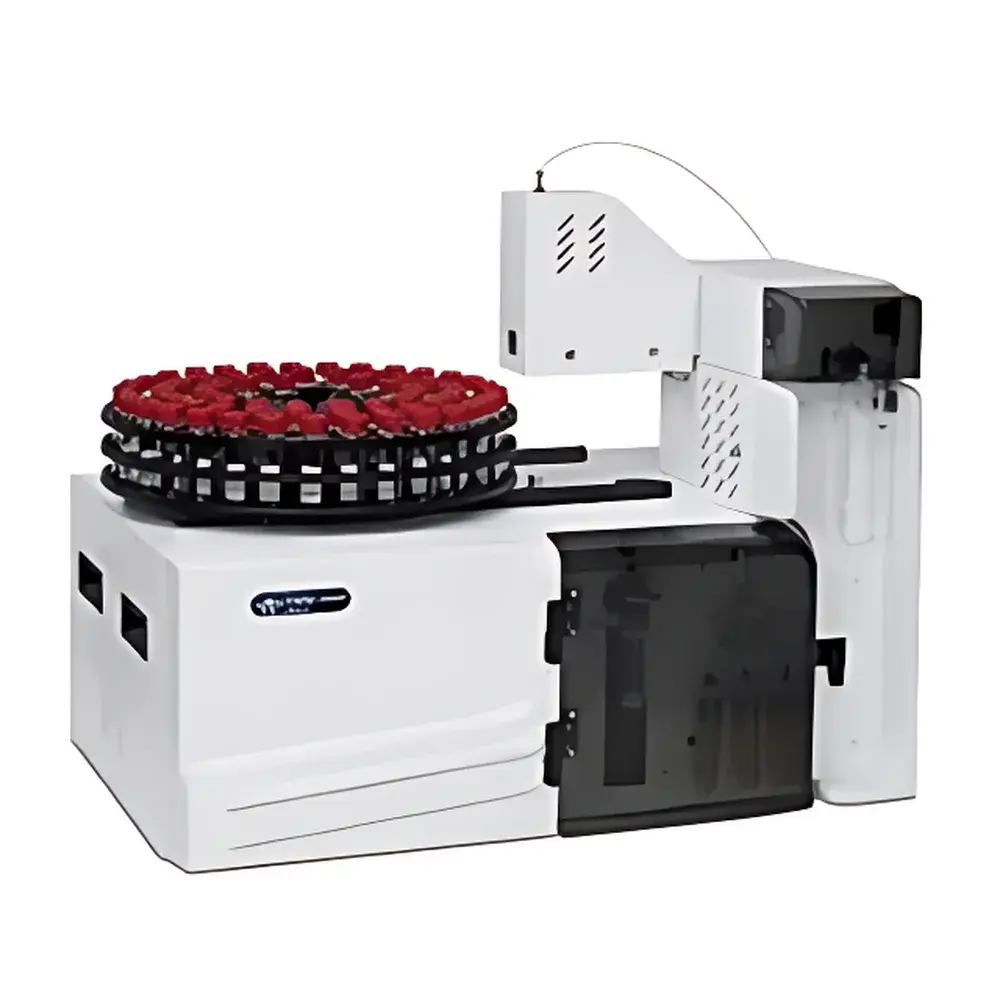
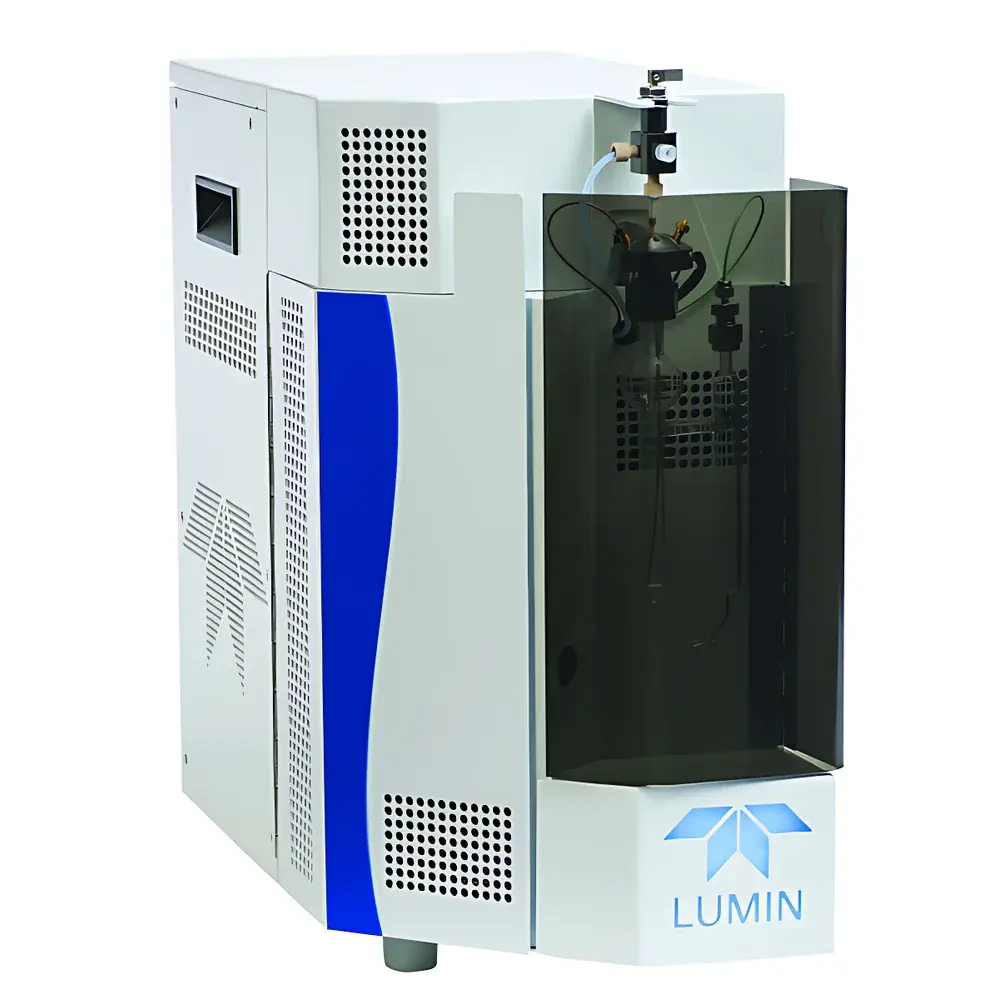
Agilent Technologies Lumin Purge and Trap Concentrator, AQUATek 100 Autosampler, and Atomx VOC Sample Preparation System
| Brand | Agilent Technologies |
|---|---|
| Origin | USA |
| Manufacturer Type | Original Equipment Manufacturer (OEM) |
| Product Category | Imported Instrumentation |
| Model Series | Lumin, AQUATek 100, Atomx |
| Instrument Type | Gas Chromatography (GC) Purge-and-Trap Sample Introduction System |
| Compliance | Designed for ASTM D5024, D6227, EPA Methods 502.2, 524.2, 624, 8260D, and ISO 15681-2 |
Overview
The Agilent Technologies Purge and Trap Sample Preparation Systems — comprising the Lumin Purge and Trap Concentrator, AQUATek 100 Autosampler, and Atomx Automated VOC Sample Preparation System — constitute a fully integrated, laboratory-grade solution for trace-level volatile organic compound (VOC) analysis in environmental, regulatory, and industrial quality control laboratories. These systems operate on the fundamental principle of dynamic headspace extraction: liquid or solid samples are purged with inert gas (typically helium or nitrogen), volatilizing target analytes into the carrier stream; analytes are then trapped onto a sorbent tube at low temperature, followed by rapid thermal desorption directly into a gas chromatograph (GC) or GC–mass spectrometer (GC–MS). This methodology delivers sub-part-per-trillion (ppt) detection sensitivity, high recovery reproducibility (>95% for most regulated VOCs), and minimal matrix interference—critical for compliance-driven analyses such as drinking water monitoring, wastewater characterization, and soil remediation assessment.
Key Features
- Modular architecture: Each system is engineered for interoperability—Lumin serves as the core concentrator unit; AQUATek 100 provides high-capacity aqueous sample handling (100 vials, 40 mL each); Atomx extends functionality to heterogeneous matrices including soils, sediments, and sludges via integrated methanol-assisted extraction and automated purge optimization.
- Thermal desorption precision: Dual-stage heating (trap desorption at 300 °C, transfer line up to 280 °C) ensures quantitative release of C2–C12 hydrocarbons, halogenated solvents, BTEX, and chlorinated ethenes without carryover or degradation.
- Automated method validation support: Built-in leak-check routines, blank monitoring, standard spiking capability (via optional internal standard addition module), and real-time pressure/flow diagnostics enable adherence to GLP and ISO/IEC 17025 requirements.
- Robust hardware design: All units feature corrosion-resistant fluidic pathways, PTFE-coated valves, and sealed electronics rated for continuous operation in Class I, Division 2 hazardous environments.
- Agilent-integrated control: Native compatibility with OpenLab CDS software enables seamless method transfer, audit-trail generation per FDA 21 CFR Part 11, and synchronized instrument scheduling across multi-GC labs.
Sample Compatibility & Compliance
The Agilent Purge and Trap platforms accommodate diverse sample types under standardized protocols. The AQUATek 100 is optimized for aqueous matrices—including raw and treated drinking water, surface water, groundwater, and wastewater—supporting EPA Method 524.2 and ASTM D5024 without manual intervention. The Atomx system expands scope to solid-phase samples: it performs automated methanol extraction (per EPA Method 5035A), quantitatively recovers VOCs from soils with moisture content up to 30%, and compensates for matrix effects using programmable purge time and temperature gradients. All systems comply with regulatory frameworks governing environmental testing, including U.S. EPA SW-846, EU EN ISO 15681-2, and China’s HJ 639-2012. Instrument qualification documentation (IQ/OQ/PQ) templates and calibration verification procedures are supplied to support GMP and accredited lab audits.
Software & Data Management
Control and data acquisition are managed through Agilent OpenLab CDS (ChemStation Data System) or optional Tekmar Vision software—both supporting full electronic record integrity. Key capabilities include: automated sequence generation with dynamic sample re-injection logic; real-time chromatographic parameter logging (trap temperature, purge flow, desorption dwell time); secure user access levels with role-based permissions; and built-in reporting modules aligned with EPA Form 2000 and ISO 17025 clause 7.8. Audit trails capture all method modifications, run start/stop events, and calibration actions with timestamped, non-erasable entries—fully compliant with 21 CFR Part 11 Subpart B requirements for electronic signatures and record retention.
Applications
- Regulatory compliance testing for VOCs in municipal drinking water per U.S. Safe Drinking Water Act (SDWA) and EU Directive 2020/2184
- Site assessment and landfill leachate analysis under RCRA and CERCLA protocols
- Pharmaceutical residual solvent testing per ICH Q2(R2) and USP <467>
- Food and beverage packaging migration studies (e.g., PET bottle headspace analysis)
- Industrial effluent monitoring in petrochemical, semiconductor, and electroplating facilities
FAQ
Which regulatory methods are validated for use with the Lumin concentrator?
The Lumin system is factory-validated for EPA Methods 502.2, 524.2, 624, and 8260D, as well as ASTM D6227 and ISO 15681-2.
Can the AQUATek 100 handle turbid or high-solids water samples?
Yes—integrated filtration and programmable purge duration allow robust performance with suspended solids up to 100 mg/L; optional inline particulate filters are available.
Does the Atomx system require separate methanol extraction equipment?
No—Atomx integrates a dedicated methanol dispensing module, heated extraction chamber, and automated phase separation, eliminating external solvent handling.
Is remote monitoring supported?
Yes—OpenLab CDS supports secure web-based instrument status viewing, alarm notifications, and method download via TLS-encrypted connections.
What maintenance intervals are recommended for the trap and transfer lines?
Sorbent traps should be replaced after 200–300 injections depending on matrix cleanliness; transfer lines require quarterly bake-out and annual replacement per Agilent Technical Note 5991-8002EN.
Related Products




