
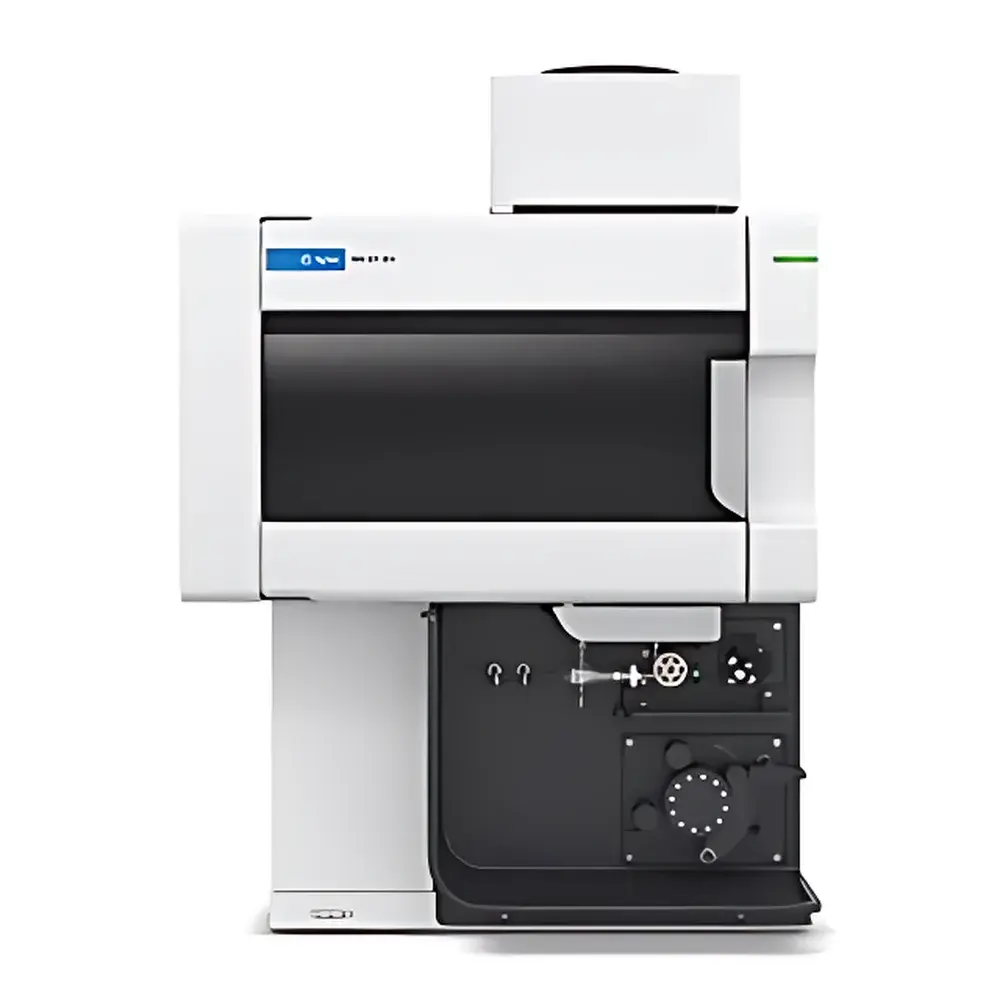
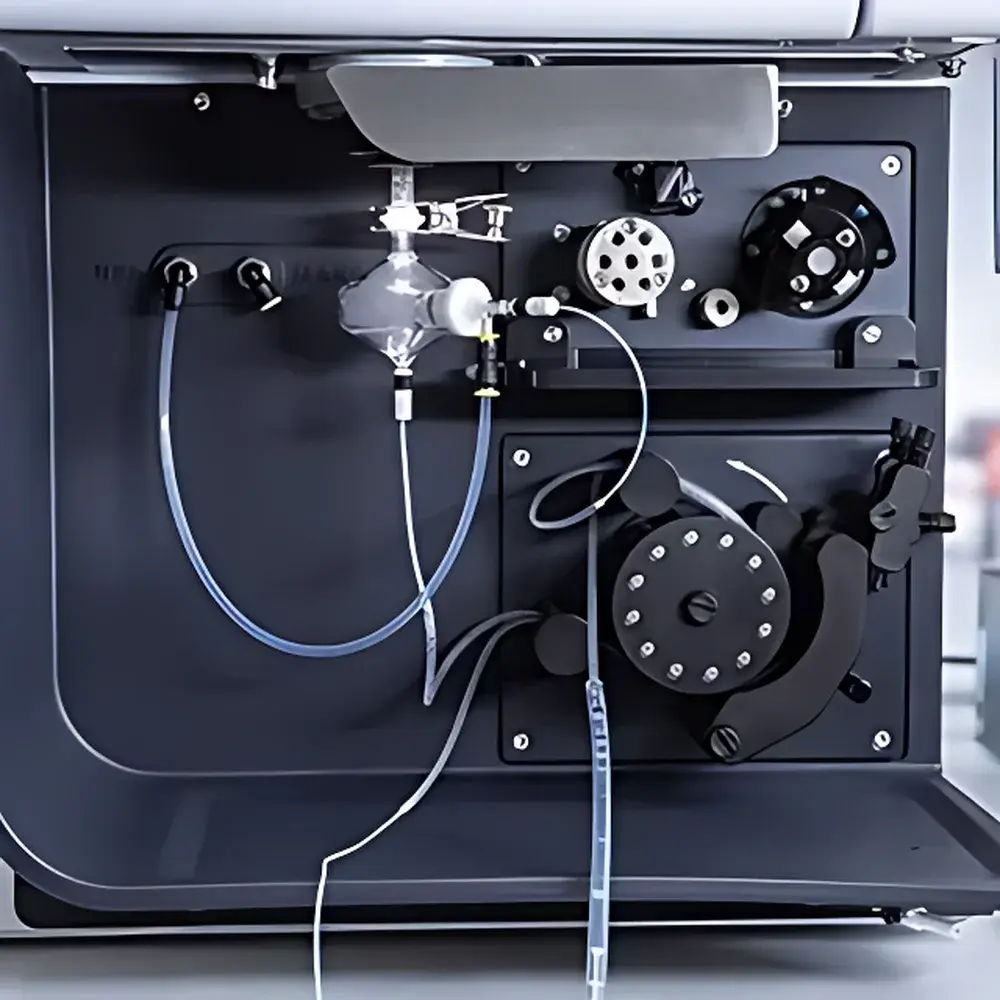
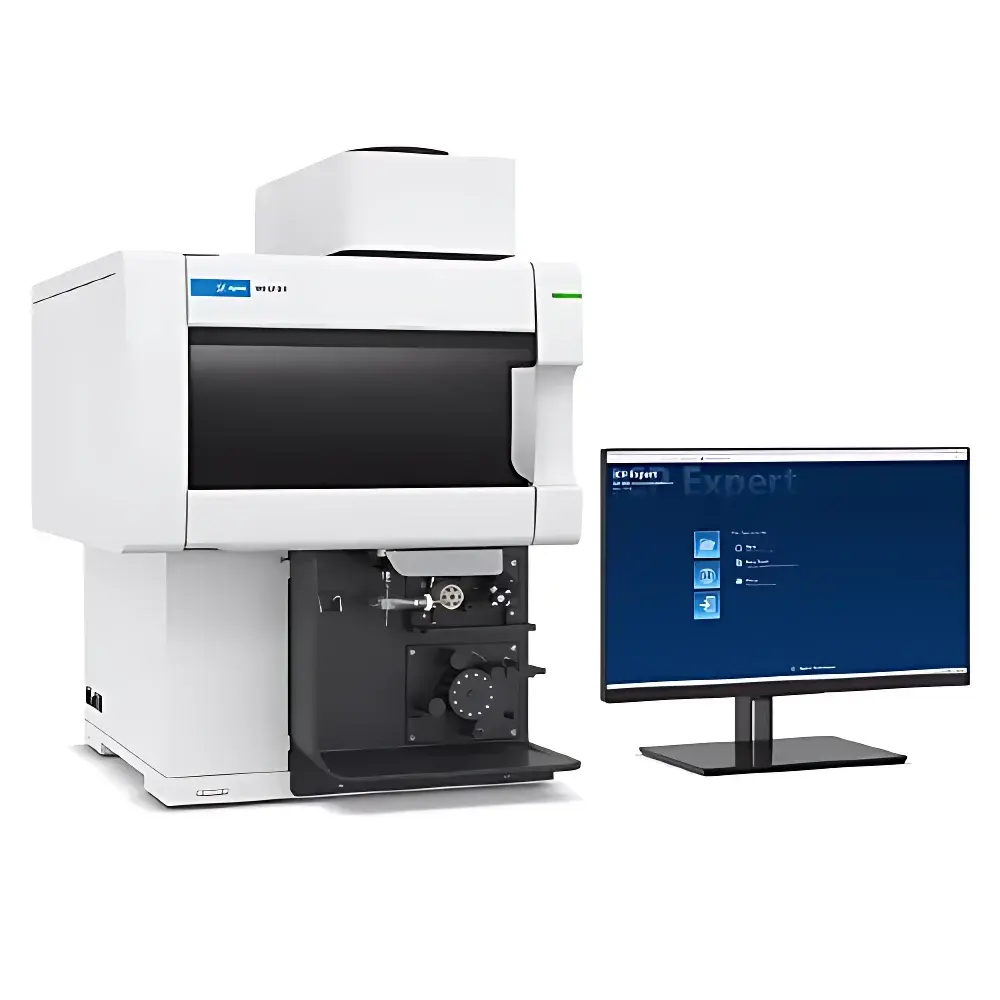
Agilent 5900 SVDV ICP-OES
| Brand | Agilent Technologies |
|---|---|
| Origin | Malaysia |
| Manufacturer Type | Original Equipment Manufacturer (OEM) |
| Origin Category | Imported |
| Model | 5900 ICP-OES |
| Instrument Type | Full-Spectrum Direct-Reading |
| Detection Limit | S (180.669 nm) < 5 µg/L |
| Repeatability | ≤1.0% RSD |
| Short-Term Stability | RSD ≤0.5% |
| Wavelength Range | 167–785 nm |
| Optical Resolution | ≤0.0065 nm (at As 188.980 nm) |
Overview
The Agilent 5900 SVDV ICP-OES is a high-performance, full-spectrum direct-reading inductively coupled plasma optical emission spectrometer engineered for laboratories requiring rigorous elemental analysis at scale. It operates on the fundamental principle of atomic emission spectroscopy: sample aerosols are introduced into an argon plasma (~6,000–10,000 K), where atoms and ions are thermally excited and emit element-specific photons upon relaxation. These emissions are dispersed by a proprietary freeform optical system and simultaneously detected across the full 167–785 nm spectral range using a solid-state CCD array detector. The instrument’s defining innovation—Synchronous Vertical Dual View (SVDV)—enables concurrent axial and radial plasma observation within a single integration cycle. This eliminates sequential viewing mode switching, reduces total analysis time per sample by up to 40%, and preserves sensitivity for trace elements (e.g., S at 180.669 nm, DL < 5 µg/L) while maintaining linear dynamic range for major constituents such as Na and K.
Key Features
- Synchronous Vertical Dual View (SVDV) Optics: Simultaneous acquisition of axial (high sensitivity) and radial (high matrix tolerance) emission signals in one read, enabling robust multi-concentration analysis without method reconfiguration.
- Freeform Optical Design: A compact, aberration-corrected monochromator architecture delivering ≤0.0065 nm resolution (verified at As 188.980 nm) and improved signal-to-noise ratio across the full 167–785 nm range.
- Advanced Valve System (AVS): Integrated pneumatic valve control minimizes argon consumption by >30% during standby and rinse cycles while ensuring precise nebulizer gas flow stability for reproducible aerosol generation.
- IntelliQuant Spectral Intelligence: Real-time full-spectrum acquisition with automated interference identification (e.g., spectral overlaps from Ca–Ar or Fe–O bands), recommended correction strategies (IEC, FBC, FACT), and elemental quantification without pre-defined calibration sets.
- Proactive Diagnostics Suite: Early Maintenance Feedback (EMF) monitors >100 hardware parameters (plasma impedance, coolant flow, RF forward/reflected power, torch alignment status); Neb Alert continuously tracks nebulizer pressure drift to preempt clogging or leakage events.
- Vertical Torch Configuration: Optimized for high-TDS samples (up to 25% w/v), reducing carbon/salt deposition on the injector and extending torch lifetime—critical for environmental digests, brines, and geological leachates.
Sample Compatibility & Compliance
The 5900 SVDV ICP-OES supports aqueous solutions, acid-digested matrices (HNO₃, HCl, HF), organic solvents (with oxygen ashing), and slurry suspensions (via ultrasonic nebulization). Its dual-view geometry and intelligent background correction algorithms ensure accurate quantification across diverse regulatory frameworks—including EPA Methods 200.7, 200.8, and 6020B; ISO 11885; ASTM D1976; and USP / for elemental impurities in pharmaceuticals. The system complies with GLP/GMP data integrity requirements via ICP Expert Pro’s audit-trail-enabled workflow, electronic signatures, and 21 CFR Part 11–compliant user access controls and method locking.
Software & Data Management
ICP Expert Pro is the embedded, validated software platform delivering end-to-end method development, acquisition, and reporting. It supports real-time export to Microsoft Excel, customizable repeat analysis logic (e.g., auto-reinjection upon RSD >1.5%), integrated control of prepFAST automated dilution systems, and batch processing of up to 500 samples with scheduled QC checks. All spectral data—including raw intensity maps, background-subtracted peaks, and diagnostic logs—are stored in vendor-neutral HDF5 format for third-party chemometric analysis. Software updates follow Agilent’s formal change control process, with validation documentation available under controlled release protocols.
Applications
- Environmental testing: Multi-element quantification in wastewater, soil extracts, and airborne particulates per EPA regulatory limits.
- Geochemical exploration: Rapid screening of rock digests for base metals (Cu, Zn, Pb), precious metals (Au, Ag), and rare earth elements (REEs).
- Pharmaceutical quality control: Compliant assessment of catalyst residues (Pd, Pt, Ni) and elemental impurities in APIs and excipients.
- Food safety: Monitoring toxic elements (As, Cd, Pb, Hg) and nutrients (Ca, Mg, Fe, Zn) in fortified beverages and infant formula.
- Metallurgical process control: On-line monitoring of bath composition in electroplating and pickling solutions.
FAQ
What distinguishes SVDV from conventional dual-view ICP-OES systems?
Unlike sequential axial/radial systems requiring two separate integrations—and introducing inter-run variability—SVDV captures both views synchronously, eliminating timing artifacts and enabling true co-located measurement of trace and major elements.
How does the freeform optical design improve analytical performance?
The freeform mirror geometry corrects off-axis aberrations inherent in traditional Czerny–Turner designs, increasing photon throughput and spectral fidelity—particularly below 190 nm—without enlarging instrument footprint.
Is the 5900 compatible with high-salt matrices like seawater or brine?
Yes. The vertical torch orientation, combined with AVS-driven optimized nebulization and robust plasma stabilization, enables stable operation with TDS levels up to 25%, significantly reducing torch cleaning frequency versus horizontal configurations.
Can IntelliQuant replace manual interference correction during method development?
IntelliQuant identifies and classifies spectral interferences in real time and recommends appropriate correction models (e.g., IEC for overlapping lines, FBC for complex background shapes), but final method validation still requires empirical verification per ISO/IEC 17025 guidelines.
Does the system support remote diagnostics and predictive maintenance?
EMF data is accessible via Agilent’s SecureLink remote service portal; predictive alerts (e.g., “RF generator thermal load trending upward”) trigger automated service ticket creation with contextual sensor history for accelerated technician dispatch.
Related Products






