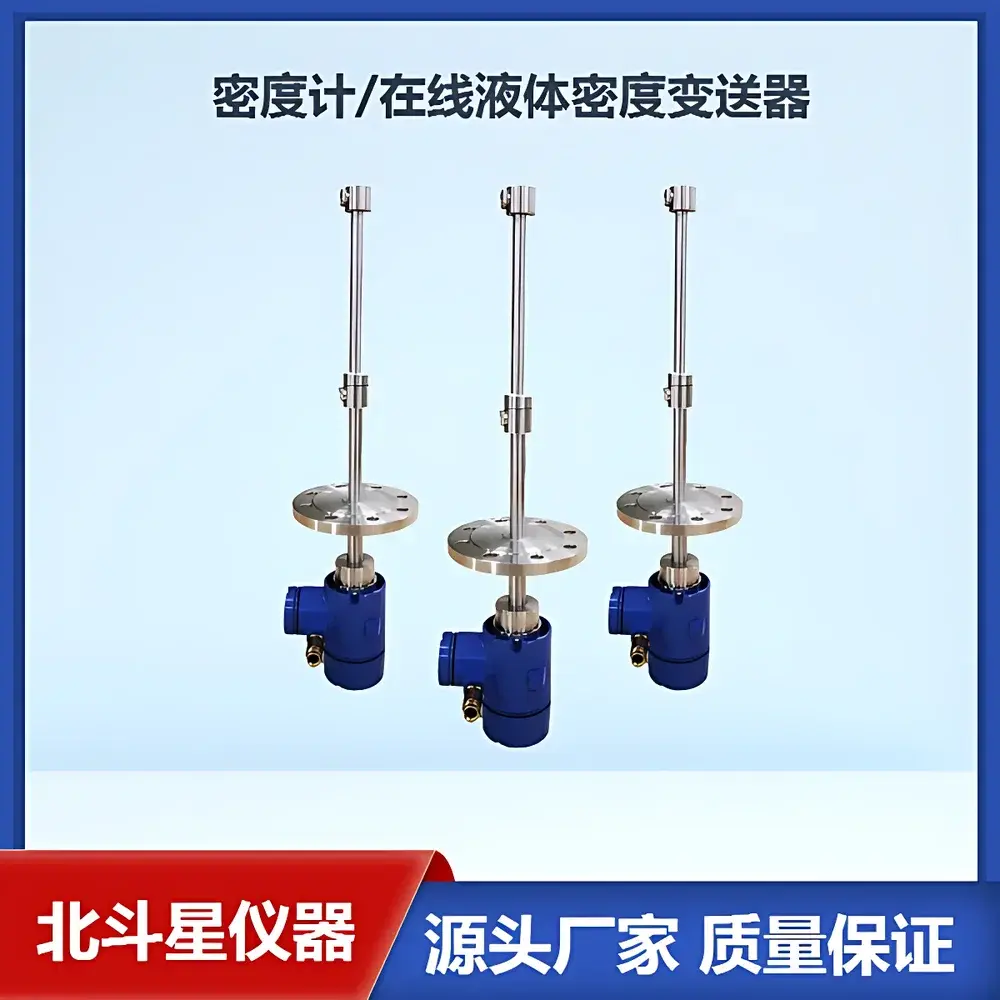
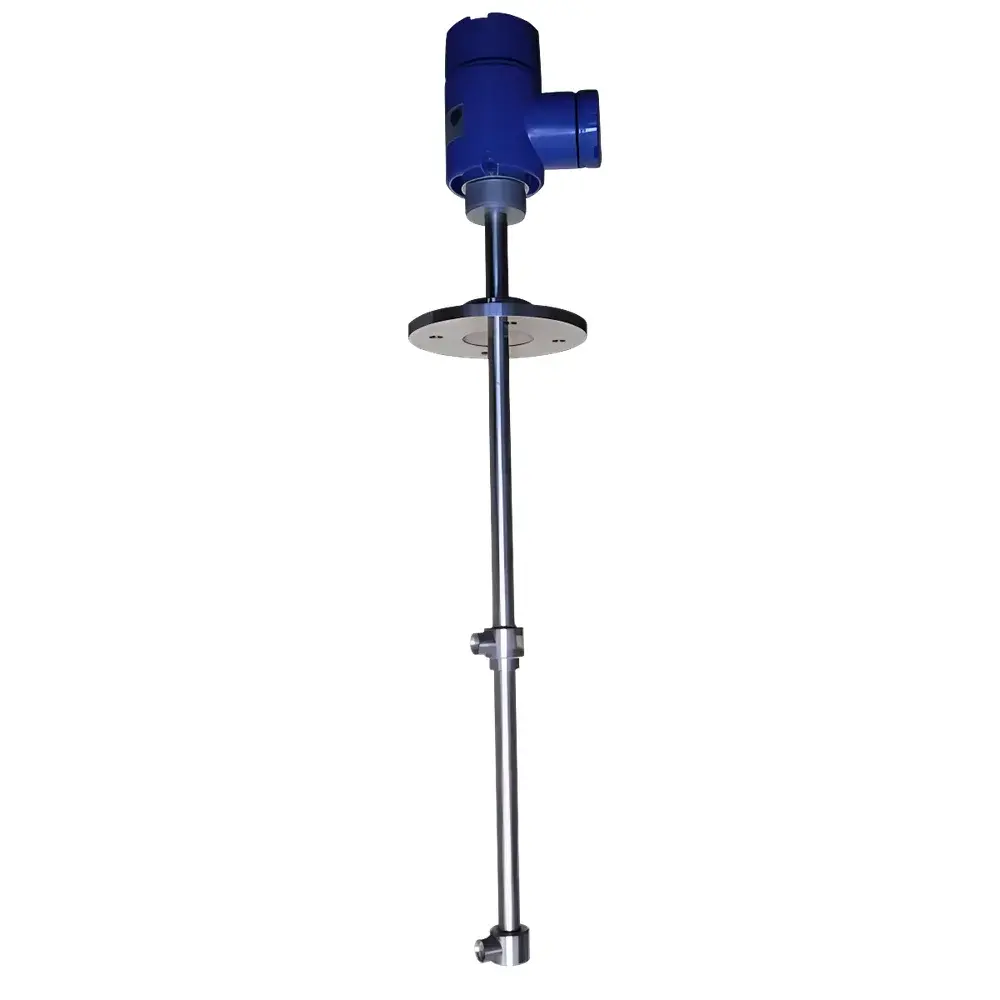
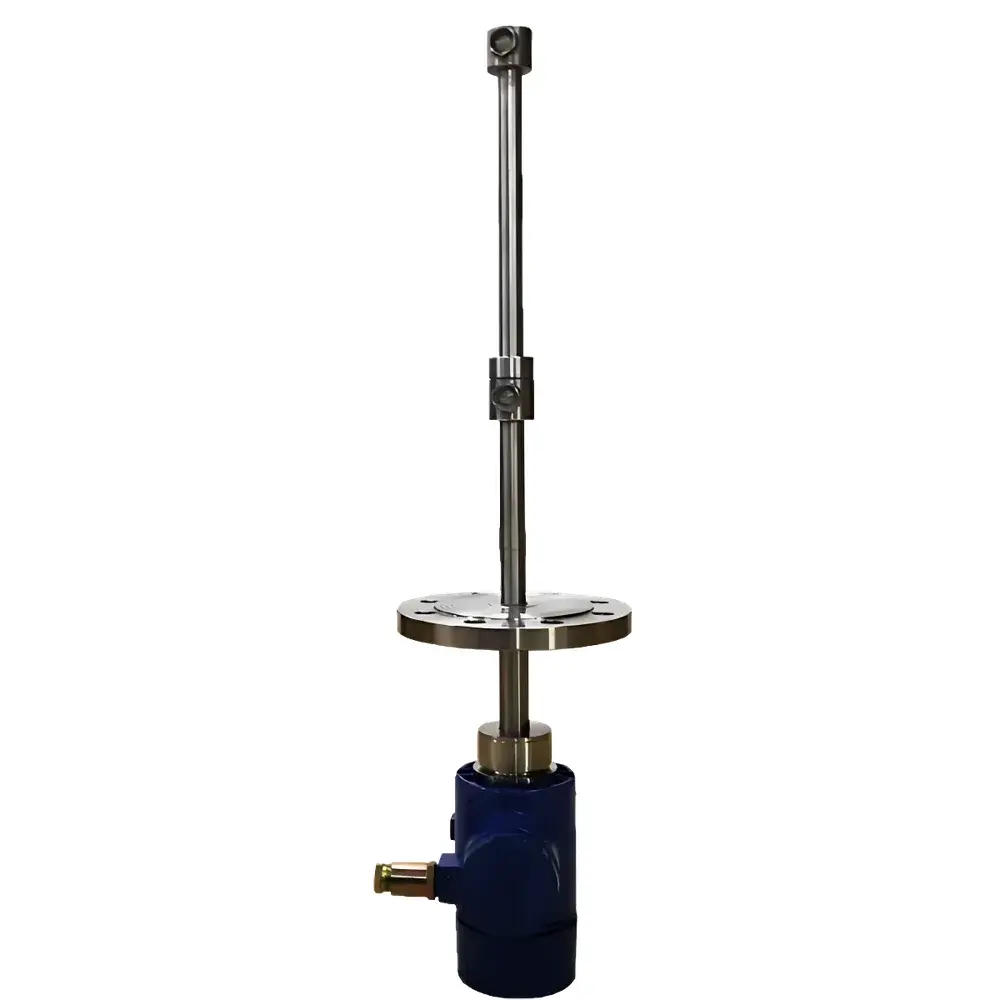
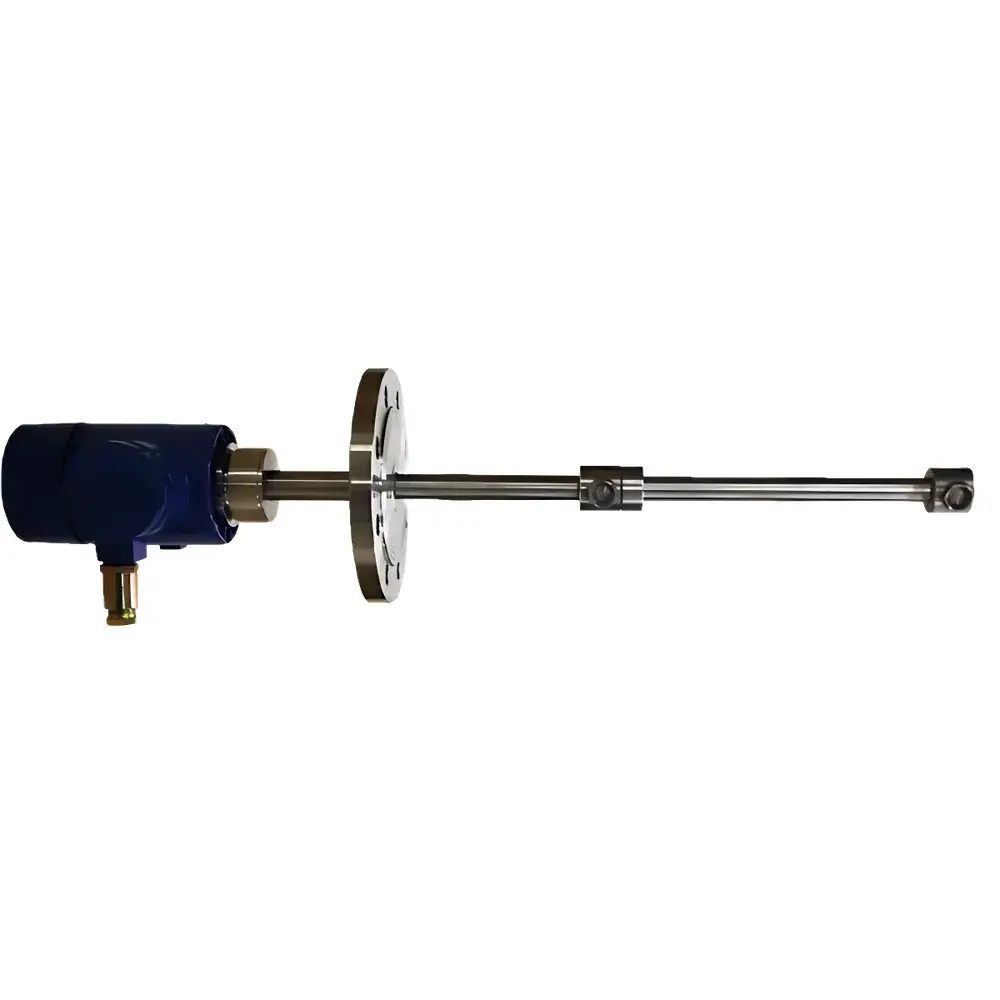
Bigdipper TBD5 DS1390 Series Differential Pressure Liquid Density Transmitter
| Brand | Bigdipper |
|---|---|
| Origin | Beijing, China |
| Manufacturer Type | Direct Manufacturer |
| Model | TBD5 DS1390 |
| Output Signal | 4–20 mA (configurable linear or control mode) |
| Communication Interfaces | RS232, RS485 (selectable baud rate), IEEE 1451.1 NCAP compliant |
| Enclosure Rating | NEMA 6P / NEMA 7 / NEMA 8 / NEMA 9 / IP67 |
| Explosion Protection | Intrinsic Safety (Ia), Class I Div 1 Groups A/B/C/D |
| Operating Temperature | −40 to +85 °C (max 125 °C transient) |
| Storage Temperature | −51 to +125 °C |
| Humidity Range | 0–95% RH (non-condensing) |
| Power Supply | 12/24 V DC ±20%, <100 mW total consumption |
| Repeatability | ±0.02% FS |
| Accuracy | <±1.0% of full scale |
| Response Time | <100 ms |
| Long-Term Stability | ±1% FS per year |
| Wetted Materials | 316SS or 304 stainless steel |
| Measuring Principle | Dual-point differential pressure (ΔP) with temperature-compensated density calculation |
| Probe Immersion Length Options | 30 cm, 60 cm, or 30 cm (model-dependent) |
| Max Working Pressure | 0.0345–0.21 MPa (model-dependent) |
| Display Interface | Built-in 2×16 character LCD driver with external keypad (no PC required) |
| Data Logging | Configurable intervals (hourly,定点, daily, monthly, quarterly, annual) |
| Temperature Compensation | Embedded real-time thermal correction algorithm |
| Digital Outputs | 2 × open-collector 5 V switches |
| Real-Time Clock | Integrated |
Overview
The Bigdipper TBD5 DS1390 Series Differential Pressure Liquid Density Transmitter is an industrial-grade, continuous online density measurement instrument engineered for rigorous process environments. It operates on the well-established hydrostatic differential pressure principle: two pressure sensors—mounted at fixed vertical separation—measure static pressure difference across a known fluid column height. Using calibrated fluid head length and real-time temperature-corrected fluid density algorithms, the transmitter computes density (g/cm³) directly from ΔP, eliminating reliance on float-based or vibrating-element methods prone to fouling, drift, or mechanical wear. Designed specifically for applications where conventional densitometers fail—including high-temperature, highly corrosive, viscous, or steam-saturated media—the TBD5 DS1390 integrates ceramic or diffused-silicon sensing elements with microprocessor-based signal conditioning to suppress thermal drift, zero shift, and electromagnetic interference. Its intrinsic safety certification (Ia) and NEMA 7/8/9/IP67-rated housing enable deployment in hazardous locations across oil & gas, chemical processing, wastewater treatment, food & beverage, and metallurgical industries.
Key Features
- Dual-sensor differential pressure architecture with factory-trimmed thermal compensation, delivering ±0.02% full-scale repeatability and <±1.0% FS accuracy under dynamic process conditions.
- Robust wetted materials (316SS or 304 stainless steel) compatible with aggressive media including concentrated acids, caustics, slurries, crude oil, dairy emulsions, and fermentation broths.
- Self-contained local interface: 2×16-character LCD driver with plug-in keypad enables field calibration, parameter configuration, and diagnostics without external PCs or proprietary software.
- Configurable analog output: 4–20 mA signal supports both linear density representation and closed-loop control actuation, with user-defined scaling and engineering unit mapping.
- Multi-protocol digital connectivity: RS232 for local diagnostics, RS485 for multi-drop network integration (up to 32 nodes), and IEEE 1451.1 NCAP compliance for smart sensor node interoperability within industrial IoT architectures.
- Embedded real-time clock and non-volatile memory support time-stamped data logging at configurable intervals—hourly averages, shift-based snapshots, or long-term archival (daily/monthly/quarterly/yearly).
- Integrated alarm logic: Two open-collector 5 V digital outputs and one opto-isolated 220 V AC/1 A relay provide fail-safe interlocks for density deviation, sensor fault, or power loss events.
Sample Compatibility & Compliance
The TBD5 DS1390 is validated for continuous density monitoring of homogeneous and heterogeneous liquids in open or pressurized vessels, provided dual sensor immersion is maintained. It accommodates high-viscosity fluids (e.g., bitumen, sludge, polymer solutions), particulate-laden streams (mining tailings, activated sludge), and thermally unstable formulations (fermentation broth, hot caustic wash). Its design conforms to international functional safety and environmental standards: intrinsic safety per IEC 60079-0/-11 (Class I Div 1, Groups A–D; Class II Div 1, Groups E–G), ingress protection per IEC 60529 (IP67), and mechanical robustness per NEMA 250 (NEMA 6P, 7, 8, 9). While not pre-certified to FDA 21 CFR Part 11, its audit-ready data logging, timestamped event records, and parameter change logs support GLP/GMP-aligned validation protocols when deployed in regulated manufacturing environments.
Software & Data Management
No host software installation is required for basic operation or calibration. All configuration—including range selection, damping factor, averaging mode (moving average, fixed-interval, or point-based), temperature compensation coefficients, and alarm thresholds—is performed via the onboard keypad and LCD interface using English-language prompts. For system integrators, ASCII-based command sets over RS232/RS485 allow seamless incorporation into DCS, PLC, SCADA, or MES platforms. Logged density values include UTC timestamps, sensor status flags, and ambient temperature readings. Data export is supported via serial polling; historical archives are retained in non-volatile memory with cyclic overwrite policy. Firmware updates are delivered via UART bootloader interface—no hardware modification required.
Applications
- Petroleum refining: Real-time density monitoring of crude cuts, fuel blending streams, and desalter effluent to optimize separation efficiency and custody transfer accuracy.
- Chemical production: Concentration control of sulfuric acid, sodium hydroxide, and ammonium nitrate solutions in reaction vessels and storage tanks.
- Wastewater treatment: Sludge concentration profiling in thickeners and digesters to regulate polymer dosing and dewatering cycles.
- Food & beverage: Alcohol content verification in distillation columns, sugar concentration tracking in juice evaporation, and fat content estimation in dairy homogenization lines.
- Mining & minerals: Pulp density management in cyclone feed circuits and leach tank monitoring to maintain optimal solid-to-liquid ratios.
- Pharmaceutical manufacturing: Batch consistency verification during solvent recovery, buffer preparation, and API crystallization processes.
FAQ
Can the TBD5 DS1390 measure density in pressurized vessels?
Yes—custom configurations are available for sealed systems; standard models are rated for up to 0.21 MPa (30 psi) working pressure depending on probe length variant.
Is temperature compensation automatic or user-configurable?
The transmitter applies embedded real-time thermal correction using internal Pt100-grade sensing; no manual coefficient entry is required.
What is the minimum immersion depth required for valid measurement?
The lower sensor must remain fully submerged at all times; minimum immersion is defined by model-specific SL (e.g., 30 cm or 60 cm) and correlates with maximum measurable density range.
Does the device support HART or Foundation Fieldbus protocols?
No—only analog 4–20 mA, RS232, and RS485 interfaces are implemented; HART or FF require external protocol converters.
How is calibration performed in the field?
Zero and span calibration use certified reference liquids (e.g., water, glycerol solutions) and are executed via the keypad-driven menu system with on-screen guidance—no external tools or documentation needed.