
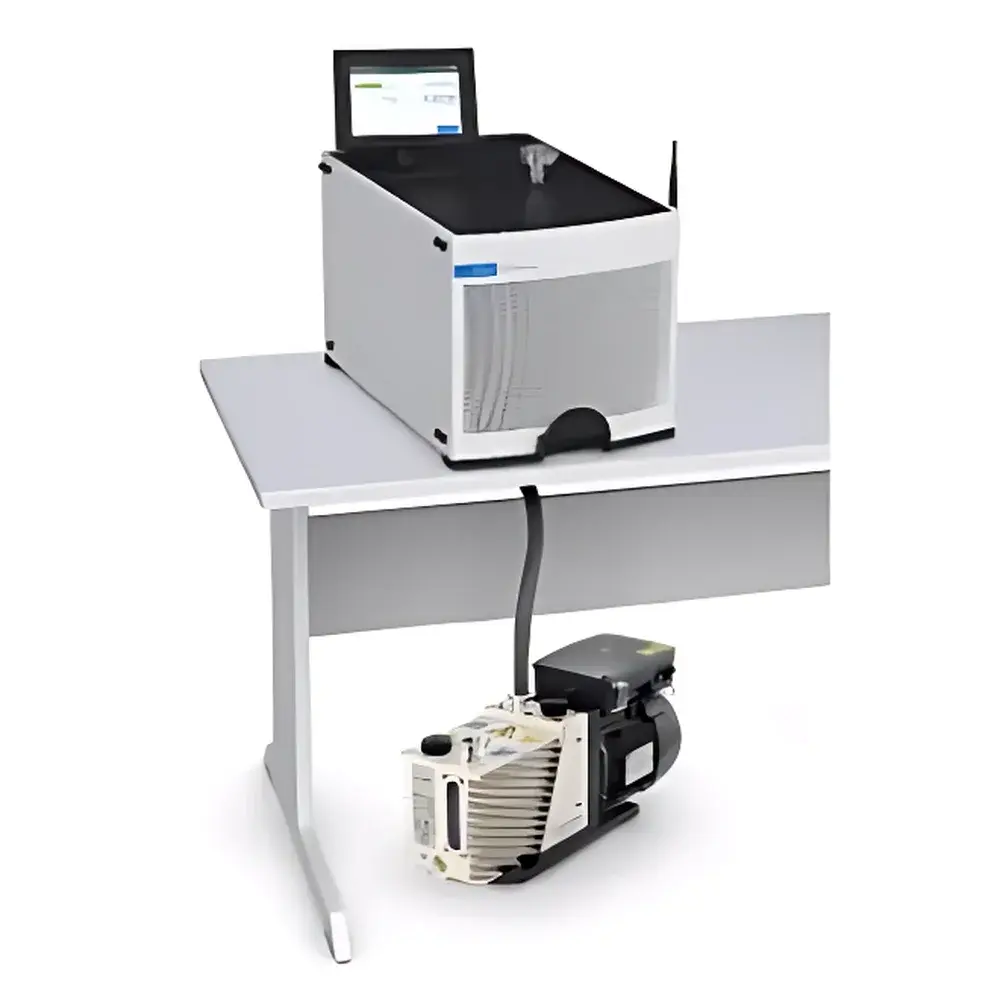
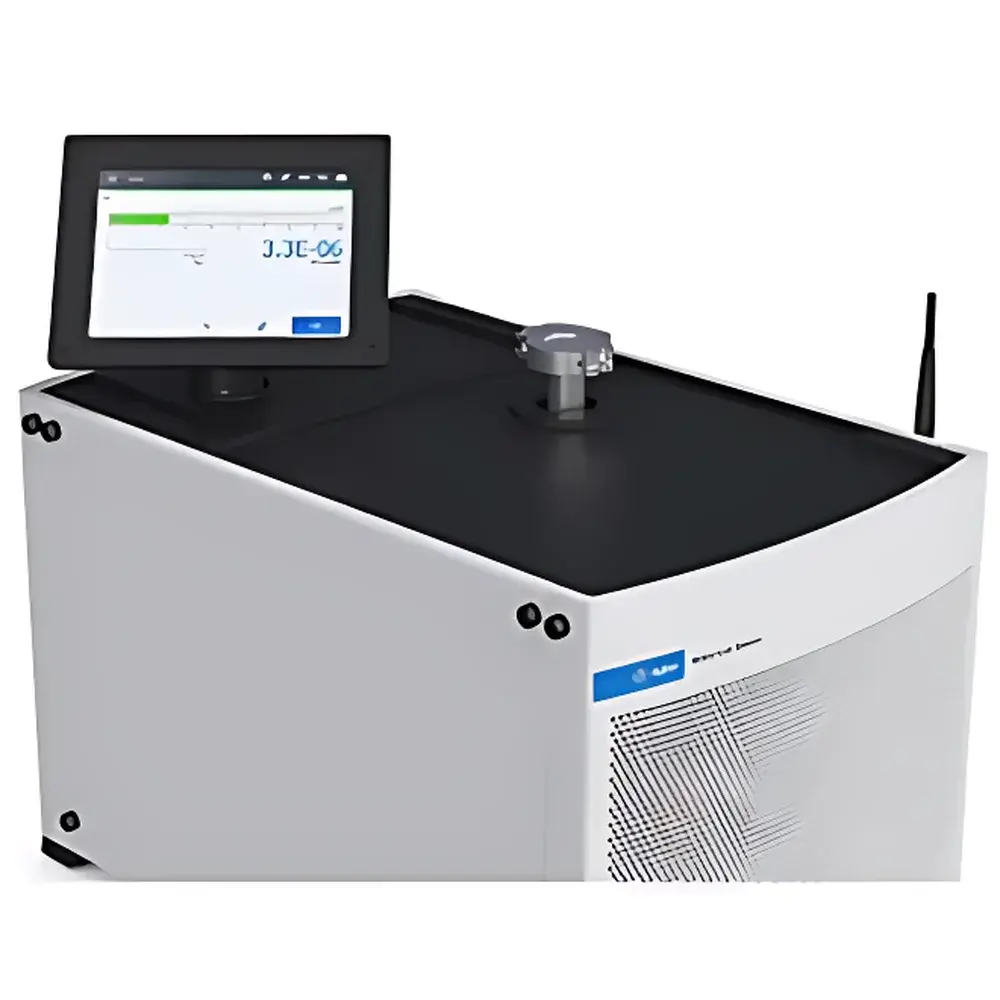
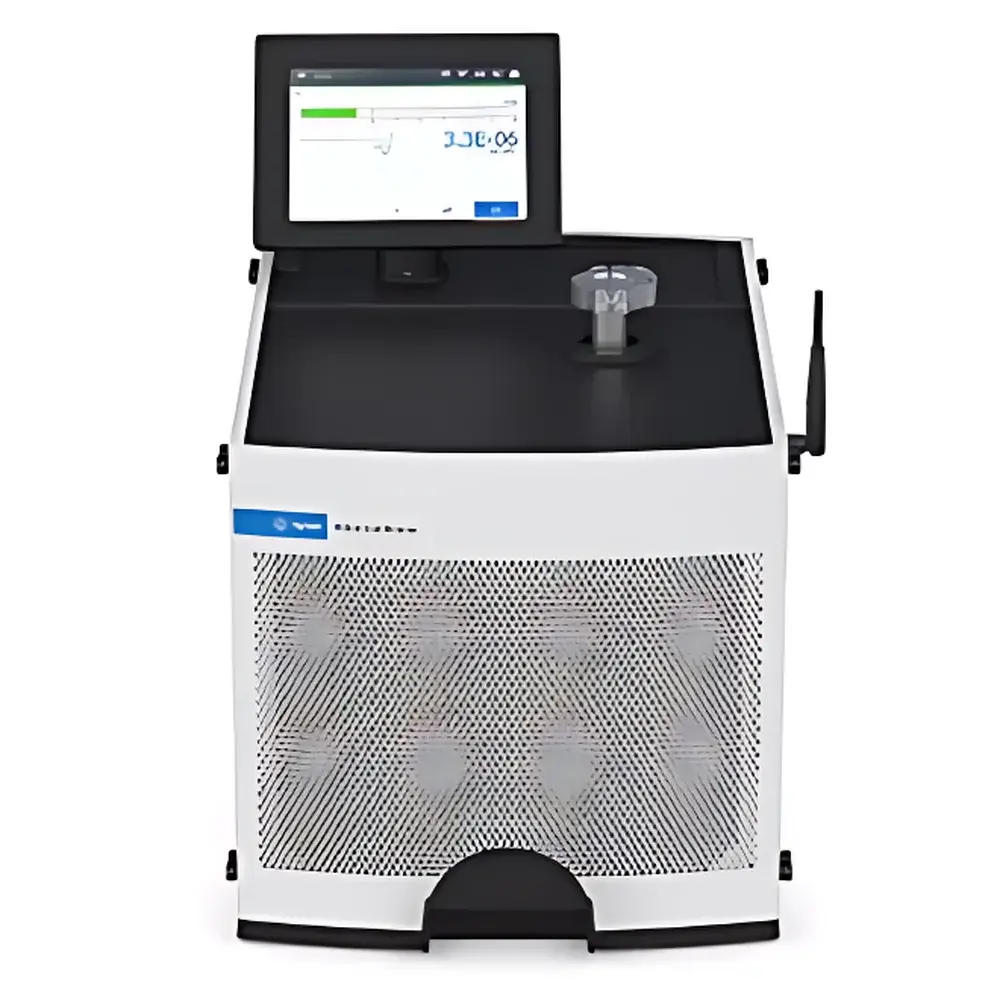
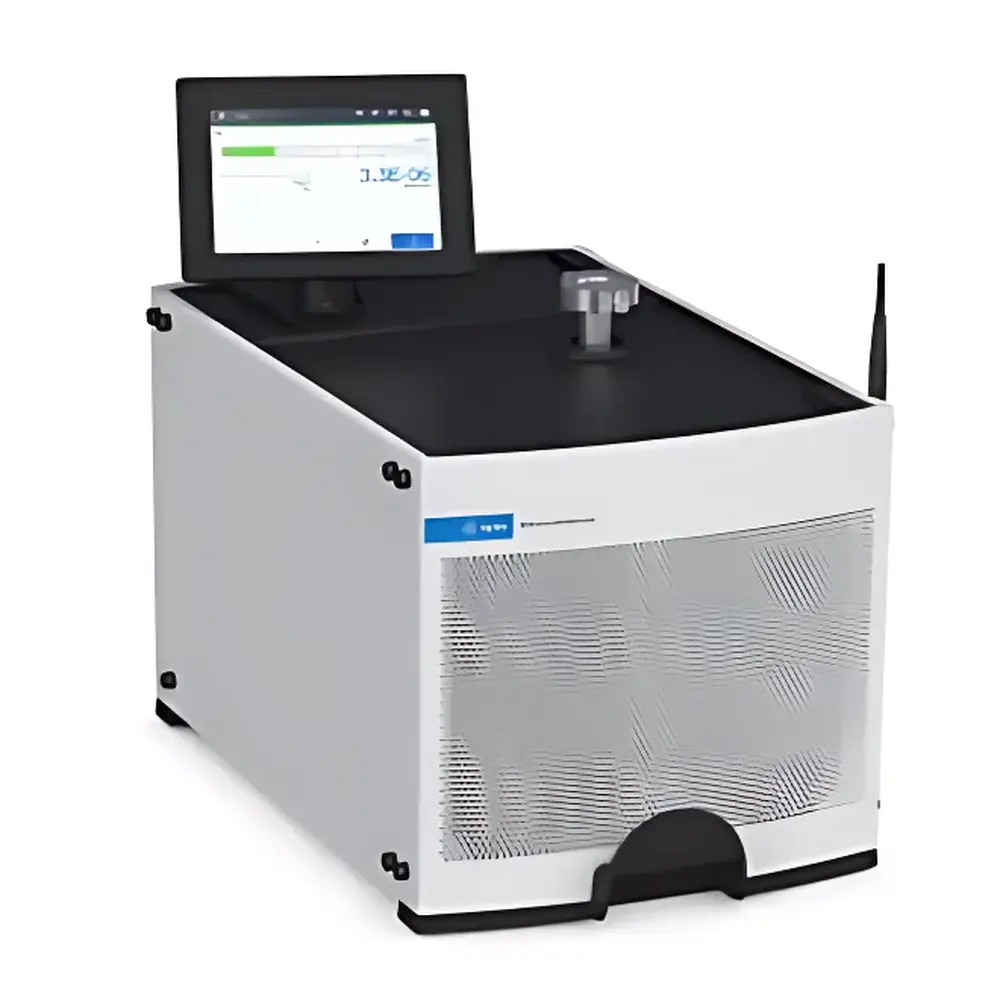
Agilent HLD BR15 Benchtop Helium Mass Spectrometer Leak Detector
| Brand | Agilent Technologies |
|---|---|
| Origin | USA |
| Manufacturer Type | Original Equipment Manufacturer (OEM) |
| Import Status | Imported |
| Model | HLD BR15 |
| Pricing | Available Upon Request |
Overview
The Agilent HLD BR15 Benchtop Helium Mass Spectrometer Leak Detector is a high-sensitivity, dedicated helium detection system engineered for quantitative and qualitative leak assessment in vacuum-integrated industrial and laboratory environments. Operating on the principle of magnetic sector mass spectrometry, the instrument selectively ionizes helium atoms (mass-to-charge ratio m/z = 4) and separates them from background gases using precise magnetic field deflection—enabling detection limits as low as 5 × 10⁻¹² Pa·m³/s under optimized conditions. Unlike broad-spectrum residual gas analyzers, the HLD BR15 employs a fixed-mass, single-ion detection architecture optimized exclusively for helium, delivering superior signal-to-noise ratio, long-term stability, and immunity to interference from hydrogen, water vapor, or hydrocarbons. Its benchtop form factor integrates a fully sealed, bakeable stainless-steel analyzer chamber, a differential pumping stage, and an integrated turbomolecular pump system—designed to maintain ultra-high vacuum (UHV) base pressure (<1 × 10⁻⁷ Pa) during operation and standby.
Key Features
- Dedicated helium mass spectrometer with magnetic sector analyzer and Faraday cup detector for high reproducibility and minimal drift over extended operational cycles
- Integrated Agilent DS-302 dual-stage rotary vane pump (pumping speed: 15 m³/h) with oil mist filter and exhaust line management hardware—enabling rapid system evacuation and efficient helium background purge between test cycles
- 180° rotatable industrial-grade capacitive touchscreen interface with IP65-rated front panel, supporting glove-compatible operation and intuitive flat-menu navigation
- Six preconfigured application wizards—including vacuum chamber validation, hermetic package testing, semiconductor tool qualification, HVAC coil integrity verification, medical device sealing inspection, and automotive EV battery enclosure screening—each auto-configuring ion source voltage, emission current, and amplifier gain based on expected leak range and part geometry
- Enhanced data visualization suite featuring time-stamped leakage rate vs. time curves, dual-axis pressure monitoring (test port + foreline), color-coded alarm thresholds, and pinch-to-zoom waveform analysis for transient leak event characterization
- Extended vacuum hold capability: automated shutdown sequence preserves turbomolecular pump rotor vacuum state and maintains analyzer chamber at <5 × 10⁻⁶ Pa for up to 72 hours post-power-off—reducing pump-down time during subsequent startups by >80%
Sample Compatibility & Compliance
The HLD BR15 supports direct connection to components ranging from miniature MEMS packages (via micro-flange adapters) to large-volume vacuum vessels (up to 2 m³) using standard ISO-KF 40, CF-63, or DN25 vacuum fittings. It complies with IEC 61000-6-3 (EMC emissions), IEC 61000-6-2 (immunity), and UL 61010-1 safety standards. For regulated environments, the system supports audit-ready operation under FDA 21 CFR Part 11 via optional Agilent OpenLab CDS integration, including electronic signature enforcement, user-level access control, and immutable test log archiving. All helium response calibrations are traceable to NIST SRM 1991a (helium-in-nitrogen standard), and routine performance verification follows ASTM E493-22 “Standard Practice for Leaks Using Helium Mass Spectrometer Test Methods”.
Software & Data Management
Firmware v3.2 and higher support local data storage on encrypted internal SSD (32 GB), export of CSV/CSVX-formatted test reports with full metadata (operator ID, timestamp, ambient temperature/humidity, calibration certificate ID), and seamless synchronization with Agilent’s enterprise-grade LabAdvisor™ platform. The embedded software includes GLP-compliant features such as automatic calibration logging, interlock status monitoring (pump temperature, foreline pressure, filament health), and configurable pass/fail criteria per test step. Optional remote diagnostics enable secure TLS 1.3–encrypted technician access for predictive maintenance alerts and firmware updates without physical intervention.
Applications
- Qualification of vacuum integrity in semiconductor process chambers, electron microscopes, and thin-film deposition systems
- Hermeticity validation of implantable medical devices (ISO 11607-1), drug delivery cartridges, and sterile barrier packaging
- In-line leak screening of lithium-ion battery enclosures prior to electrolyte filling (UN 38.3 compliance support)
- Leak rate mapping of aerospace fuel manifolds, cryogenic piping, and satellite propulsion modules using sniffing or vacuum chamber modes
- Root cause analysis of outgassing-related contamination in UHV optical benches and particle accelerator beamlines
- Validation of cleanroom glovebox seals and inert atmosphere gloveboxes used in battery R&D and air-sensitive synthesis
FAQ
What is the minimum detectable leak rate under standard operating conditions?
The HLD BR15 achieves a base sensitivity of ≤5 × 10⁻¹² Pa·m³/s when operated with optimal helium partial pressure, stable thermal environment (±1°C), and calibrated reference leaks traceable to NIST.
Can the system be integrated into an automated production test cell?
Yes—RS-232, Ethernet (TCP/IP), and optional Profinet or EtherCAT interfaces support PLC-triggered test sequences, pass/fail output signaling, and real-time data streaming to MES platforms.
Is bake-out capability available for ultra-high vacuum applications?
The analyzer chamber is constructed from electropolished 316L stainless steel and rated for continuous bake-out up to 120°C; external bake controllers and thermocouple inputs are supported via optional accessories.
How often does the turbomolecular pump require maintenance?
With proper foreline pressure management and use of the integrated DS-302 pump’s oil mist filter, the turbomolecular pump typically requires bearing inspection every 15,000 hours and full service every 30,000 hours—documented in the included maintenance logbook and tracked via firmware-based usage counters.
Does the instrument support multi-gas analysis beyond helium?
No—the HLD BR15 is a single-mass, helium-dedicated platform. For residual gas analysis or multi-species leak tracing, Agilent recommends the 7890B GC/MS or QQQ 7010B systems configured with leak detection modules.





