
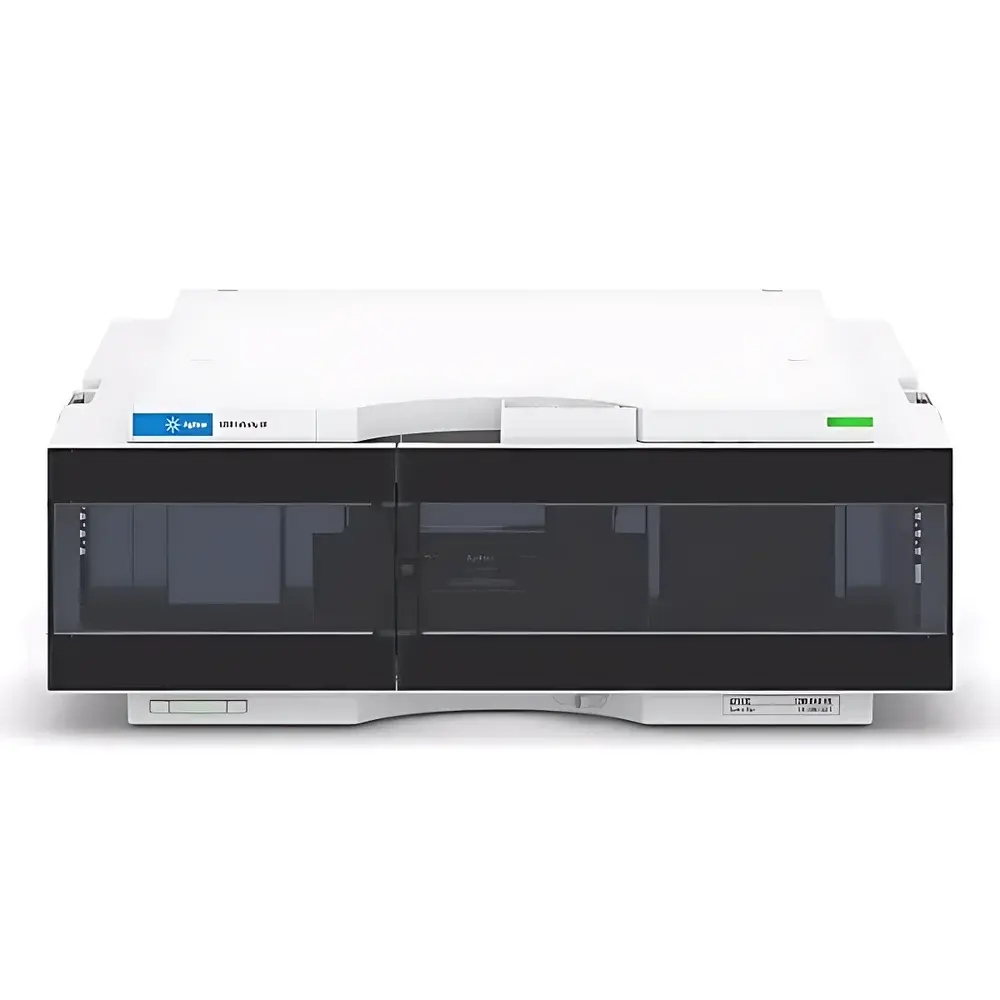
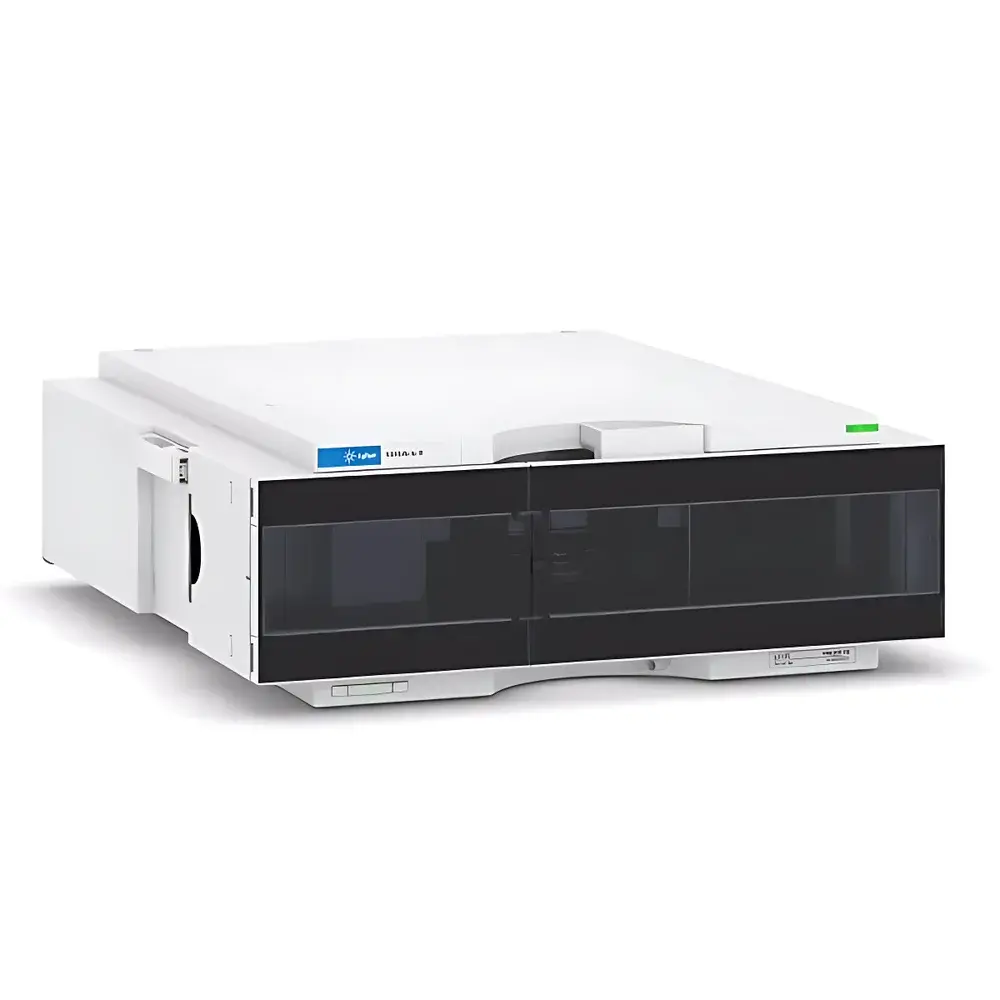
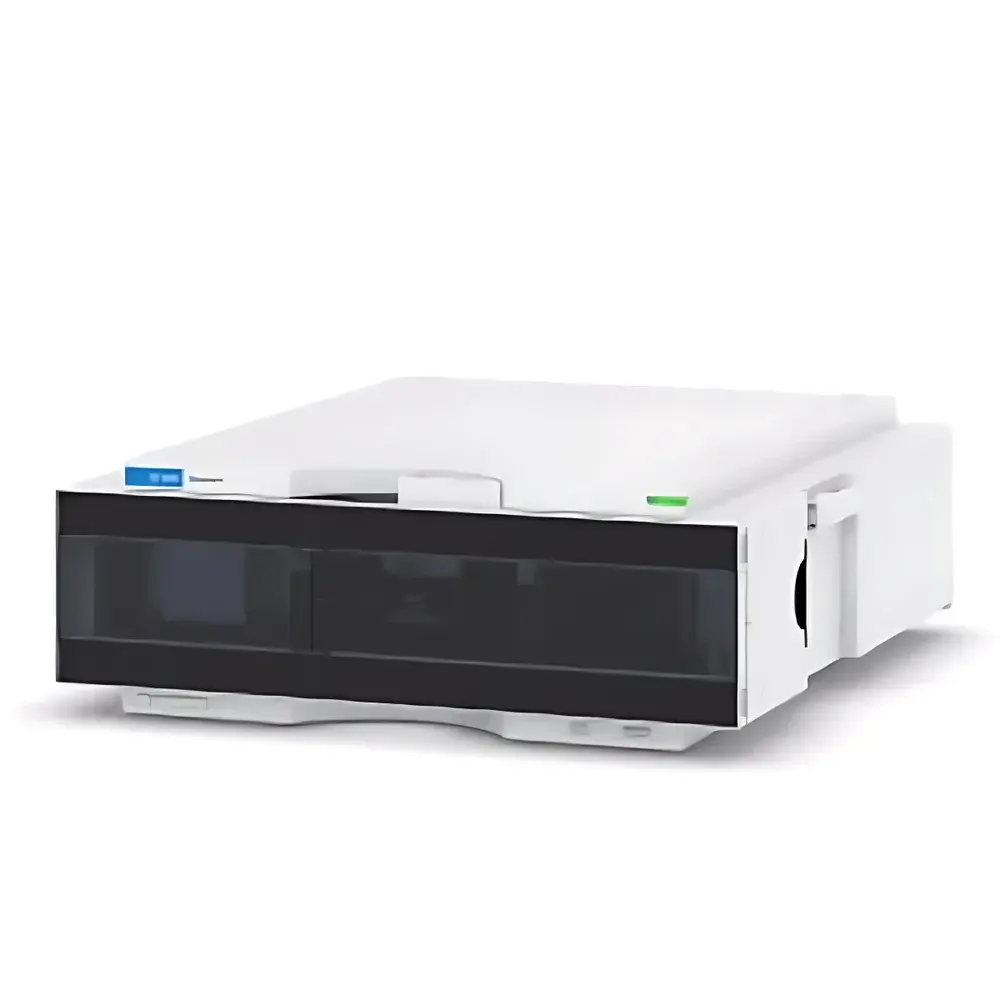
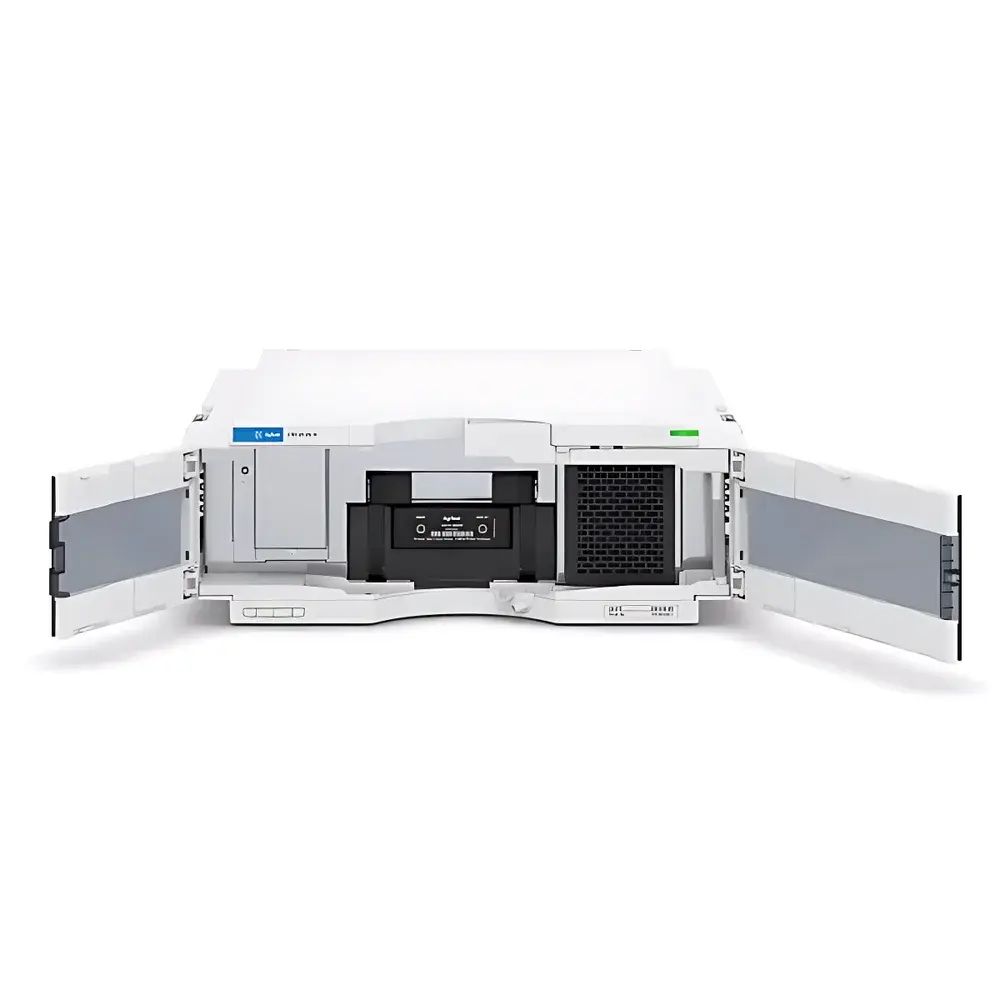
Agilent 1260 Infinity III High-Sensitivity Diode Array Detector (DAD)
| Brand | Agilent Technologies |
|---|---|
| Origin | Germany |
| Manufacturer Type | Original Equipment Manufacturer (OEM) |
| Product Category | Imported Instrument |
| Model | 1260 Infinity III High-Sensitivity Diode Array Detector (HS) |
| Detection Principle | UV-Vis Absorption Spectrophotometry via Fixed-Slit DAD Architecture |
| Noise Level | < ±3 µAU (typical baseline noise, 1 s bandwidth, 254 nm, 10 mm pathlength cell) |
| Signal Channels | Up to 8 simultaneous wavelength-specific absorbance signals |
| Data Acquisition Rate | Up to 120 Hz (full-spectrum acquisition) |
| Flow Cell | Agilent Max-Light Cartridge Flow Cell with Optical Waveguide, 10 mm pathlength (standard), 60 mm pathlength option available (< ±0.6 µAU/cm noise) |
| Compliance | Designed for GLP/GMP environments |
Overview
The Agilent 1260 Infinity III High-Sensitivity Diode Array Detector (HS) is an engineered optical detection module designed specifically for high-performance liquid chromatography (HPLC) and ultra-high-performance liquid chromatography (UHPLC) systems. It operates on the principle of UV-Vis absorption spectroscopy, utilizing a fixed-slit diode array architecture coupled with Agilent’s proprietary Max-Light cartridge flow cell featuring an integrated optical waveguide. This design achieves near-100% optical transmission efficiency while eliminating diffraction-induced resolution loss typically associated with conventional flow cells. The detector delivers exceptional baseline stability and sensitivity—critical for trace-level quantitation, peak purity assessment, and spectral library matching in regulated analytical workflows.
Key Features
- Max-Light optical waveguide flow cell technology ensures maximum photon throughput without compromising chromatographic resolution or peak shape fidelity.
- Two interchangeable flow cell options: standard 10 mm pathlength (optimized for 2.1–4.6 mm ID columns) and high-sensitivity 60 mm pathlength (achieving < ±0.6 µAU/cm noise at 254 nm).
- Fixed-slit optical design eliminates mechanical slit adjustment drift, ensuring long-term wavelength accuracy and reproducibility across instrument lifecycles.
- Real-time, simultaneous acquisition of up to eight user-defined wavelength channels at full spectral resolution (1.2 nm), enabling multi-analyte monitoring and ratiometric correction.
- RFID-enabled flow cells and deuterium/tungsten lamps provide automatic configuration recognition, calibration history logging, and full hardware traceability—essential for audit-ready laboratories.
- Next-generation Electronic Temperature Control (ETC) actively stabilizes optical components against ambient temperature and humidity fluctuations, reducing baseline drift by >70% compared to conventional thermoelectric coolers.
Sample Compatibility & Compliance
The detector is compatible with all Agilent 1260 Infinity III LC modules and fully interoperable with legacy 1200/1290 series systems via firmware update. It supports aqueous and organic mobile phases across pH 1–12 and pressures up to 600 bar. Flow cell wetted materials (fused silica, PEEK, stainless steel) comply with USP Class VI and ISO 10993 biocompatibility standards. When operated within Agilent OpenLab CDS v2.5 or later, the system supports ALCOA+ data integrity principles—including attributable, legible, contemporaneous, original, accurate, complete, consistent, enduring, and available records—as required under FDA 21 CFR Part 11, EU Annex 11, and ICH GCP guidelines.
Software & Data Management
Native integration with Agilent OpenLab CDS enables automated method validation, spectral deconvolution, peak purity analysis (using both angle and threshold algorithms), and real-time library searching (NIST, Wiley, or custom spectral libraries). All raw spectral data (absorbance vs. wavelength vs. time) are stored in vendor-neutral .d format, supporting third-party chemometric tools (e.g., MATLAB, Python SciPy) for multivariate curve resolution (MCR) or principal component analysis (PCA). Audit trail functionality captures every parameter change, lamp usage cycle, flow cell swap, and calibration event with user ID, timestamp, and reason-for-change annotation.
Applications
- Pharmaceutical QC/QA: Release testing of APIs and finished dosage forms per USP , EP 2.2.46, and JP 6.03.
- Biopharmaceutical characterization: Monitoring aggregation, oxidation, and deamidation via UV spectral shifts in monoclonal antibodies and recombinant proteins.
- Environmental analysis: Multi-residue pesticide screening in water and soil extracts using spectral match scores ≥95% confidence thresholds.
- Food safety: Detection of adulterants (e.g., melamine, Sudan dyes) through spectral fingerprinting and peak purity verification.
- Academic research: Kinetic studies requiring high-temporal-resolution spectral snapshots during gradient elution.
FAQ
What is the maximum data acquisition rate for full-spectrum scanning?
Up to 120 Hz (8.3 ms per spectrum), supporting sub-second peak sampling in fast gradient UHPLC methods.
Does the detector support post-run spectral reprocessing?
Yes—raw .d files retain all wavelength-time-absorbance triplets, enabling retrospective extraction of new wavelengths, smoothing algorithms, or baseline correction without re-injection.
How does RFID integration improve compliance in regulated labs?
RFID tags store unique serial numbers, manufacturing date, calibration certificates, and usage logs—automatically ingested into OpenLab CDS audit trails to satisfy FDA 21 CFR Part 11 electronic record requirements.
Can the HS detector be used with non-Agilent LC systems?
It is designed as a dedicated module for Agilent Infinity III platforms; analog voltage output (0–1 V) and RS-232/USB interfaces allow limited external triggering but do not support full bidirectional control or spectral data streaming.
What maintenance intervals are recommended for optimal performance?
Lamp replacement every 2,000 hours (deuterium) or 5,000 hours (tungsten); flow cell cleaning after every 500 injections with aggressive solvents; annual optical alignment verification per Agilent Service Bulletin SB-1260-DAD-002.





