
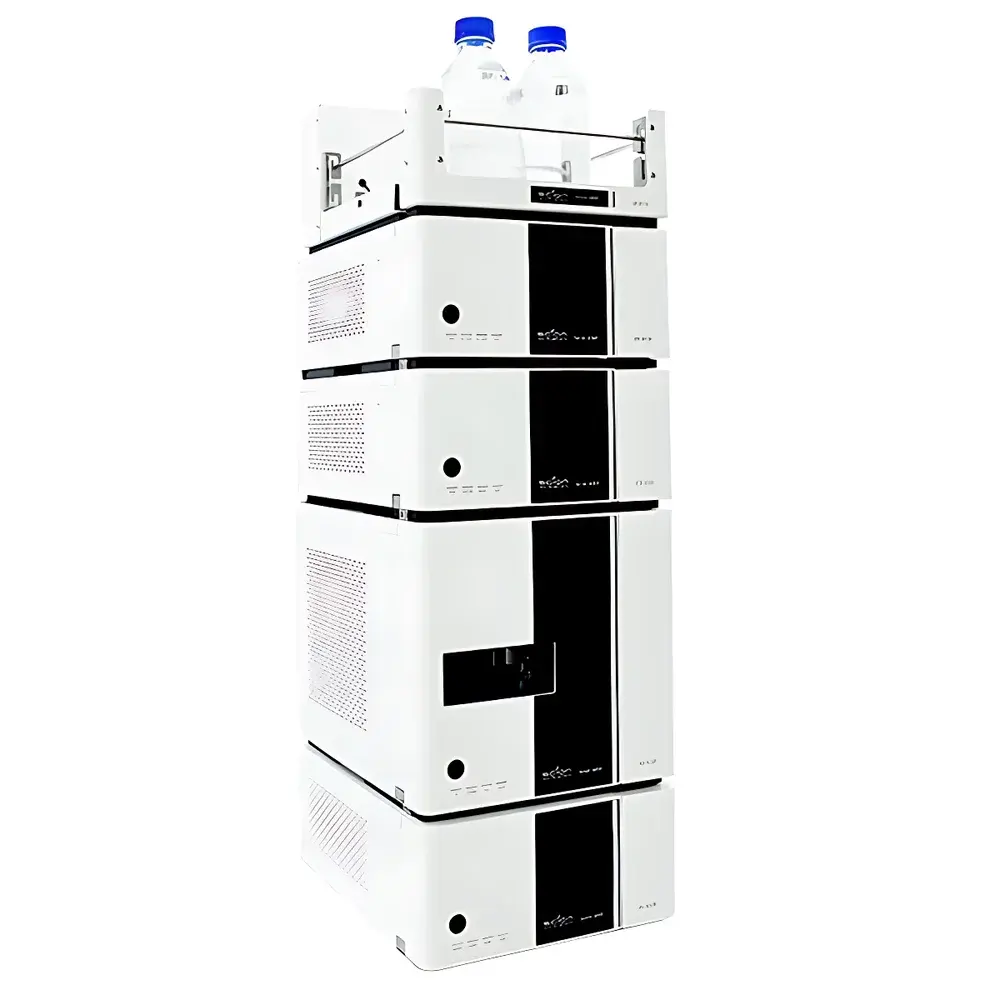
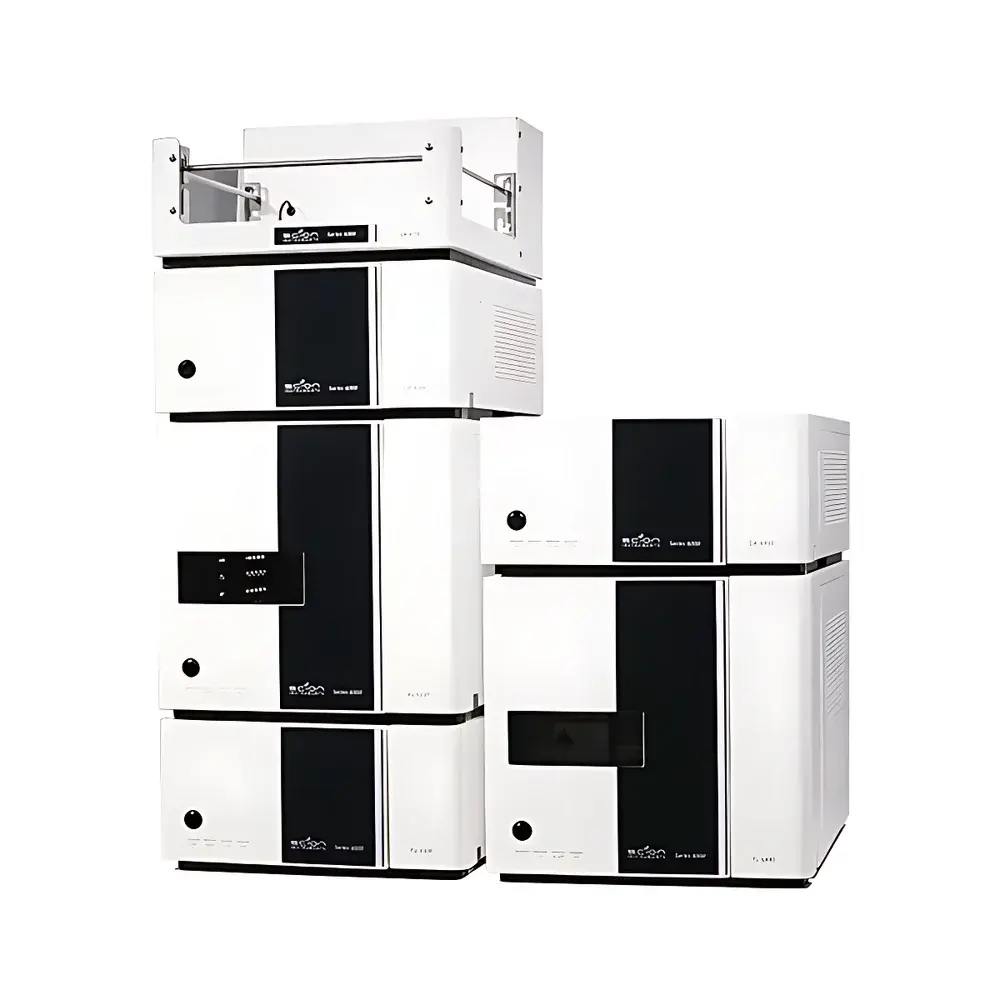
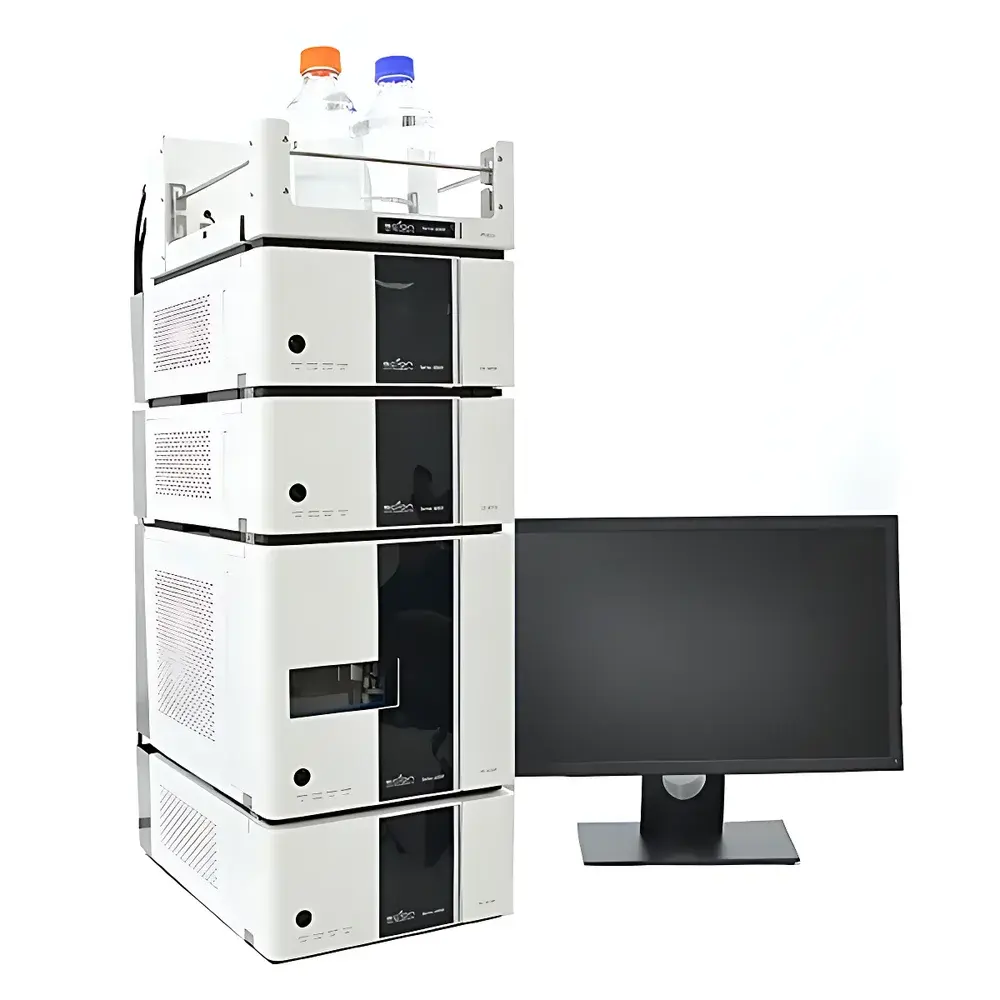
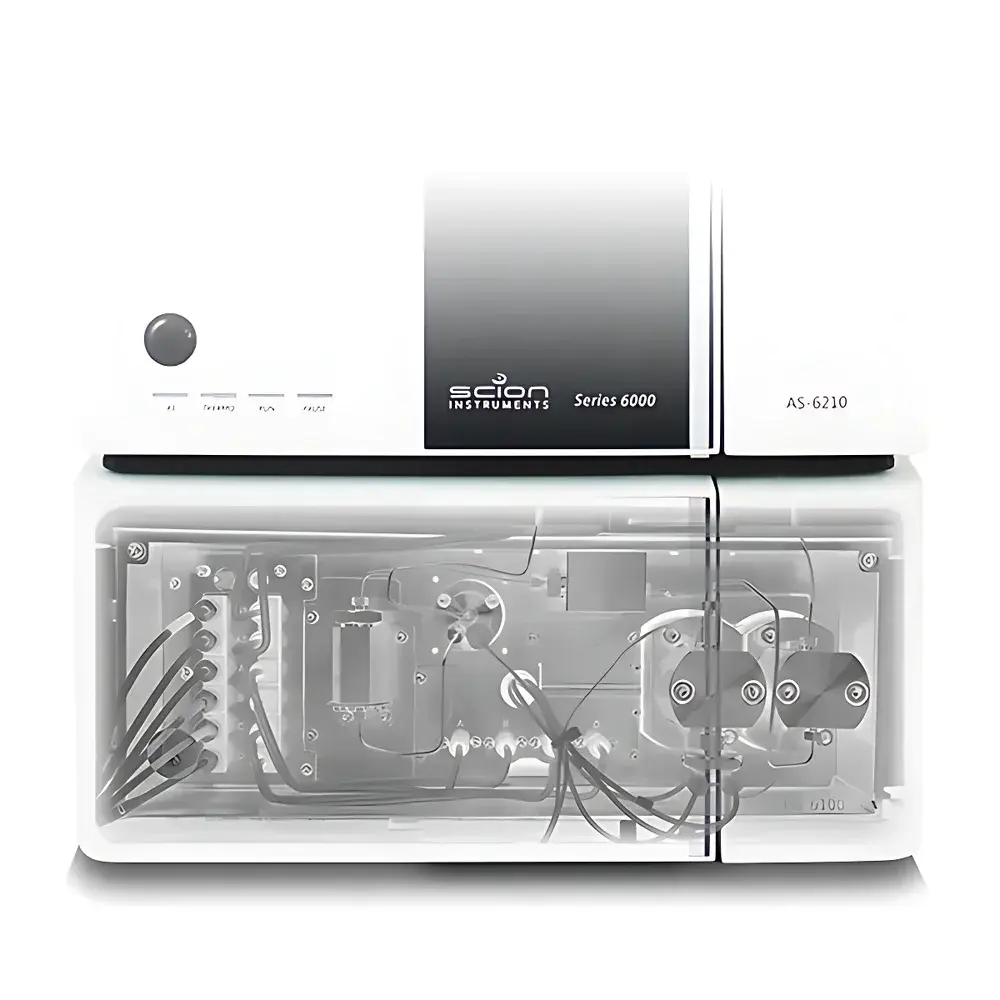
SCION LC6000 Ultra-High Performance Liquid Chromatograph
| Brand | SCION |
|---|---|
| Origin | Shanghai, China |
| Manufacturer Type | Original Equipment Manufacturer (OEM) |
| Regional Classification | Domestic (China) |
| Model | LC6000 |
| Instrument Type | Ultra-High Performance Liquid Chromatograph (UHPLC) |
| Application Scope | General-purpose analytical platform |
| Flow Rate Range | 0.001–5.000 mL/min |
| Maximum Operating Pressure | 60 MPa |
| Flow Precision | <0.05% RSD |
| Autosampler Capacity | 200 positions (1.5 mL vials) |
| Optional Configurations | 128 positions (4 mL vials) |
| Injection Volume Range | 0.1–100 µL (standard) |
| Wavelength Ranges | UV-Vis: 190–900 nm |
| DAD | 190–900 nm |
| Fluorescence (FL) | Ex 200–850 nm / Em 250–900 nm |
| Data Acquisition Rate | Multi-step selectable |
Overview
The SCION LC6000 Ultra-High Performance Liquid Chromatograph is an engineered platform for high-resolution, high-throughput liquid chromatographic analysis under elevated pressure conditions. Built upon the principles of modern UHPLC—utilizing sub-2-µm particle-packed columns and precise gradient delivery—the system delivers enhanced separation efficiency, reduced analysis time, and improved peak capacity compared to conventional HPLC. Its dual-mode pump architecture integrates the advantages of binary high-pressure mixing and quaternary low-pressure blending, enabling robust method transfer across laboratories and seamless scalability from method development to routine QC. The LC6000 operates within a maximum pressure limit of 60 MPa (8700 psi), supporting column internal diameters from 2.1 mm to 4.6 mm and accommodating both narrow-bore and standard analytical formats.
Key Features
- Dual-Mode Gradient Pump System: Combines high-pressure binary mixing with low-pressure quaternary solvent selection, allowing flexible mobile phase composition without compromising gradient accuracy or dwell volume consistency.
- Real-Time Flow Control Architecture: Implements high-frequency pressure feedback loops and active pulse suppression algorithms to maintain flow stability at ≤0.05% RSD—even at ultra-low flow rates down to 0.001 mL/min—critical for microbore and capillary applications.
- Modular Autosampler with Low-Dead-Volume Design: Standard 200-position tray accommodates 1.5 mL vials; optional configurations support 4 mL vials, 96-well and 384-well microplates (up to 1152 positions), with injection volumes ranging from 0.1 µL to 2500 µL via selectable syringe modules.
- Cooling-Enabled Column Compartment: Integrated thermoelectric cooling/heating module maintains column temperature between 5 °C and 85 °C with ±0.1 °C stability, ensuring retention time reproducibility for thermally sensitive analytes.
- Multi-Detector Interfacing Capability: Designed for plug-and-play integration of UV, DAD, fluorescence (FL), refractive index (RI), and evaporative light scattering (ELSD) detectors—all synchronized via unified timing and data acquisition protocols.
Sample Compatibility & Compliance
The LC6000 supports a broad range of sample matrices—including pharmaceutical actives, biologics, environmental extracts, food additives, and natural product isolates—without requiring hardware modification. Its autosampler’s minimal carryover (<0.005%) and low internal volume (<10 µL) ensure compatibility with trace-level quantitation and high-sensitivity assays. From a regulatory standpoint, the system meets essential requirements for GLP and GMP environments: all hardware components are CE-marked and compliant with IEC 61010-1 safety standards. When operated with Compass CDS software, the LC6000 satisfies FDA 21 CFR Part 11 criteria for electronic records and signatures, including audit trail generation, user role-based access control, and immutable data archiving.
Software & Data Management
Compass CDS (Chromatography Data System) serves as the native control and data processing environment for the LC6000. It features a modular architecture supporting standalone workstation deployment or client-server network configurations scalable to enterprise-level laboratory infrastructures. The software enables full instrument remote monitoring, sequence scheduling, real-time chromatogram visualization, peak integration using ISO 17025-aligned algorithms, and automated report generation compliant with ISO/IEC 17025 and USP . Integration with LIMS platforms—including Thermo Fisher SampleManager, LabWare LIMS, and Waters Empower—is achieved via ASTM E1384-compliant interfaces and secure RESTful API endpoints. All raw data files adhere to ANDI/NetCDF format for long-term archival integrity.
Applications
The LC6000 is routinely deployed in pharmaceutical quality control labs for assay validation, impurity profiling, and dissolution testing per USP monographs. In academic and contract research settings, it facilitates metabolomic profiling using reversed-phase and hydrophilic interaction liquid chromatography (HILIC) coupled to mass spectrometry. Environmental testing laboratories apply the system for pesticide residue analysis in soil and water matrices according to EPA Method 531.3 and ISO 17025-accredited workflows. Its flexible detector options also support carbohydrate analysis via RI detection, glycoprotein characterization by FL detection with post-column derivatization, and non-chromophoric compound quantification using ELSD.
FAQ
Does the LC6000 support method transfer from legacy HPLC systems?
Yes—the dual-mode pump architecture minimizes dwell volume variability, and the system includes automated method conversion tools within Compass CDS that adjust gradient delay, flow rate scaling, and column dimension compensation.
Is the autosampler compatible with third-party vial types and plate formats?
The tray design follows ANSI/SLAS standards; 1.5 mL and 4 mL vials conform to ANSI/SBS specifications, while microplate configurations comply with ANSI SLAS-1-2004 and SLAS-4-2004 dimensional tolerances.
What level of cybersecurity does Compass CDS provide for networked deployments?
Compass CDS implements TLS 1.2 encryption for client-server communication, supports Windows Active Directory authentication, and logs all privileged operations in tamper-evident audit trails meeting NIST SP 800-53 Rev. 4 controls AU-3, AU-9, and IA-2.
Can the LC6000 be integrated into a fully automated sample-to-report workflow?
Yes—when combined with robotic sample preparation stations (e.g., Gilson Liquid Handler or Hamilton STAR), the LC6000 accepts external trigger signals and exports structured result files (CSV, XML, PDF) directly to LIMS or ELN systems via configurable export rules.




