
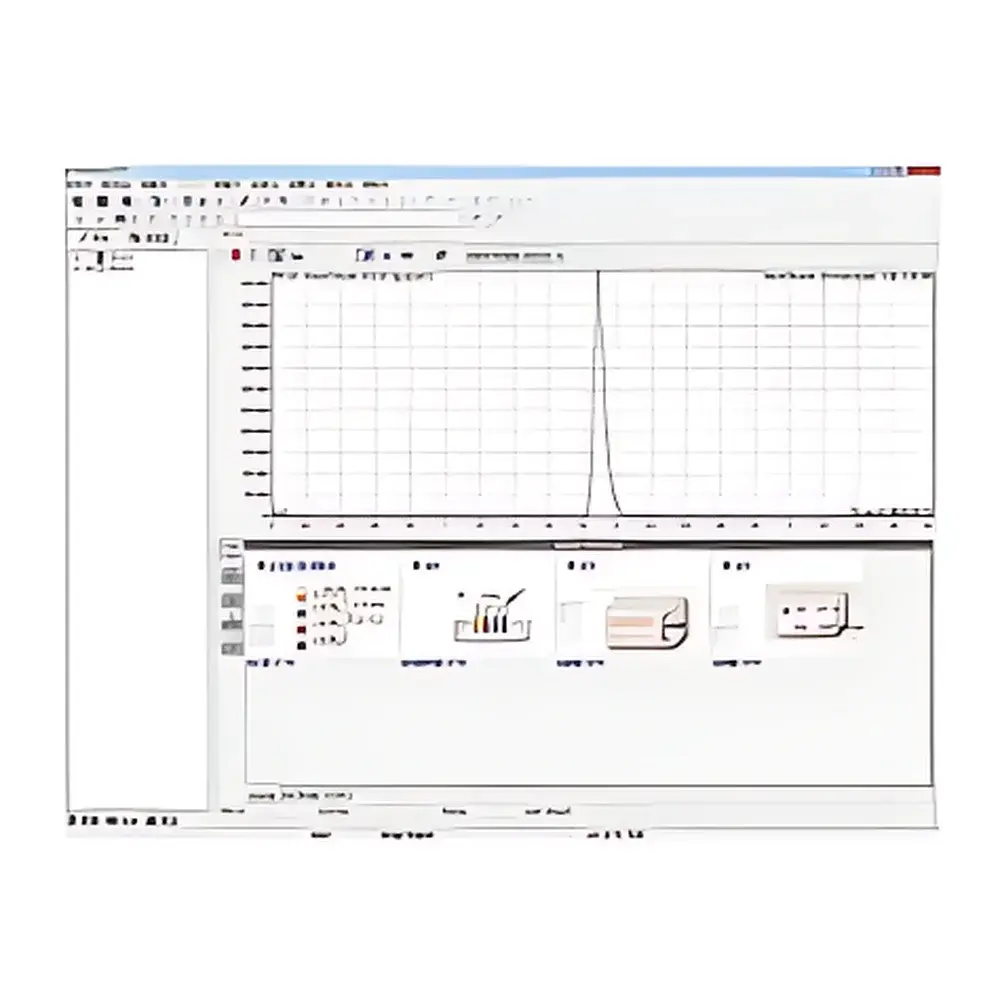
SCION CompassCDS Chromatography Data System
| Brand | SCION |
|---|---|
| Origin | Shanghai, China |
| Manufacturer Type | Original Equipment Manufacturer (OEM) |
| Regional Classification | Domestic (China) |
| Model | Primaide / Chromaster |
| Pricing | Available Upon Request |
Overview
The SCION CompassCDS Chromatography Data System is a validated, enterprise-grade software platform engineered for comprehensive control, acquisition, processing, and reporting of chromatographic data from gas chromatography (GC), high-performance liquid chromatography (HPLC), and ultra-high-performance liquid chromatography (UHPLC) instruments. Built on a modular client-server architecture, CompassCDS implements standardized chromatographic data handling protocols aligned with the principles of analytical instrument qualification (AIQ) and computerized system validation (CSV). Its core measurement logic integrates real-time signal digitization, peak detection via derivative-based algorithms, retention time alignment using dynamic reference standards, and quantitative analysis based on external/internal standard calibration curves. Designed explicitly for regulated environments, the system supports full lifecycle data integrity—from raw detector signal capture through audit-trail-secured report generation—ensuring traceability across all user actions, method modifications, and result revisions.
Key Features
- Fully integrated instrument control: Native support for SCION GC systems and HITACHI HPLC platforms—including multi-instrument management per workstation, synchronized method deployment, and remote status monitoring.
- Regulatory-compliant architecture: Enforces role-based access control (RBAC) with configurable permission tiers (e.g., Analyst, Supervisor, Administrator), electronic signatures compliant with FDA 21 CFR Part 11 and EU Annex 11, and immutable audit trails recording timestamped user ID, action type, object affected, and pre-/post-change values.
- Automated retention time adjustment: Implements adaptive retention time windowing that dynamically recalibrates peak identification thresholds based on system suitability test (SST) results and historical run variance—reducing manual intervention and improving inter-run reproducibility.
- Multi-format data export: Native export to ASCII (tab-delimited), CSV, AIA/ANDI (.cdf), PDF (with embedded metadata and digital signature), and Microsoft Excel (.xlsx) formats—preserving original integration parameters and audit trail references in exported reports.
- Scalable deployment options: Supports standalone, networked, and virtualized (VMware/Hyper-V) installations; compatible with laboratory information management systems (LIMS) via ASTM E1578-compliant APIs and HL7 v2.x messaging for bidirectional sample queue synchronization.
Sample Compatibility & Compliance
CompassCDS processes chromatographic data generated from volatile organic compounds (VOCs), residual solvents, pharmaceutical actives, impurities, and environmental contaminants across diverse matrices—including aqueous solutions, organic extracts, headspace vapors, and solid-phase microextraction (SPME) eluates. The software conforms to international regulatory frameworks governing analytical data integrity: it satisfies the requirements of USP Analytical Instrument Qualification, ISO/IEC 17025:2017 Clause 7.7 on data management, ICH Q2(R2) guideline on analytical procedure validation, and China’s NMPA “Computerized Systems in Pharmaceutical Production” Annex (2023). All audit trail records are stored in encrypted, write-once-read-many (WORM) format with SHA-256 hashing, enabling forensic reconstruction of any data modification event during GLP or GMP inspections.
Software & Data Management
The CompassCDS software suite comprises three core modules: Acquisition (real-time instrument interfacing and signal acquisition), Processing (peak integration, baseline correction, calibration curve fitting, and purity assessment), and Reporting (template-driven certificate-of-analysis generation with embedded electronic signatures). Data storage utilizes a relational database backend (Microsoft SQL Server or Oracle 19c) with automated daily backups, point-in-time recovery, and granular backup retention policies aligned with ALCOA+ principles (Attributable, Legible, Contemporaneous, Original, Accurate, Complete, Consistent, Enduring, Available). System-generated audit logs capture every login attempt, method edit, reprocessing event, and report approval—each cryptographically signed and time-stamped by an NIST-traceable hardware security module (HSM).
Applications
CompassCDS is deployed in quality control laboratories for routine batch release testing of active pharmaceutical ingredients (APIs) and finished dosage forms per USP/EP monographs; in R&D settings for stability-indicating method development and forced degradation studies; in environmental labs for EPA Method 8260/8270 compliance; and in food safety labs conducting pesticide residue screening per GB 23200 series standards. Its LIMS integration capability enables seamless transfer of sample IDs, test methods, and analytical results into enterprise-wide data workflows—supporting trend analysis, OOS/OOT investigations, and annual product review (APR) documentation.
FAQ
Does CompassCDS support 21 CFR Part 11-compliant electronic signatures?
Yes. Electronic signatures are implemented with dual-factor authentication (password + token or biometric), mandatory reason-for-change justification, and cryptographic binding to the signed record.
Can CompassCDS be validated for GxP use?
Yes. SCION provides a comprehensive Validation Support Package including IQ/OQ/PQ protocols, risk assessments (per ICH Q9), traceability matrices, and CSV documentation templates aligned with GAMP 5.
Is remote access supported for distributed laboratory networks?
Yes. CompassCDS supports secure remote access via TLS 1.2+ encrypted connections, with optional integration into corporate Active Directory and SAML 2.0 identity federation.
What chromatographic detectors are natively supported?
Native support includes FID, TCD, ECD, NPD, and MS detectors for GC systems; UV-Vis, PDA, and fluorescence detectors for HPLC/UHPLC platforms.
How is data backup and disaster recovery handled?
Automated daily full backups and hourly transaction log backups are retained for 90 days; offsite replication to geographically separate storage locations is configurable per organizational DRP requirements.





