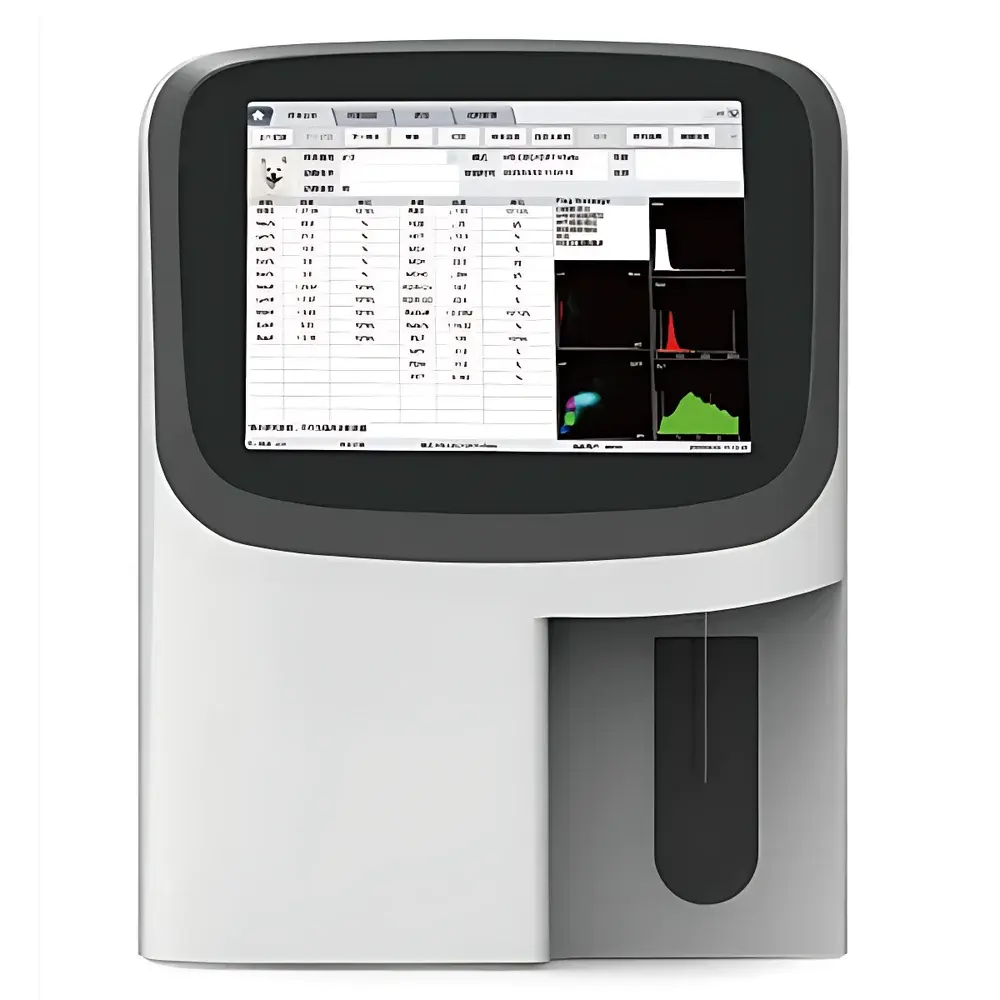
YUYANBIO YAN-505A Veterinary Hematology Analyzer for Rodent and Small Animal Research
| Brand | YUYANBIO |
|---|---|
| Origin | Shanghai, China |
| Manufacturer Type | Direct Manufacturer |
| Country of Origin | China |
| Model | YAN-505A |
| Testing Speed | 100 samples/hour |
| Sample Volume | 10 µL (whole blood, pre-diluted mode) |
| Sample Type | Whole Blood |
| Loading Mode | Automatic |
| White Blood Cell Differential Method | Multi-angle semiconductor laser scattering flow cytometry |
| Output Graphics | 3 histograms + 4 scatter plots (including dedicated BASO scatter plot) |
| Internal Storage Capacity | Up to 50,000 complete test records with graphical data |
| Display | 10.4-inch full-color capacitive touchscreen |
| LIS Connectivity | Bidirectional wireless LIS interface compliant with ASTM E1384 and HL7 v2.x |
| Regulatory Compliance | Designed for GLP-compliant preclinical research environments |
| Optional Module | Reticulocyte detection (YAN-505A variant only) |
Overview
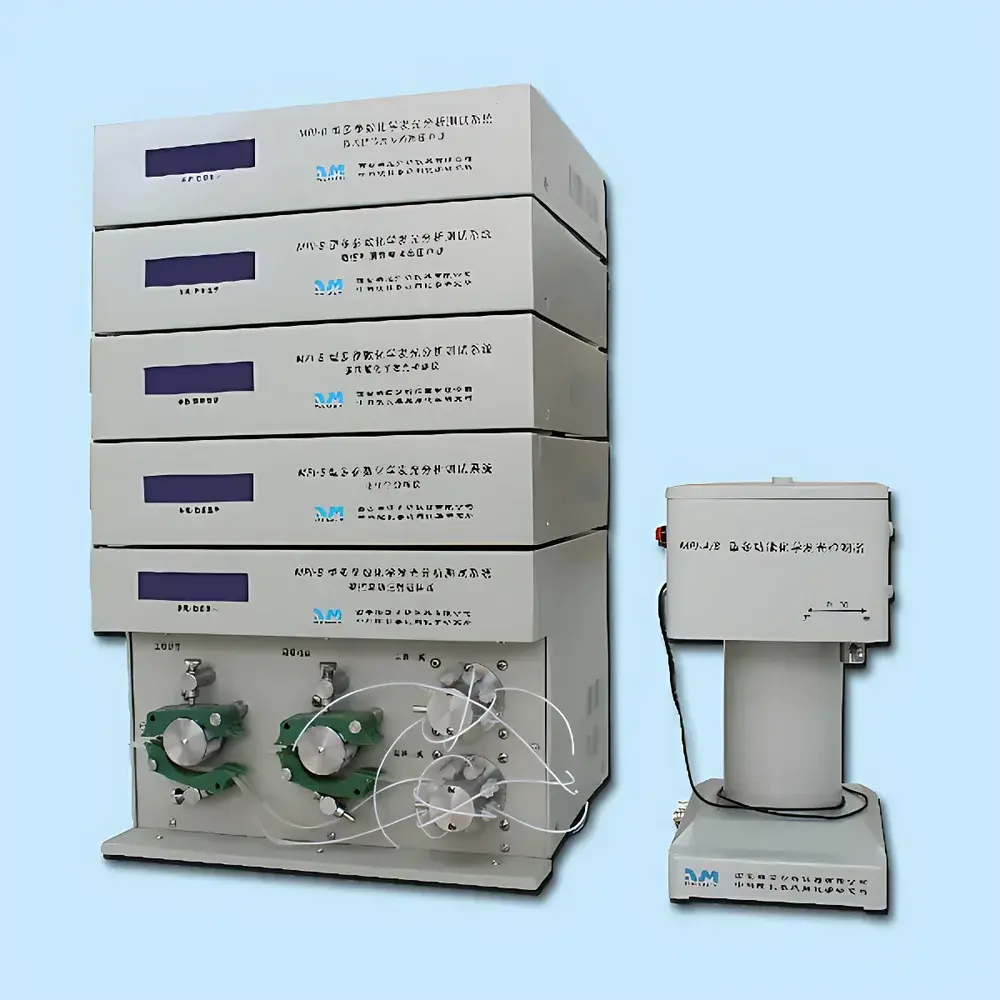
The YUYANBIO YAN-505A Veterinary Hematology Analyzer is a dedicated benchtop hematology system engineered for high-precision, automated blood cell analysis in preclinical research laboratories. It employs multi-angle semiconductor laser scattering flow cytometry — a principle distinct from impedance-based methods — to achieve species-specific leukocyte differentiation without interference from platelet aggregates or nucleated red blood cells. This optical architecture enables robust discrimination of neutrophils, lymphocytes, monocytes, eosinophils, and basophils across 17 validated laboratory animal species, including mice, rats, guinea pigs, dogs, and non-human primates. The instrument operates under whole-blood or pre-diluted modes, requiring only 10 µL of native sample per assay — minimizing stress-induced hematological artifacts in small-animal models. Its design prioritizes analytical reproducibility, traceable calibration, and audit-ready data integrity in GLP-aligned workflows.
Key Features
- Multi-angle laser scattering flow cytometry for species-optimized WBC five-part differential — eliminating morphological ambiguity inherent in impedance-based classification
- 10.4-inch capacitive touchscreen interface with intuitive icon-driven navigation and context-sensitive help overlays
- Automated sample aspiration, dilution, lysing, and measurement cycle — no manual pipetting or reagent handling required
- Integrated thermal printer supporting direct output of parameter-rich reports including CBC parameters, histograms, and all four scatter plots (NEUT/LO/EO/BASO)
- Onboard storage for up to 50,000 complete test records — each containing full numeric results, histogram vectors, scatter plot coordinates, and animal metadata (species, ID, date/time, operator)
- One-touch system maintenance: automatic probe rinsing, fluidic line purging, and sensor calibration verification at startup/shutdown
- Modular architecture supporting future reticulocyte enumeration upgrade (YAN-505A configuration)
Sample Compatibility & Compliance
The YAN-505A is validated for EDTA-anticoagulated whole blood from 17 laboratory species, with species-specific algorithms embedded in firmware. Each algorithm is supported by formal clinical performance evaluation reports meeting ISO 15189:2022 Annex A.3 requirements for veterinary in vitro diagnostics. The analyzer complies with IEC 61010-1 for laboratory equipment safety and meets electromagnetic compatibility standards per EN 61326-1. Data management functions support 21 CFR Part 11–compliant audit trails when connected to validated LIS platforms via bidirectional HL7 v2.5.8 or ASTM E1384 interfaces. All calibration and quality control procedures are documented per CLSI H20-A3 guidelines for veterinary hematology.
Software & Data Management
Firmware version 3.2+ includes embedded QC tracking with Westgard multirule violation alerts, customizable reference interval libraries per species and strain, and automated flagging of abnormal scatter plot morphology (e.g., left-shifted neutrophil distribution, atypical basophil clustering). Raw scatter plot coordinate data (X/Y intensity values) and histogram bin counts are exportable in CSV format for third-party statistical analysis (e.g., R, Python pandas). The system maintains immutable timestamps for every action — including sample loading, result generation, report printing, and user login/logout — enabling full forensic traceability during regulatory audits. Remote software updates are delivered via encrypted HTTPS channel with SHA-256 signature verification.
Applications
This analyzer serves as a core quantitative phenotyping tool in translational research domains including oncology (leukemia engraftment monitoring), immunology (T-cell depletion kinetics), toxicology (myelosuppression assessment), metabolic disease (anemia profiling in diabetic rodent models), and infectious disease (viral-induced leukopenia tracking). Its low sample volume requirement makes it especially suitable for longitudinal studies in juvenile or genetically modified mice where serial sampling is constrained. Researchers routinely integrate YAN-505A-derived CBC metrics with flow cytometry, histopathology, and transcriptomic datasets to establish multivariate biomarker signatures.
FAQ
Does the YAN-505A require daily calibration or manual alignment?
No — the system performs self-alignment and photometric verification during power-up using internal reference beads and laser power sensors.
Can the instrument store species-specific reference ranges for automated flagging?
Yes — up to 20 custom reference interval sets can be defined and assigned per animal species, strain, sex, and age cohort.
Is raw scatter plot data accessible for machine learning model training?
Yes — X/Y coordinate arrays for all 4 scatter plots and binned histogram intensities are exportable via USB or network share in standardized CSV format.
What maintenance consumables require periodic replacement?
Only the integrated waste bag (6-month service life) and lysing reagent cartridge (1,000 tests); no optical filters or laser diodes require user replacement.
How is data security ensured during LIS transmission?
All HL7/ASTM messages are transmitted over TLS 1.2+ with client-certificate mutual authentication and payload encryption per NIST SP 800-53 Rev. 5 SC-13 controls.