
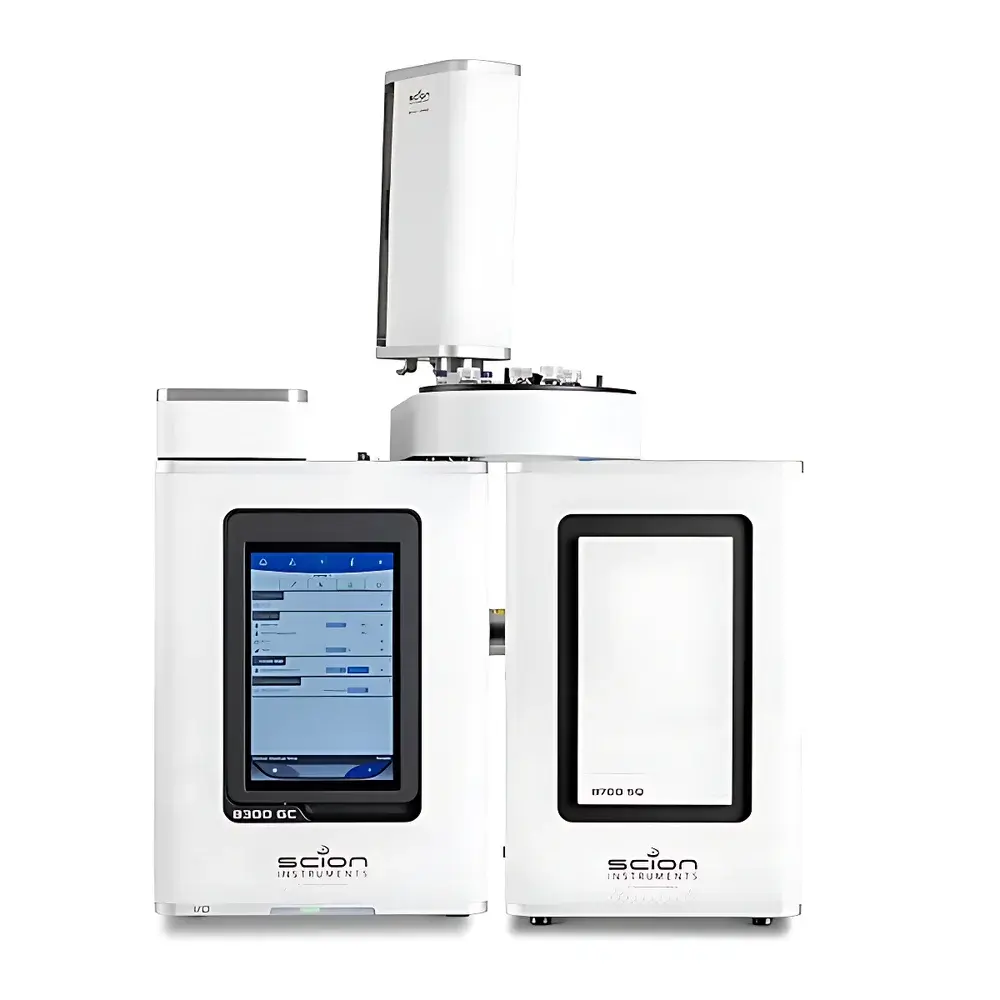
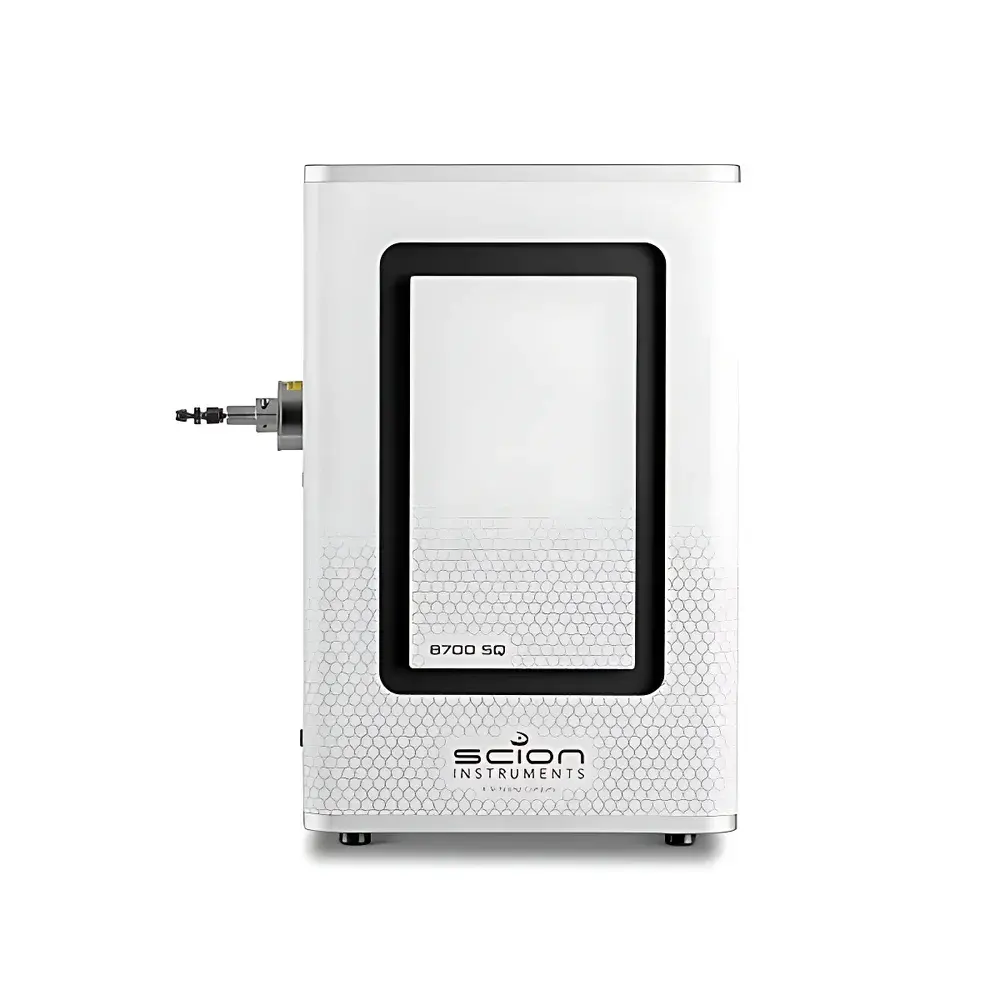
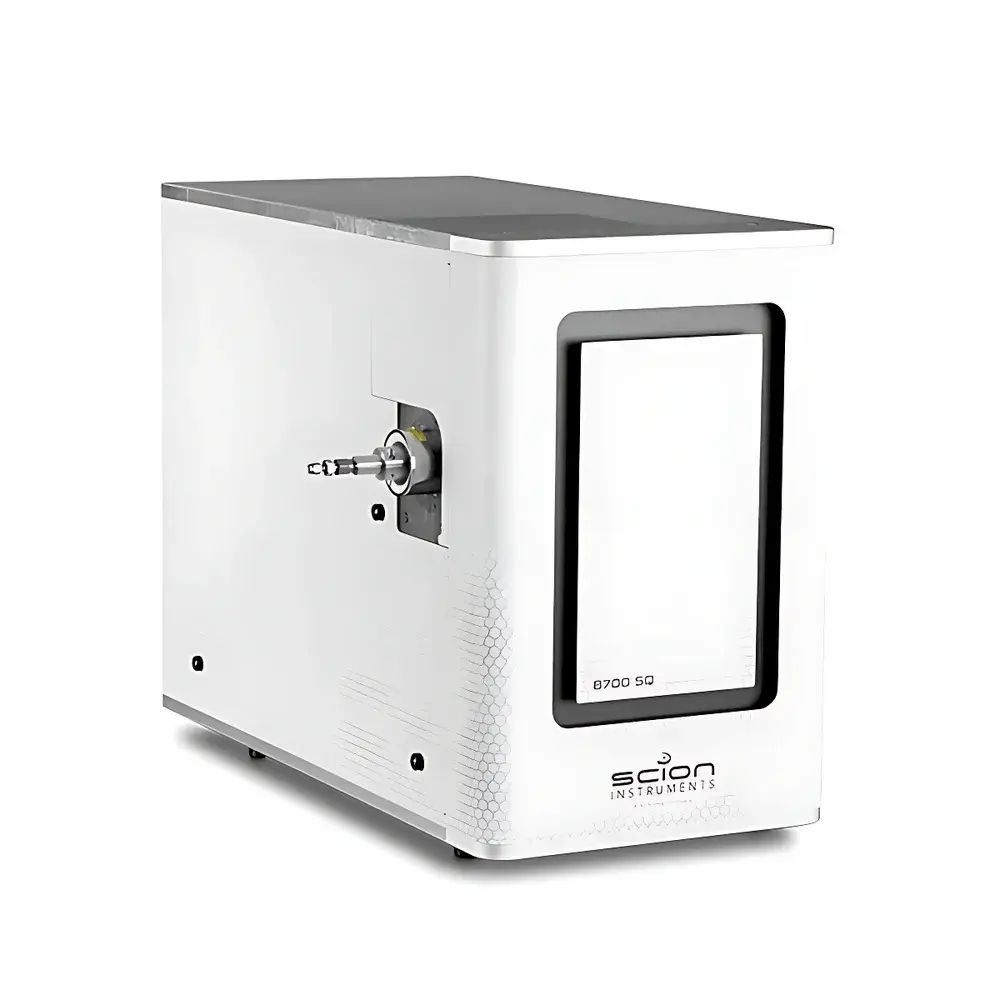
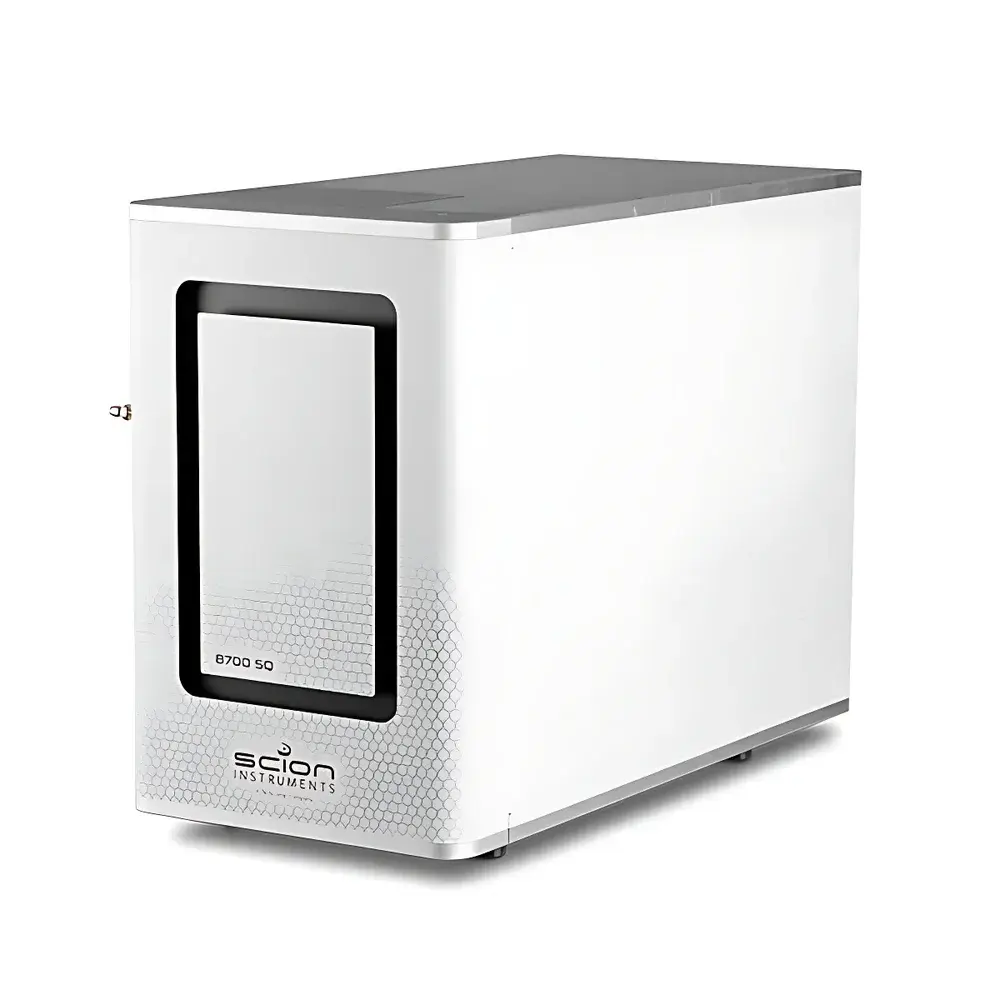
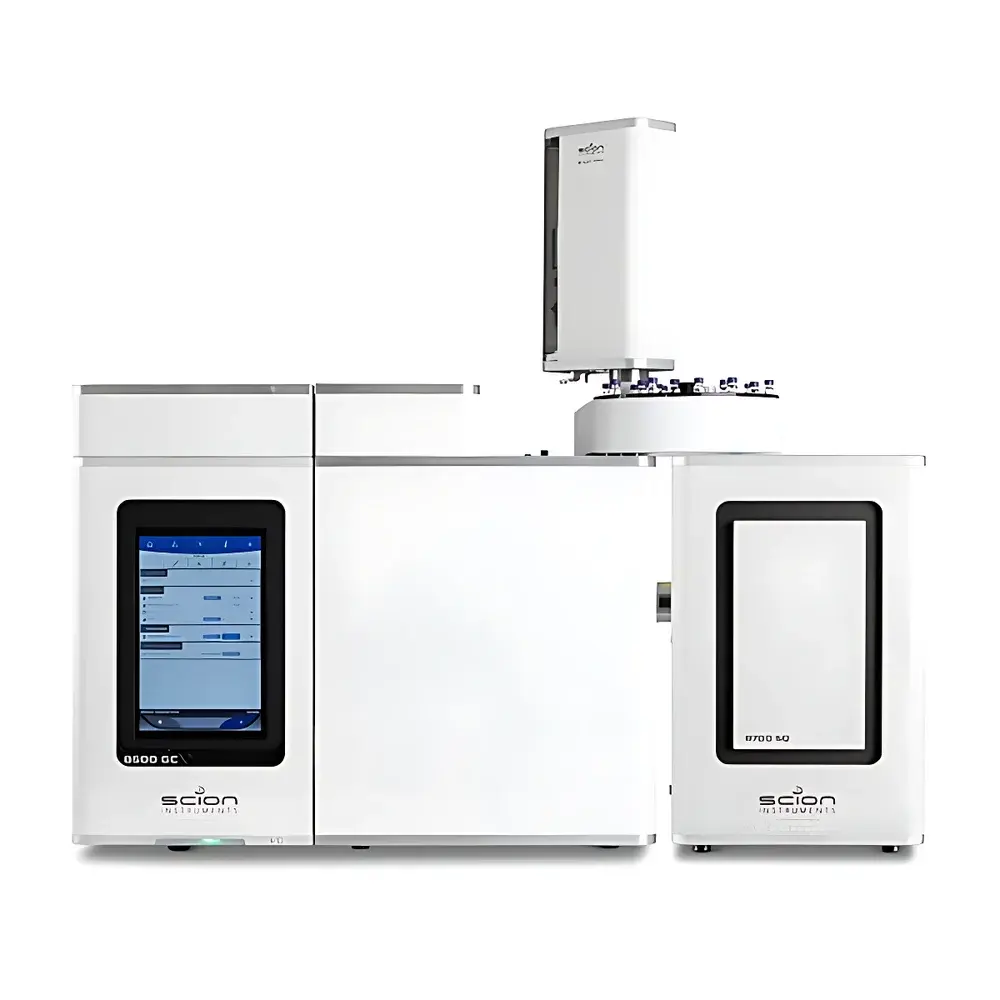
SCION 8700-SQ Gas Chromatography Quadrupole Mass Spectrometer
| Brand | SCION |
|---|---|
| Origin | Netherlands |
| Manufacturer | SCION Instruments |
| Instrument Type | Single Quadrupole GC-MS |
| GC Platform Options | SCION 8300 / 8500 |
| Mass Range | 1–1200 Da |
| Resolution | 0.7–4 Da (FWHM) |
| Sensitivity (EI Full Scan) | ≥1500:1 S/N for 1 pg Octafluoronaphthalene |
| Scan Speed | 20,000 Da/s |
| Oven Ramp Rate | Up to 180 °C/min |
| Pressure Control Accuracy | ±0.001 psi |
| Ion Source | Axially Oriented, Ultra-Inert Design |
| Vacuum System | High-Capacity Turbo-Molecular Pump (Standard) |
Overview
The SCION 8700-SQ Gas Chromatography Quadrupole Mass Spectrometer is a purpose-engineered analytical platform designed for laboratories requiring robust, reproducible, and regulatory-compliant small-molecule analysis. Built upon SCION’s three-decade heritage in gas chromatography and mass spectrometry, the 8700-SQ integrates a high-performance SCION 8300 or 8500 gas chromatograph with a single quadrupole mass spectrometer operating on established ion optical principles—electron ionization (EI), optional chemical ionization (CI), and mass filtering via RF/DC voltage-controlled quadrupole transmission. Its architecture emphasizes signal fidelity through physical noise suppression: dual 90° ion path bends eliminate neutral species before the mass analyzer, while q0 collision-induced focusing using helium gas enhances ion transmission efficiency across the full mass range. The system delivers high mass accuracy, low detection limits, and consistent quantitative performance—critical for trace-level residue screening, environmental monitoring, and forensic toxicology workflows.
Key Features
- Ultra-inert axial ion source with minimized surface adsorption—reduces maintenance frequency and improves long-term signal stability.
- Dual-stage ion optics incorporating q0 helium-focusing technology for enhanced sensitivity and improved duty cycle during fast GC gradients.
- High-capacity turbo-molecular pump (standard configuration) supporting both helium and hydrogen carrier gases at flow rates up to 5 mL/min—enabling rapid pump-down (<15 min from atmosphere) and seamless CI source retrofit without hardware replacement.
- Lens-free ion transmission channel simplifies mass spectrometer tuning and eliminates alignment drift associated with electrostatic lens systems.
- Self-calibrating electron multiplier detector—no routine gain calibration required, reducing operational overhead and improving data continuity across multi-day sequences.
- Modular ion source design allows tool-free removal and reinstallation in under 90 seconds—facilitating routine cleaning or source exchange without venting the vacuum system.
- Integrated pressure control with ±0.001 psi precision enables highly reproducible retention time locking and method transfer between instruments.
Sample Compatibility & Compliance
The SCION 8700-SQ supports broad sample matrix compatibility—from volatile organic compounds (VOCs) and semi-volatiles (SVOCs) to thermally labile pesticides and pharmaceutical metabolites. Its inert flow path (deactivated fused-silica liners, gold-plated source components, and low-bleed column interfaces) minimizes analyte degradation and adsorption artifacts. The system complies with key international standards for regulated environments: ASTM D5845 (petroleum hydrocarbons), EPA Method 8270/8260 (environmental SVOCs/VOCs), ISO 17025 quality management requirements, and USP for chromatographic system suitability. Data acquisition and processing support audit trails, electronic signatures, and 21 CFR Part 11 compliance when used with SCION’s validated ChromaTOF-MS software suite—meeting GLP/GMP documentation expectations for contract research organizations and regulatory submission labs.
Software & Data Management
Control and data handling are managed via SCION’s ChromaTOF-MS software—a Windows-based platform supporting method development, real-time spectral monitoring, automated peak integration, and library searching (NIST, Wiley, custom libraries). The software includes built-in retention index calculation, deconvolution algorithms for co-eluting peaks, and customizable reporting templates aligned with ISO/IEC 17025 documentation frameworks. Raw data files are stored in open-format .CDF (NetCDF) containers, ensuring long-term accessibility and third-party interoperability. Instrument diagnostics—including vacuum status, filament emission current, detector gain history, and GC oven temperature profiles—are logged with timestamped metadata for full traceability. Remote monitoring and scheduled maintenance alerts are configurable via secure HTTPS interface.
Applications
- Food safety: Multi-residue pesticide screening in fruits, vegetables, and animal feed per EU SANTE/11312/2021 guidelines.
- Environmental analysis: Quantification of PAHs, PCBs, phthalates, and brominated flame retardants in soil, water, and air particulates.
- Clinical & forensic toxicology: Targeted and untargeted detection of drugs of abuse, metabolites, and novel psychoactive substances (NPS) in biological matrices.
- Petrochemical QA/QC: Hydrocarbon group-type analysis (HTA), sulfur speciation, and additive profiling in fuels and lubricants.
- Pharmaceutical impurity profiling: Identification and quantification of genotoxic impurities per ICH M7 guidelines.
- Metabolomics: Semi-quantitative profiling of endogenous small molecules in plasma, urine, and tissue extracts using EI spectral libraries and RI indexing.
FAQ
Does the 8700-SQ support both EI and CI ionization modes?
Yes—the system is pre-wired and mechanically configured for rapid CI source installation; no additional turbo pump or vacuum modifications are required.
What GC models are compatible with the 8700-SQ MS detector?
It is fully integrated with SCION 8300 and 8500 gas chromatographs, including support for simultaneous dual-column operation and backflush capability.
Is the mass calibration stable over extended run times?
The quadrupole drive electronics feature temperature-compensated RF generation and digital waveform stabilization—typical mass drift is <0.1 Da over 48-hour continuous operation.
Can the system be operated in a networked laboratory environment with centralized data storage?
Yes—ChromaTOF-MS supports UNC path mapping, SQL database logging, and integration with LIMS via ASTM E1384-compliant export protocols.
What maintenance intervals are recommended for routine operation?
Ion source cleaning every 2–4 weeks (depending on sample load); EM detector replacement every 18–24 months; turbomolecular pump bearing inspection at 12,000 hours of cumulative runtime.




