
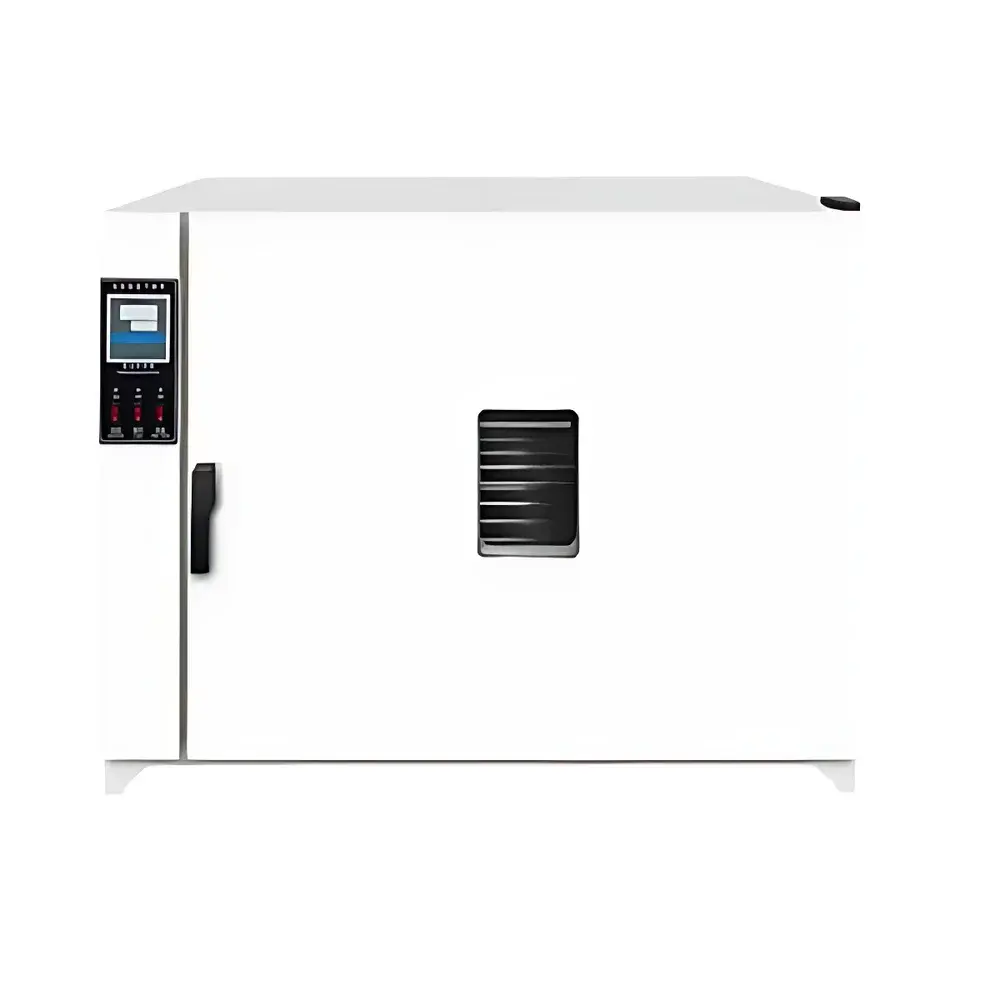
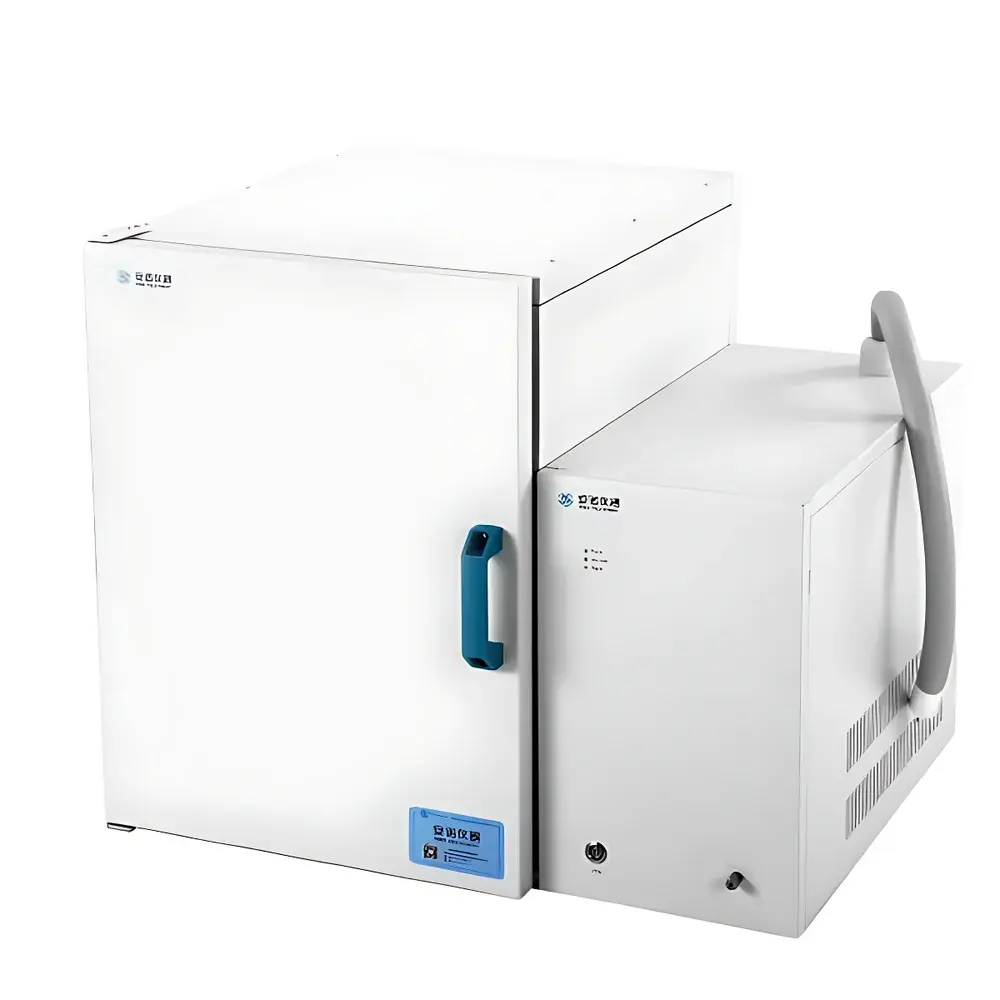
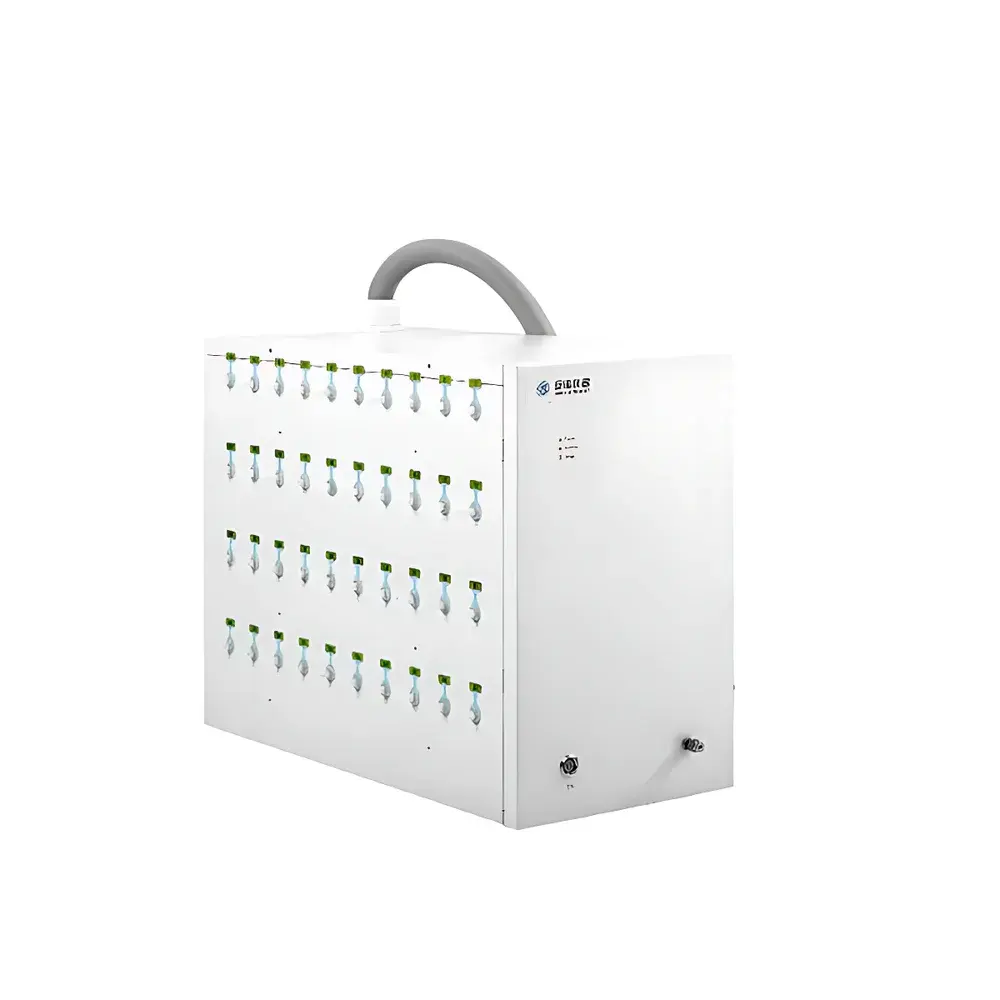
Annuo GAS-3539 Heated Gas Bag Autosampler
| Brand | Annuo |
|---|---|
| Origin | Henan, China |
| Manufacturer Type | Authorized Distributor |
| Product Category | Domestic |
| Model | GAS-3539 |
| Instrument Type | Multifunctional Gas Autosampler |
| Max Sample Positions | 88 |
| Min Sample Positions | 16 |
| Quantitative Loop Volumes | 1 mL, 2 mL, 3 mL (selectable) |
| Positioning Accuracy | RSD <0.5% for total hydrocarbon and methane peak areas across 10 consecutive injections |
| Control Interface | PC-based upper-computer software |
| Needle & Loop Cleaning | Automated in-line cleaning of sampling lines, quantitative loops, gas bags, and sample pathways during GC coupling |
| Repeat Injection Capability | Unlimited cycles per sample |
| Operating Temperature Range | −20 °C to 50 °C |
| Storage Temperature Range | −40 °C to 70 °C |
| Humidity Range (Operating) | 10–90% RH |
| Humidity Range (Storage) | 5–90% RH |
| Syringe Capacity | 100 mL |
| Gas Bag Capacity | 500 mL or 1 L |
| Minimum Injection Volume | 50 µL (loop-dependent) |
| Maximum Injection Volume | 5 mL (loop-dependent) |
| Max Purge Time | 600 s |
| Max Draw Time | 99 s |
| Max Equilibration Time | 99 s |
| Max Interval Between Injections | 999 min |
| Quantitative Loop Heating Range | Ambient to 150 °C |
| Sample Pathway Heating Range | Ambient to 150 °C |
| Calibration Standard Points | Up to 8 programmable concentration levels |
| Cleaning Cycles per Step | 1–15 |
| Sampling Pump Flow Rate | Up to 6 L/min |
| Ultimate Vacuum | −55 kPa |
| Data Interfaces | USB, Ethernet (RJ45), RS-232 |
| Dimensions (L×W×H) | 900 × 600 × 900 mm |
| Tubing Material | Silanized stainless steel |
| Valve Body | PEEK |
| Valve Core | PI (Polyimide) |
| Sample Port Flexibility | Dual-mode — gas bag or syringe injection per port |
| High-Concentration Detection Logic | Auto-halt + GC oven ramp initiation upon detection of saturation-level analyte signals |
Overview
The Annuo GAS-3539 Heated Gas Bag Autosampler is an engineered solution for automated, thermally controlled gas-phase sample introduction into gas chromatography (GC) systems. Designed specifically for environmental air monitoring, industrial emissions testing, landfill gas analysis, and volatile organic compound (VOC) profiling, the GAS-3539 implements a quantitative loop-based sampling principle grounded in precise pneumatic actuation and thermal management. Unlike passive gas sampling devices, it integrates active pressure-controlled draw, programmable equilibration, and heated pathway integrity to ensure representative transfer of low-concentration or condensable gaseous analytes—particularly critical for C₂–C₁₂ hydrocarbons, sulfur compounds, and halogenated VOCs. Its architecture supports direct interfacing with both legacy and modern GC platforms via hardware-triggered signal synchronization (TTL/relay) or software-driven command protocols, enabling full method integration within validated laboratory workflows.
Key Features
- Heated quantitative loop and sample pathway (ambient to 150 °C), preventing condensation of semi-volatile species and minimizing adsorptive losses on metallic surfaces.
- Modular carousel design accommodating 16 to 88 sample positions—expandable without firmware or mechanical retrofitting—optimized for high-throughput compliance monitoring (e.g., EPA Method TO-15, ASTM D6420).
- PEEK-bodied, polyimide-core multi-position switching valves engineered for >500,000 actuation cycles under continuous operation; chemically inert and low-dead-volume configuration ensures minimal carryover.
- Dual-inlet capability per port: seamless toggling between Tedlar® gas bags (500 mL / 1 L) and 100 mL gas-tight syringes, supporting both field-collected and lab-prepared standards.
- Independent purge control for each sampling line—programmable flow rate, duration, and sequence—to eliminate cross-contamination between high- and low-concentration samples.
- Integrated high-concentration detection logic: real-time signal evaluation against user-defined thresholds triggers automatic GC oven ramp initiation and system hold, preserving column integrity and data continuity.
- PC-based upper-computer software with audit-trail-capable logging (meets GLP/GMP documentation requirements), supporting method export/import, position mapping, and batch-level metadata annotation.
- Silanized stainless-steel fluidic path compliant with ISO 16000-6 and US EPA Compendium Method IP-1A specifications for trace-level gas analysis.
Sample Compatibility & Compliance
The GAS-3539 accommodates standard gas sampling media including laminated polymer bags (e.g., FlexFoil®, SKC, or equivalent), aluminum composite pouches, and glass syringes fitted with septum-sealed caps. Its thermal stability and inert surface finish support analysis of reactive species such as hydrogen sulfide, formaldehyde, and chlorine-containing compounds without catalytic degradation. The instrument meets mechanical and electrical safety requirements per IEC 61010-1 and operates within electromagnetic compatibility (EMC) limits defined by EN 61326-1. When deployed in regulated environments—including those governed by US EPA, EU EN 13640, or China’s HJ 732–2014—it functions as a validated peripheral under the host GC’s 21 CFR Part 11-compliant data acquisition system, provided the controlling software implements electronic signatures, change history, and secure user authentication.
Software & Data Management
The proprietary Annuo GC-Link software provides a deterministic, event-driven interface for method development and execution. Users define injection sequences, loop selection, heating profiles, purge parameters, and calibration point concentrations through a tabular editor with drag-and-drop positioning. All operational events—including valve actuations, temperature setpoint changes, pump status, and error flags—are timestamped and stored locally in SQLite format with optional network-synced backup. Raw log files are exportable in CSV or XML for third-party LIMS integration. Software validation packages—including IQ/OQ documentation templates and test scripts for loop precision, temperature uniformity, and inter-device synchronization—are available upon request for regulated laboratories.
Applications
- Ambient air quality monitoring (e.g., BTEX, aldehydes, ozone precursors)
- Landfill and biogas composition profiling (CH₄, CO₂, H₂S, NH₃)
- Industrial stack emission testing per EPA Methods 18, 25, and TO-14A
- Indoor air quality (IAQ) surveys in commercial buildings and cleanrooms
- Method development and reference standard preparation for GC–MS and GC–FID quantification
- Automated calibration curve generation using up to eight discrete concentration levels
FAQ
Does the GAS-3539 support unattended overnight operation?
Yes—its watchdog timer, hardware fault detection circuitry, and non-volatile method storage enable fully autonomous batch runs exceeding 24 hours, provided ambient conditions remain within specified temperature/humidity ranges.
Can the instrument be integrated with Agilent, Thermo Fisher, or Shimadzu GC systems?
Yes—via TTL-level start/stop triggers, RS-232 command sets, or Ethernet-based remote procedure calls (RPC); driver libraries and configuration guides are supplied for major GC OEMs.
Is the quantitative loop volume user-replaceable in the field?
Yes—1 mL, 2 mL, and 3 mL stainless-steel loops are mechanically interchangeable without tools; each includes calibrated volume certification traceable to NIST SRM 1640a.
What maintenance intervals are recommended for long-term reliability?
Valve lubrication every 6 months; pump diaphragm replacement every 12 months under continuous use; annual verification of loop volume accuracy and heater PID stability using certified gas standards.
Does the system comply with ISO/IEC 17025 requirements for accredited testing labs?
As a measurement ancillary device, it contributes to method validation when used within a documented, uncertainty-assessed GC analytical procedure; full compliance requires lab-specific validation per ISO/IEC 17025 Clause 7.7.
Related Products







