
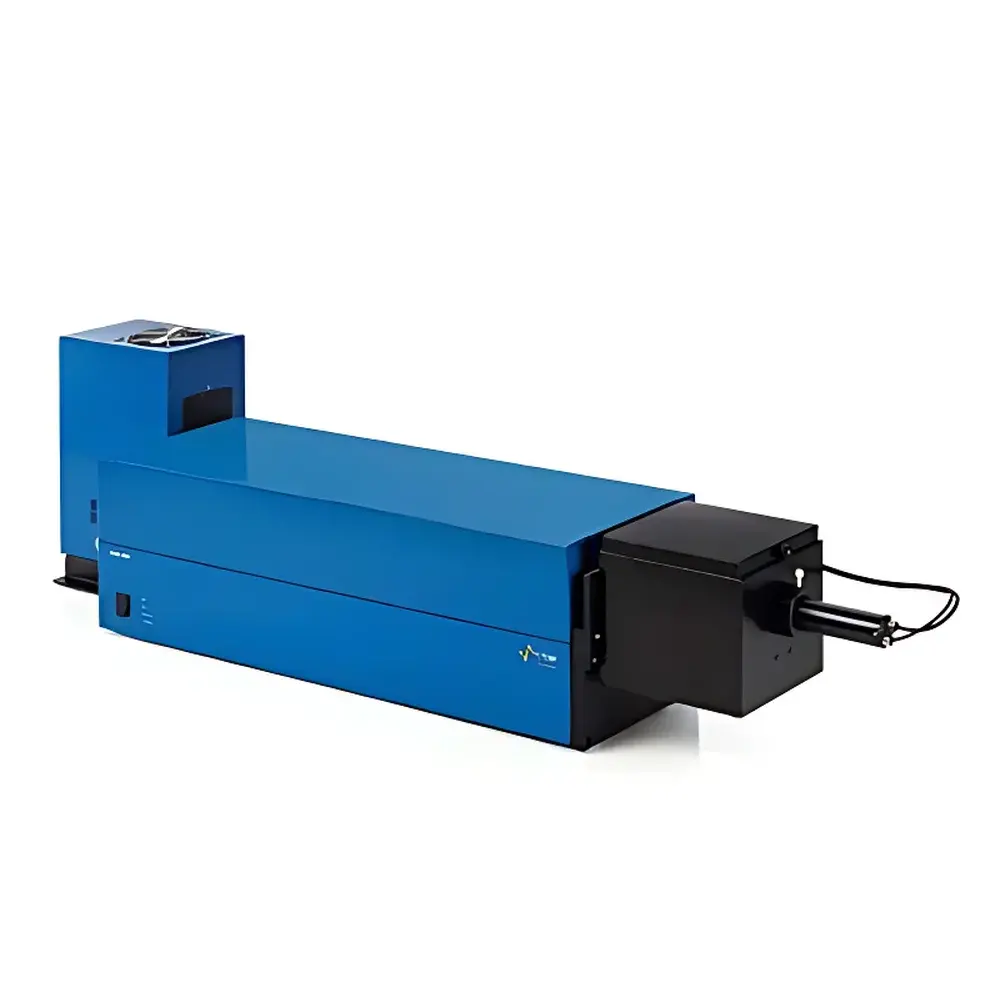
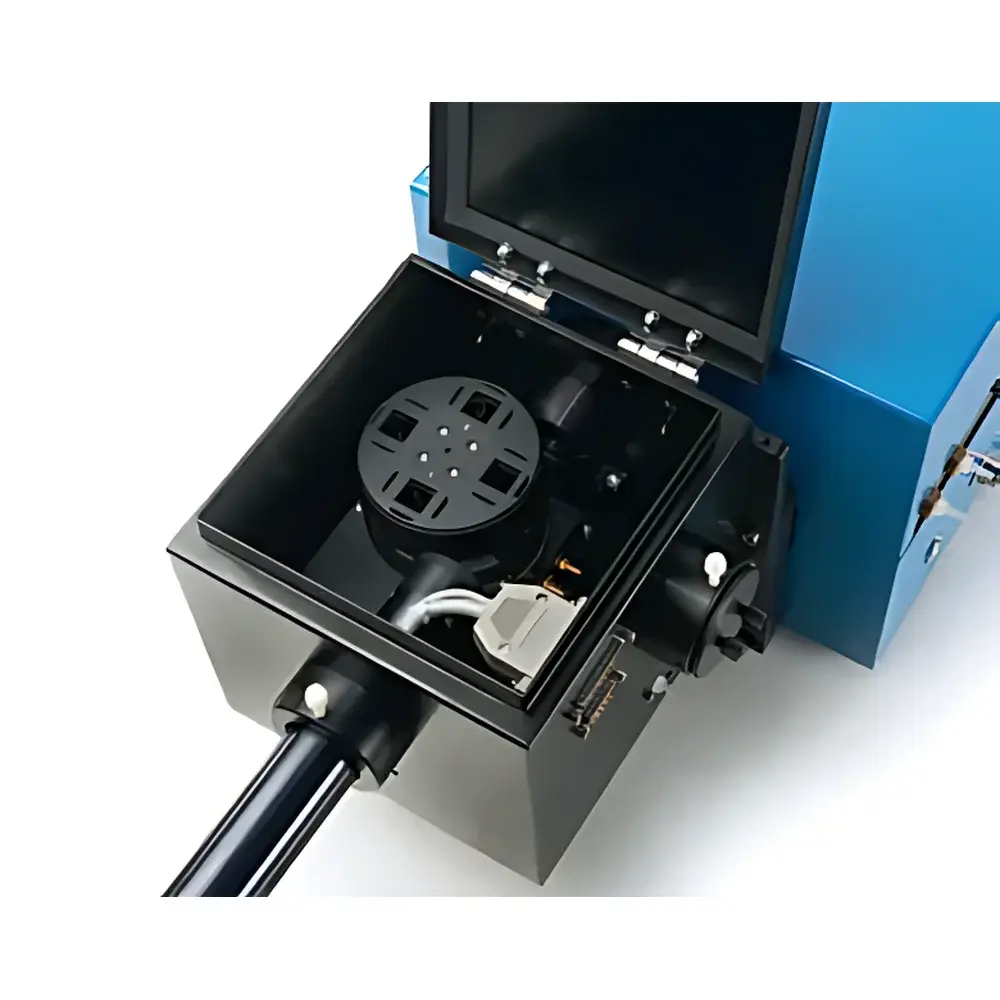
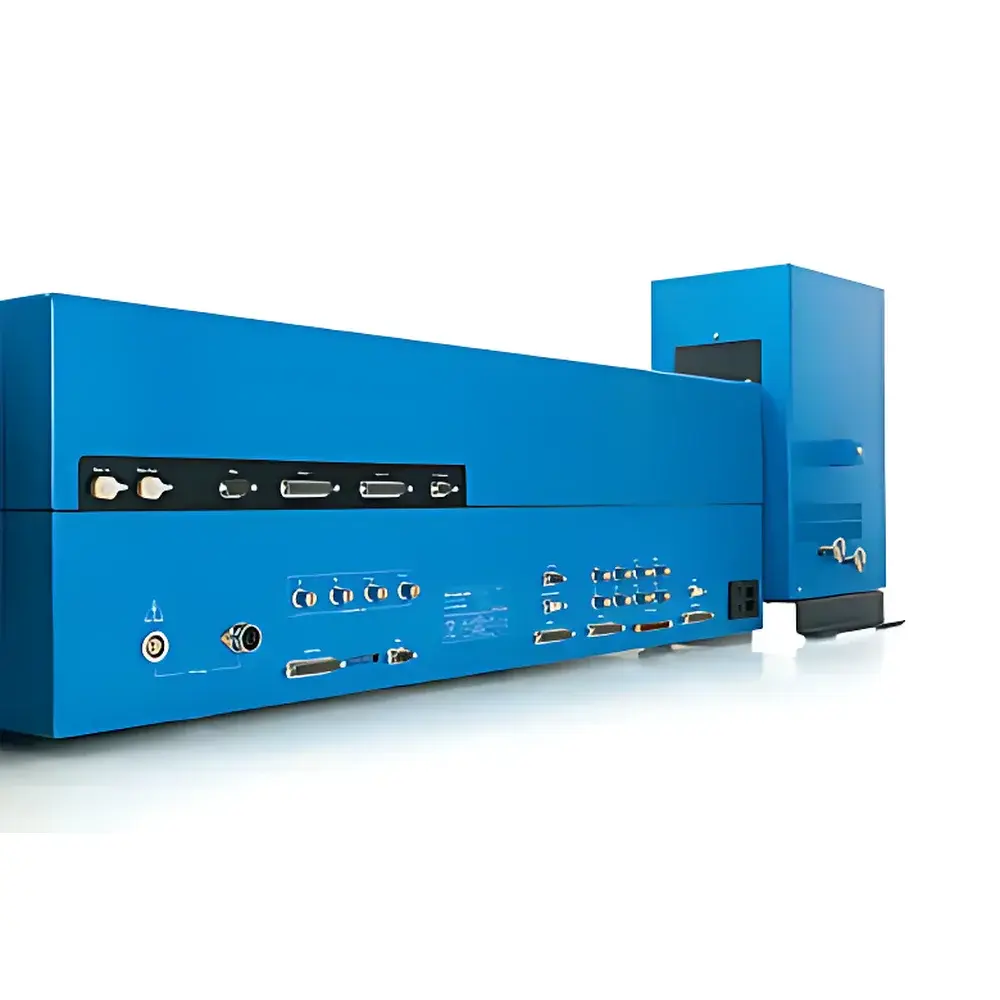
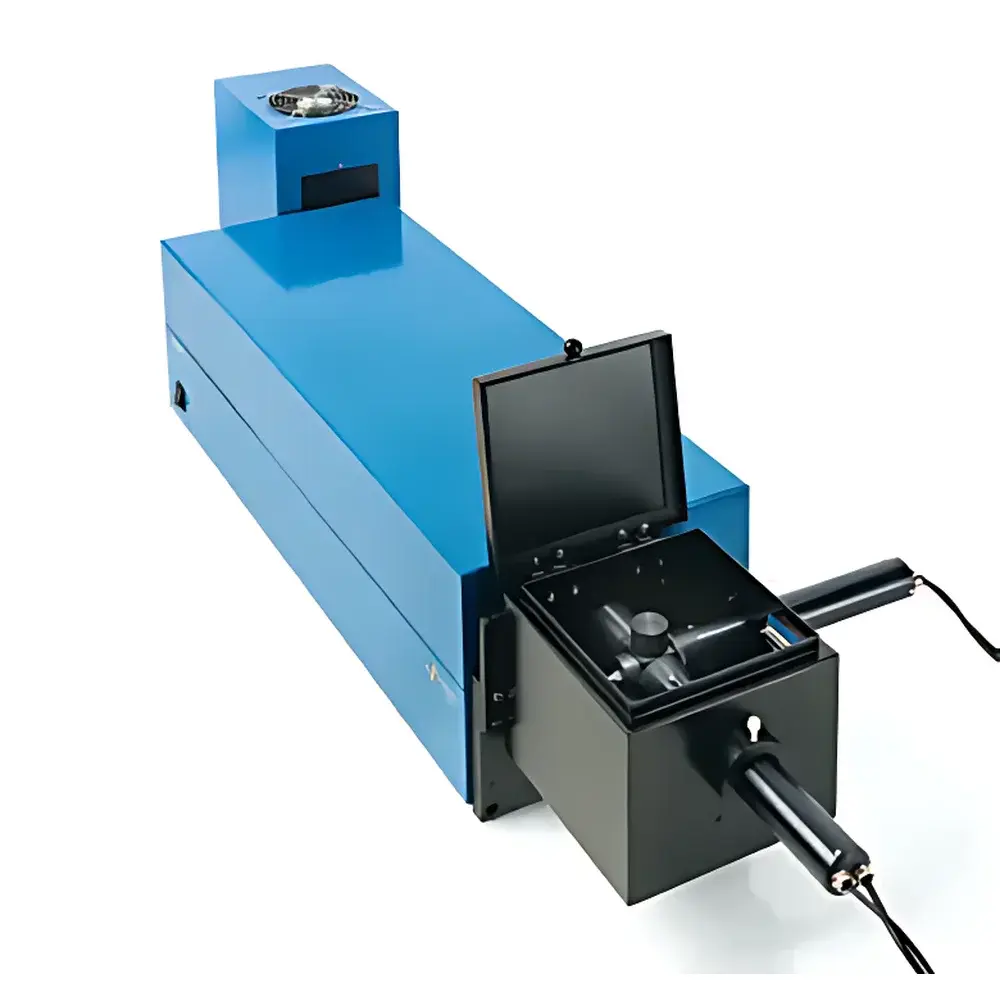
Bio-Logic MOS-500 Circular Dichroism Spectrometer
| Brand | Bio-Logic |
|---|---|
| Origin | France |
| Model | MOS-500 |
| Instrument Type | Circular Dichroism (CD) Spectrometer |
| Light Sources | 150 W Xenon Lamp + 150 W Mercury-Xenon Lamp |
| Detection Modes | CD, UV-Vis Absorption, Fluorescence CD (FCD), Linear Dichroism (LD), Fluorescence Anisotropy |
| Wavelength Range | 163–950 nm (extendable to 1250 nm) |
| Wavelength Accuracy | ±0.1 nm (163–1250 nm) |
| Optical System | Dual Grating Monochromator |
| Stray Light | <2 × 10⁻⁶ at 200 nm |
| Baseline Stability | 0.007 mdeg/hr |
| Maximum Scan Speed | 12,000 nm/min |
| Solid Sample Capability | Integrated Integrating Sphere for Diffuse Reflectance |
| Stopped-Flow Unit | Triple- or Quadruple-Channel Mixing with Independent Stepper-Motor Control |
| Minimum Injection Volume | 10 µL |
| Flow Rate Range | 0.01–40 mL/s |
| Mixing Ratio Range | Continuously Adjustable from 1:1 to 1:100 |
| Mixer Type | Spherical High-Efficiency Mixing Cell |
| Dead Time | 0.2 ms (with Microcell Accessory) |
| Expandable Modules | Cryo-Quench, Sub-Zero Stopped-Flow, Temperature-Jump (T-Jump), Automated Titration, Microconductivity Detection |
Overview
The Bio-Logic MOS-500 Circular Dichroism Spectrometer is a high-performance, research-grade instrument engineered for the quantitative analysis of chiral molecular structure and conformational dynamics in solution and solid states. Based on the physical principle of differential absorption of left- and right-circularly polarized light, the MOS-500 delivers precise, high-sensitivity CD spectra across an extended spectral range—from deep vacuum ultraviolet (163 nm) through visible (950 nm), optionally extendable to 1250 nm. Its dual-light-source configuration (150 W xenon and 150 W mercury-xenon lamps) ensures optimal photon flux and signal-to-noise ratio across the entire operational range, particularly critical for low-absorbance biological macromolecules and dilute chiral compounds. The dual-grating monochromator architecture enables high spectral resolution and exceptional stray light rejection (<2 × 10⁻⁶ at 200 nm), essential for accurate baseline integrity and reliable secondary structure quantification in proteins and nucleic acids.
Key Features
- Dual-lamp illumination system providing seamless spectral coverage and intensity stability from 163 nm to 1250 nm
- Simultaneous acquisition of multiple spectroscopic modalities: circular dichroism (CD), UV-Vis absorption, fluorescence circular dichroism (FCD), linear dichroism (LD), and fluorescence anisotropy
- Ultra-stable optical platform with baseline drift <0.007 mdeg/hr, enabling long-duration kinetic and temperature-dependent experiments
- High-speed scanning capability up to 12,000 nm/min without compromising photometric accuracy or polarization modulation fidelity
- Integrated integrating sphere accessory for quantitative CD measurements of powdered solids and thin films via diffuse reflectance
- Modular stopped-flow unit supporting triple- or quadruple-channel mixing with independent stepper-motor-driven syringes for precise volumetric control (10 µL minimum injection)
- Sub-millisecond dead time (0.2 ms) achievable using micro-volume detection cells, compatible with rapid protein folding/unfolding and enzyme catalytic kinetics
Sample Compatibility & Compliance
The MOS-500 accommodates a broad spectrum of sample formats: aqueous and organic solvent-based solutions (standard cuvettes, demountable cells, capillaries), lyophilized powders (via integrating sphere), and thin-film substrates. Its design conforms to internationally recognized metrological practices for chiroptical instrumentation, including traceable wavelength calibration (NIST-traceable standards) and photometric linearity verification per ISO 8579 and ASTM E275. For regulated environments—such as pharmaceutical development labs operating under ICH Q5B or USP guidelines—the system supports audit-trail-enabled data acquisition when paired with Bio-Kine software compliant with FDA 21 CFR Part 11 requirements (electronic signatures, user access control, immutable raw data archiving). All hardware components are CE-marked and manufactured in accordance with ISO 9001-certified processes in Bio-Logic’s Grenoble facility.
Software & Data Management
Controlled by Bio-Kine v5.x software, the MOS-500 offers a deterministic, scriptable acquisition environment optimized for reproducible method development and GLP/GMP-aligned workflows. The software provides real-time spectral visualization, automated baseline correction algorithms (including reference-subtraction and polynomial fitting), and built-in secondary structure deconvolution libraries (e.g., CONTIN/LL, SELCON3, CDSSTR) for protein and nucleic acid analysis. Raw data are stored in vendor-neutral ASCII and HDF5 formats, facilitating integration with third-party analysis platforms (e.g., MATLAB, Python-based biophysics toolkits). Audit trail logs record every parameter change, user login event, calibration action, and data export operation—fully compliant with laboratory quality management systems requiring full data traceability.
Applications
- Quantitative determination of protein secondary structure content (α-helix, β-sheet, random coil) and thermal/chemical denaturation profiles
- Enantioselective binding studies of chiral small molecules (e.g., pharmaceuticals, catalysts) to biomacromolecular targets
- Real-time monitoring of ligand-induced conformational transitions in GPCRs, kinases, and allosteric enzymes using stopped-flow CD
- Characterization of supramolecular chirality in synthetic polymers, metal–organic frameworks (MOFs), and nanoscale assemblies
- Structural validation of biosimilars and novel biologics in comparability studies per ICH Q5C
- Time-resolved analysis of photoactive protein intermediates (e.g., rhodopsin, cryptochrome) using temperature-jump and laser-pulse triggering modules
FAQ
What is the minimum sample volume required for standard CD measurements?
For conventional 0.1–10 mm pathlength quartz cuvettes, typical volumes range from 200 µL to 2 mL depending on concentration and absorbance. Microcell accessories support down to 15 µL.
Can the MOS-500 perform absolute CD measurements without reference standards?
Yes—the instrument is factory-calibrated for ellipticity (mdeg) and mean residue ellipticity ([θ]) using NIST-traceable quartz waveplates and certified CD standards; no user reference measurement is required for quantitative reporting.
Is the stopped-flow module compatible with aggressive solvents such as DMSO or TFA?
All wetted components (syringes, mixers, tubing) are chemically resistant to common organic solvents, including DMSO, acetonitrile, and ≤10% TFA in aqueous media; PTFE and sapphire flow paths ensure long-term durability.
How does the dual-grating system improve measurement reliability compared to single-grating designs?
Dual gratings enable independent optimization of dispersion and throughput—reducing higher-order diffraction artifacts, enhancing stray light suppression, and maintaining consistent spectral resolution across the full 163–1250 nm range.
Does Bio-Logic provide application support for regulatory submissions?
Yes—Bio-Logic offers IQ/OQ documentation packages, 21 CFR Part 11 validation templates, and technical consultation for CD data inclusion in IND, NDA, and BLA dossiers per FDA and EMA guidance.





