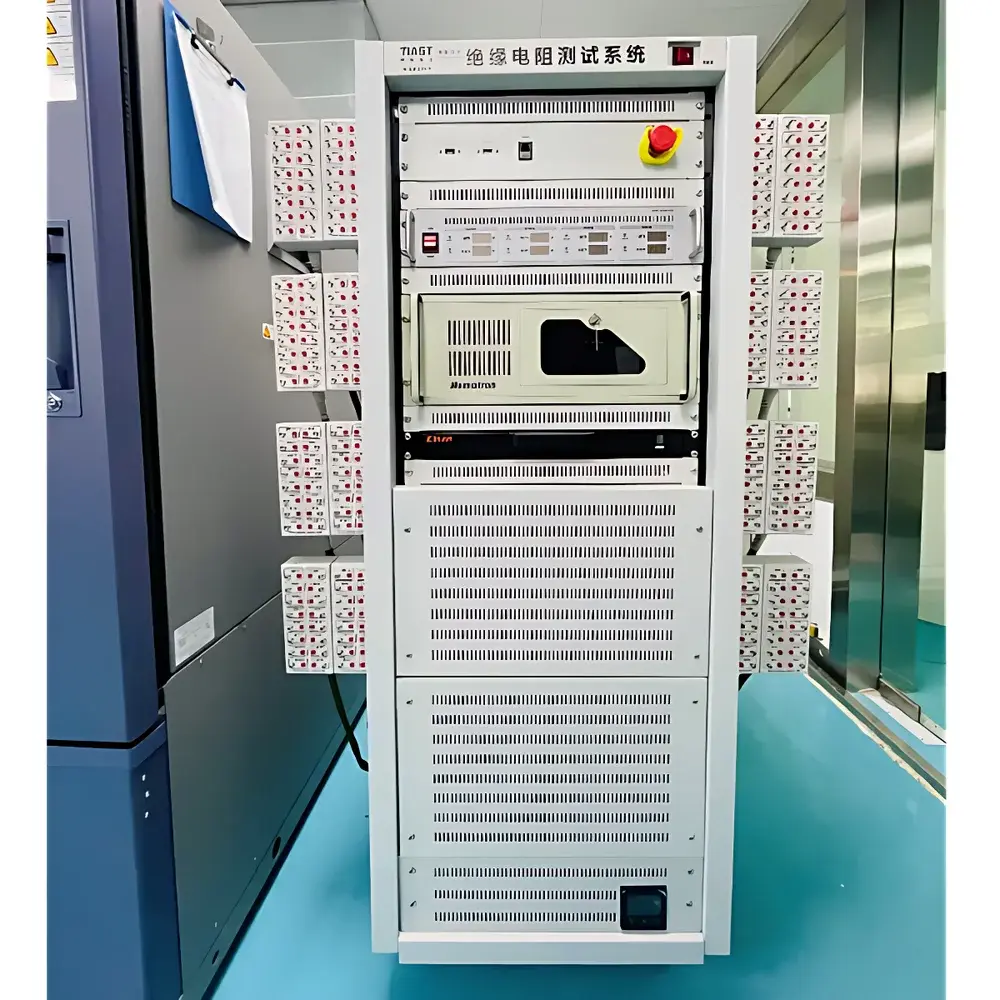
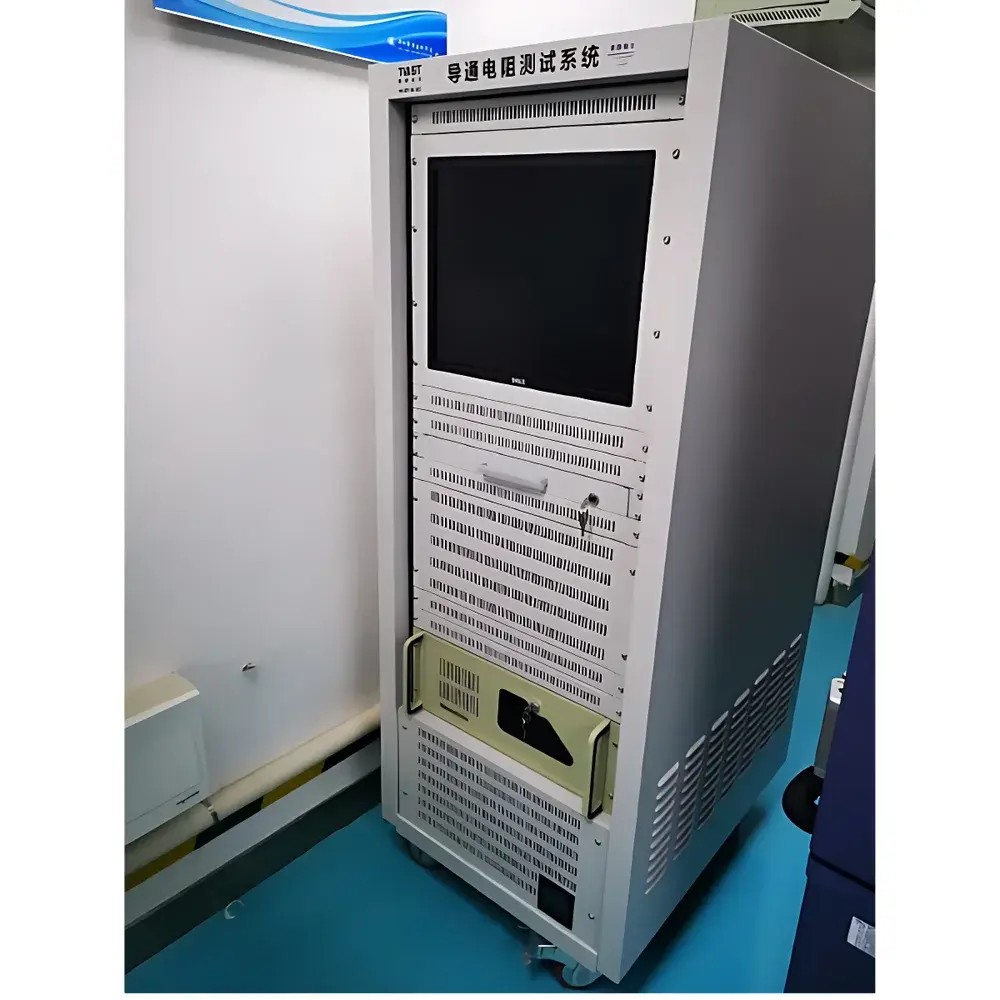
Multi-Channel Continuity and Insulation Resistance Test System – Supro Instruments TIAST
| Brand | Supro Instruments |
|---|---|
| Origin | Guangdong, China |
| Manufacturer Type | OEM Manufacturer |
| Country of Origin | China |
| Model | TIAST |
| Price | USD 1,400 (approx.) |
Overview
The Supro Instruments TIAST Multi-Channel Continuity and Insulation Resistance Test System is an engineered solution for high-throughput electrical safety and reliability validation in electronics manufacturing, aerospace component qualification, and automotive harness testing. Designed around a modular, programmable architecture, the TIAST system performs simultaneous continuity verification and insulation resistance (IR) measurement across up to 128 independently configurable test channels. It operates on the principle of applying a stable, user-selectable DC test voltage (typically 50 V, 100 V, 250 V, or 500 V DC) to evaluate leakage current and calculate resistance via Ohm’s Law (R = V/I), with measurement ranges spanning 10 kΩ to 100 GΩ. The system meets core functional requirements for IEC 61000-4-5 surge immunity, IEC 61326-1 EMC compliance, and supports traceable calibration per ISO/IEC 17025-accredited procedures. Its deterministic timing control and low-noise analog front-end ensure high reproducibility in production-line pass/fail screening and long-term aging studies.
Key Features
- Modular 16–128 channel scalability via daisy-chained expansion modules, enabling flexible integration into automated test fixtures and burn-in racks
- Programmable test voltage selection (50 V / 100 V / 250 V / 500 V DC) with ±1% accuracy and <0.1% ripple
- Auto-ranging insulation resistance measurement from 10 kΩ to 100 GΩ, with 0.1% basic accuracy and 10 ms minimum dwell time per channel
- Dual-mode operation: sequential single-point testing or parallel multi-channel batch execution with synchronized start/stop triggers
- Integrated relay matrix with 1 A contact rating and <10 mΩ cold resistance, rated for >1 million mechanical cycles
- Front-panel USB-C and rear-panel Ethernet (TCP/IP + Modbus TCP) interfaces for remote command control and real-time data streaming
- On-board non-volatile memory stores up to 10,000 test records with timestamp, channel ID, voltage setting, measured R-value, and pass/fail status
Sample Compatibility & Compliance
The TIAST system accommodates a broad range of passive and interconnect samples—including printed circuit board assemblies (PCBAs), wire harnesses, battery modules, motor windings, and medical device cable sets—via standardized banana jack, screw-terminal, or custom fixture interface options. All measurements adhere to fundamental requirements outlined in ASTM D257 (Standard Test Methods for DC Resistance or Conductance of Insulating Materials), IEC 60335-1 (Household Appliance Safety), and UL 61010-1 (Safety Requirements for Electrical Equipment). While not certified as a Class I medical device tester, its design supports GLP/GMP-aligned documentation workflows when paired with external audit-trail-capable software. Calibration certificates include as-found/as-left data and uncertainty budgets traceable to NIM (National Institute of Metrology, China).
Software & Data Management
Supro Instruments provides the TIAST Control Suite—a Windows-based application supporting test plan creation, sequence scripting (via Lua-based logic engine), real-time monitoring, and export to CSV, XML, or SQLite formats. The software implements role-based access control (Operator, Technician, Administrator), automatic report generation with embedded digital signatures, and optional 21 CFR Part 11 compliance mode (requiring external Windows domain authentication and electronic signature validation). Raw measurement logs include channel-specific metadata (e.g., thermistor-corrected ambient temperature, humidity reading from optional sensor module), enabling statistical process control (SPC) analysis using industry-standard tools such as JMP or Minitab. Data integrity is enforced via SHA-256 hashing of each record and write-once archival to network-attached storage (NAS) paths.
Applications
- Final acceptance testing of automotive wiring harnesses prior to vehicle assembly
- Pre- and post-environmental stress screening (ESS) verification of PCB isolation integrity after thermal cycling or humidity exposure
- Quality gate validation for battery pack interconnects in EV powertrain systems
- Reliability lab use in accelerated life testing (ALT) campaigns tracking IR drift over 1,000+ hour bias-temperature-humidity-stress (BTHS) profiles
- Contract manufacturing service (CMS) labs performing third-party conformance testing against IPC-A-610 or J-STD-001 standards
- Research applications requiring synchronized multi-node leakage characterization in MEMS packaging or high-voltage capacitor arrays
FAQ
What is the maximum number of test points supported in a single TIAST configuration?
The base unit supports 16 channels; up to seven expansion modules can be added, yielding a total of 128 independently addressable test points.
Does the TIAST system support AC dielectric withstand (hipot) testing?
No—TIAST is dedicated to DC insulation resistance and continuity measurement only. It does not generate high-voltage AC waveforms required for hipot testing.
Can test sequences be triggered externally via PLC or industrial I/O?
Yes—digital input lines accept TTL/24 VDC trigger signals, and the Ethernet interface supports Modbus TCP coil writes for remote initiation and status polling.
Is firmware upgrade capability available over the network?
Yes—secure firmware updates are delivered via HTTPS through the web-based configuration portal, with checksum verification and rollback support.
How is measurement uncertainty quantified for calibration purposes?
Uncertainty is calculated per GUM (Guide to the Expression of Uncertainty in Measurement) principles, incorporating contributions from voltage source stability, current measurement noise floor, relay contact resistance drift, and environmental temperature effects—typically ±(0.15% of reading + 0.05% of range) at 23 °C ±2 °C.
Related Products