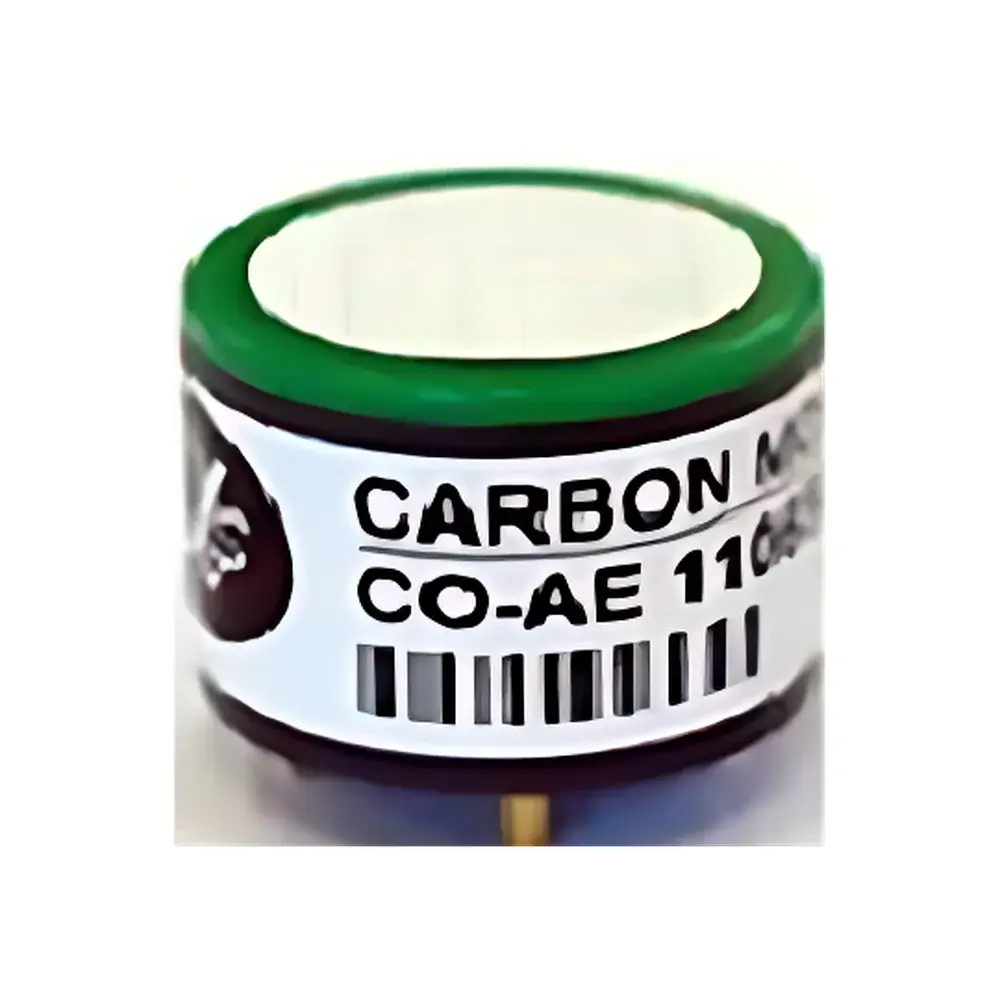
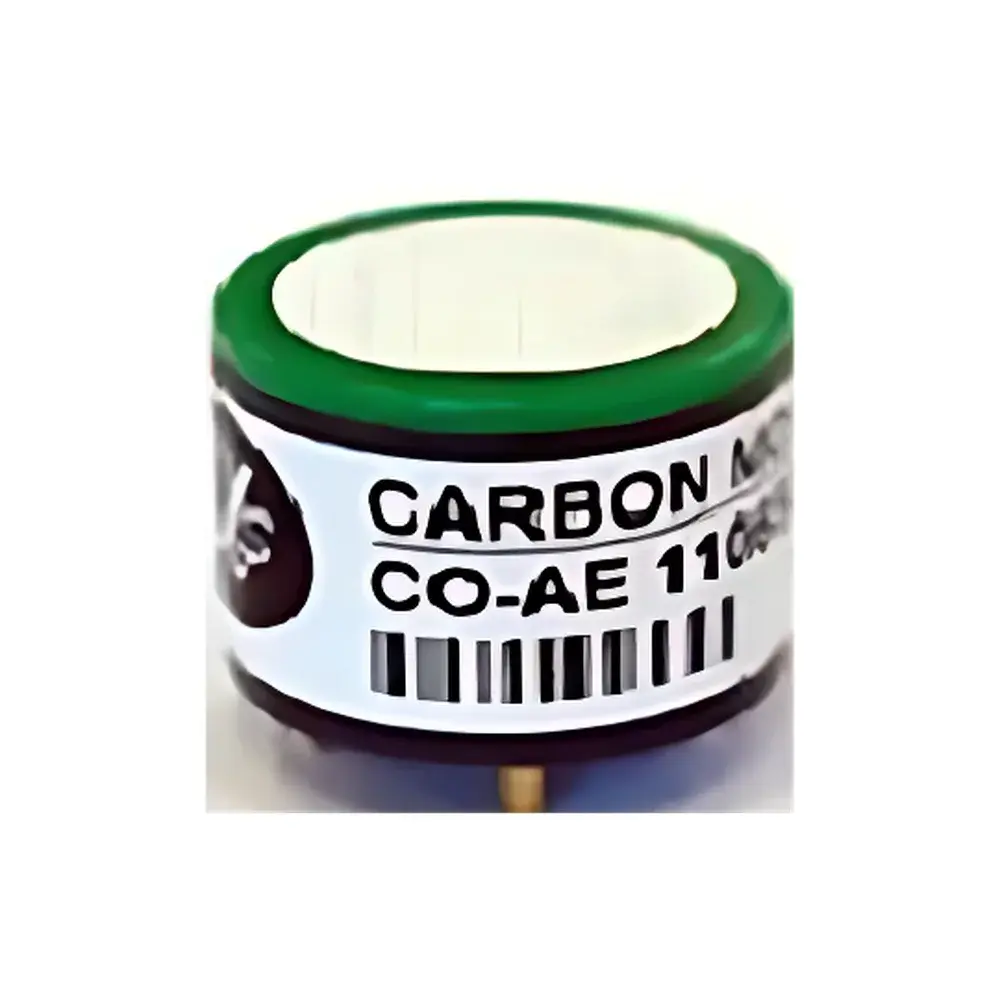
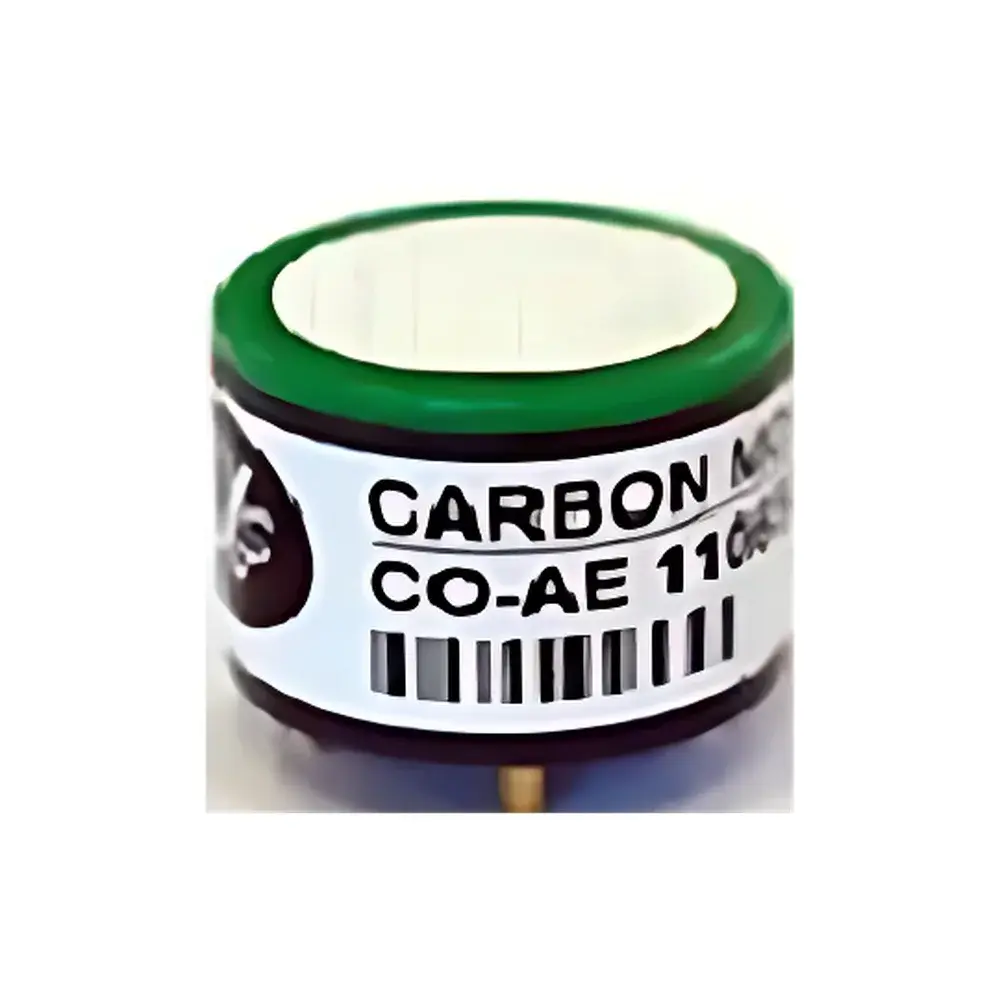
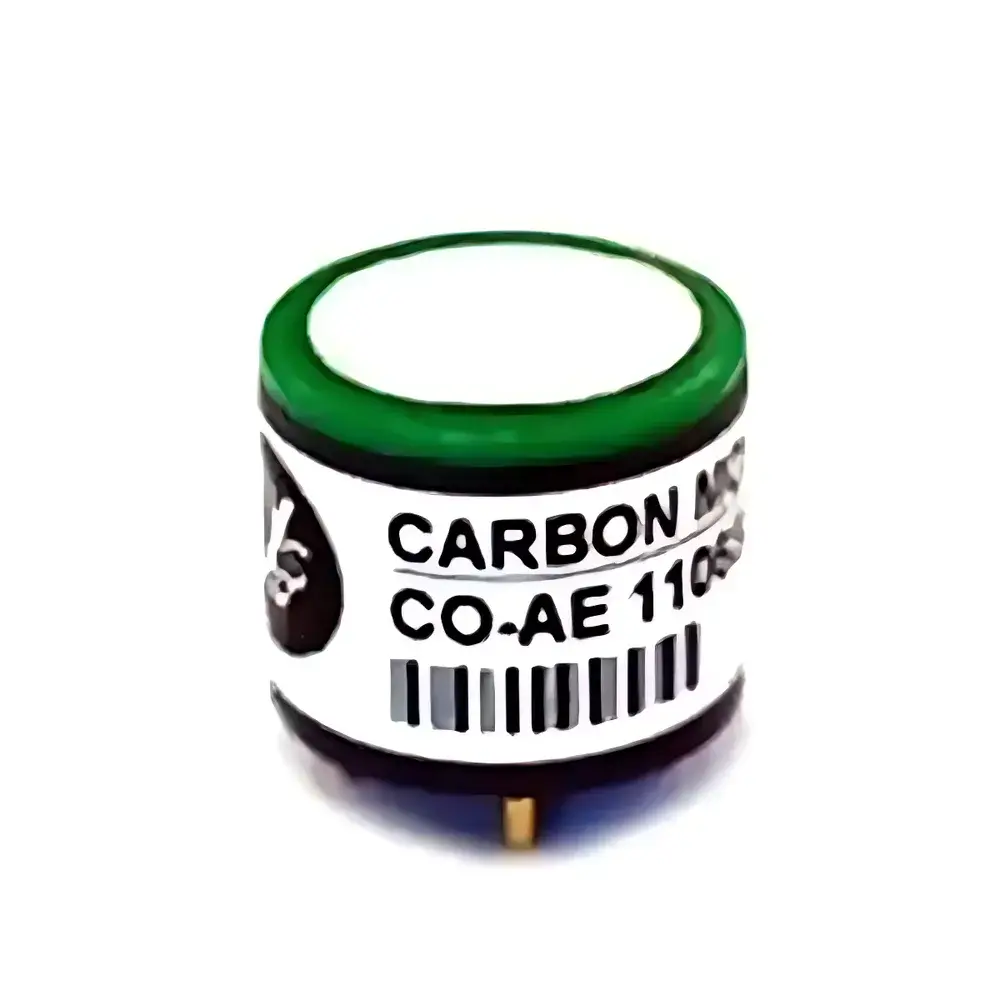
Alphasense CO-AE Electrochemical Carbon Monoxide Sensor (Compact, Filtered, High-Range)
| Brand | Alphasense |
|---|---|
| Origin | United Kingdom |
| Model | CO-AE |
| Measurement Range | 0–10,000 ppm |
| Sensitivity | 12–25 nA/ppm |
| Response Time (t₉₀) | <50 s |
| Linear Range | 0–2,000 ppm |
| Full-Scale Linearity Error | <±5% of reading (0–500 ppm) |
| Overload Capacity | 100,000 ppm |
| Resolution | <5 ppm |
| Dimensions | Ø20.2 × 16.5 mm |
| Operating Temperature | −30 to +50 °C |
| Operating Humidity | 15–90 %RH (non-condensing) |
| Load Resistance | 10–47 Ω |
| Expected Operational Lifetime | 2 years |
| Storage Shelf Life | 6 months |
Overview
The Alphasense CO-AE is a compact, high-range electrochemical sensor engineered for reliable and stable detection of carbon monoxide (CO) in ambient air and industrial environments. Based on the principle of amperometric electrochemical transduction, the sensor generates a current proportional to CO concentration via oxidation at a catalytic working electrode in an acidic electrolyte. Its robust three-electrode architecture—comprising working, counter, and reference electrodes—ensures stable baseline performance, minimized cross-sensitivity to interfering gases (e.g., H₂, NO₂), and long-term signal reproducibility. The integrated hydrophobic PTFE filter provides mechanical protection against particulates and moisture ingress while maintaining gas diffusion kinetics essential for rapid response. Designed for integration into fixed-gas monitoring systems, portable safety instruments, and OEM emission control platforms, the CO-AE meets stringent requirements for continuous operation under variable environmental conditions without recalibration drift exceeding specification limits.
Key Features
- High dynamic range: 0–10,000 ppm CO with overload tolerance up to 100,000 ppm for transient exposure resilience
- Fast electrochemical response: t₉₀ < 50 seconds across full operating temperature range (−30 to +50 °C)
- Precision linear output: ≤±5% full-scale error within 0–500 ppm; maintained linearity up to 2,000 ppm
- Sub-5 ppm resolution enabled by low-noise analog output and optimized signal-to-noise ratio
- Compact cylindrical form factor (Ø20.2 × 16.5 mm) facilitating space-constrained PCB mounting
- Integrated hydrophobic membrane filter (PTFE) ensuring consistent diffusion-limited response and extended service life in dusty or humid atmospheres
- Stable zero-current offset and low temperature coefficient (<0.15% / °C) minimizing thermal drift compensation burden
- Two-year operational lifetime under typical continuous-use conditions (25 °C, 50% RH, 1,000 ppm CO exposure cycles)
Sample Compatibility & Compliance
The CO-AE sensor is validated for use in clean, non-corrosive gaseous matrices with oxygen content ≥18% v/v—essential for sustaining the electrochemical reaction cycle. It exhibits minimal interference from common background gases including methane, ethanol, hydrogen sulfide, and carbon dioxide when operated within specified humidity and temperature envelopes. Cross-sensitivity to hydrogen is mitigated through proprietary electrode formulation and filtering geometry. The sensor complies with IEC 60079-29-1:2016 (Explosive atmospheres – Gas detectors – Performance requirements for detectors for flammable gases) for intrinsic safety compatibility and aligns with EN 45544-1:2017 (Workplace atmospheres – Electrical apparatus for the detection and measurement of toxic gases – Requirements and test methods) for occupational exposure monitoring applications. While not certified for medical or regulatory compliance out-of-the-box, its metrological characteristics support traceable calibration against NIST-traceable standards and integration into systems compliant with ISO/IEC 17025 quality management frameworks.
Software & Data Management
As a passive analog sensor, the CO-AE outputs a linear current signal (nA) proportional to CO concentration, requiring external signal conditioning—including transimpedance amplification, temperature compensation, and analog-to-digital conversion. When integrated into host instrumentation, it supports real-time data logging, alarm threshold triggering (e.g., OSHA PEL = 50 ppm TWA), and diagnostic flagging (e.g., end-of-life indication via sensitivity decay monitoring). Firmware-level compensation algorithms—based on onboard thermistor readings and factory-characterized temperature-response curves—enable accurate ambient correction across the full −30 to +50 °C operating range. For systems requiring auditability, the sensor’s predictable aging profile allows implementation of time-based calibration interval scheduling aligned with GLP/GMP documentation practices and FDA 21 CFR Part 11 electronic record integrity guidelines.
Applications
- Fixed-site industrial safety systems for boiler rooms, parking garages, and confined-space entry monitoring
- OEM integration into portable multi-gas detectors used by fire services and hazmat response teams
- Indoor air quality (IAQ) controllers in commercial HVAC systems with demand-controlled ventilation logic
- Combustion efficiency analyzers for residential heating appliances and small-scale biomass burners
- Environmental monitoring networks tracking urban CO gradients near traffic corridors and industrial perimeters
- Research-grade exposure chambers requiring stable, low-drift CO dosing feedback control
FAQ
What is the recommended calibration frequency for the CO-AE sensor?
Calibration should be performed before initial deployment and at intervals no greater than 6 months under continuous operation, or after exposure to concentrations >5,000 ppm or extreme environmental stress (e.g., condensation, solvent vapors).
Can the CO-AE operate in oxygen-deficient environments?
No. Sustained operation below 18% O₂ will impair the electrochemical reaction kinetics and lead to irreversible sensitivity loss.
Is the PTFE filter replaceable by the end user?
The filter is permanently bonded during manufacturing and is not field-replaceable; replacement requires full sensor unit exchange.
Does the CO-AE require a warm-up period before stable readings?
Yes—a stabilization period of 24 hours is recommended after storage or power-on to achieve thermal equilibrium and baseline settling.
How does humidity affect measurement accuracy?
Within 15–90% RH (non-condensing), humidity-induced error remains within ±3% of reading; condensation must be avoided to prevent electrolyte dilution and electrode flooding.