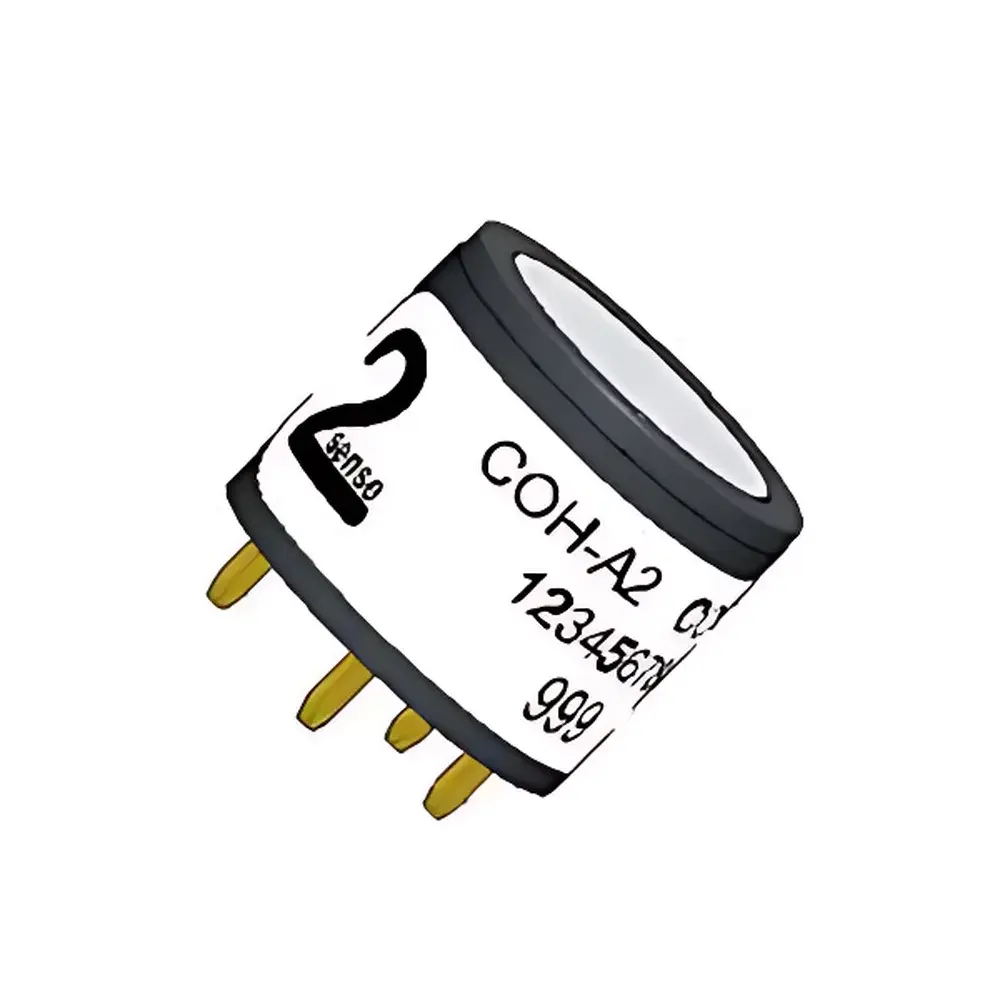
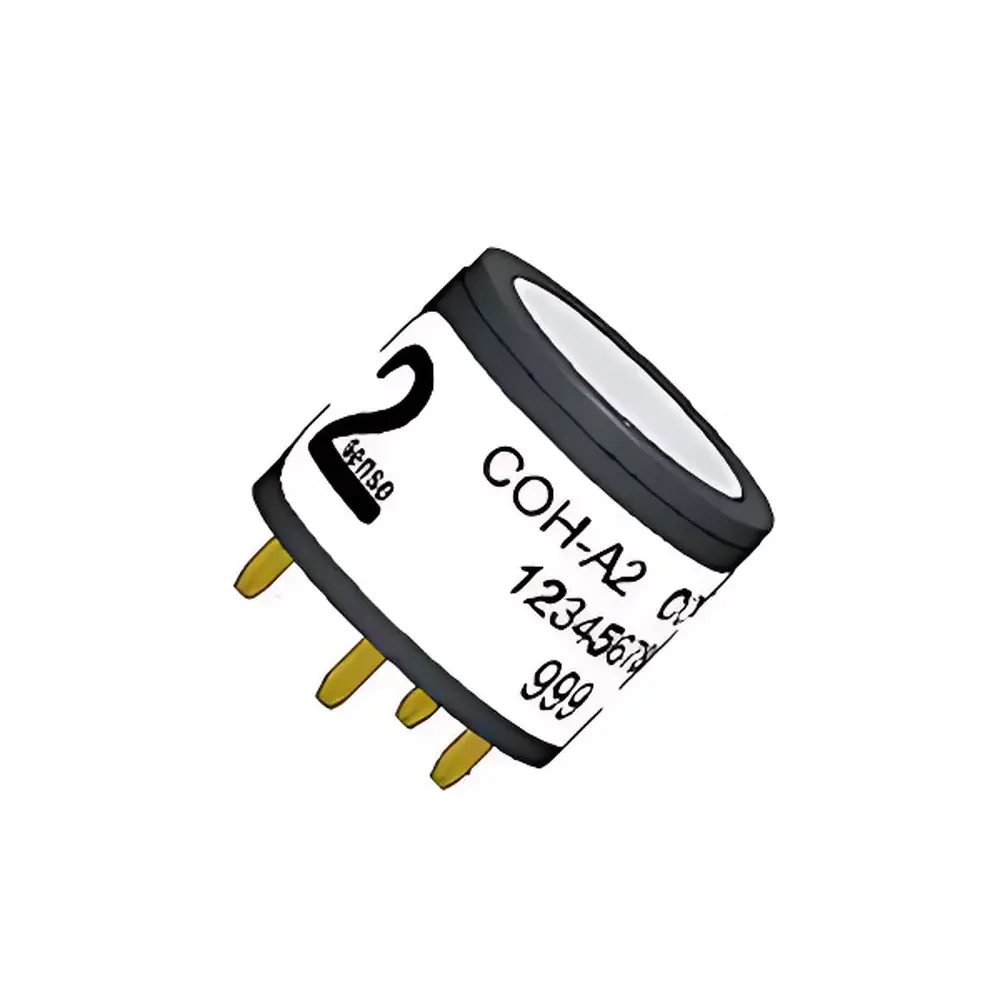
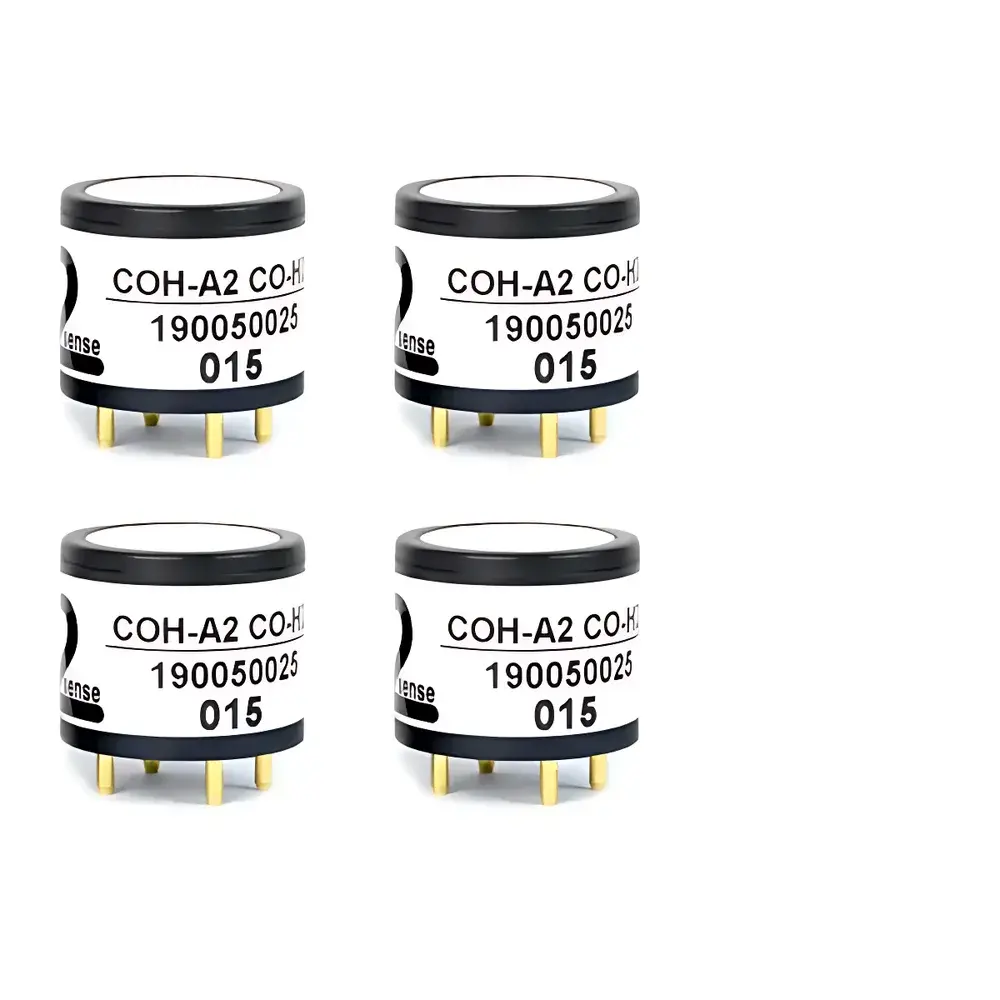
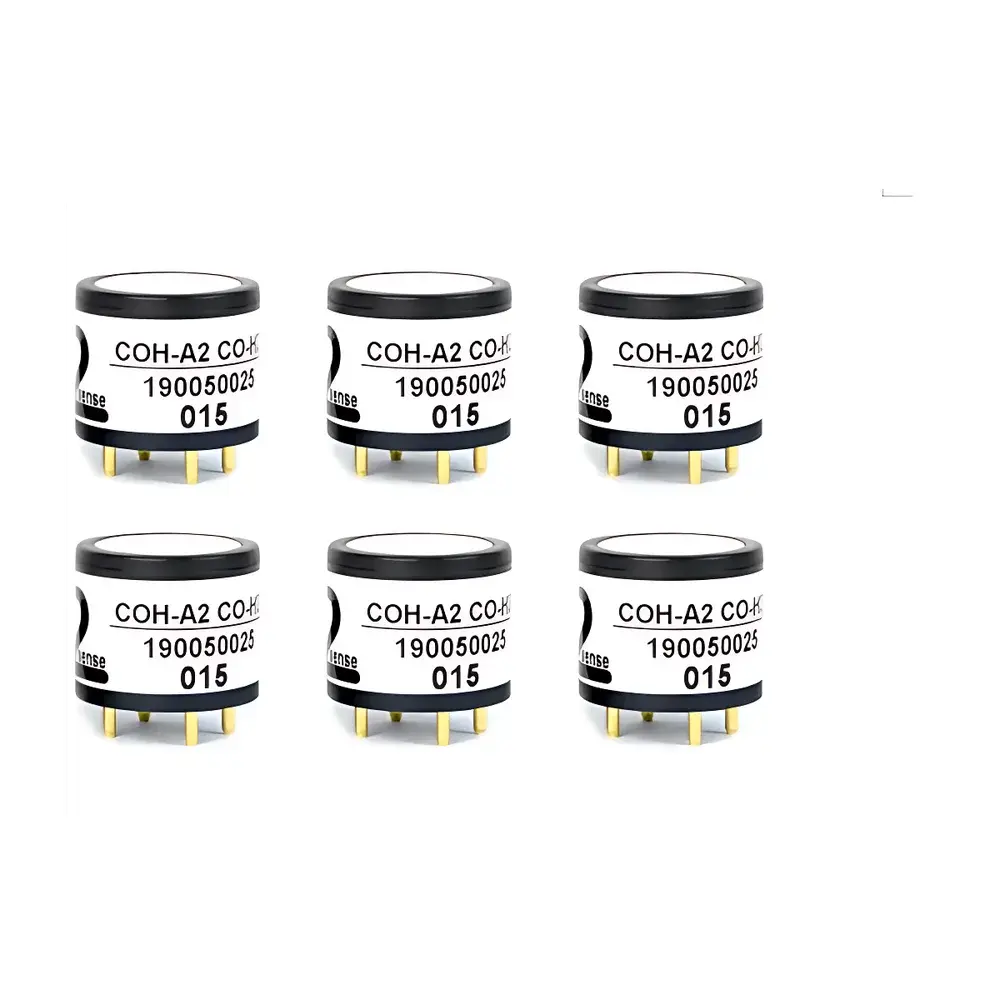
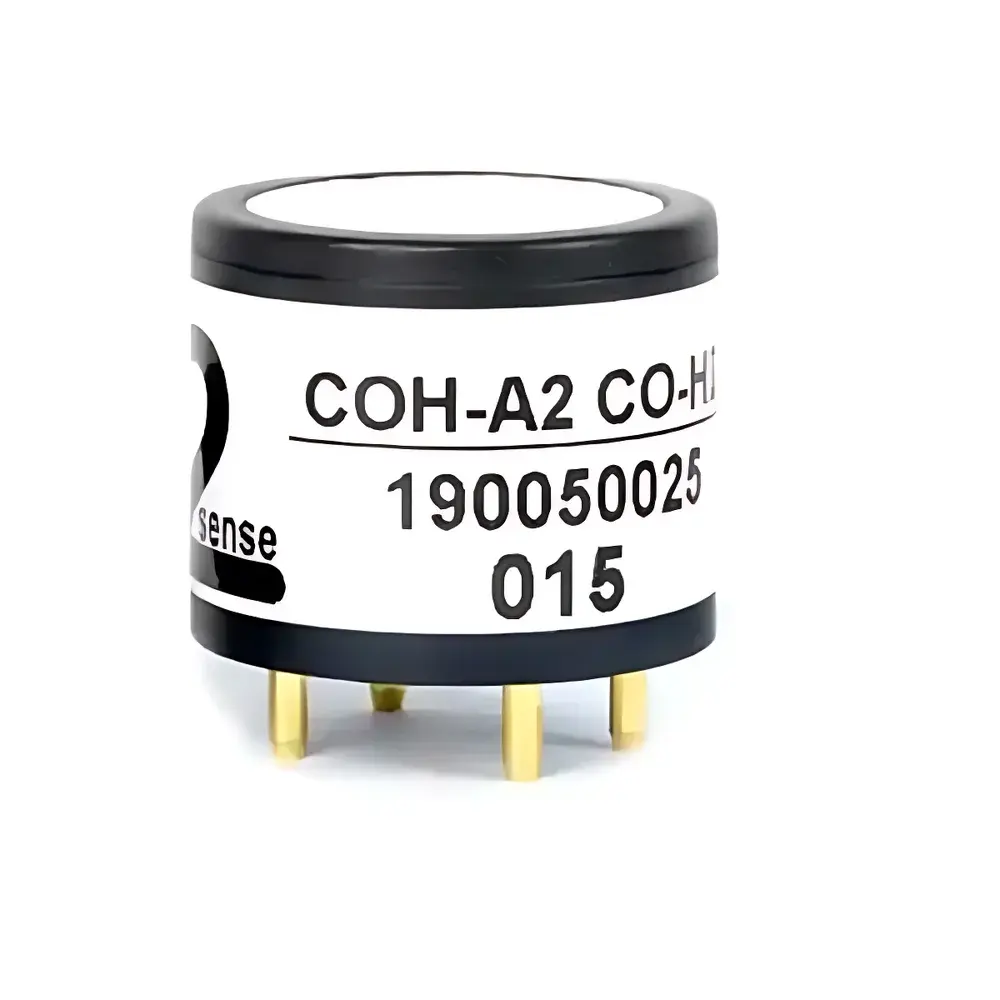
Alphasense COH-A2 Dual-Gas Electrochemical Sensor (CO + H₂S)
| Brand | Alphasense (UK) |
|---|---|
| Origin | United Kingdom |
| Model | COH-A2 |
| Sensor Type | Electrochemical |
| Target Gases | Carbon Monoxide (CO), Hydrogen Sulfide (H₂S) |
| CO Range | 0–1000 ppm |
| H₂S Range | 0–100 ppm |
| CO Resolution | <0.5 ppm |
| H₂S Resolution | <0.1 ppm |
| CO t₉₀ | <35 s |
| H₂S t₉₀ | <30 s |
| CO Sensitivity | 50–100 nA/ppm (at 400 ppm CO) |
| H₂S Sensitivity | 650–1100 nA/ppm (at 20 ppm H₂S) |
| CO Zero Current | −3 to +3.5 ppm |
| H₂S Zero Current | ±0.25 ppm |
| CO Linearity Error | ≤±5 ppm (0–400 ppm), full-scale error 10–40 ppm |
| H₂S Linearity Error | <±5 ppm (0–20 ppm) |
| CO Overload Capacity | 5000 ppm (stable pulse response) |
| H₂S Overload Capacity | 200 ppm (stable pulse response) |
| Cross-Sensitivity Mitigation | Integrated high-capacity filter on CO working electrode eliminates interference from H₂S, SO₂, NOₓ, and acidic gases |
Overview
The Alphasense COH-A2 is a rigorously engineered dual-gas electrochemical sensor designed for simultaneous, selective detection of carbon monoxide (CO) and hydrogen sulfide (H₂S) in portable and fixed gas detection systems. Unlike conventional single-gas sensors or stacked dual-element configurations, the COH-A2 integrates two independently optimized electrochemical cells within a single 20 mm diameter housing—retaining mechanical and electrical compatibility with industry-standard sensor footprints (e.g., 3-electrode pinout, 0.7 V bias). Its core innovation lies in the proprietary high-capacity diffusion barrier applied to the CO working electrode, which quantitatively suppresses cross-sensitivity to H₂S, sulfur dioxide (SO₂), nitrogen oxides (NOₓ), and other acidic interferents without compromising CO sensitivity or response kinetics. This architecture enables true co-located, real-time dual-gas measurement under dynamic field conditions—critical for confined space entry, industrial hygiene monitoring, and ambient air quality instrumentation where independent calibration drift between channels introduces unacceptable uncertainty.
Key Features
- True dual-gas detection in a single, compact 20 mm package—meets IEC 60079-29-1 and EN 45544-1 mechanical interchangeability requirements
- Electrochemically isolated CO and H₂S sensing elements with independent zero and span stability characteristics
- CO channel equipped with a chemically stabilized, high-capacity hydrophobic filter that eliminates >99.8% of H₂S cross-response and reduces SO₂/NOₓ interference to <2% of full scale
- Low-power operation (typical 150 µA quiescent current per channel) compatible with battery-powered handheld instruments requiring >12-month service intervals
- Stable baseline performance across −20 °C to +50 °C operating range; integrated temperature compensation circuitry minimizes thermal drift to <0.05 ppm/°C (CO) and <0.02 ppm/°C (H₂S)
- Factory-calibrated with NIST-traceable gas standards; supports both factory-level and field-level 2-point calibration using certified span gases (e.g., 200 ppm CO in air, 10 ppm H₂S in N₂)
Sample Compatibility & Compliance
The COH-A2 is validated for continuous exposure to ambient air, industrial process streams, and indoor environments containing typical background levels of humidity (15–90% RH non-condensing), CO₂ (up to 5000 ppm), and particulate matter (PM₁₀ < 100 µg/m³). It is not rated for use in explosive atmospheres without appropriate system-level certification (e.g., ATEX/IECEx enclosure integration). The sensor complies with key international standards governing electrochemical gas sensor performance: ISO 20785:2022 (specification for electrochemical toxic gas sensors), EN 45544-2:2017 (performance requirements for H₂S and CO detectors), and meets the linearity, repeatability, and zero-stability criteria referenced in OSHA 29 CFR 1910.120 and NIOSH Manual of Analytical Methods (NMAM) Method 6003/6004. All production units undergo 100% functional screening and are supplied with individual calibration certificates traceable to UKAS-accredited gas standards.
Software & Data Management
When integrated into OEM instrumentation, the COH-A2 interfaces via standard analog output (0–20 mA or 0–3 V) or digital I²C protocol (optional firmware upgrade). Its linear current output enables direct integration with microcontroller-based signal conditioning without complex polynomial correction. For regulatory compliance applications—including workplace exposure monitoring under EU Directive 2017/164/EU or US EPA Method TO-15 support—the sensor’s stable zero and calibrated slope facilitate automated audit trails, calibration event logging, and data integrity features aligned with FDA 21 CFR Part 11 principles (when implemented at the host instrument level). Firmware-upgradable versions support configurable alarm thresholds, automatic baseline drift correction algorithms, and diagnostic self-test routines (e.g., electrode impedance monitoring, open-circuit voltage verification).
Applications
- Personal safety monitors for oil & gas, wastewater treatment, mining, and utility maintenance personnel
- Fixed-point area monitors in chemical manufacturing plants, biogas facilities, and pulp & paper mills
- Indoor air quality (IAQ) analyzers deployed in laboratories, schools, and commercial buildings
- OEM integration into multi-gas detector platforms requiring simultaneous CO/H₂S quantification with minimal cross-talk
- Environmental monitoring networks measuring urban and industrial boundary-layer emissions
FAQ
What is the expected operational lifetime of the COH-A2 under normal ambient conditions?
Typical functional lifetime is 24 months when operated continuously at 23 °C and 50% RH. Lifetime decreases proportionally under elevated temperature (>40 °C), high humidity (>90% RH), or repeated exposure to >100 ppm H₂S pulses.
Can the CO and H₂S channels be calibrated independently?
Yes—each channel has dedicated zero and span calibration points. Recommended practice is sequential calibration: zero first (using certified zero air), then span each gas individually using traceable standards.
Does the COH-A2 require external temperature or humidity compensation?
No. Onboard thermistor and humidity-resistant electrode formulation provide intrinsic compensation across the specified operating range. External compensation is unnecessary unless operating beyond −20 °C or above +50 °C.
Is the COH-A2 compatible with PID or MOS-based multi-gas platforms?
It is electrically and mechanically compatible but must be integrated as a discrete electrochemical channel. It does not replace photoionization or metal-oxide semiconductor sensors—rather, it augments them for targeted toxic gas quantification.