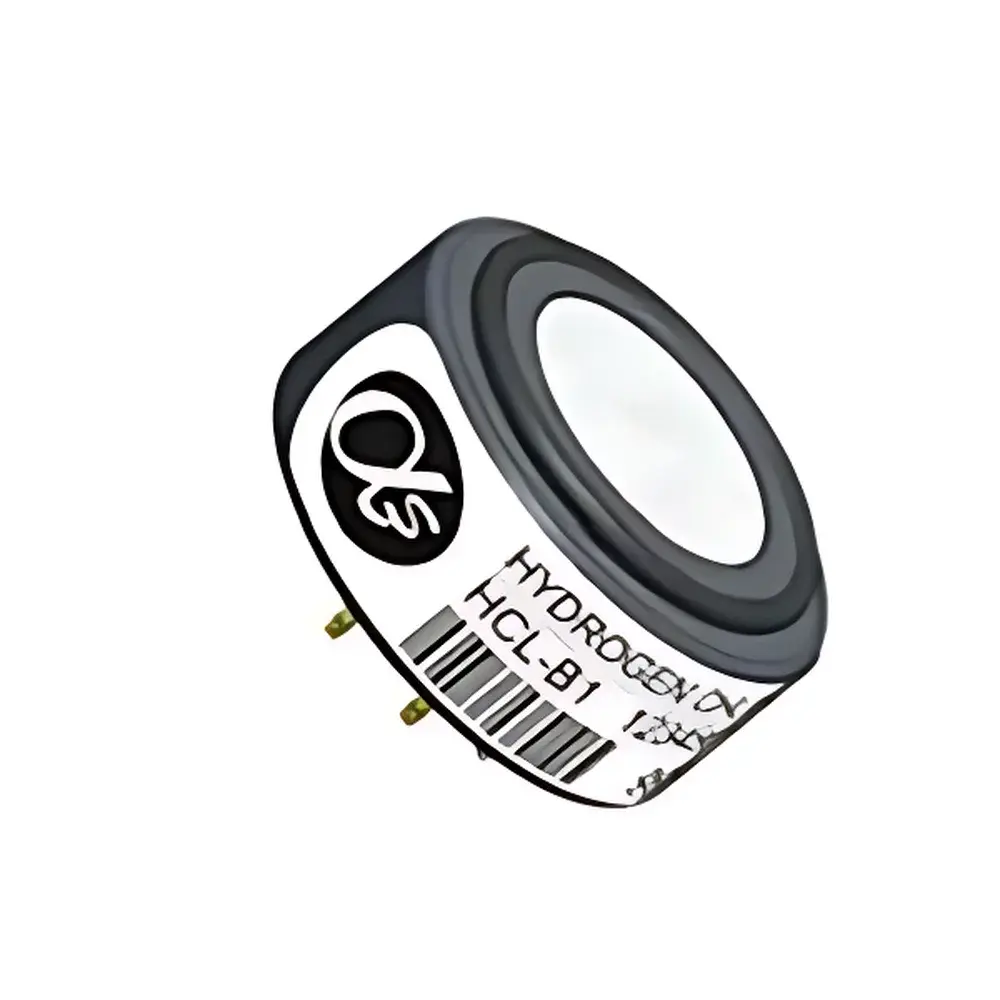
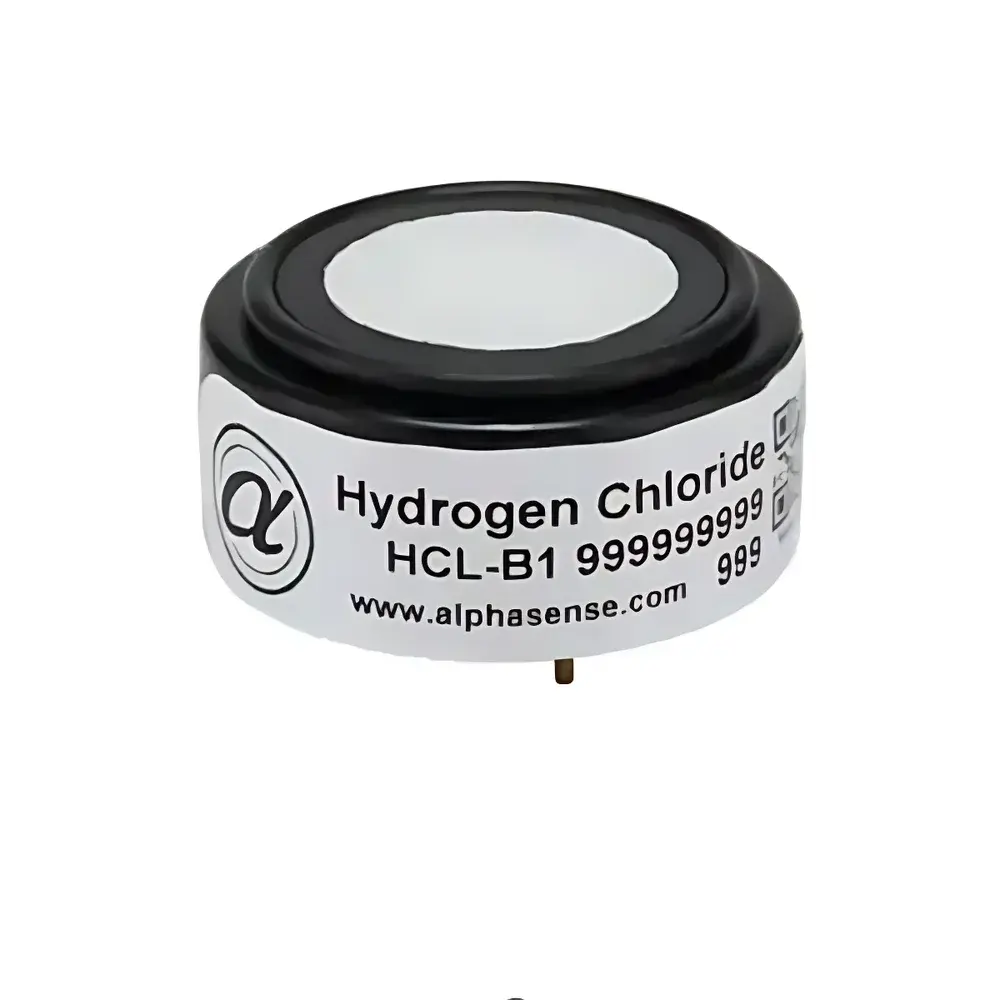
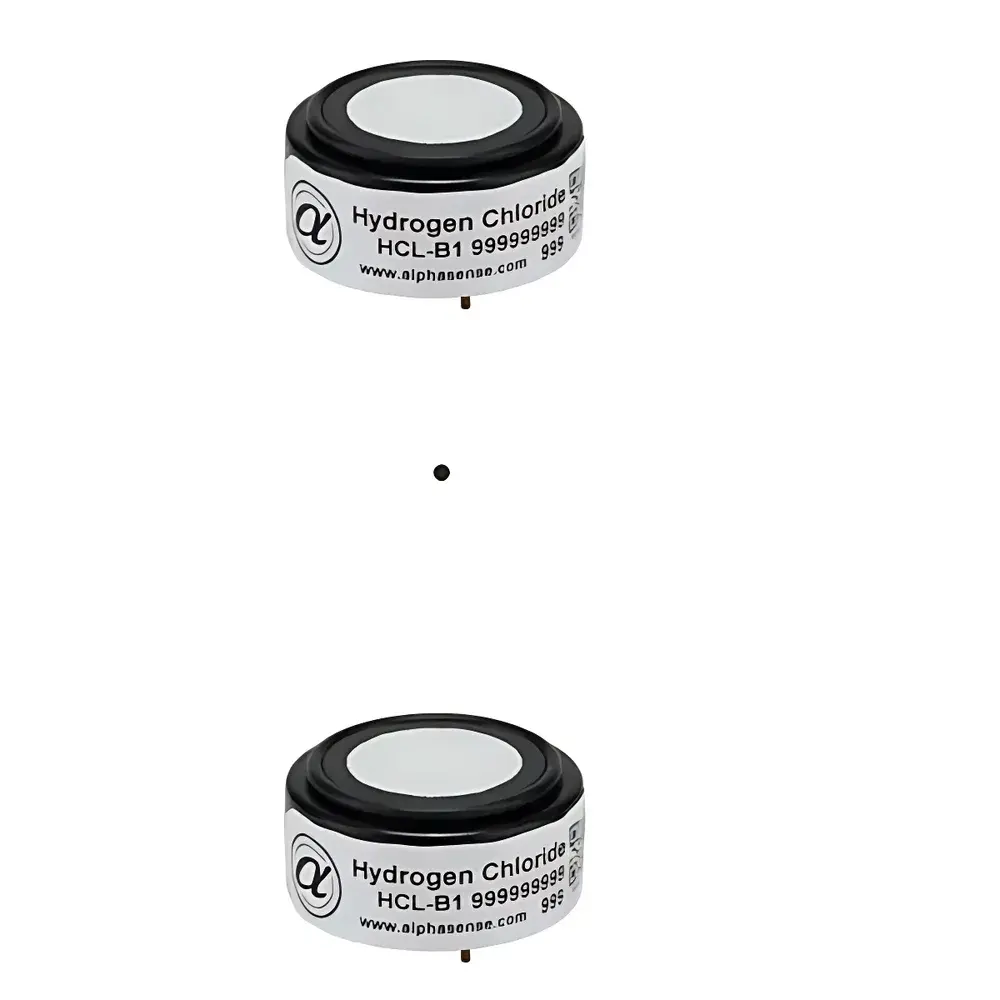
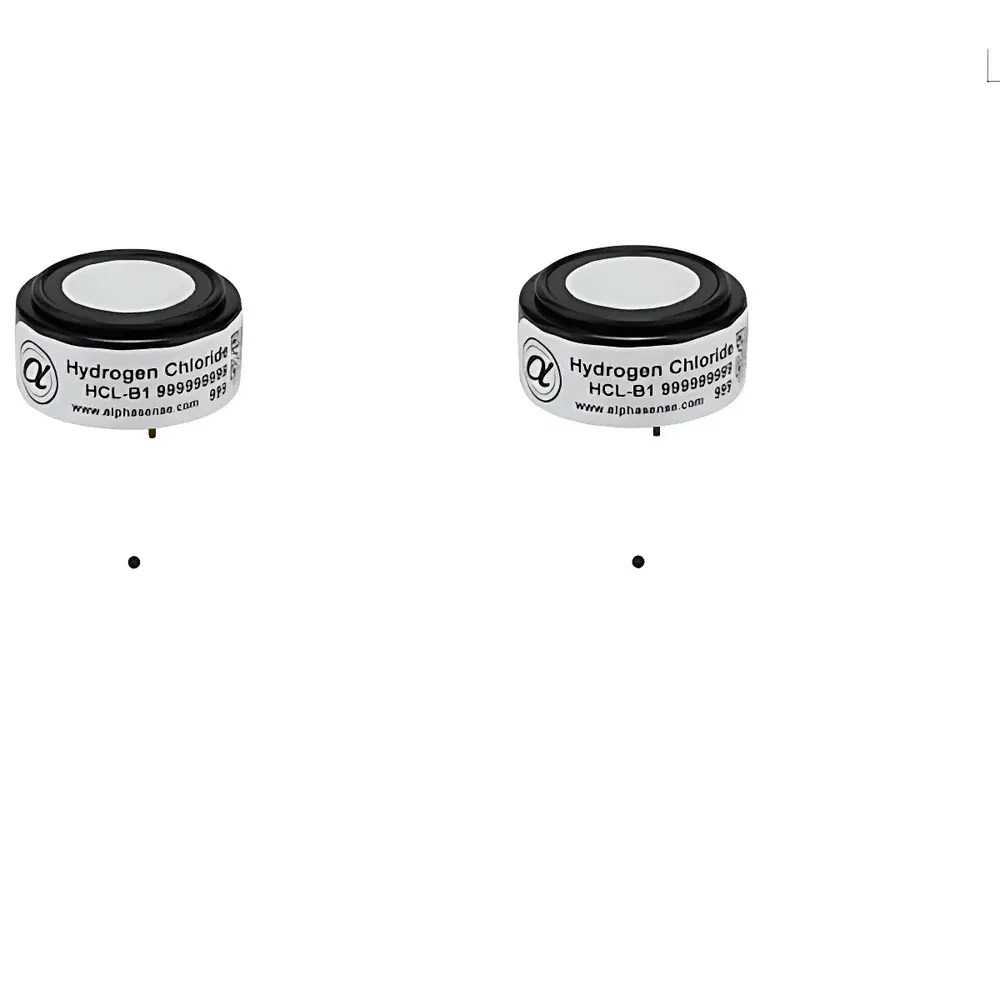
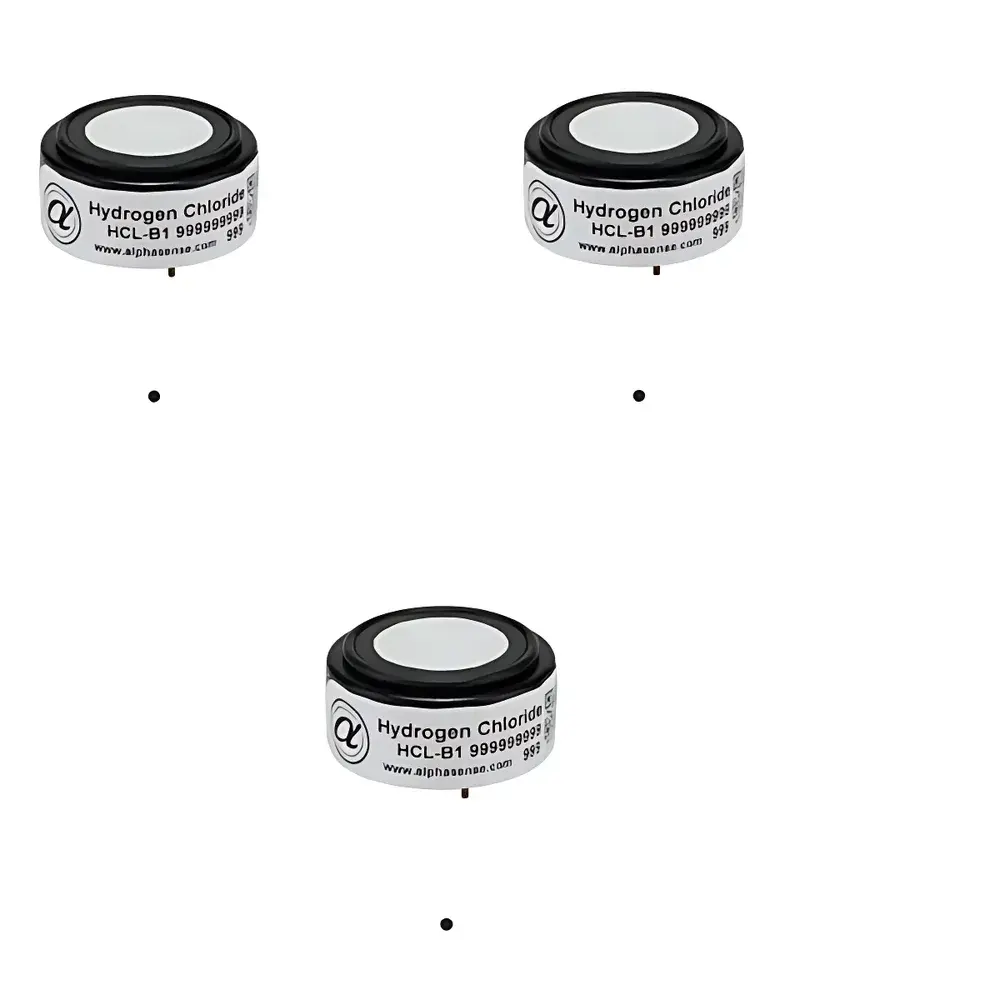
Alphasense HCL-B1 Electrochemical Hydrogen Chloride (HCl) Gas Sensor
| Brand | Alphasense (UK) |
|---|---|
| Origin | United Kingdom |
| Model | HCL-B1 |
| Sensitivity | 120–250 nA/ppm |
| Response Time (t90) | <200 s |
| Resolution | <0.1 ppm |
| Operating Temperature | −30 to +50 °C |
| Operating Humidity | 15–90 %RH (non-condensing) |
| Load Resistance | 10–33 Ω |
| Diameter × Height | 32.3 × 16.5 mm |
Overview
The Alphasense HCL-B1 is a high-performance, diffusion-type electrochemical gas sensor engineered for the selective and stable detection of hydrogen chloride (HCl) in ambient air. Designed and manufactured in the United Kingdom, the HCL-B1 operates on the principle of amperometric electrochemistry: HCl gas diffuses through a hydrophobic membrane into an aqueous electrolyte, where it undergoes oxidation at the working electrode, generating a current proportional to the analyte concentration. This linear current response—typically 120–250 nA per ppm of HCl—enables precise quantification across low-ppm measurement ranges critical for industrial hygiene, fenceline monitoring, and process safety applications. The sensor features a robust three-electrode architecture (working, counter, and reference electrodes), which enhances long-term baseline stability and minimizes drift under variable temperature and humidity conditions (−30 to +50 °C; 15–90 %RH non-condensing). Its compact cylindrical form factor (Φ32.3 × 16.5 mm) facilitates integration into portable detectors, fixed-gas monitors, and OEM environmental instrumentation platforms.
Key Features
- Electrochemical detection with proven selectivity for HCl in complex gas matrices, minimizing cross-sensitivity to common interferents including Cl₂, SO₂, NO₂, and H₂S
- Fast t90 response time of less than 200 seconds, enabling timely exposure assessment in dynamic environments
- High resolution down to <0.1 ppm—suitable for compliance with occupational exposure limits (OELs) such as OSHA PEL (5 ppm TWA) and ACGIH TLV (2 ppm STEL)
- Optimized load resistance range (10–33 Ω) compatible with standard analog signal conditioning circuits used in industrial gas detection systems
- Stable zero and span performance over typical service life (>24 months in clean air), supported by Alphasense’s proprietary electrode formulation and sealed electrolyte system
- CE-marked and RoHS-compliant; designed to meet IEC 60079-29-1 requirements for use in potentially explosive atmospheres when integrated into certified host equipment
Sample Compatibility & Compliance
The HCL-B1 is intended for continuous or intermittent sampling of ambient air and low-velocity process streams. It is not rated for direct immersion, high-particulate, or highly acidic condensate environments without appropriate inlet filtration (e.g., particulate filter + chemical scrubber for SO₂/NOₓ if co-present). When deployed in fixed systems, the sensor complies with EN 45544-1 (electrochemical sensors for toxic gases) and supports functional safety requirements per IEC 61508 SIL 2 when integrated with suitable diagnostics and redundancy. For regulatory reporting, data generated using the HCL-B1 may contribute to compliance with EPA Method TO-15 (for ambient HCl), ISO 16000-33 (indoor air quality), and EU Directive 2010/75/EU (Industrial Emissions Directive), provided full system validation—including calibration traceability to NIST-certified standards—is documented.
Software & Data Management
While the HCL-B1 itself is an analog transducer, its output is fully compatible with industry-standard gas detection platforms supporting 4–20 mA, 0–5 V, or UART digital interfaces. Alphasense provides comprehensive technical documentation—including calibration certificates, temperature compensation coefficients, and cross-sensitivity matrices—for seamless integration into SCADA, DCS, or cloud-based IoT monitoring systems. When paired with host firmware that implements automatic baseline correction, temperature/humidity compensation algorithms, and audit-trail logging, the sensor supports data integrity requirements aligned with FDA 21 CFR Part 11 and ISO/IEC 17025 for accredited laboratories.
Applications
- Occupational health monitoring in chlor-alkali plants, PVC production facilities, and metal pickling operations
- Fenceline and community air quality monitoring near waste incinerators and chemical manufacturing sites
- Leak detection and emission verification in HCl transport, storage, and handling infrastructure
- OEM integration into portable multi-gas detectors (e.g., 4-gas or 6-gas configurations with CO, H₂S, O₂, and VOCs)
- Research-grade atmospheric chemistry studies requiring validated, field-deployable HCl sensing capability
FAQ
What is the recommended calibration frequency for the HCL-B1?
Calibration should be performed before initial use, after exposure to high-concentration HCl or contaminants, and at intervals not exceeding 6 months under normal operating conditions—per EN 50104 and manufacturer guidelines.
Can the HCL-B1 be used in high-humidity environments?
Yes, within 15–90 %RH (non-condensing); prolonged exposure to condensation or >90 %RH may compromise membrane integrity and electrolyte stability.
Does the sensor require external temperature compensation?
While the HCL-B1 includes internal temperature compensation circuitry, optimal accuracy is achieved when host instrumentation applies the published temperature coefficient (±0.15 %/°C) during signal processing.
Is the HCL-B1 compatible with PID or MOS-based detector platforms?
No—it is strictly an electrochemical transducer and requires dedicated potentiostatic circuitry; it is not interchangeable with photoionization or metal-oxide semiconductor sensors.
What is the expected service life under typical field conditions?
Minimum 24 months in clean, dry air at 20–25 °C; actual lifetime depends on cumulative exposure dose, temperature cycling, and mechanical stress during installation.