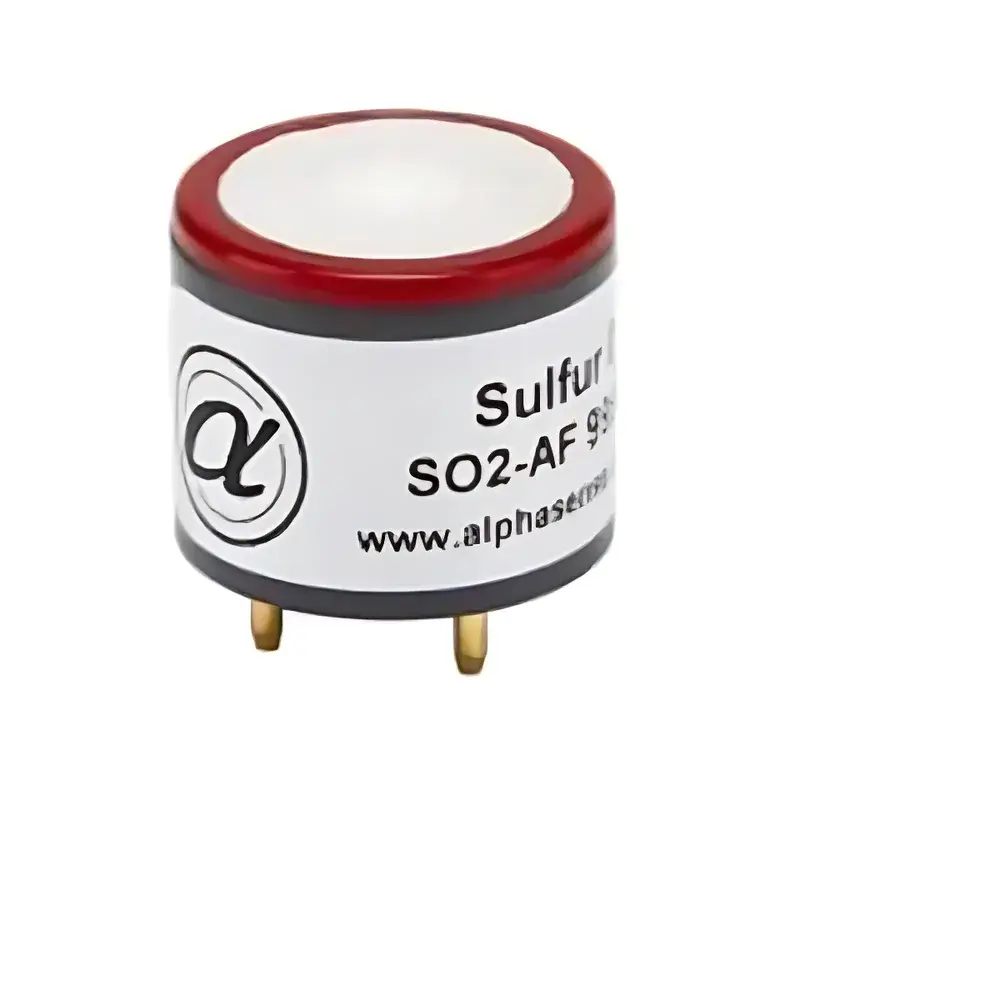
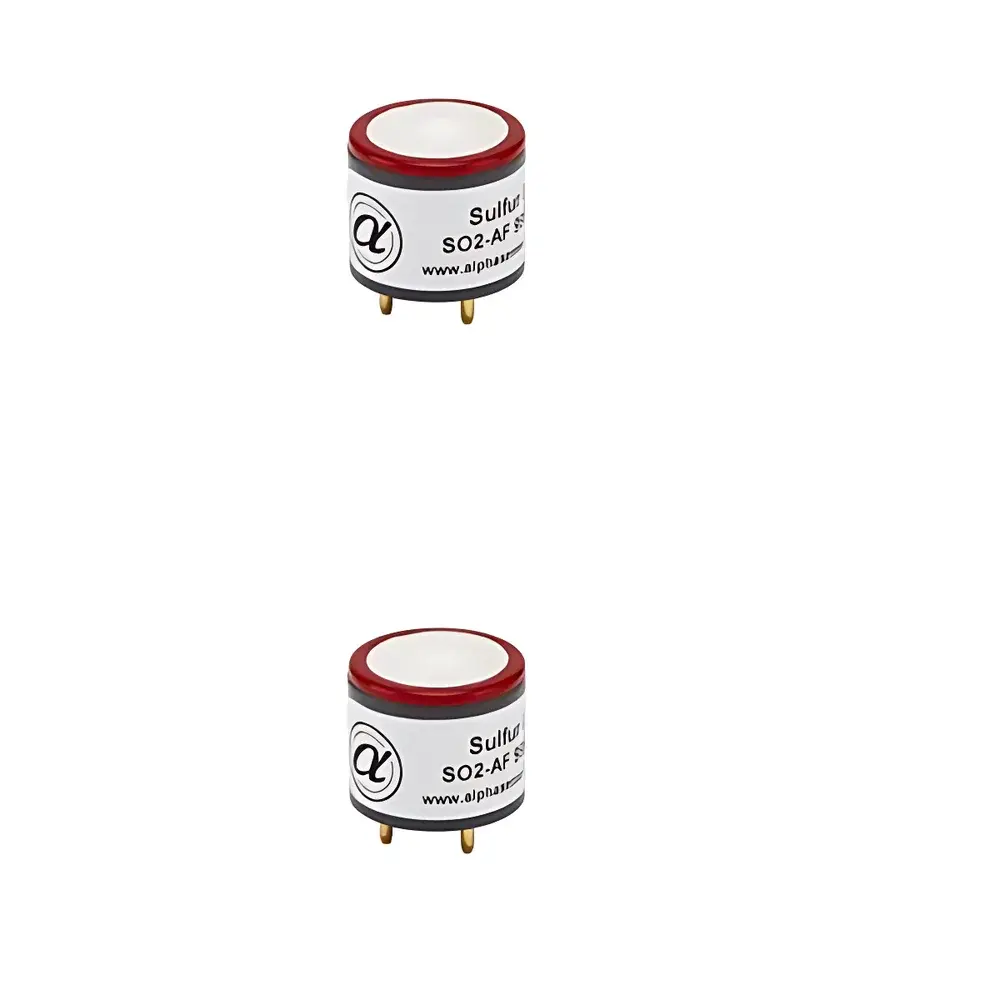
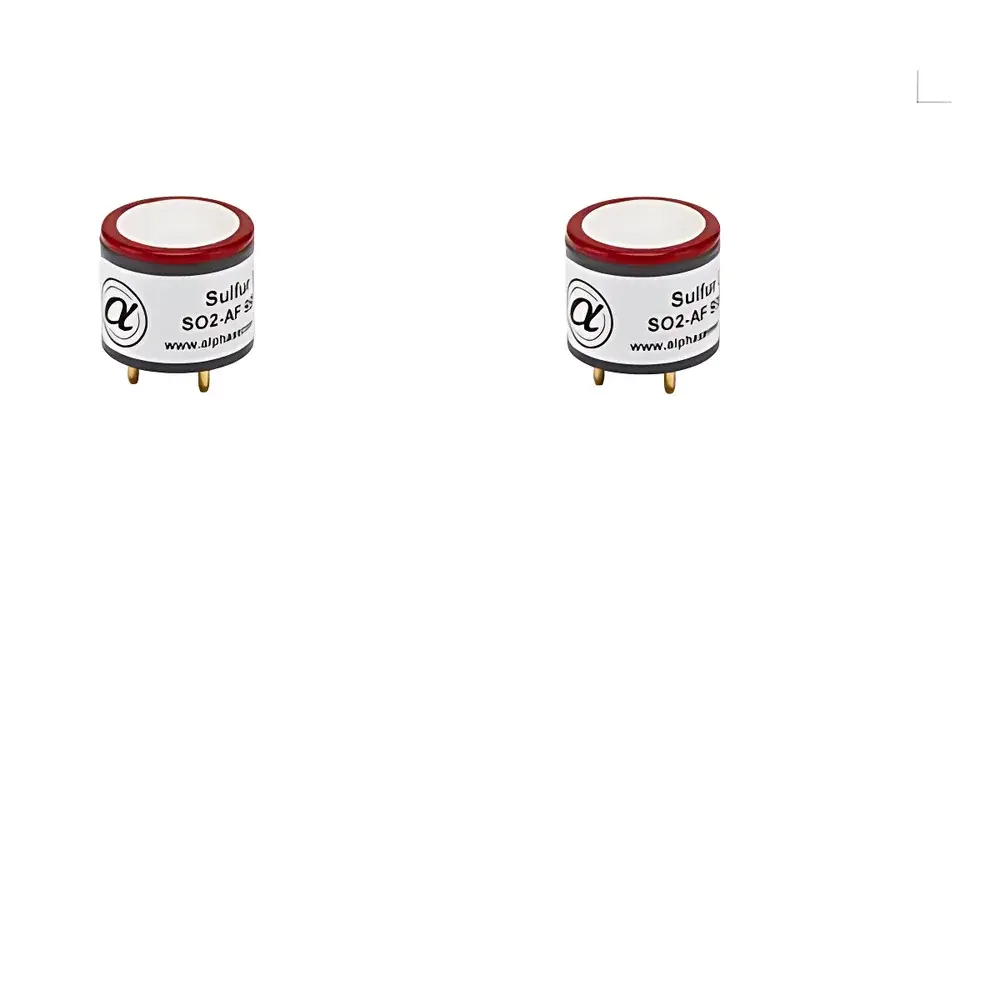
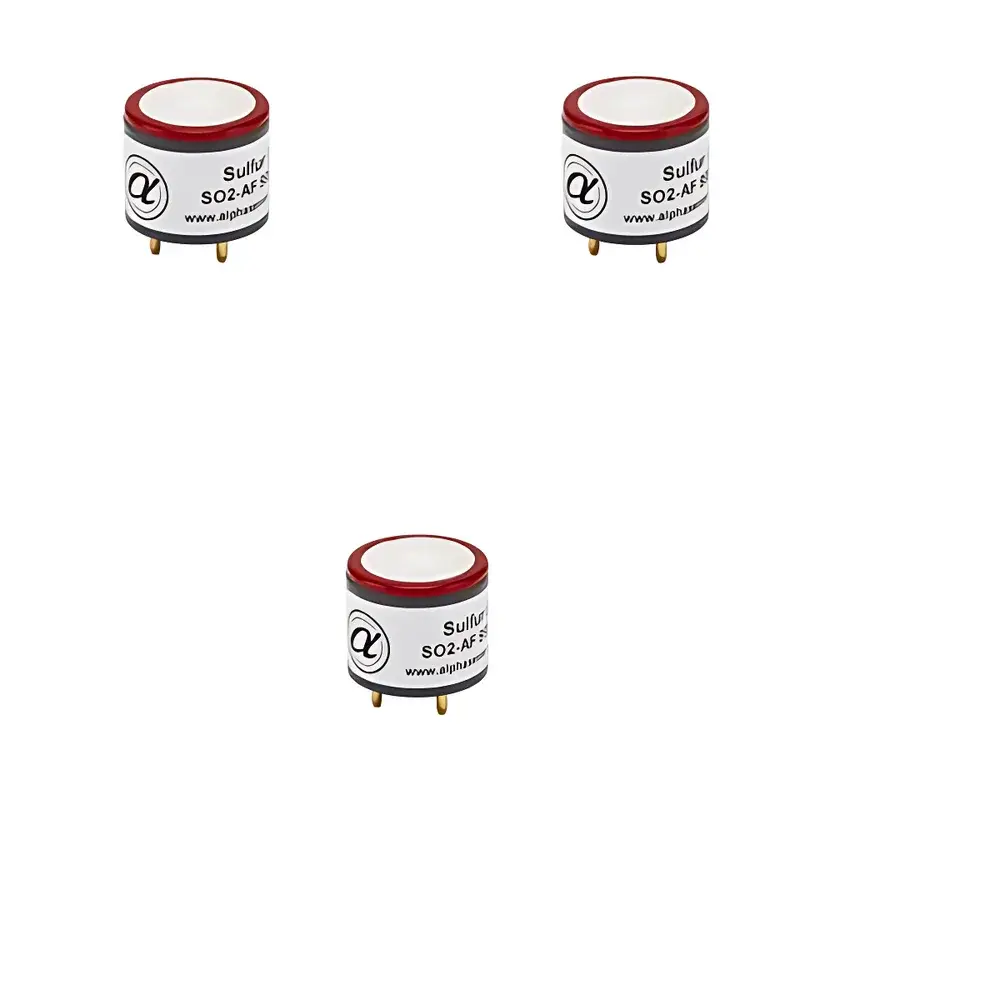
Alphasense SO2-AF Electrochemical Sulfur Dioxide Sensor
| Brand | Alphasense (UK) |
|---|---|
| Origin | United Kingdom |
| Model | SO2-AF (Portable) |
| Overload | 75 ppm |
| Response Time (t₉₀) | <35 s |
| Dimensions | Ø20 × 16.5 mm |
| Detection Range | 0–50 ppm |
| Sensitivity | 300–550 nA/ppm |
| Resolution | <0.1 ppm |
| Linearity | Linear from 0–10 ppm |
| Operating Temperature | −20 °C to +50 °C |
| Operating Humidity | 15–90 % RH (non-condensing) |
| Expected Lifetime | ≥24 months (typical in ambient air) |
| Zero Current | <±5 nA |
| Bias Voltage | −300 mV |
Overview
The Alphasense SO2-AF is a high-performance, diffusion-type electrochemical sensor engineered for the selective and stable detection of sulfur dioxide (SO₂) in ambient air and portable gas monitoring systems. Based on three-electrode potentiostatic amperometry, the SO2-AF employs a proprietary electrolyte formulation and optimized working electrode catalyst to deliver consistent sensitivity, low zero-current drift, and rapid response kinetics—critical attributes for compliance with occupational health standards (e.g., OSHA PEL, ACGIH TLV) and environmental monitoring protocols. Its compact cylindrical form factor (Ø20 × 16.5 mm) and low power consumption make it ideal for integration into battery-powered handheld detectors, fixed-site transmitters, and multi-gas instrumentation platforms requiring real-time SO₂ quantification at sub-ppm resolution.
Key Features
- Stable electrochemical architecture with integrated reference and counter electrodes for drift-compensated current measurement
- High selectivity against common interferents including NO₂, CO, H₂S, and Cl₂—validated per Alphasense Application Note AN-003
- Factory-calibrated sensitivity (300–550 nA/ppm) traceable to NIST-certified SO₂ standard gases
- Fast t₉₀ response time of <35 seconds ensures timely alarm activation in safety-critical applications
- Robust construction with hydrophobic PTFE membrane providing protection against particulate ingress and humidity-induced signal attenuation
- Compliant with RoHS 2011/65/EU and REACH SVHC regulations; lead-free solder compatible
- Operates at −300 mV bias voltage—compatible with industry-standard analog interface circuits (e.g., Texas Instruments LMP91000, Analog Devices ADuCM360)
Sample Compatibility & Compliance
The SO2-AF is designed for direct sampling of ambient air or filtered process streams with no pre-concentration required. It maintains accuracy across a wide operating range: −20 °C to +50 °C and 15–90 % RH (non-condensing). The sensor meets the functional requirements of IEC 60079-29-1 (explosive atmospheres – gas detectors) when integrated into appropriately certified host instruments. While not intrinsically safe as a standalone component, its low power draw (<80 µA quiescent current) supports Class I, Division 2 or ATEX Zone 2 system-level certification. For regulatory reporting, data generated using SO2-AF-based analyzers may support compliance with EPA Method TO-11A (for ambient SO₂), ISO 7935:1995 (air quality – determination of SO₂ – electrochemical method), and EU Directive 2008/50/EC (ambient air quality assessment).
Software & Data Management
When interfaced with microcontroller-based readout electronics, the SO2-AF outputs a linear analog current proportional to SO₂ concentration. Integration with digital signal conditioning firmware enables automatic temperature and humidity compensation (using onboard thermistor and capacitive RH sensor inputs), baseline correction, and dynamic range scaling. Alphasense provides comprehensive calibration guidance—including span gas protocols, zero-air verification procedures, and lifetime validation test methods—in its publicly available Technical Datasheet TD-SO2-AF Rev. 5. For audit-ready deployments, host systems implementing SO2-AF sensors should incorporate timestamped logging, calibration history tracking, and electronic signature functionality to satisfy GLP and FDA 21 CFR Part 11 requirements where applicable.
Applications
- Personal and area monitoring devices for industrial hygiene (e.g., power generation, pulp & paper, metal smelting)
- Fixed-site ambient air quality networks compliant with national AQMS frameworks
- Portable multi-gas detectors used by emergency response teams and confined space entry personnel
- Indoor air quality (IAQ) analyzers in schools, hospitals, and municipal buildings
- Process control feedback loops in flue gas desulfurization (FGD) scrubber bypass monitoring
- Research-grade field instrumentation for atmospheric chemistry studies and emission source characterization
FAQ
What is the recommended calibration frequency for the SO2-AF sensor?
Alphasense recommends initial calibration upon installation, followed by bump testing every 30 days and full two-point (zero/span) calibration every 3–6 months—depending on exposure conditions and regulatory requirements.
Can the SO2-AF be exposed to high-humidity environments continuously?
Yes, provided relative humidity remains below 90 % RH and condensation is avoided; prolonged exposure to saturated conditions may accelerate electrolyte loss and reduce service life.
Is cross-sensitivity to nitrogen dioxide (NO₂) compensated in the SO2-AF design?
The SO2-AF exhibits <5 % signal interference from 1 ppm NO₂ under standard test conditions; additional hardware filtering or algorithmic compensation is advised for mixed-gas environments exceeding 0.5 ppm NO₂.
Does Alphasense provide long-term stability data for the SO2-AF?
Yes—accelerated aging tests show typical baseline drift of <2 % FS/month and sensitivity change of <0.5 %/month under continuous operation at 25 °C and 50 % RH.
How is the SO2-AF mounted in a gas sampling chamber?
It is installed with the gold-plated contact pins facing upward and the PTFE membrane flush-mounted against a diffusion barrier or laminar flow plate to ensure uniform gas access and minimize boundary layer effects.