
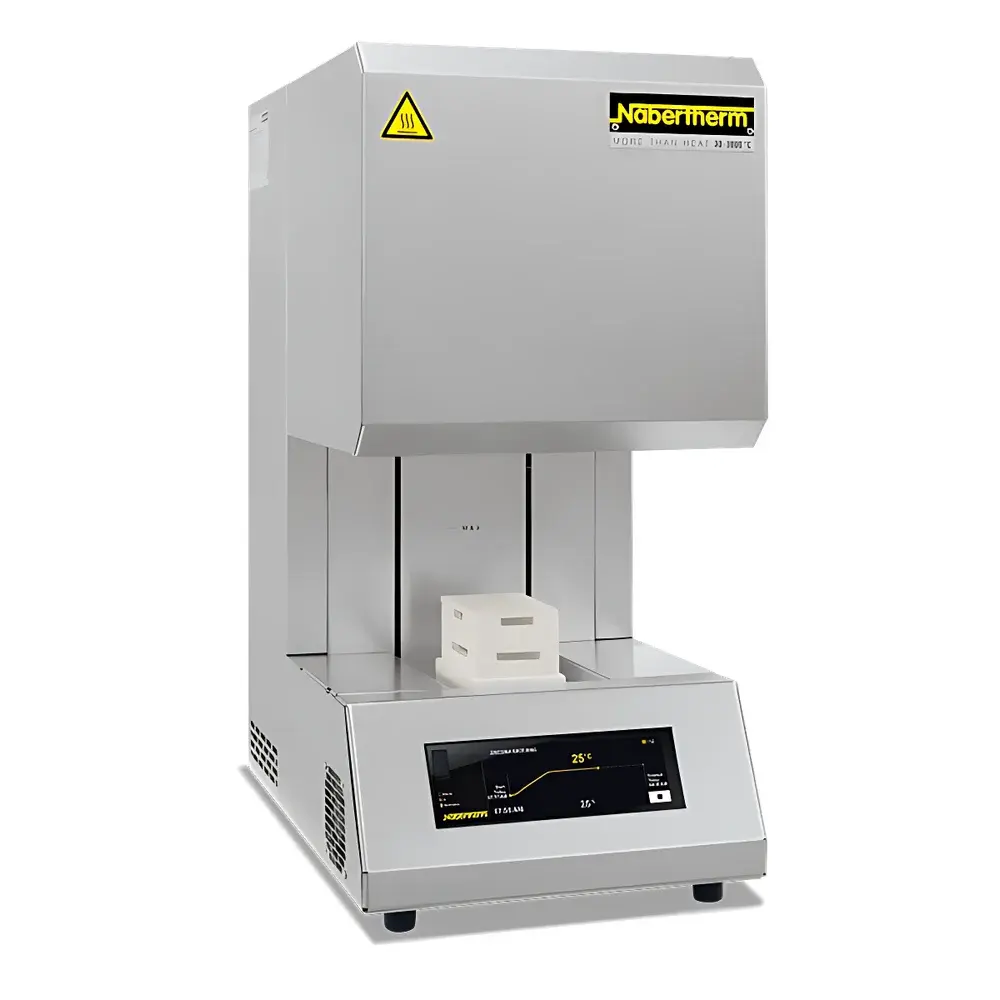
Nabertherm LHT 01/17LB Speed & LHT 02/17LB Speed Vertical Lift High-Temperature Sintering Furnace for Translucent Zirconia
| Brand | Nabertherm |
|---|---|
| Origin | Germany |
| Model | LHT 01/17LB Speed / LHT 02/17LB Speed |
| Type | Vertical Lift Muffle Furnace |
| Max Temperature | 1650 °C |
| Temperature Uniformity | Optimized via circumferential MoSi₂ heating |
| Control Accuracy | ±1 °C |
| Heating Element | Molybdenum disilicide (MoSi₂) rods |
| Max Power | 3400 W |
| Ramp Time to 1650 °C | 75–85 min |
| Internal Dimensions | 145 × 180 × 100 mm (LHT 01) / 185 × 180 × 185 mm (LHT 02) |
| Chamber Volume | ~1.0 L / ~2.0 L |
| Cooling | Programmable staged lid opening |
| Drying Mode | Controlled gap ventilation at ≤500 °C |
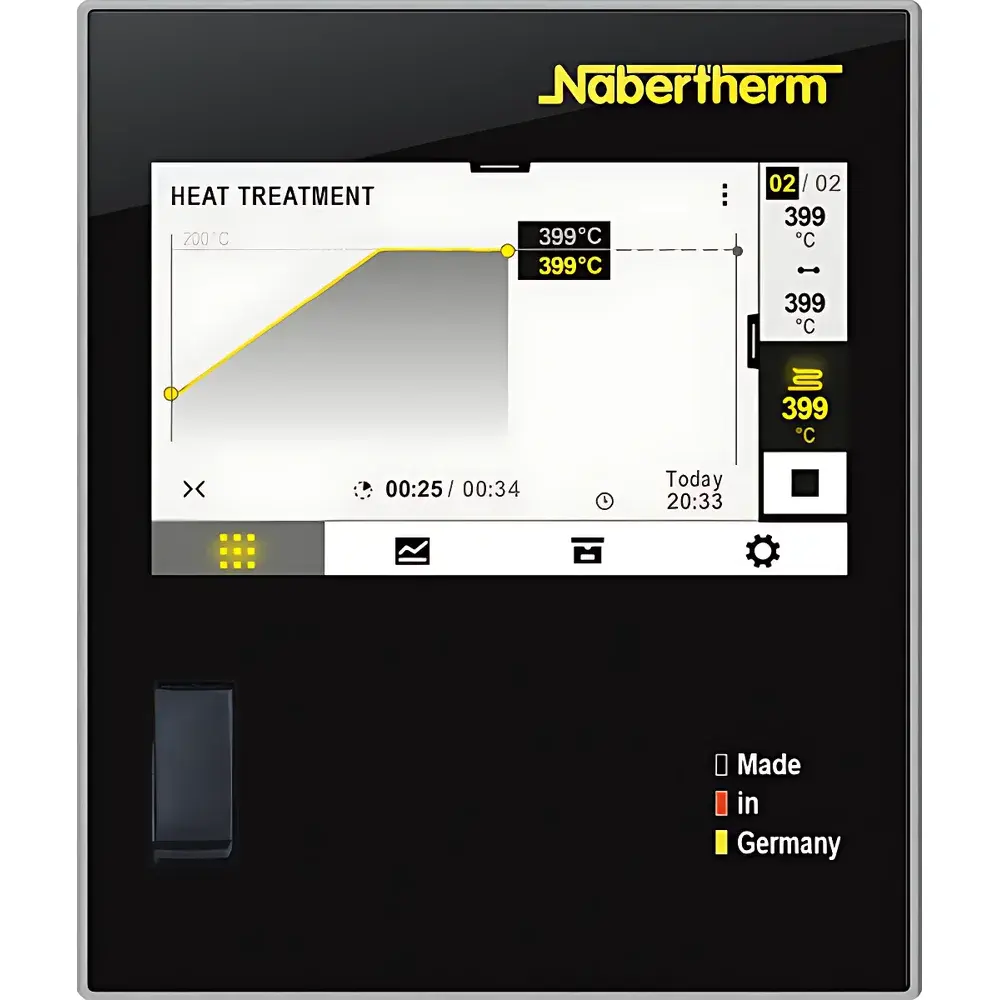
| Controller | P480 with 50 programmable profiles, USB data logging (NTLog), S-type thermocouple |
| Compliance | EN 60519-2 (thermal protection class 2), TRGS 905 (non-carcinogenic insulation materials) |
| Optional | VCD software for remote monitoring, multi-tier loading kits, overtemperature limiter |
Overview
The Nabertherm LHT 01/17LB Speed and LHT 02/17LB Speed are vertically actuated high-temperature sintering furnaces engineered specifically for the precision thermal processing of translucent zirconia dental restorations—including crowns, bridges, and monolithic frameworks. Operating up to 1650 °C, these furnaces employ a robust MoSi₂ (molybdenum disilicide) heating system arranged in a circumferential configuration around a cylindrical chamber, ensuring exceptional radial and axial temperature uniformity—critical for achieving consistent grain growth, density, and optical translucency in Y-TZP (yttria-stabilized tetragonal zirconia polycrystal) ceramics. Unlike conventional box-type muffle furnaces, the vertical lift mechanism—driven by a high-precision toothed belt actuator—enables safe, repeatable, and ergonomic loading/unloading without manual handling at elevated temperatures. The furnace architecture integrates dual-layer stainless steel casing with high-purity, low-bioavailability ceramic fiber insulation classified under TRGS 905 as Category 1 or 2 (non-carcinogenic), satisfying stringent occupational safety requirements in EU-regulated laboratory and production environments.
Key Features
- Vertical electric lift platform with tactile-button control and position repeatability <±0.5 mm, minimizing operator exposure during loading
- Circumferential MoSi₂ heating elements delivering stable thermal profiles across the full operating range (room temperature to 1650 °C)
- P480 digital controller with 50 user-programmable sintering profiles, two preloaded sample programs aligned with major zirconia manufacturers’ recommendations (e.g., 3M Lava, Ivoclar Vivadent IPS e.max ZirCAD, GC Initial ZR2)
- Dedicated drying mode: automatic gap ventilation maintained during ramp to 500 °C to ensure complete moisture removal from green or pre-sintered compacts
- Programmable rapid cooling sequence: lid opens in discrete, time- and temperature-triggered stages to reduce total cycle time to under 2.5 hours for typical dental zirconia batches
- Integrated S-type thermocouple with cold-junction compensation, traceable calibration support available per ISO/IEC 17025 guidelines
- Overtemperature protection limiter compliant with EN 60519-2 (thermal protection class 2), with adjustable cut-off threshold independent of main controller logic
Sample Compatibility & Compliance
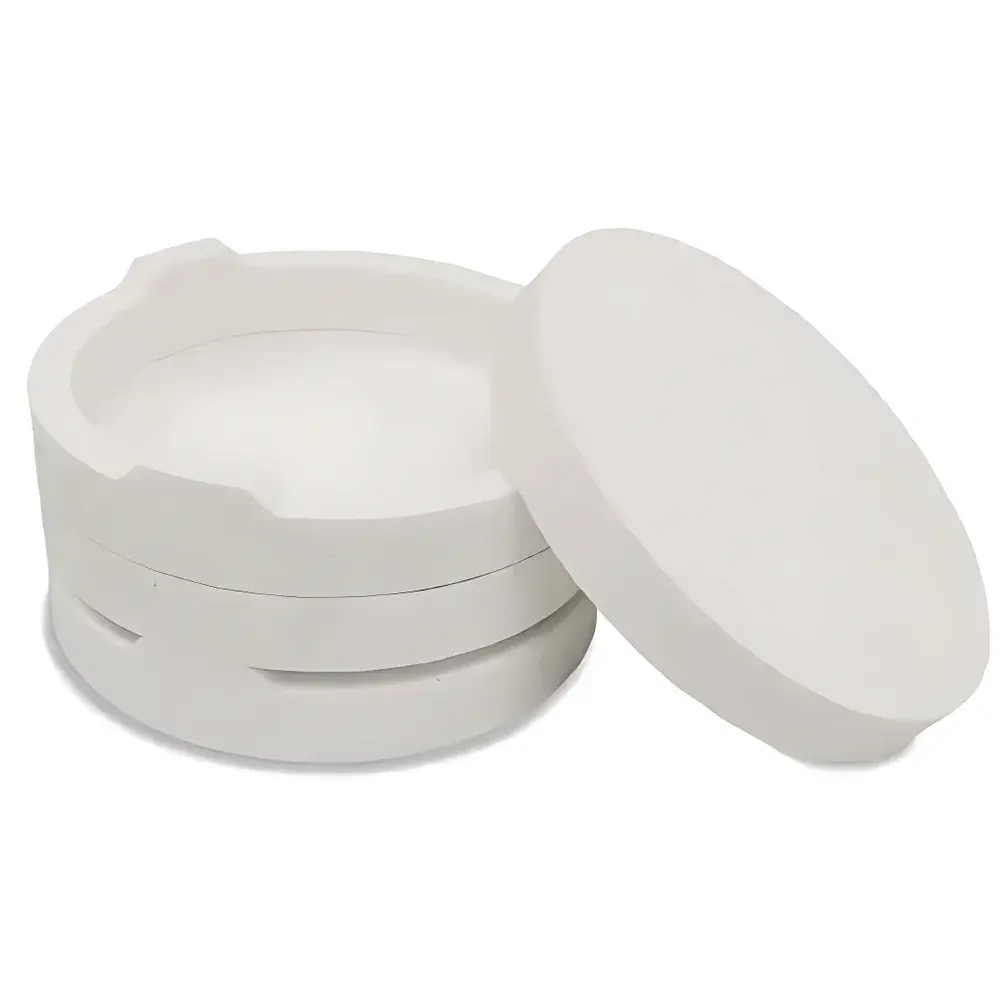
These furnaces accommodate standard industrial ceramic crucibles and proprietary zirconia loading trays manufactured from high-purity alumina or cordierite. The LHT 01/17LB Speed supports up to two single-tier trays (15 units per tray); the LHT 02/17LB Speed accommodates three stacked trays (25 units per tray), enabling scalable throughput while preserving thermal homogeneity. All internal surfaces and furnace linings are chemically inert toward ZrO₂-based powders and binders—eliminating risk of Mo or Si contamination that could compromise sintered density or fracture toughness. The system complies with GLP-relevant documentation practices via NTLog USB data logging (time-stamped temperature, setpoint, power %, lid position), supporting audit readiness for ISO 13485-certified dental laboratories. Optional VCD software enables real-time remote supervision, electronic signature-capable report generation, and alignment with FDA 21 CFR Part 11 requirements when deployed with validated IT infrastructure.
Software & Data Management
The embedded P480 controller provides deterministic, non-volatile profile storage and execution with cycle-start confirmation prompts and deviation alerts. Process data—including actual vs. setpoint temperature, power draw, and lift position—are recorded at user-selectable intervals (1–60 s) onto any standard USB flash drive using the NTLog utility. Raw .csv files are compatible with MATLAB, Python pandas, or LIMS integration via serial export. For centralized fleet management, the optional VCD (Virtual Control Desk) software suite offers Ethernet-connected monitoring, multi-furnace synchronization, alarm escalation (email/SMS), and automated PDF report generation with digital signatures. All firmware updates are delivered via signed binary packages, maintaining integrity verification throughout the device lifecycle.
Applications
- Sintering of translucent and high-strength Y-TZP dental prostheses requiring precise dwell times at 1450–1550 °C
- Two-stage firing protocols: low-temperature debinding followed by high-temperature densification
- Thermal validation studies for new zirconia formulations (e.g., Ce/TZP, Al₂O₃-doped ZrO₂)
- Research-scale densification kinetics analysis under controlled oxygen partial pressure (when coupled with optional gas inlet module)
- Pre-sintering and final sintering of additively manufactured (SLM/DLP) zirconia green bodies
- Quality assurance testing per ISO 6872 (dental ceramics) and ASTM F2345 (zirconia strength standards)
FAQ
What is the maximum recommended load mass for optimal temperature uniformity?
For reproducible sintering outcomes, Nabertherm recommends ≤1.2 kg total zirconia mass per cycle in the LHT 01/17LB Speed and ≤2.5 kg in the LHT 02/17LB Speed—distributed evenly across trays to avoid localized thermal shadowing.
Can the furnace be integrated into an automated lab workflow?
Yes—via RS485 Modbus RTU or optional Ethernet/IP interface, the P480 controller supports PLC-level handshake signals (e.g., “ready”, “cycle complete”, “fault”) for synchronization with robotic loaders or MES systems.
Is the MoSi₂ heating element replaceable in-field?
Yes—elements are modular and accessible without furnace disassembly; replacement requires only standard torx tools and adherence to Nabertherm’s torque-spec sheet (provided in service manual).
Does the system support nitrogen or argon atmosphere operation?
The base configuration is air-atmosphere only; however, a gas-tight retrofit kit (including flanged inlet/outlet ports and pressure relief valve) is available as a factory-installed option—validated for inert gas purging up to 0.5 bar gauge.
How is thermal calibration verified during routine maintenance?
Nabertherm supplies a certified reference thermocouple probe (S-type, NIST-traceable) and calibration procedure compliant with DIN EN 62056-6-2; field verification can be performed without removing the furnace from service.



