
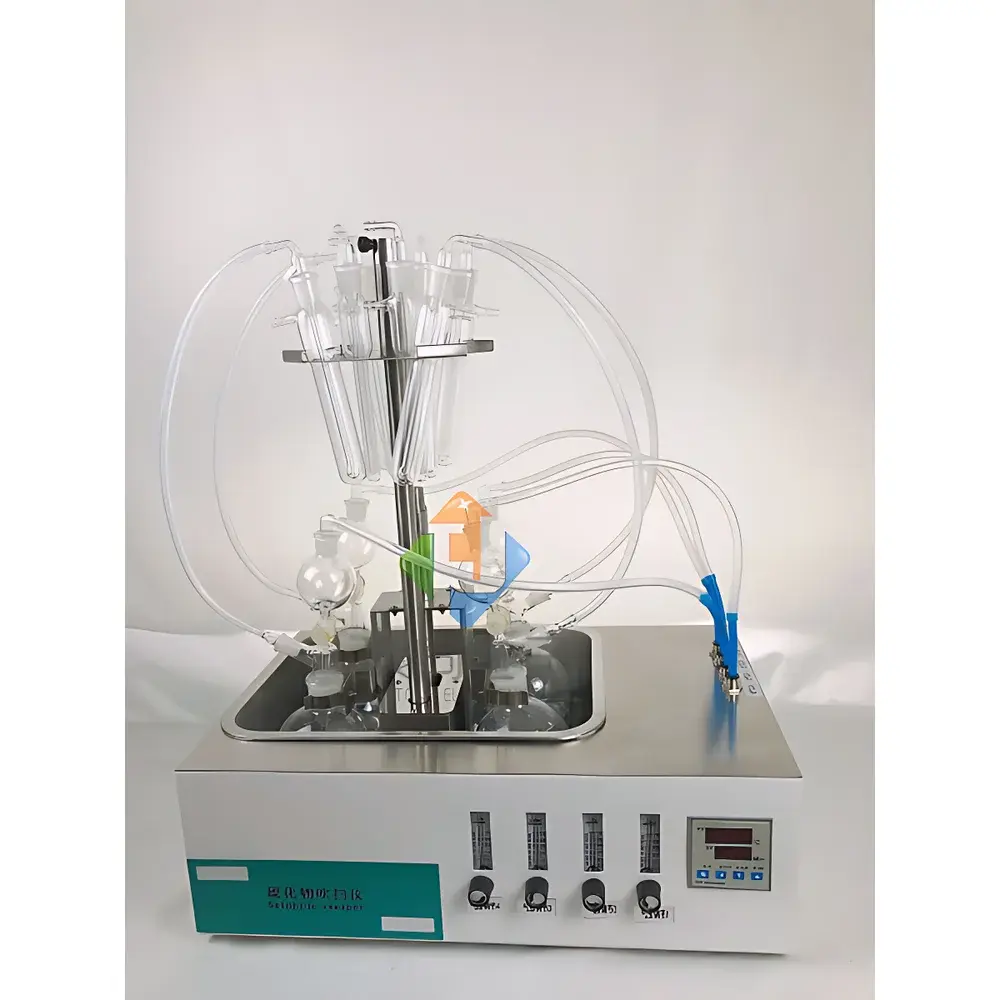
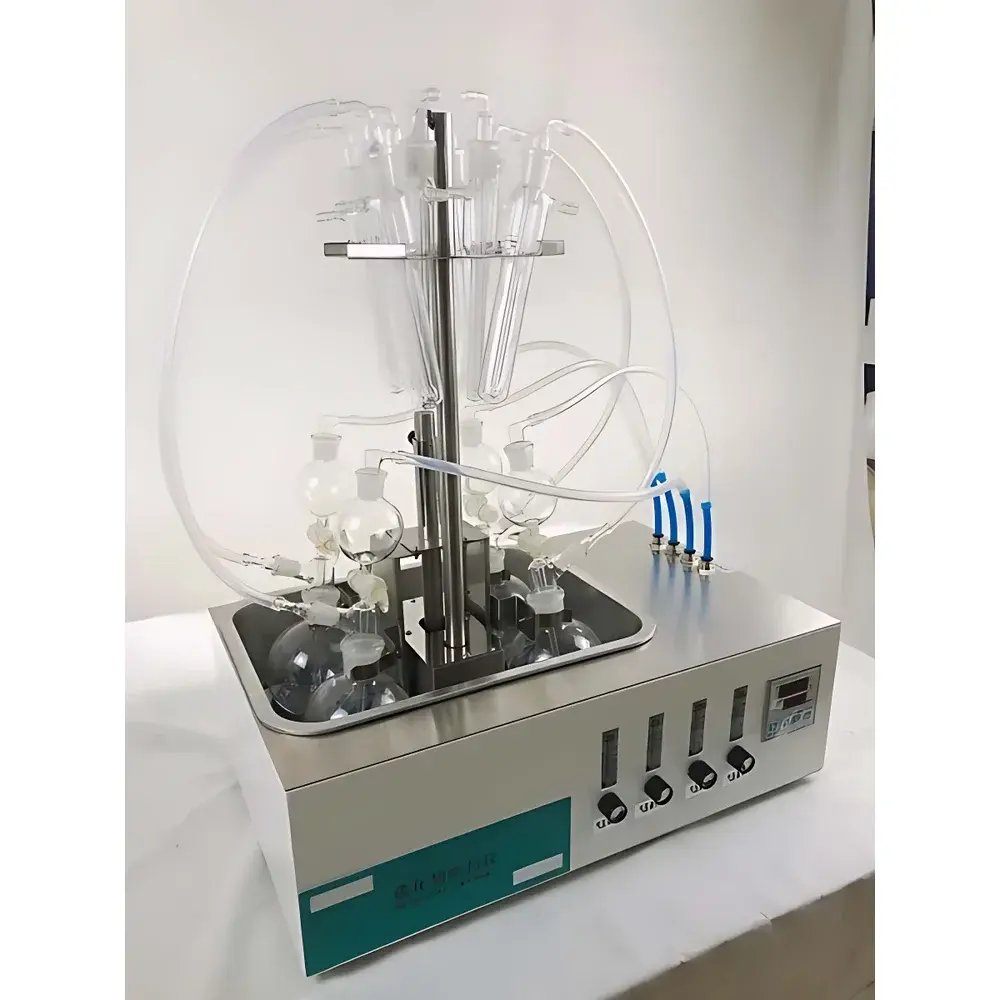
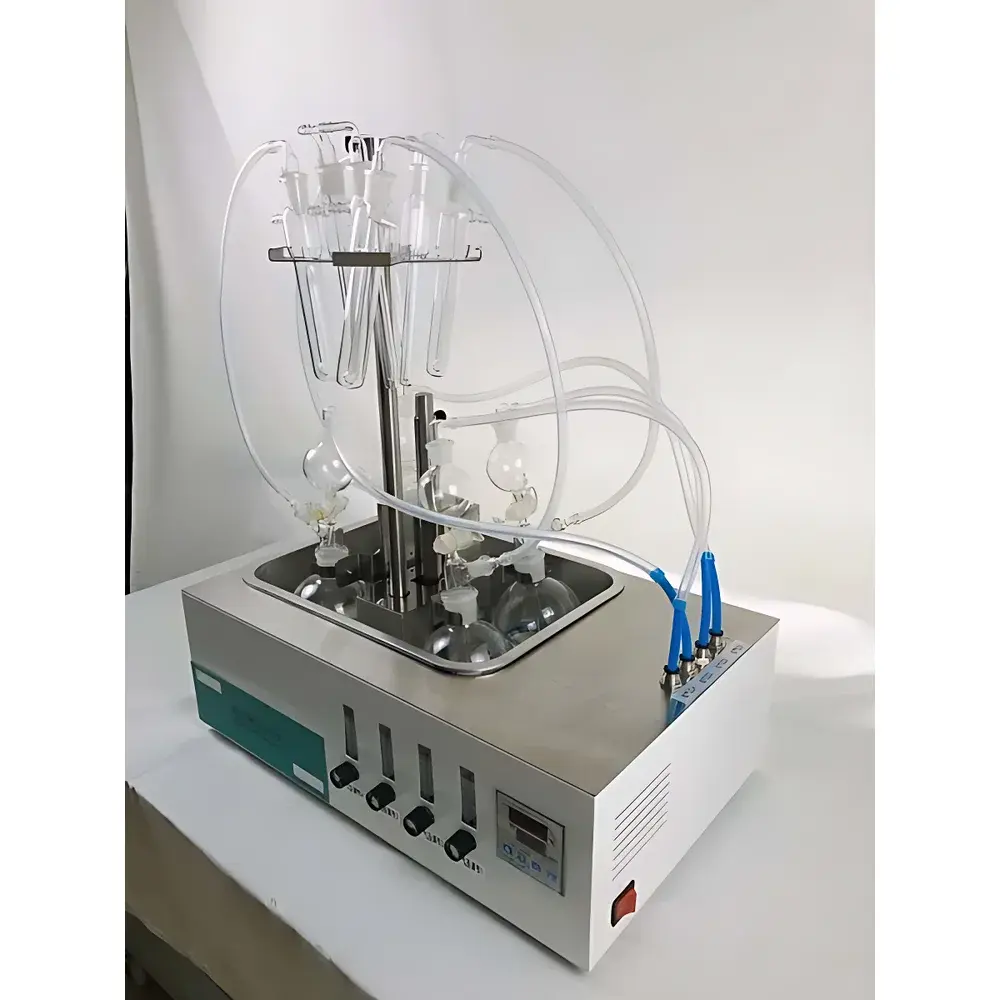
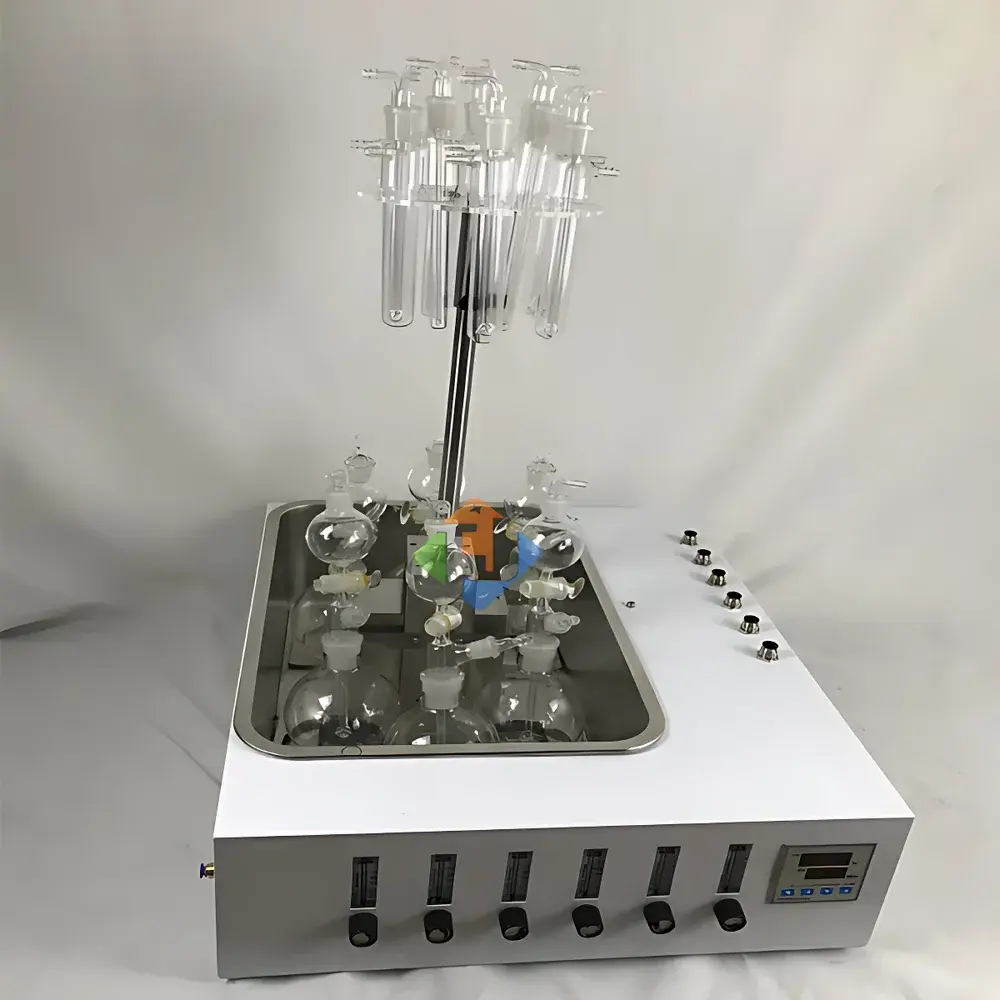
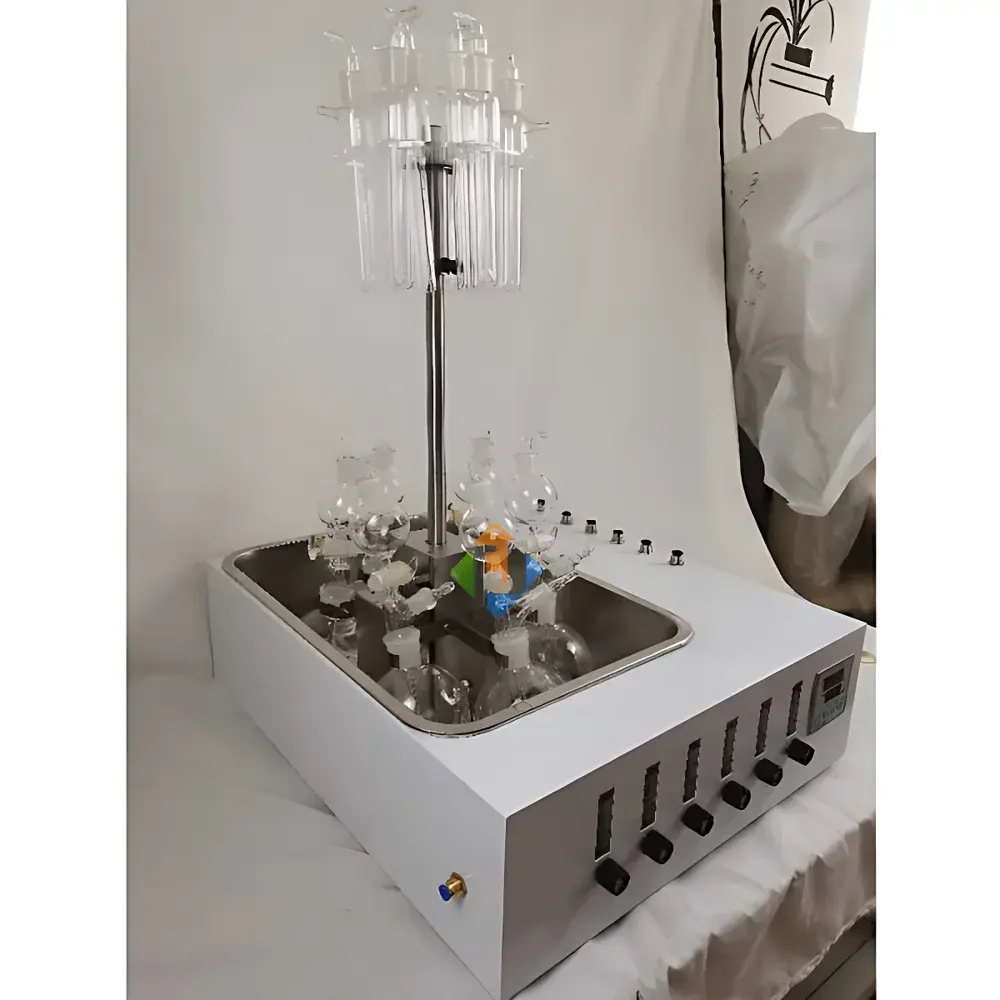
JTONE JT-DCY-4SL Acidification-Purge System for Sulfide Analysis in Water Samples
| Brand | JTONE |
|---|---|
| Origin | Shandong, China |
| Manufacturer Type | Authorized Distributor |
| Product Category | Domestic |
| Model | JT-DCY-4SL |
| Price Range | USD 140–850 (FOB) |
| Instrument Type | Laboratory Benchtop System |
| Sample Capacity | 4 simultaneous samples |
| Gas Flow Range | 0–3 L/min (per channel, independently adjustable) |
| Temperature Control Range | Ambient to 99.9 °C |
| Temperature Accuracy | ±1 °C |
| Heating Power | 1000 W |
| Display | Digital LED |
| Bath Drain Valve | Integrated quick-release |
| Lift Mechanism | Motorized vertical sample rack positioning |
| Construction | Mirror-finish 316 stainless steel |
| Compliance | Designed per GB/T 16489–1996 and HJ/T 60–2000 |
Overview
The JTONE JT-DCY-4SL Acidification-Purge System is a laboratory-grade benchtop instrument engineered for the quantitative pretreatment of water samples prior to sulfide determination via colorimetric (methylene blue) or iodometric methods. It implements the standardized acidification-purge-trapping principle: under controlled acidic conditions (typically with HCl), dissolved sulfide species (S²⁻, HS⁻, H₂S) are converted to hydrogen sulfide gas (H₂S), which is then selectively purged from the aqueous matrix using high-purity nitrogen and quantitatively trapped in an alkaline absorbent solution (e.g., zinc acetate or NaOH). This process isolates volatile sulfide from interfering matrices—such as suspended solids, organic matter, or reducing agents—thereby ensuring analytical specificity and reproducibility required for regulatory compliance testing. The system is explicitly designed to meet the procedural specifications outlined in Chinese national standards GB/T 16489–1996 and HJ/T 60–2000, both of which align with internationally recognized principles of volatile analyte recovery and gas-phase transfer efficiency.
Key Features
- Motorized vertical lift mechanism enables precise, repeatable immersion depth control of reaction vessels into the恒温 water bath—critical for consistent thermal energy transfer and reaction kinetics across all four sample channels.
- Independent needle-valve flow control for each of the four sample positions, allowing individual optimization of nitrogen flow rate (0–3 L/min) based on sample viscosity, matrix complexity, and target trapping efficiency—verified visually via uniform bubble generation in absorption tubes.
- Integrated digital temperature controller with ±1 °C accuracy over a 0–99.9 °C range; rapid thermal stabilization achieved via 1000 W submerged heating elements and optimized bath geometry.
- Triple-port reaction vessel design (acid addition port, N₂ inlet, H₂S outlet) ensures spatial separation of reagent delivery, purge gas introduction, and analyte extraction—eliminating cross-contamination and enabling sequential or parallel operation without procedural interference.
- Full 316 stainless steel construction—including bath chamber, sample rack, and gas manifolds—provides long-term resistance to HCl fumes, H₂S corrosion, and routine decontamination with oxidizing agents (e.g., KMnO₄ or bleach solutions).
- Front-mounted quick-drain valve allows complete bath fluid evacuation without disassembly, minimizing downtime between batches and supporting GLP-aligned cleaning validation protocols.
Sample Compatibility & Compliance
The JT-DCY-4SL accommodates standard 100–500 mL borosilicate glass reaction bottles and common 10–25 mL absorption tubes used in methylene blue and iodometric assays. It supports diverse water matrices including surface water, groundwater, domestic wastewater, and industrial effluents from coking, pulp & paper, petrochemical, and textile manufacturing sectors. All operational parameters—including purge time, acid concentration, bath temperature, and gas flow—are configurable to match method-specific requirements in GB/T 16489–1996 (equivalent to EPA Method 376.1 principles) and HJ/T 60–2000. While not certified to ISO/IEC 17025 or ASTM D4129, the instrument’s mechanical repeatability, thermal stability, and gas-flow linearity support internal method validation under GLP or ISO 9001 quality management systems.
Software & Data Management
The JT-DCY-4SL operates as a standalone hardware platform with no embedded microprocessor or data logging capability. Temperature setpoints and real-time bath readings are displayed on a dedicated LED interface; nitrogen flow rates are monitored analogically via calibrated rotameters. Users are expected to record operational parameters manually or integrate the system into laboratory information management systems (LIMS) via external environmental monitoring logs. For regulated environments requiring audit trails (e.g., water utility QA/QC labs), manual logbooks must include timestamps, operator ID, batch numbers, calibration dates for flow meters and thermistors, and verification of gas-tight integrity before each run—consistent with FDA 21 CFR Part 11 documentation expectations for non-computerized instruments.
Applications
- Regulatory compliance testing for total recoverable sulfide in municipal wastewater discharge permits (e.g., China’s Discharge Standard of Pollutants for Municipal Wastewater Treatment Plants, GB 18918–2002).
- Baseline characterization of sulfur cycling in riverine and lacustrine sediment porewater studies.
- Process monitoring in anaerobic digesters and sulfate-reducing bioreactors where H₂S off-gas concentration correlates with microbial activity.
- Drinking water source assessment in karst aquifers prone to geogenic sulfide contamination.
- Method development and inter-laboratory comparison studies requiring high-throughput, low-variability sample pretreatment prior to UV-Vis spectrophotometry or titrimetric analysis.
FAQ
What safety precautions are required when operating the JT-DCY-4SL?
Hydrogen sulfide is highly toxic and flammable. The system must be operated inside a certified chemical fume hood with continuous airflow ≥100 fpm at the sash face. Operators must wear acid-resistant gloves, splash goggles, and H₂S-detecting personal monitors. All absorbent solutions containing trapped sulfide must be treated as hazardous waste prior to disposal.
Can the instrument be used for other volatile analytes besides sulfide?
While mechanically adaptable, the JT-DCY-4SL is validated only for sulfide per GB/T 16489–1996 and HJ/T 60–2000. Use for cyanide, volatile phenols, or organotin compounds would require full method revalidation—including recovery studies, detection limit verification, and interference testing—as bath temperature, acid strength, and purge duration are analyte-specific.
How often should the nitrogen flow meters be recalibrated?
Rotameter calibration should be verified annually using a primary-standard wet-test meter or mass flow calibrator traceable to NIST or CNAS. Frequency increases to quarterly if used >20 hours/week or exposed to condensate ingress.
Is the water bath compatible with non-aqueous heating media?
No. The heating element and temperature sensor are rated exclusively for aqueous solutions. Use of silicone oil or ethylene glycol may cause sensor drift, heater failure, or bath leakage due to differential thermal expansion.
Does the system support unattended overnight operation?
No. Continuous visual monitoring of bubble formation, bath level, and gas-tight integrity is mandatory per standard methods. Automatic shutoff is not integrated; operators must manually terminate runs and cool the bath below 40 °C before power-down.
Related Products







