
JTONE JT-GHX-AC Multi-Functional Photochemical Reactor System for UV/Visible Light-Driven Catalytic Degradation and Synthesis
| Brand | JTONE |
|---|---|
| Origin | Fujian, China |
| Manufacturer Type | Authorized Distributor |
| Product Category | Domestic |
| Model | JT-GHX-AC |
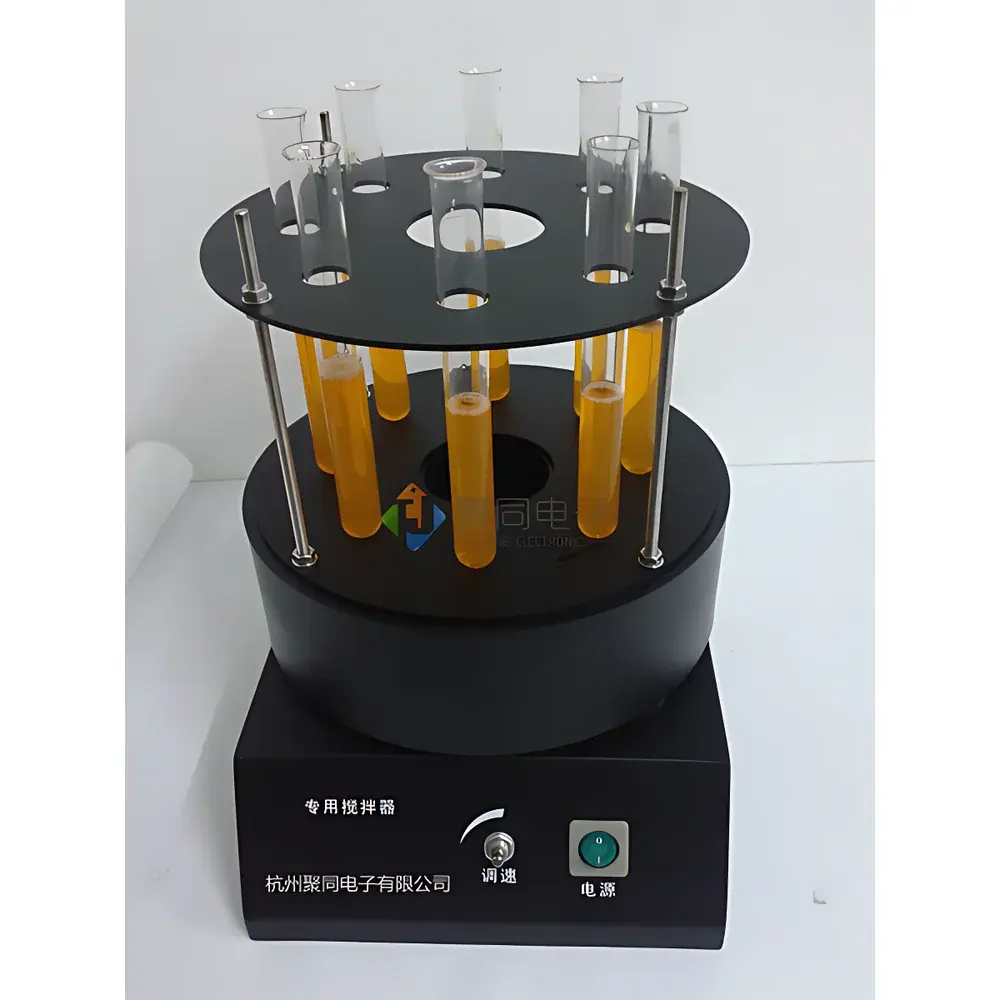
| Volume Capacity | Small-scale (8 × 30–50 mL quartz tubes |
| Operating Pressure | Low-pressure (ambient to slight positive/negative pressure with optional gas inlet/outlet ports) |
| Vacuum Capability | Compatible with standard laboratory vacuum systems (≤ –0.1 MPa, dependent on external pump) |
| Construction Material | Borosilicate glass, stainless steel frame, quartz optical components |
| Temperature Control Range | –5 °C to 100 °C (via integrated recirculating chiller) |
| Chiller Cooling Capacity | >1000 W |
| Light Sources | Adjustable-intensity mercury lamp (0–1000 W), xenon lamp (0–1000 W), metal halide lamp (0–500 W) |
| Stirring | 8-channel synchronized magnetic stirring (speed independently adjustable per position) |
| Compliance | Designed for ISO/IEC 17025-aligned lab environments |
Overview
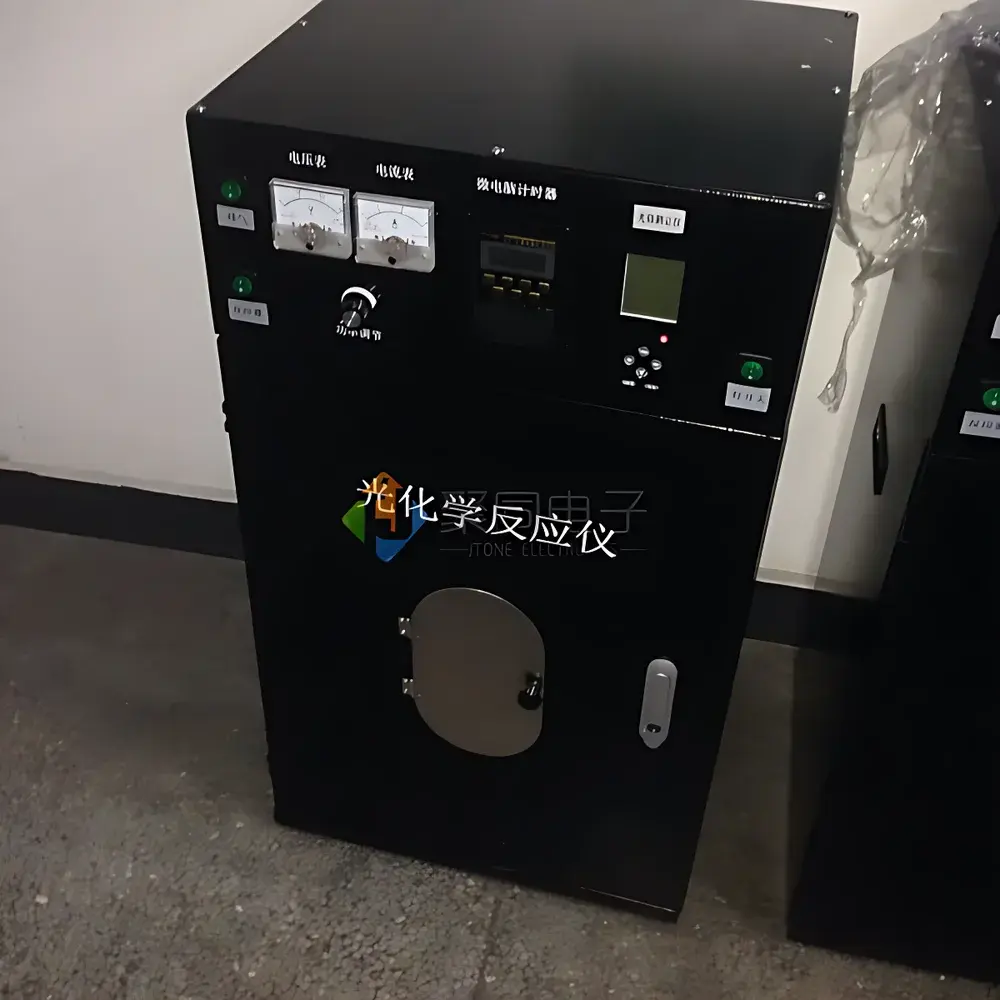
The JTONE JT-GHX-AC is a modular, multi-functional photochemical reactor system engineered for controlled light-driven catalytic reactions under simulated UV, visible, or customized spectral irradiation. It operates on the principle of heterogeneous photocatalysis—where semiconductor photocatalysts (e.g., TiO₂, g-C₃N₄, or doped oxides) absorb photons to generate electron–hole pairs that drive redox processes in gaseous, liquid, or solid-phase media. Unlike conventional batch reactors, the JT-GHX-AC integrates simultaneous illumination, precise thermal management, and mechanical agitation within a light-shielded enclosure (black anodized aluminum dark box), minimizing ambient interference and ensuring reproducible photon flux delivery. Its architecture supports both fundamental kinetic studies and applied screening of photocatalytic materials for environmental remediation (e.g., phenol degradation, NOₓ abatement), organic synthesis (C–C bond formation, oxidation/reduction), and materials science (photocorrosion testing, quantum yield determination). The system is not a standalone light source but a complete reaction platform—designed for integration into ISO 14001-compliant sustainability labs and EPA Method 450.1-aligned water treatment research.
Key Features
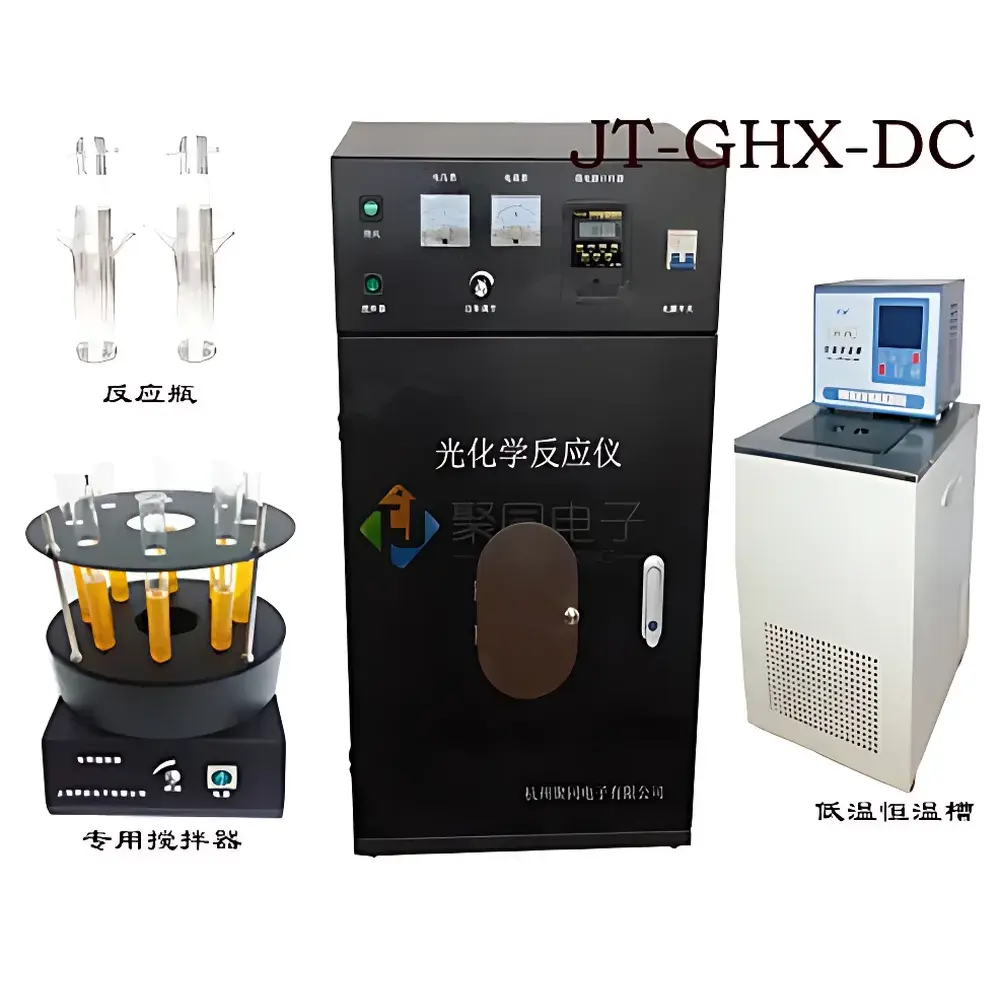
- Modular dual-scale reaction configuration: Eight parallel 30–50 mL quartz reaction tubes (standard) plus optional large-volume glass reactors (250/500/1000 mL) with PTFE-sealed multi-port lids for gas purging, sampling, and pH/DO monitoring.
- Integrated, digitally regulated light source controller supporting three lamp types—mercury (185–400 nm), xenon (250–1100 nm), and metal halide (350–800 nm)—with continuous 0–100% power adjustment and real-time wattage feedback.
- Eight-channel independent magnetic stirrer with speed synchronization capability (0–1200 rpm), ensuring uniform suspension of catalyst particles and consistent mass transfer across all reaction vessels.
- Dual-layer quartz cold finger assembly coupled to a high-capacity recirculating chiller (–5 °C to 100 °C range; >1000 W cooling power), enabling strict isothermal control during exothermic photoreactions and preventing thermal degradation of sensitive intermediates.
- Light-tight dark chamber with viewing window (UV-blocking acrylic), built-in safety interlock switch, and CE-marked electrical subsystems compliant with IEC 61000-6-3 EMC standards.
- Standardized mounting rails and universal flange interfaces allow seamless integration with auxiliary modules: gas mass flow controllers (MFCs), online UV-Vis spectrophotometers, or electrochemical workstations.
Sample Compatibility & Compliance
The JT-GHX-AC accommodates heterogeneous, homogeneous, and triphasic reaction systems—including aqueous suspensions of nanoscale photocatalysts, organic solvent-based syntheses, solid-state surface reactions on immobilized films, and gas-phase VOC degradation under humidified airflow. All wetted parts contact-grade borosilicate glass (DIN 7080) and fused quartz meet ASTM E438 Type I Class A specifications. The system supports method validation per USP <621>, ISO 10678:2010 (photocatalytic activity measurement), and EPA SW-846 Method 450.1 for photolytic degradation kinetics. Data acquisition logs—including lamp intensity, temperature setpoint, stir speed, and runtime—can be exported in CSV format for audit-ready GLP/GMP documentation. Optional 21 CFR Part 11-compliant software add-ons provide electronic signatures, audit trails, and user role-based access control.
Software & Data Management
While the base JT-GHX-AC operates via tactile membrane keypad with LED status indicators, optional PC-based control software (JT-LightControl v3.x) enables time-programmed irradiation sequences, multi-parameter logging (temperature, stir speed, lamp output), and automated start/stop triggers based on external sensor inputs (e.g., dissolved oxygen probe). All operational data are timestamped and stored locally on encrypted SD card or networked NAS—fully traceable for regulatory review. Export formats include .csv, .xlsx, and .tdms (NI DIAdem compatible), facilitating statistical analysis in JMP or MATLAB. No cloud connectivity is embedded by default; data residency remains fully on-premise unless explicitly configured by the end user.
Applications
This reactor system is routinely deployed in academic and industrial laboratories for: photocatalytic degradation of priority pollutants (phenols, pharmaceuticals, pesticides) in wastewater matrices; solar fuel generation (H₂ evolution, CO₂ reduction); photoinduced C–H activation and cross-coupling reactions; stability testing of photovoltaic materials under accelerated UV exposure; and development of antimicrobial coatings under simulated daylight. Its flexibility in reactor geometry, irradiation spectrum, and thermal boundary conditions makes it suitable for method development aligned with ISO 22197-1 (NO removal), ISO 18061 (acetone degradation), and ASTM D7253 (photostability of polymers).
FAQ
Is the JT-GHX-AC certified for use in GMP-regulated environments?
The hardware meets mechanical and electrical safety requirements per IEC 61010-1. Full GMP compliance requires site-specific IQ/OQ/PQ validation using user-defined protocols and third-party calibration certificates for temperature, irradiance (via NIST-traceable radiometer), and stir speed.
Can the system operate under inert atmosphere or controlled gas flow?
Yes—each large-volume reactor port includes standard Swagelok® 1/4″ compression fittings. Optional MFC kits (0–100 sccm N₂, O₂, Ar, or synthetic air) enable dynamic gas composition control and headspace analysis.
What maintenance is required for long-term lamp stability?
Mercury and xenon lamps require periodic alignment verification and output recalibration every 200 hours of operation. Quartz cold fingers must be cleaned weekly with ethanol to prevent optical fouling; full chiller maintenance (refrigerant charge, filter replacement) is recommended annually.
Does JTONE provide application support for catalyst screening protocols?
Yes—technical documentation includes validated SOPs for TiO₂-mediated phenol degradation (based on ISO 10678), quantum efficiency calculation templates, and troubleshooting guides for common artifacts (e.g., photon shadowing, thermal drift).
Are custom reactor geometries or spectral filters available?
Custom quartz reactor shapes (e.g., microchannel, annular, or fiber-optic coupled designs), bandpass filters (254 nm, 365 nm, 420 nm), and collimated beam adapters can be engineered upon request with lead times of 8–12 weeks.



