
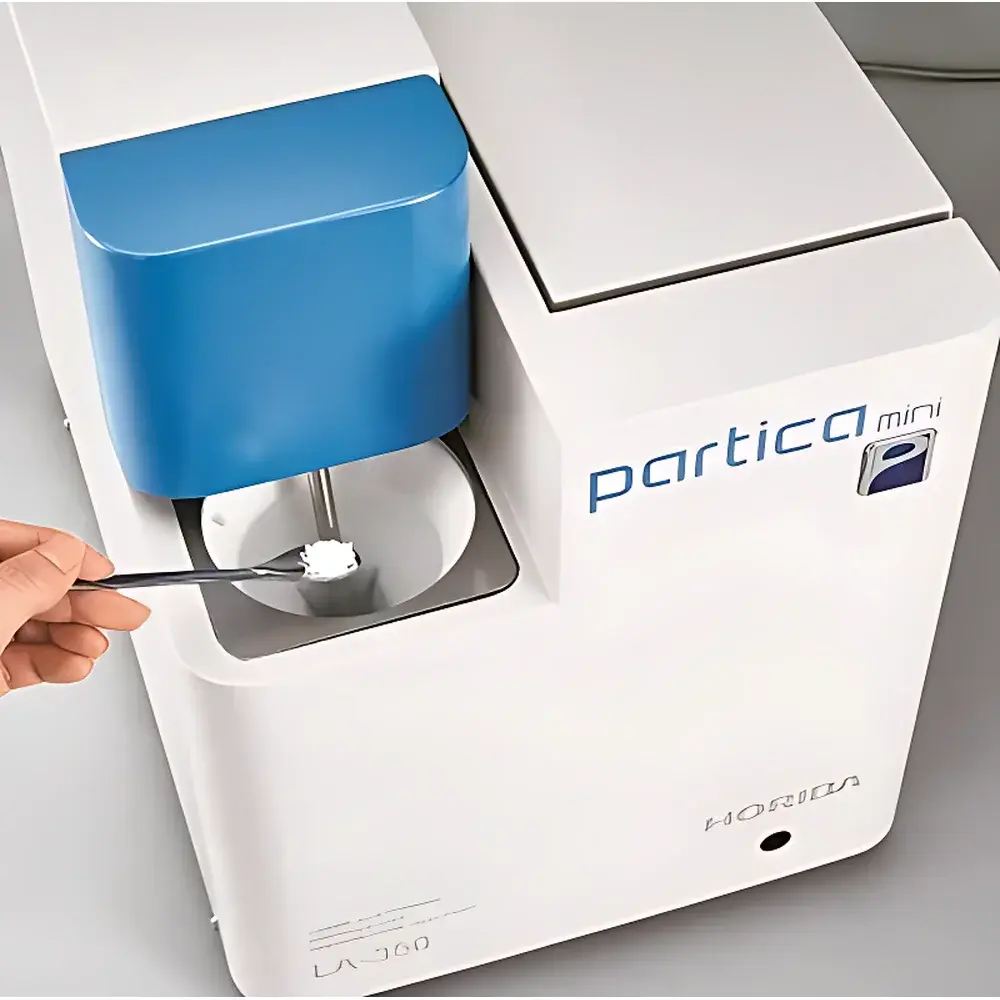
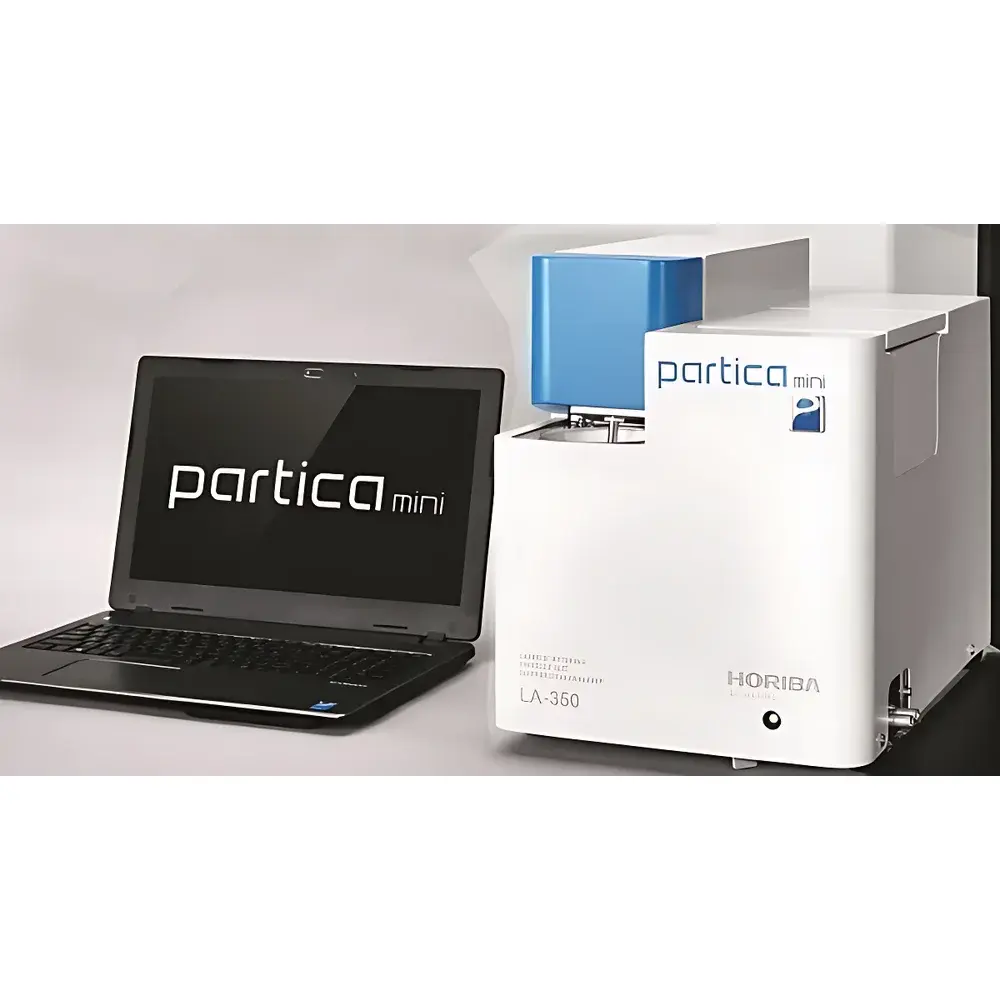
HORIBA LA-350 Compact Laser Diffraction Particle Size Analyzer
| Brand | HORIBA |
|---|---|
| Origin | Japan |
| Manufacturer Type | Original Equipment Manufacturer (OEM) |
| Product Origin | Imported |
| Model | LA-350 |
| Dispersion Method | Wet Dispersion |
| Measurement Range | 100 nm – 1000 µm |
| Repeatability | <1% RSD |
| Measurement Time | 10 s |
Overview
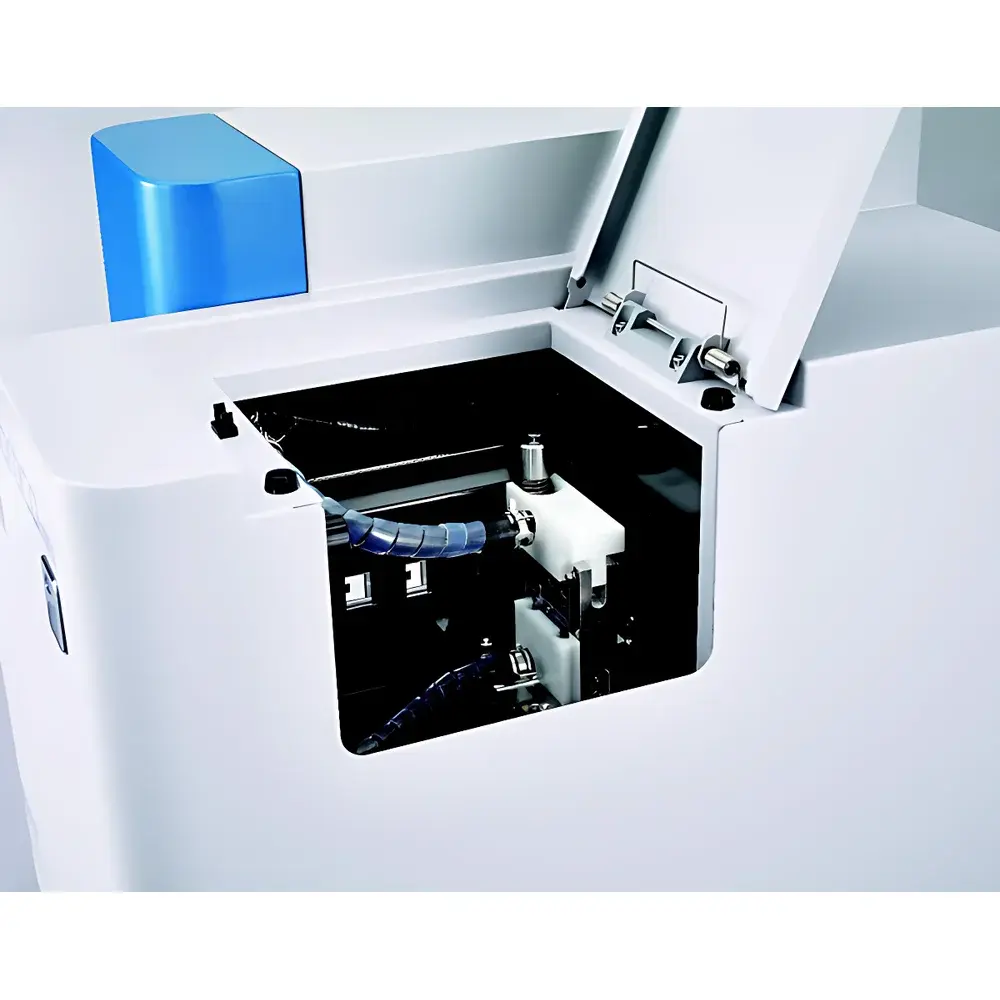
The HORIBA LA-350 Compact Laser Diffraction Particle Size Analyzer is an engineered solution for rapid, high-fidelity particle size distribution (PSD) analysis based on ISO 13320-compliant laser diffraction principles. Utilizing a fixed-focus, multi-angle Mie scattering optical architecture with optimized detector array geometry, the LA-350 delivers robust quantification of volume-weighted particle size distributions across a continuous dynamic range—from colloidal nanoparticles (100 nm) to coarse granules (1000 µm). Its design prioritizes operational integrity in regulated and routine QC environments, where reproducibility, minimal operator intervention, and spatial efficiency are critical. Unlike benchtop systems requiring dedicated optical tables or climate-controlled rooms, the LA-350’s integrated optical train—featuring thermally stabilized laser diode, precision-aligned lens assembly, and low-noise photodetector ring—is factory-aligned and sealed against dust and vibration, eliminating field recalibration needs.
Key Features
- Compact footprint (297 mm × 420 mm × 350 mm H) enables deployment on shared lab benches, mobile QC carts, or satellite testing stations—ideal for multi-site manufacturing or contract laboratories with space constraints.
- Integrated wet dispersion module featuring programmable ultrasonic probe (20–60 W, 0–300 s duration), peristaltic circulation pump (flow rate: 0.5–4.0 L/min), and automatic rinse cycle—reducing carryover risk and enabling unattended sequential analysis.
- Single-click measurement workflow: method selection → sample injection → automated dispersion → real-time data acquisition → PSD report generation—all completed within ≤10 seconds per run.
- Self-diagnostic optical alignment verification and automatic background subtraction ensure long-term signal stability; no user-accessible optical adjustments required.
- Compliance-ready architecture: supports audit trails, electronic signatures, and instrument qualification documentation per FDA 21 CFR Part 11 and ISO/IEC 17025 requirements when deployed with optional software modules.
Sample Compatibility & Compliance
The LA-350 is validated for aqueous and organic suspensions across diverse industrial matrices—including ceramic slurries, pigment dispersions, pharmaceutical suspensions, mineral flotation feeds, pulp fiber suspensions, and battery electrode slurries. Its wet dispersion system accommodates sample concentrations from 0.001 to 20 vol%, with viscosity tolerance up to 1000 mPa·s (with optional high-shear cell). All optical and fluidic components comply with ISO 8573-1 (compressed air purity) and USP particulate matter testing guidelines for pharmaceutical applications. The instrument meets IEC 61000-4 electromagnetic compatibility standards and carries CE marking for use in EU laboratories under Directive 2014/30/EU.
Software & Data Management
Controlled via HORIBA’s LA Series Analysis Software (v4.x), the LA-350 provides full compliance with GLP/GMP workflows. The software includes customizable method templates, statistical batch reporting (D10, D50, D90, span, relative standard deviation), comparative overlay of up to 16 runs, and export to CSV, PDF, or XML formats compatible with LIMS integration. Audit trail functionality logs all user actions—including parameter changes, calibration events, and report generation—with time-stamped, non-erasable records. Optional 21 CFR Part 11 Module adds role-based access control, digital signature capture, and electronic record retention compliant with FDA-regulated environments.
Applications
- Quality control of battery cathode/anode slurries in EV manufacturing—monitoring agglomerate breakage during mixing and coating consistency.
- In-process verification of pigment dispersion stability in inkjet ink formulation, tracking sub-micron mode shifts indicative of flocculation onset.
- Raw material release testing for kaolin, talc, and calcium carbonate in papermaking—ensuring narrow D90 specifications for improved sheet formation.
- Regulatory submission support for generic drug products: PSD characterization per ICH Q5A(R2) and USP for injectable suspensions.
- Research-grade nanoparticle synthesis optimization—correlating reaction parameters with hydrodynamic diameter trends across 100–500 nm range.
FAQ
Does the LA-350 require annual optical recalibration?
No. The optical path is hermetically sealed and factory-aligned; only routine verification using NIST-traceable polystyrene latex standards (e.g., 100 nm, 1 µm, 10 µm) is recommended per ISO 21501-4.
Can the LA-350 measure dry powders?
No. It is designed exclusively for wet dispersion analysis. For dry powder measurement, HORIBA recommends the LA-960 or LA-9200 series with integrated air dispersion modules.
Is method transfer possible from older LA-series instruments?
Yes. The LA-350 uses identical Mie theory calculation engines and scattering inversion algorithms as LA-960/LA-9200, ensuring direct comparability of D50, span, and distribution shape metrics across platforms.
What maintenance intervals are specified for the fluidic system?
The peristaltic pump tubing requires replacement every 6 months under daily use; ultrasonic probe tips are rated for ≥2000 hours; all wetted parts are chemically resistant to IPA, acetone, and 1M NaOH for cleaning validation.
Does the system support ASTM D4291 or ISO 13320-1 compliance reporting?
Yes. Default reports include full traceability to ISO 13320-1:2020 clauses, and optional ASTM D4291-compliant templates are available via software configuration.



