
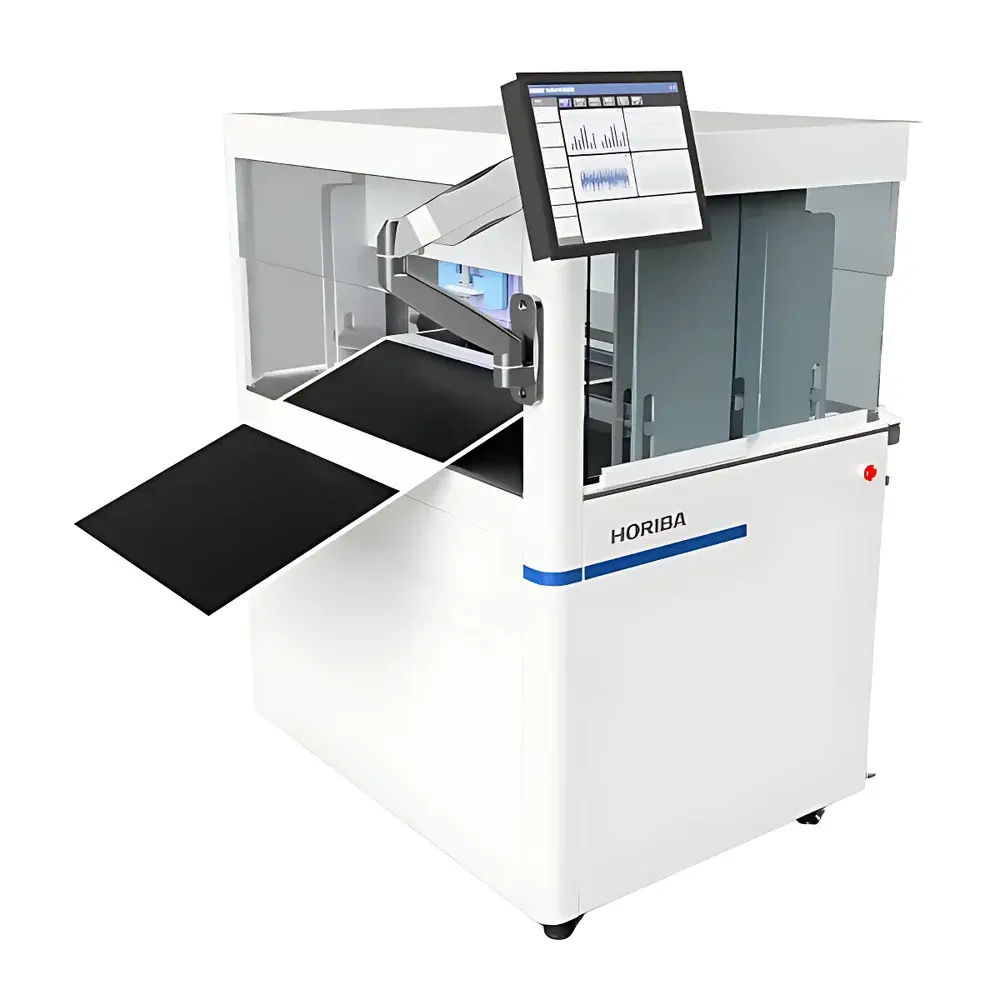
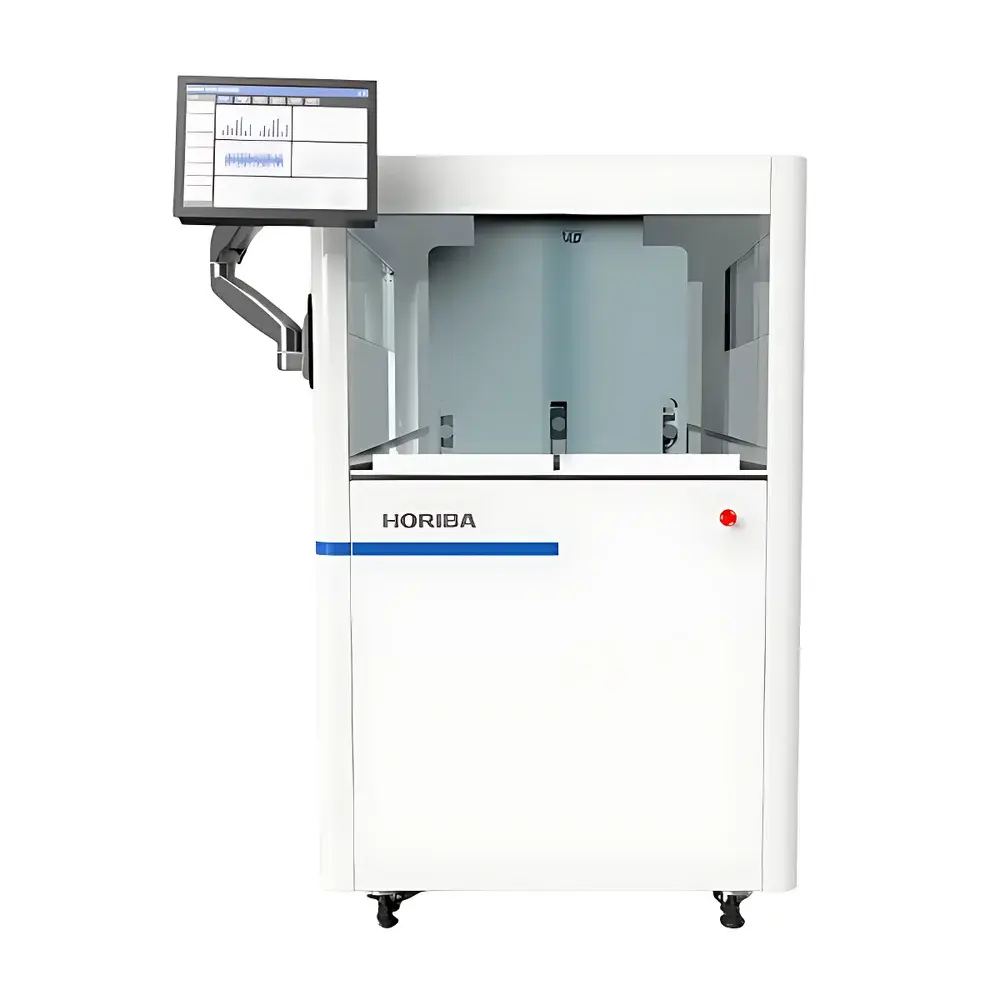
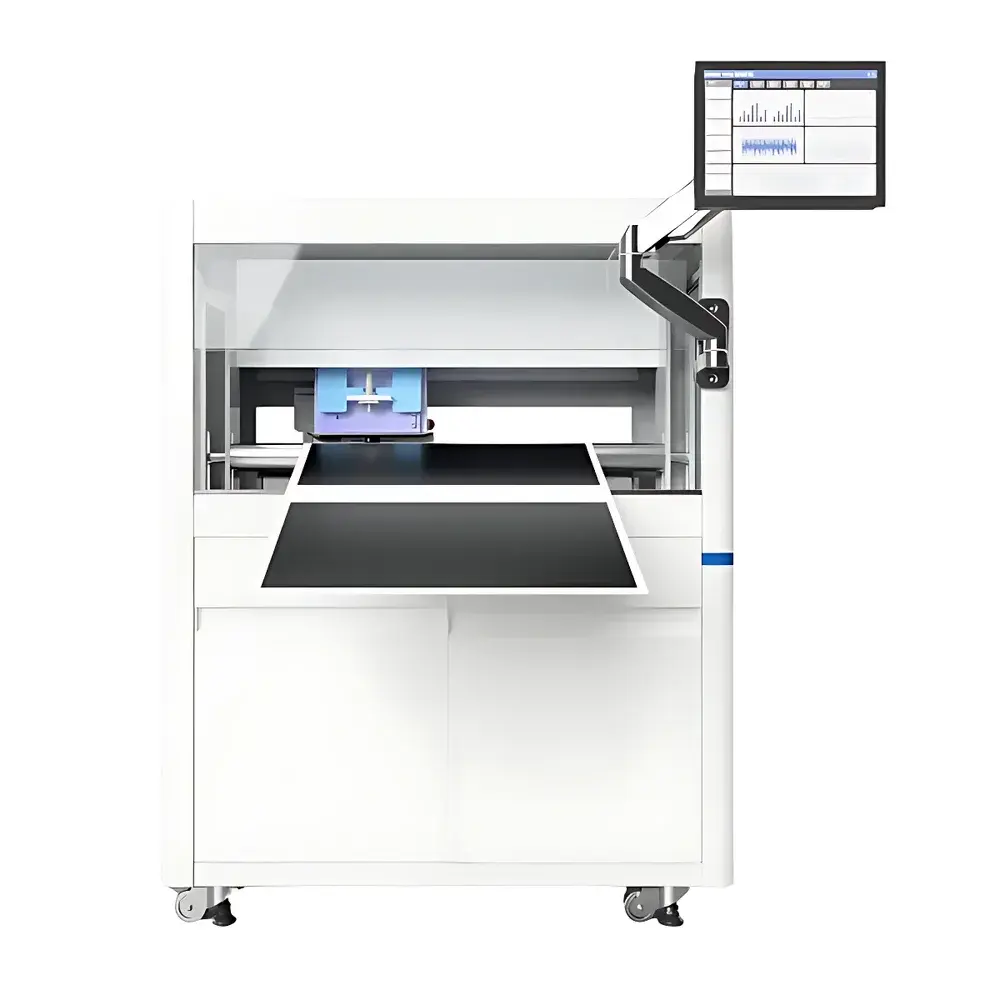
HORIBA MEA/CCM Coating Quality Control Monitor
| Brand | HORIBA |
|---|---|
| Origin | Japan |
| Manufacturer Type | Original Equipment Manufacturer (OEM) |
| Product Origin | Imported |
| Model | Custom-configurable XRF-based In-line Monitor |
| Pricing | Available upon consultation |
Overview
The HORIBA MEA/CCM Coating Quality Control Monitor is an industrial-grade, in-line X-ray fluorescence (XRF) measurement system engineered for real-time, non-contact quantification of catalyst layer mass loading during membrane electrode assembly (MEA) and catalyst-coated membrane (CCM) manufacturing. Designed specifically for high-precision hydrogen energy production environments, this instrument leverages fundamental XRF physics—where incident X-rays excite characteristic secondary (fluorescent) X-ray emission from target elements—to deliver trace-level elemental quantification without sample preparation or process interruption. Its core function is the continuous, millisecond-resolved monitoring of platinum (Pt), iridium (Ir), ruthenium (Ru), and other catalytically relevant elements directly on moving web substrates, enabling closed-loop feedback control essential for lean fuel cell production and strict adherence to DOE and JIGS technical targets for catalyst utilization efficiency.
Key Features
- Non-destructive, in-line XRF detection with 10 ms minimum dwell time per measurement point—compatible with high-speed roll-to-roll (R2R) coating lines up to 30 m/min;
- Adjustable X-ray beam diameter (up to 100 mm) and working distance (up to 150 mm), configurable to match substrate width, web tension, and coater geometry;
- Multi-element capability calibrated for Pt (Z=78), Ir (Z=77), Ru (Z=44), and additional elements upon specification—ensuring compatibility with next-generation low-Pt and Pt-alloy catalysts;
- Modular software architecture supporting both standalone operation and integration with PLCs (Siemens S7, Rockwell ControlLogix) and MES platforms via OPC UA or Modbus TCP;
- Robust mechanical design rated for Class 10,000 cleanroom environments (ISO 14644-1) and continuous 24/7 operation under industrial ambient conditions (15–35 °C, 30–70% RH, non-condensing);
- Long-life microfocus X-ray tube with integrated thermal management and automatic beam stability compensation—designed for >20,000 hours of operational lifetime with minimal maintenance.
Sample Compatibility & Compliance
The system accommodates standard CCM and GDL substrates—including Nafion™-based membranes, carbon paper/cloth gas diffusion layers, and spray-, slot-die-, or gravure-coated catalyst films—with no requirement for masking, backing layers, or conductive coatings. Measurement accuracy is validated against certified reference materials traceable to NIST SRMs and verified per ISO 12909-2:2021 (Fuel cell technologies — Membrane electrode assemblies — Part 2: Determination of catalyst loading by XRF). The instrument complies with IEC 61000-6-2 (EMC immunity) and IEC 61000-6-4 (EMC emissions), and supports audit-ready data integrity through optional 21 CFR Part 11-compliant electronic signatures, role-based access control, and immutable audit trails.
Software & Data Management
HORIBA’s proprietary CoatingInsight™ software provides real-time spatial mapping of elemental mass loading (µg/cm²), statistical process control (SPC) charting (X̄-R, Cpk), and automated pass/fail classification per user-defined tolerance bands. Raw spectra are stored in vendor-neutral .spe format; processed data exports to CSV, HDF5, or SQL databases. Batch reporting includes timestamped metadata (line speed, temperature, humidity, operator ID), enabling full traceability across production lots. Optional integration with LIMS and SAP QM modules allows direct linkage to quality release workflows and CAPA documentation.
Applications
- Real-time validation of Pt loading uniformity across 200–500 cm² MEA sheets during R2R or sheet-fed coating;
- In-process correction of catalyst ink viscosity or nozzle pressure based on XRF-derived mass deviation signals;
- Verification of catalyst recovery efficiency in recycling loops for spent MEAs;
- Supporting DOE targets for <0.125 mgPt/cm² anode and <0.3 mgPt/cm² cathode loadings in PEMFC stacks;
- Enabling DOE H2@Scale initiatives requiring >95% catalyst utilization consistency across multi-MW production lines.
FAQ
Is calibration required before each production shift?
No—system drift is compensated automatically via internal reference standards and periodic (e.g., daily) verification using certified check standards. Full recalibration is recommended every 6 months or after major hardware service.
Can the system detect catalyst degradation during accelerated stress testing (AST)?
Not directly—the monitor is optimized for as-manufactured coating analysis. For post-fabrication degradation assessment, HORIBA recommends coupling with ex-situ SEM-EDS or synchrotron-based XANES.
Does it support dual-layer CCM inspection (anode + cathode simultaneously)?
Yes—via sequential rapid-beam scanning or optional dual-detector configuration, with synchronization to encoder-based position tracking.
What safety certifications does the X-ray source carry?
The system meets IEC 62471 (Photobiological Safety) and carries CE marking for radiation-emitting equipment under Directive 2013/59/Euratom; local regulatory registration (e.g., FDA 21 CFR 1020.40, Japanese MHLW Ordinance No. 137) is supported via HORIBA’s regional compliance team.





