HORIBA EVALUATOR EOL End-of-Line Fuel Cell Stack Test System
| Brand | HORIBA |
|---|---|
| Origin | Germany |
| Manufacturer Type | Manufacturer |
| Import Status | Imported |
| Model | EOL |
| Pricing | Upon Request |
Overview
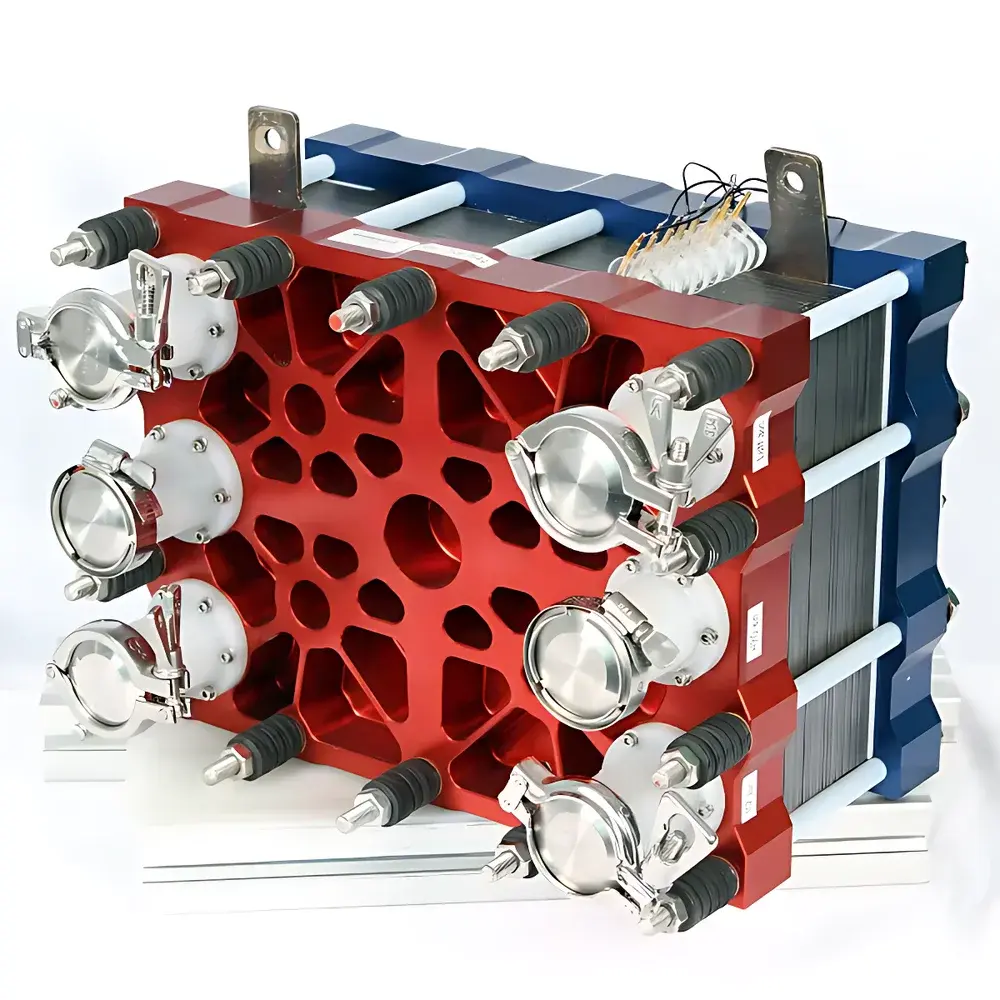
The HORIBA EVALUATOR EOL End-of-Line Fuel Cell Stack Test System is an engineered production-floor solution designed specifically for high-throughput, metrology-grade validation of proton exchange membrane (PEM) fuel cell stacks prior to shipment. Built upon HORIBA’s proprietary electrochemical test architecture, the system implements dynamic load cycling, controlled gas humidification, precise thermal management, and real-time voltage monitoring across individual cells via multi-channel potentiostatic scanning. It operates under ISO 8528-10, IEC 62282-2, and SAE J2718-compliant test protocols to ensure repeatability and traceability in serial manufacturing environments. Unlike laboratory-grade analyzers, the EOL system integrates directly into automated assembly lines—supporting both manual and conveyor-based stack handling—while maintaining full compliance with functional safety requirements per EN ISO 13849-1 (PL e) and IEC 61508 (SIL 2).
Key Features
- End-of-line qualification with pass/fail decision logic based on pre-configured acceptance criteria (e.g., polarization curve slope, OCV stability, voltage deviation thresholds)
- Multi-cell voltage monitoring (up to 500 channels) with ±0.5 mV accuracy and 100 Hz sampling rate for detecting localized MEA defects or contact resistance anomalies
- Integrated PLC-controlled safety interlock architecture featuring dual-channel emergency shutdown, hydrogen leak detection (0–100% LEL), and fail-safe purge sequencing
- Automated external coolant fill/drain station with temperature-controlled deionized water loop (±0.3 °C stability) and pressure decay leak testing (detection limit: ≤0.5 sccm @ 3 bar)
- Modular hardware expansion support: optional electrochemical impedance spectroscopy (EIS) module (10 mHz–10 kHz), barcode/DMC scanner for traceability, and MEA saturation station with programmable RH ramping
- Production-ready software interface compliant with ISA-88 batch control standards and capable of exporting CSV/ATFX data formats for MES integration
Sample Compatibility & Compliance
The EVALUATOR EOL accommodates PEM fuel cell stacks ranging from 10 to 500 cells, with maximum rated power up to 150 kW (scalable to 300 kW with liquid-cooled auxiliary modules). It supports standard bipolar plate geometries (up to 400 × 400 mm active area) and interfaces with common industrial bus systems (PROFINET, EtherCAT, Modbus TCP). All operational sequences adhere to GLP/GMP-aligned audit trails, including electronic signatures per FDA 21 CFR Part 11 requirements. Test reports include timestamped metadata, operator ID, environmental chamber logs (T, RH, pressure), and raw cell-level voltage/current/time datasets—fully exportable for internal quality review or third-party certification (e.g., TÜV Rheinland, UL 2261).
Software & Data Management
The embedded production software suite provides role-based access control (administrator, technician, QA auditor), script-driven test sequence definition (via drag-and-drop workflow editor), and real-time dashboard visualization of stack health metrics—including cumulative voltage degradation rate, cell-to-cell variance index, and activation energy trend analysis. Data persistence follows ACID-compliant SQL database architecture with automatic daily backups and configurable retention policies. The system supports bidirectional communication with enterprise-level databases (e.g., SAP QM, Siemens Opcenter Quality), enabling direct write-back of test outcomes to lot-level quality records and automatic flagging of nonconforming units for quarantine.
Applications
- Final functional verification of automotive-grade fuel cell stacks (e.g., Class 4–8 trucks, buses, and off-road vehicles)
- MEA break-in and initial activation profiling under controlled stoichiometry and backpressure conditions
- Statistical process control (SPC) implementation using Cp/Cpk calculation on key parameters such as open-circuit voltage dispersion and low-current density performance
- Root cause analysis of manufacturing deviations through comparative EIS spectra and polarization hysteresis mapping
- Regulatory submission support for type approval documentation (UNECE R134, GB/T 38914–2020) with certified calibration certificates traceable to NIST standards
FAQ
Does the EVALUATOR EOL support automated integration with existing factory automation systems?
Yes—it offers native PROFINET and EtherCAT master/slave configurations, along with OPC UA server functionality for seamless MES/SCADA interoperability.
Can the system perform accelerated stress testing (AST) protocols beyond standard EOL checks?
While optimized for production throughput, optional firmware modules enable standardized AST routines per DOE Hydrogen Program targets (e.g., humidity cycling, freeze-thaw, load cycling) with full data logging.
Is calibration traceability provided for all measurement channels?
All voltage, current, temperature, pressure, and flow sensors are calibrated annually against NIST-traceable references; calibration certificates are generated automatically per test run.
What cybersecurity measures are implemented in the control software?
The system complies with IEC 62443-3-3 SL2 requirements, including encrypted communications (TLS 1.2+), secure boot, and application whitelisting—certified by independent penetration testing labs.
How is operator training and technical support delivered internationally?
HORIBA provides remote commissioning, on-site installation supervision, and certified operator training programs aligned with ISO/IEC 17025 competency frameworks—delivered in English, German, Japanese, and Chinese.
Related Products