
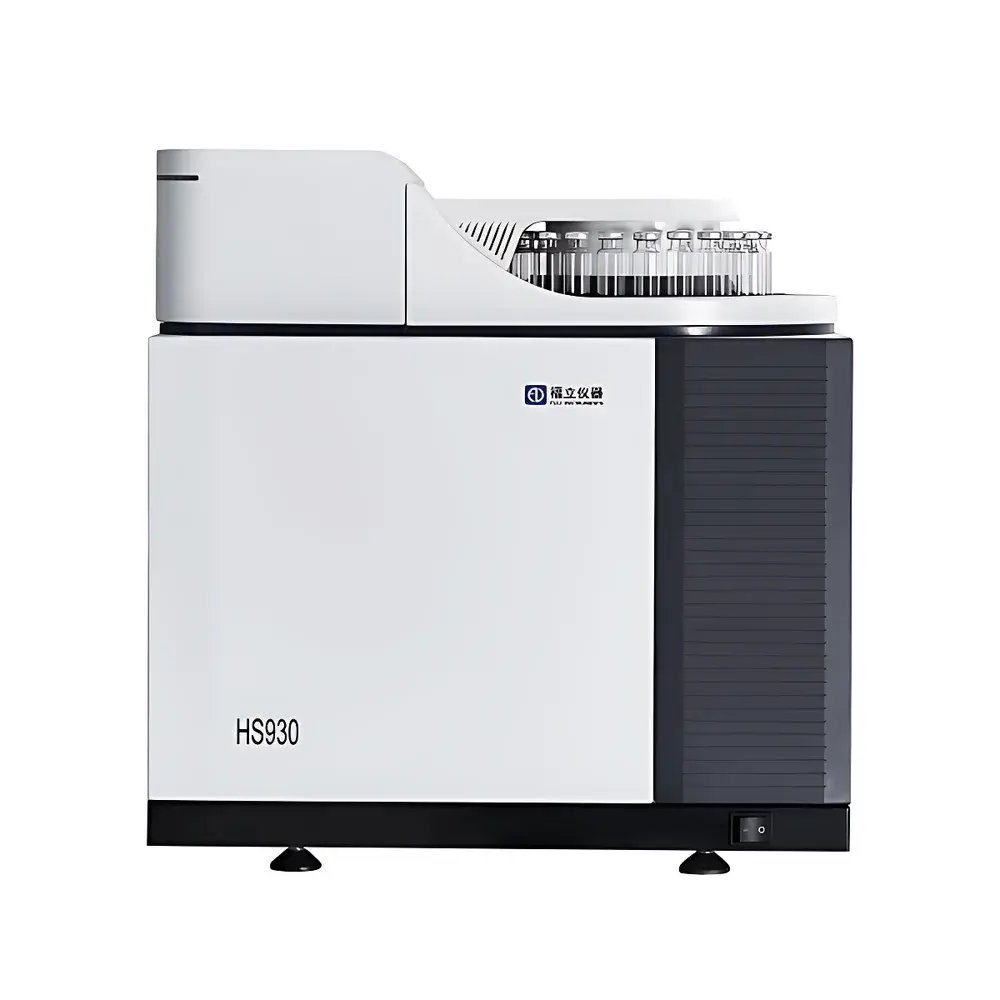
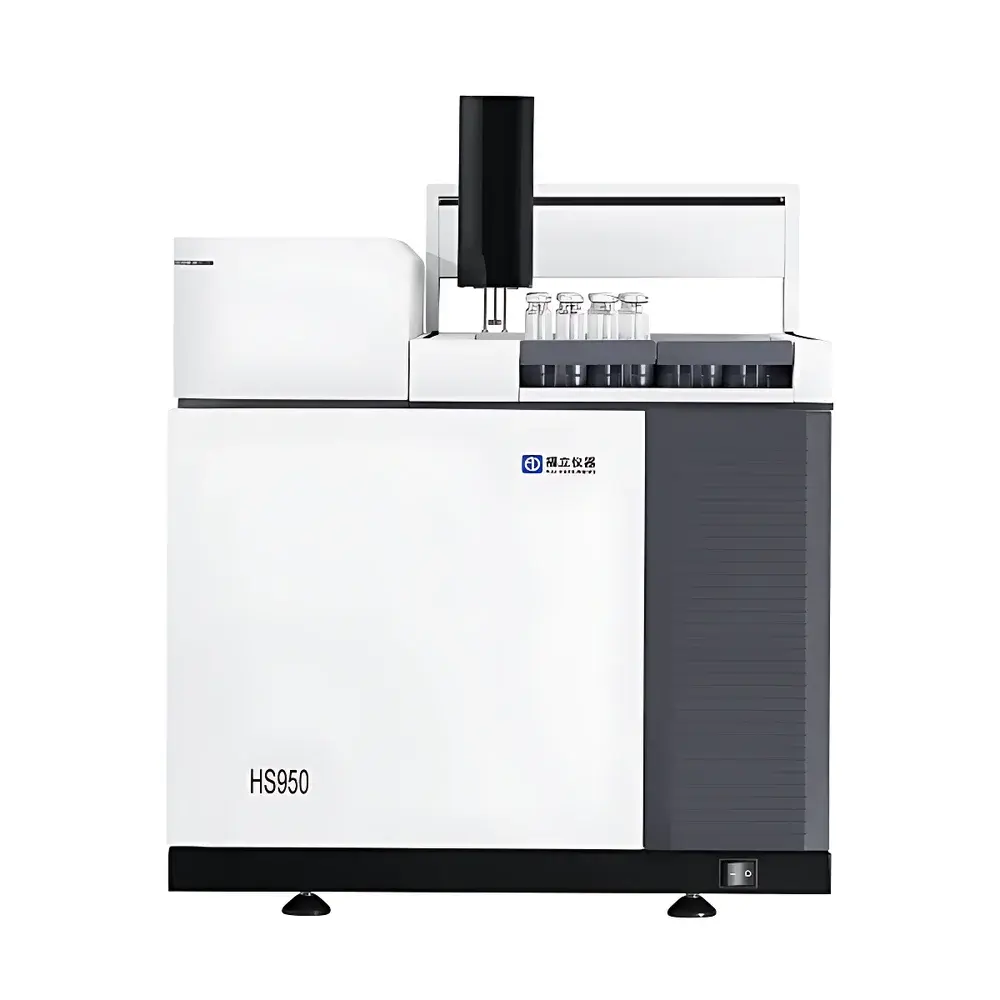
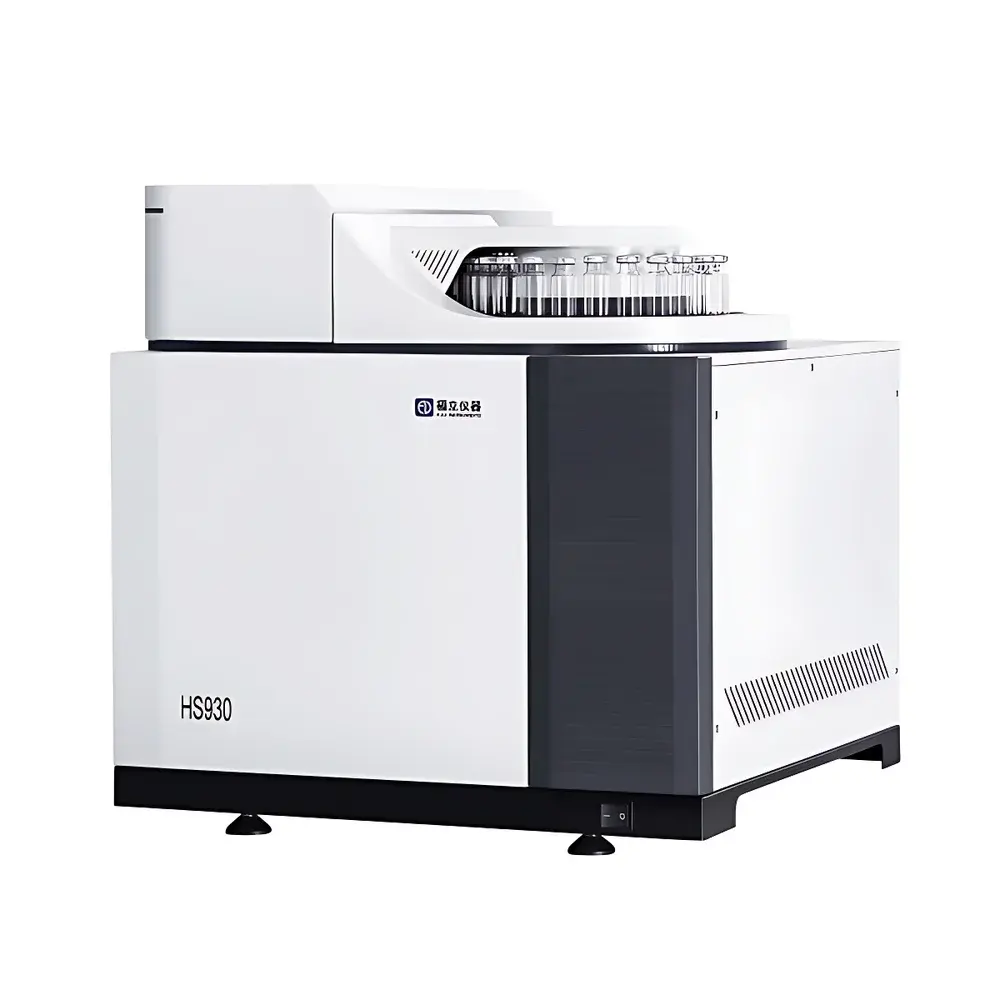
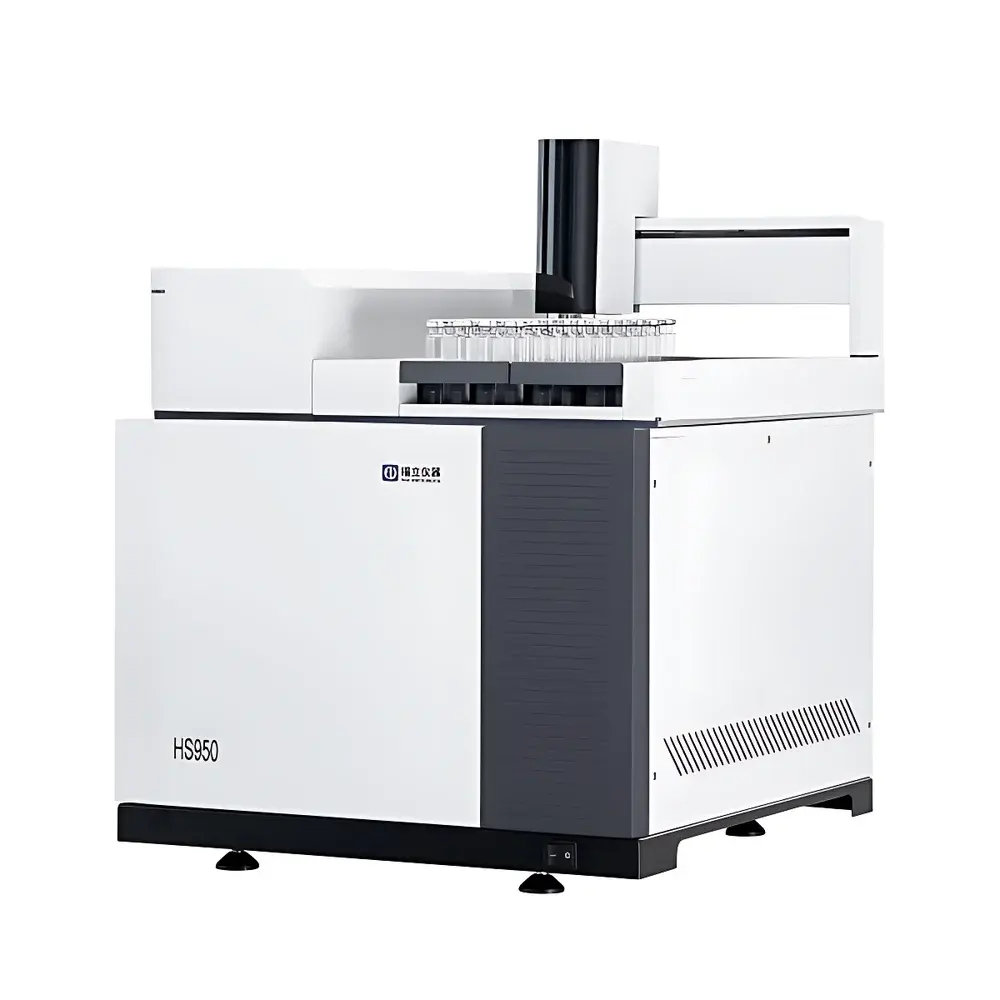
Fuli HS930/HS950 Fully Automated Headspace Sampler
| Brand | Fuli |
|---|---|
| Origin | Zhejiang, China |
| Manufacturer Type | Original Equipment Manufacturer (OEM) |
| Instrument Type | Dynamic Headspace Sampler |
| Automation Level | Fully Automated |
| Sample Tray Capacity | 24-position or 91-position |
| Heated Positions | 12 independent temperature-controlled vial positions |
| Sampling Modes | Static and Dynamic (with optional trap enrichment) |
| Electronic Pneumatic Control | Advanced AFC/EPC (Analog Flow Control / Electronic Pressure Control) |
| Equipped with Vial Agitation | Yes, programmable orbital shaking |
| Software Interface | Integrated intelligent workstation with method sequencing, audit trail, and GC trigger synchronization |
Overview
The Fuli HS930/HS950 Fully Automated Headspace Sampler is an engineered solution for high-throughput, reproducible analysis of volatile and semi-volatile organic compounds (VOCs and SVOCs) in complex matrices. Based on the fundamental principle of phase equilibrium partitioning—where analytes distribute between a liquid/solid sample matrix and its overlying vapor phase—the system enables quantitative extraction of headspace gas via precise thermal equilibration, followed by automated transfer to a coupled gas chromatograph (GC). Unlike manual or semi-automated alternatives, the HS930/HS950 implements full process automation from vial loading through GC injection and post-run system purge, minimizing operator intervention and reducing inter-run variability. Its dual-mode capability—supporting both static headspace sampling and dynamic headspace with optional cold-trap enrichment—provides analytical flexibility across concentration ranges, particularly critical in trace-level environmental monitoring and residual solvent testing per ICH Q3C guidelines.
Key Features
- Fully automated workflow: integrated sequence control for vial positioning, heating, equilibration, pressurization, sampling, GC injection triggering, backflush cleaning, and vial return.
- Advanced AFC/EPC electronic pneumatic control system ensuring precise regulation of pressurization pressure, sampling pressure, purge flow rate, and transfer line temperature—critical for retention time stability and peak shape reproducibility.
- Dual sampling modes: configurable static headspace operation for routine volatiles analysis; optional dynamic headspace mode with cryo-focused trapping for enhanced sensitivity (detection limits improved by up to two orders of magnitude).
- 12 independently heated vial positions with programmable temperature ramping (range: ambient to 200 °C, ±0.1 °C stability), enabling staggered or overlapping thermal equilibration for increased sample throughput.
- Orbital agitation module with adjustable speed and duration—reducing equilibrium time for viscous or heterogeneous samples such as pharmaceutical suspensions, polymer extracts, or soil slurries.
- Modular tray design supporting either 24-position or 91-position sample capacity, compatible with standard 10–22 mL crimp-top or screw-cap headspace vials.
Sample Compatibility & Compliance
The HS930/HS950 accommodates a broad range of sample types—including aqueous solutions, biological fluids, solid polymers, soils, food homogenates, and pharmaceutical formulations—without requiring derivatization or solvent extraction. Its sealed vial handling and inert flow path (stainless steel and SilcoNert®-treated surfaces) prevent adsorption or degradation of reactive analytes such as aldehydes, sulfides, or low-molecular-weight esters. The system complies with key regulatory frameworks governing analytical instrumentation: it supports 21 CFR Part 11-compliant data integrity through user-access controls, electronic signatures, and immutable audit trails within its workstation software. Method parameters are stored with versioning and timestamping, facilitating GLP and GMP audits. Routine operation aligns with ASTM D7622 (standard test method for VOCs in water by dynamic headspace GC), ISO 15681-2 (water quality—determination of organotin compounds), and USP (residual solvents in pharmaceuticals).
Software & Data Management
The embedded intelligent workstation provides a Windows-based graphical interface for comprehensive method development, sequence scheduling, real-time status monitoring, and diagnostic logging. Users define multi-step methods—including incubation time, temperature profiles, agitation parameters, pressurization cycles, and trap desorption settings—with support for conditional logic (e.g., “if pressure deviation >5% then abort run”). All instrument events—vial movement, heater activation, valve actuation, GC trigger signals—are timestamped and logged with metadata. Raw logs and processed method files are exportable in CSV and XML formats for LIMS integration. The software supports role-based access levels (Administrator, Analyst, Reviewer) and maintains full electronic records compliant with ALCOA+ principles (Attributable, Legible, Contemporaneous, Original, Accurate, Complete, Consistent, Enduring, Available).
Applications
The HS930/HS950 delivers validated performance in regulated and research-driven environments: residual solvent quantification in active pharmaceutical ingredients (APIs) per ICH Q3C; ethanol and flavor compound profiling in beverages and dairy products; benzene, toluene, and xylenes (BTX) detection in drinking water and wastewater; monomer release testing from packaging materials; and off-gas screening in battery electrolyte formulations. Its dynamic mode is routinely applied to ultra-trace analysis of chlorinated hydrocarbons in contaminated soils and formaldehyde emissions from composite wood products—applications demanding sub-ppbv detection sensitivity and robust matrix tolerance.
FAQ
Does the HS930/HS950 support integration with third-party GC systems?
Yes—it provides standardized TTL and RS-232 interfaces for seamless synchronization with major GC platforms (Agilent, Thermo Fisher, Shimadzu, PerkinElmer), including auto-triggering of oven ramp and detector acquisition.
Can the agitation function be disabled for thermally labile samples?
Yes—agitation is fully programmable per sample position or sequence step, and may be omitted entirely for heat-sensitive analytes such as certain terpenes or peroxides.
Is calibration verification supported within the software?
The workstation includes built-in calibration check routines for pressure sensors and temperature probes, with results documented in the audit trail and exportable for QA review.
What maintenance intervals are recommended for the EPC module?
Fuli recommends quarterly verification of pressure transducer accuracy and annual recalibration by authorized service personnel using NIST-traceable standards.
How is carryover minimized between high-concentration and low-concentration samples?
The system executes a multi-stage backflush cycle—including carrier gas purge, heated transfer line bake-out, and cold trap regeneration—programmable per run to ensure <0.05% carryover for target analytes under ISO 17025 validation protocols.




