
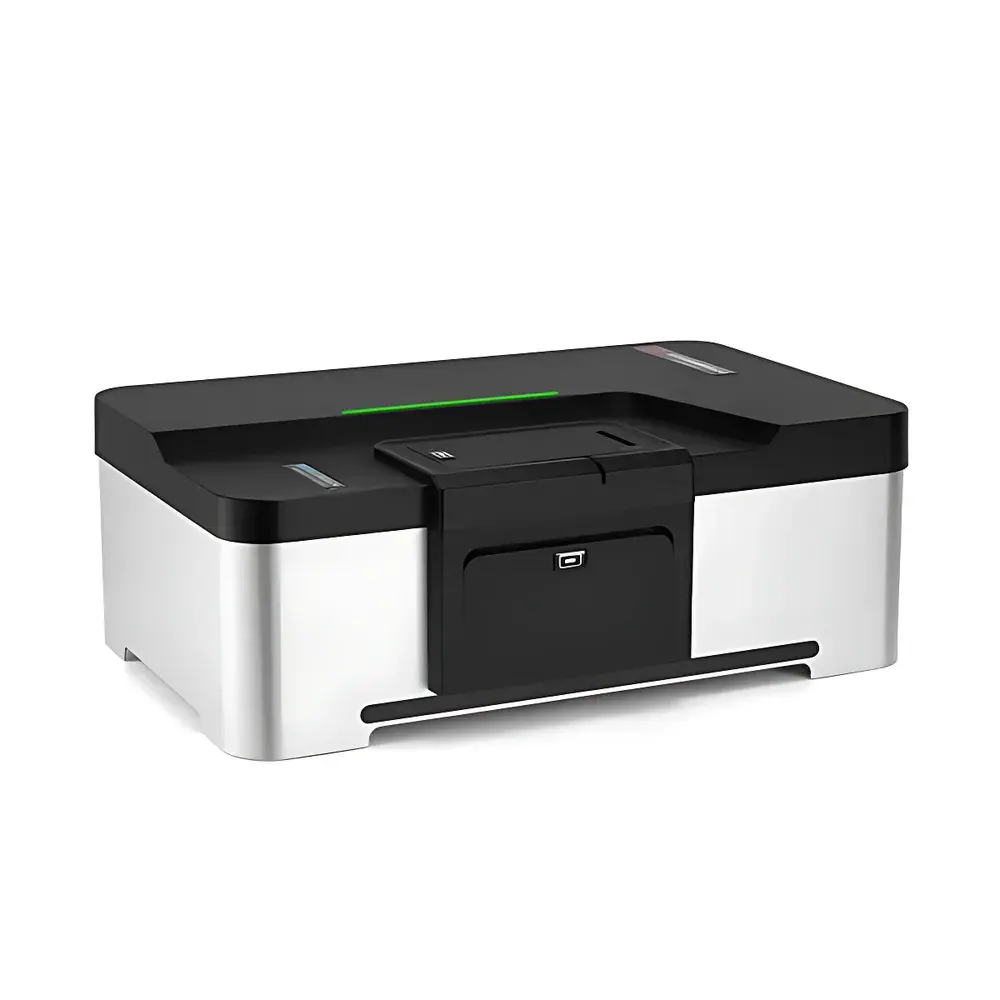
Bettersize BeNano 180 Zeta Pro Nanoparticle Size and Zeta Potential Analyzer
| Brand | Bettersize |
|---|---|
| Origin | Liaoning, China |
| Manufacturer Type | Direct Manufacturer |
| Country of Origin | China |
| Model | BeNano 180 Zeta Pro |
| Price | Upon Request |
| Particle Size Range | 0.3 nm – 15 µm |
| Temperature Control Range | −15 °C to 120 °C |
| Temperature Stability | ±0.1 °C |
| Sample Volume | 3 µL – 1 mL |
| Zeta Potential Measurement Range | No Practical Limit |
Overview
The Bettersize BeNano 180 Zeta Pro is a high-precision, triple-mode optical characterization platform engineered for comprehensive nanoparticle and macromolecular analysis. It integrates three fundamental light-scattering techniques—Dynamic Light Scattering (DLS) at backscattering (173°), side-scattering (90°), and low-angle (11.2°); Electrophoretic Light Scattering (ELS) using Phase Analysis Light Scattering (PALS); and Static Light Scattering (SLS)—within a single, thermally stabilized optical bench. This architecture enables simultaneous, model-independent determination of hydrodynamic diameter (Dh), polydispersity index (PDI), zeta potential (ζ), electrophoretic mobility (µe), absolute molecular weight (Mw, Mn, Mz), second virial coefficient (A2), and micro-rheological parameters including complex modulus (G*), storage modulus (G′), loss modulus (G″), and creep compliance (J). The system operates on the principles of Brownian motion (for DLS), electrophoretic migration under applied electric field (for ELS), and angular intensity distribution (for SLS), delivering data compliant with ISO 22412:2017 (DLS), ISO 13099-2:2012 (ELS), and ISO 22412 Annex C (SLS).
Key Features
- Triple-angle DLS detection (173°, 90°, and 11.2°) optimized for broad concentration range analysis—from dilute colloids (<0.001% w/v) to highly concentrated dispersions (up to 40% w/v).
- PALS-based zeta potential measurement with no practical lower or upper limit; validated for particles from 1 nm to >120 µm across conductivity ranges up to ≥270 mS/cm.
- Integrated temperature control from −15 °C to 120 °C with ±0.1 °C stability, enabling precise thermal transition studies (e.g., Tm of proteins or LCST/UCST behavior in polymers).
- High-sensitivity avalanche photodiode (APD) detector coupled with a 671 nm solid-state laser (optional wavelengths available), supporting fast correlation sampling down to 25 ns and 4000-channel correlator resolution.
- Multi-algorithm particle size analysis: Cumulants, General Purpose (non-negative least squares, NNLS), and CONTIN inversion for robust distribution modeling.
- Micro-rheology module providing mean-squared displacement (MSD), G*, G′, G″, η*, and J directly from DLS time-series data—without requiring external rheometers.
Sample Compatibility & Compliance
The BeNano 180 Zeta Pro accommodates aqueous and organic solvent-based dispersions, protein solutions, polymer melts, liposomes, exosomes, and aggregated colloidal systems. Its low-volume cuvette design (as little as 3 µL) minimizes sample consumption while maintaining signal-to-noise integrity. For regulated environments, the system supports audit-trail-enabled operation when paired with optional software modules compliant with FDA 21 CFR Part 11 requirements—including electronic signatures, user access control, and immutable data logging. All measurement protocols align with ASTM D8195–21 (nanoparticle size by DLS), USP <788> (subvisible particles), and ICH Q5A(R2) guidelines for biopharmaceutical characterization.
Software & Data Management
The proprietary BeNano Analysis Suite provides unified control, real-time visualization, and advanced post-processing. It includes automated trend analysis modules for temperature-, time-, and pH-dependent measurements, with built-in titration curve fitting for pI determination. Raw correlation functions, intensity distributions, volume-weighted histograms, and molecular weight chromatograms are exportable in ASCII, CSV, and HDF5 formats. Data integrity is ensured through timestamped metadata embedding (instrument ID, operator, calibration status, environmental logs). Optional integration with LIMS platforms via OPC UA or RESTful API enables seamless workflow alignment in QC/QA laboratories operating under GLP or GMP frameworks.
Applications
- Biopharmaceutical development: monitoring aggregation onset, formulation stability screening, and charge heterogeneity assessment of monoclonal antibodies and viral vectors.
- Nanomedicine R&D: sizing and surface charge profiling of lipid nanoparticles (LNPs), polymeric micelles, and iron oxide contrast agents under physiological salt conditions.
- Materials science: characterizing colloidal silica, quantum dots, and metal-organic frameworks (MOFs) across synthesis batches and aging cycles.
- Food & beverage: evaluating protein-polyphenol complexes, emulsion droplet stability, and starch granule swelling kinetics as a function of pH and temperature.
- Academic research: quantifying interfacial interactions, Debye length modulation, and DLVO theory validation in complex electrolyte media.
FAQ
What is the minimum detectable particle size for this instrument?
The theoretical lower limit is 0.3 nm under optimal conditions (low noise, high scattering contrast, and stable dispersion), consistent with detection of small peptides and oligonucleotides.
Can the system measure zeta potential in high-conductivity buffers such as PBS or cell culture media?
Yes—the PALS detection scheme and adaptive field strength control enable reliable zeta potential measurement across conductivities from 0 to ≥270 mS/cm without electrode polarization artifacts.
Is molecular weight determination truly absolute, or does it require calibration standards?
SLS-based molecular weight is absolute and calibration-free when combined with concentration data from UV-Vis or RI detection; DLS-derived Mw remains semi-quantitative and requires shape assumptions.
Does the system support automated pH titration for zeta potential vs. pH profiling?
When coupled with the optional BAT-1 Auto-Titrator, full programmable acid/base titrations are supported—including dynamic mixing, sequential dosing, and real-time feedback-controlled endpoint detection.
How does the micro-rheology module differ from conventional mechanical rheometry?
It derives viscoelastic moduli from spontaneous thermal fluctuations (via DLS), eliminating wall-slip, edge fracture, and shear banding artifacts—making it ideal for fragile, low-viscosity, or scarce biological samples.



