
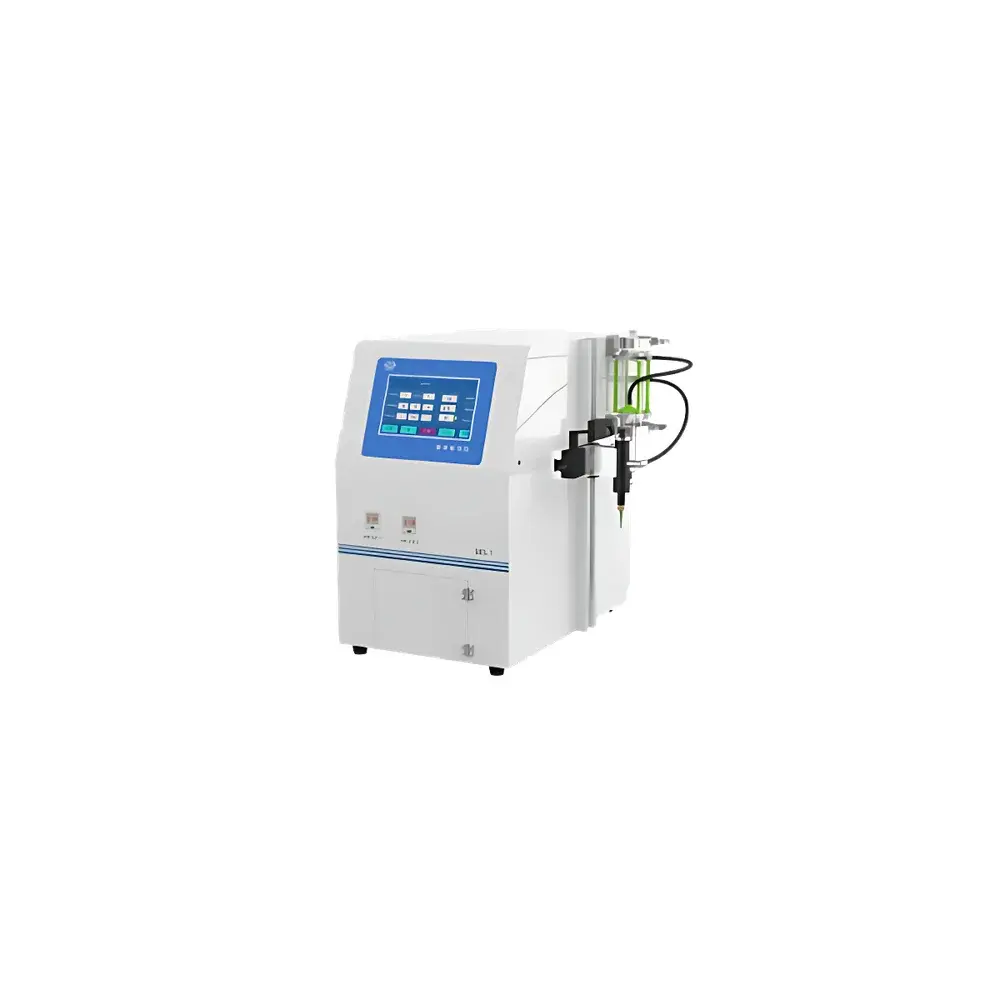
AA OPTO Electronic MS-1-6 Calcium Alginate Microsphere Forming Instrument
| Brand | AA OPTO Electronic |
|---|---|
| Origin | Beijing, China |
| Manufacturer Type | Authorized Distributor |
| Country of Origin | China |
| Model | MS-1-6 |
| Power Supply | AC 220 V / 50 Hz |
| Installed Power | 500 W |
| Sphere Diameter Range | 1–6 mm |
| Production Capacity | 1–1.5 L/h |
| Stage Travel | 1–150 mm |
| Nozzle Count | 6 (interchangeable orifice diameters) |
| Compatible Viscosity Range | 1–5000 cP |
| Control System | PLC + 7-inch color LCD touchscreen (V1.1 firmware) |
| Dimensions (L×W×H) | 500 × 320 × 520 mm |
| Weight | ~30 kg |
| Construction | Monolithic stainless-steel wetted parts |
| Material Contact Compliance | AISI 316L-grade stainless steel for fluid path |
Overview
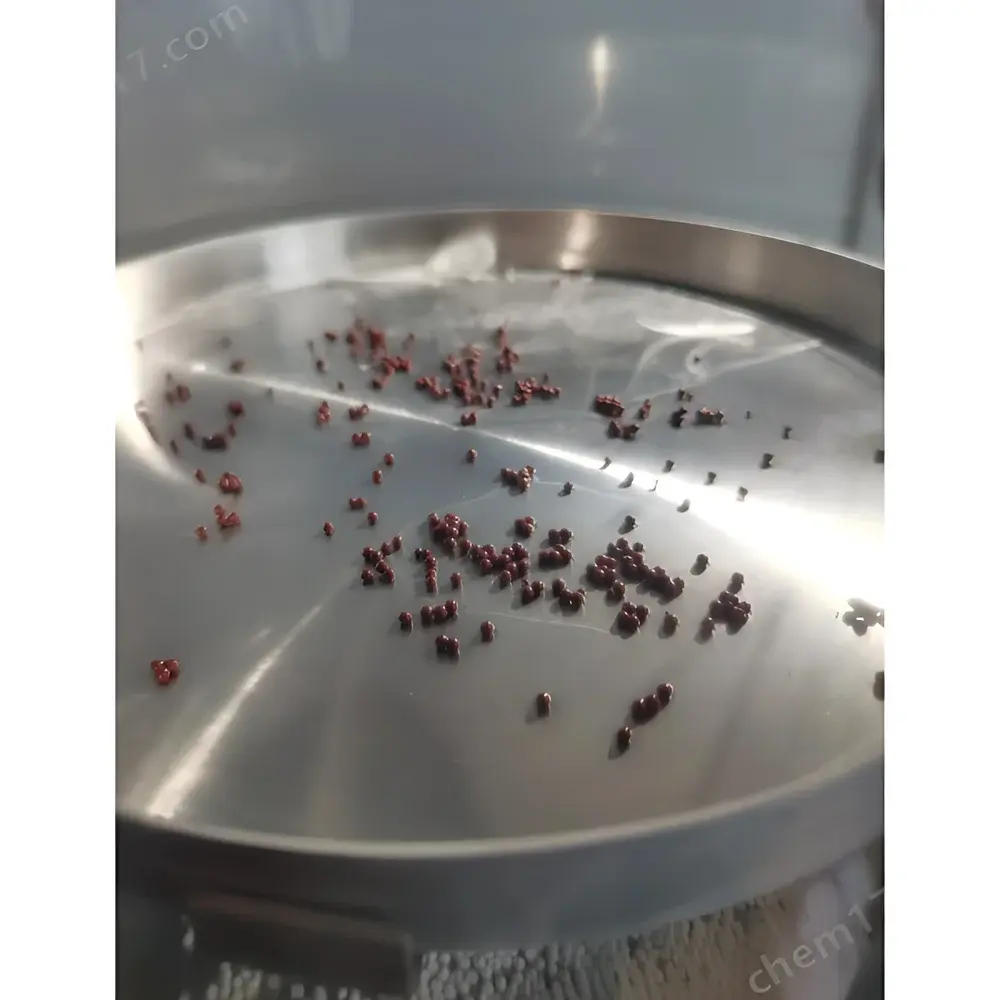
The AA OPTO Electronic MS-1-6 Calcium Alginate Microsphere Forming Instrument is a precision-engineered laboratory-scale device designed for the controlled, reproducible fabrication of spherical hydrogel microcarriers via dripping and ionotropic gelation. It operates on the principle of regulated droplet generation under gravity, followed by in-situ crosslinking in calcium chloride or other divalent cation-containing bath solutions. The system leverages calibrated peristaltic or piston-driven quantitative pumping to deliver consistent volumetric flow, enabling formation of uniform alginate-based microspheres with defined size distribution, high sphericity, and structural integrity. Unlike batch emulsification or spray-drying methods, this instrument provides deterministic control over droplet initiation, fall distance, residence time in gelling medium, and post-gelation handling—critical parameters governing network density, mechanical strength, porosity, and bioactivity retention. Its design supports both R&D-scale optimization and pilot-scale continuous production of microspheres used in cell encapsulation, drug delivery, enzyme immobilization, and tissue engineering scaffolds.
Key Features
- Monolithic stainless-steel construction with full AISI 316L contact surfaces ensures chemical resistance, cleanability, and compliance with GLP-aligned lab hygiene standards.
- Six independently configurable nozzles (with interchangeable orifice diameters) allow parallel processing or multi-parameter screening without hardware reconfiguration.
- Adjustable stage travel (1–150 mm) enables precise control over droplet fall height—a key determinant of sphere morphology, surface smoothness, and internal homogeneity.
- Quantitative pump system eliminates manual syringe refilling; supports uninterrupted operation for extended gelation kinetics studies or high-throughput formulation testing.
- Integrated PLC controller (firmware V1.1) coupled with a 7-inch high-resolution color touchscreen delivers real-time monitoring of operational parameters including elapsed run time, total drop count, setpoint confirmation, and error logging.
- Viscosity-adaptive dispensing algorithm accommodates solutions ranging from dilute sodium alginate (1 cP) to highly concentrated, thermally sensitive biopolymer blends (up to 5000 cP), maintaining drop fidelity across rheological regimes.
Sample Compatibility & Compliance
The MS-1-6 is validated for use with sodium alginate, carboxymethyl cellulose, chitosan, pectin, and other anionic polysaccharides responsive to Ca²⁺, Ba²⁺, or Sr²⁺ crosslinking. It supports sterile processing when integrated with laminar flow hoods and autoclavable nozzle assemblies. All wetted components meet ISO 8573-1 Class 3 purity requirements for compressed air interfaces (if pneumatic options are added), and the electrical architecture conforms to IEC 61000-4 electromagnetic compatibility standards. While not certified for GMP manufacturing, its traceable parameter logging, repeatable actuation, and stainless-steel fluid path make it suitable for preclinical process development aligned with USP <1043>, ISO 13485 preliminary stages, and ASTM F2656-22 guidance for biomaterial microsphere characterization.
Software & Data Management
The embedded V1.1 control firmware records timestamped operational metadata—including pump speed, nozzle selection, stage position, cycle count, and user-defined batch IDs—to internal non-volatile memory. Export is supported via USB 2.0 to CSV format for integration into LIMS or statistical process control platforms. Audit trails include operator login (optional password protection), parameter change history, and system uptime diagnostics. The interface complies with ALCOA+ principles for data integrity: attributable, legible, contemporaneous, original, accurate, complete, consistent, enduring, and available—facilitating FDA 21 CFR Part 11 readiness when paired with institutional electronic signature protocols.
Applications
- Encapsulation of mammalian cells, probiotics, or therapeutic proteins within semi-permeable alginate matrices for sustained release or immunoisolation.
- Preparation of catalytic microreactors via enzyme immobilization on high-surface-area nanofibrous networks formed during controlled gelation.
- Development of injectable, biodegradable carriers for localized chemotherapy or regenerative medicine applications requiring narrow size distribution (e.g., <5% CV in diameter).
- Screening of crosslinker concentration, alginate M/G ratio, and post-gelation drying protocols (freeze-drying, supercritical CO₂) to modulate mechanical resilience and degradation kinetics.
- Teaching platform for polymer physics labs demonstrating sol-gel transitions, interfacial tension effects, and diffusion-limited reaction kinetics in confined geometries.
FAQ
Can the MS-1-6 produce microspheres smaller than 1 mm or larger than 6 mm?
No—the mechanical and hydrodynamic design is optimized for the 1–6 mm range. Smaller spheres require microfluidic droplet generators; larger spheres risk gravitational deformation and inconsistent gelation kinetics.
Is the instrument compatible with non-alginate polymers such as gelatin or collagen?
Yes, provided thermal or enzymatic crosslinking mechanisms are implemented externally; the MS-1-6 itself supports only ionotropic gelation. Users must adapt bath composition and post-drip handling accordingly.
Does the system support automated collection of formed microspheres?
Not natively—but the standard outlet geometry permits integration with custom conveyor belts, vacuum filtration manifolds, or rotating drum collectors using third-party mechanical interfaces.
What maintenance is required for long-term reliability?
Monthly inspection of nozzle orifices for residue buildup, quarterly calibration of pump displacement volume against gravimetric measurement, and annual verification of touchscreen responsiveness and PLC I/O signal integrity.
Is remote monitoring or Ethernet connectivity available?
Not in the base configuration; however, the USB data export function enables periodic offline synchronization with networked lab servers or cloud-based analytics tools.



