
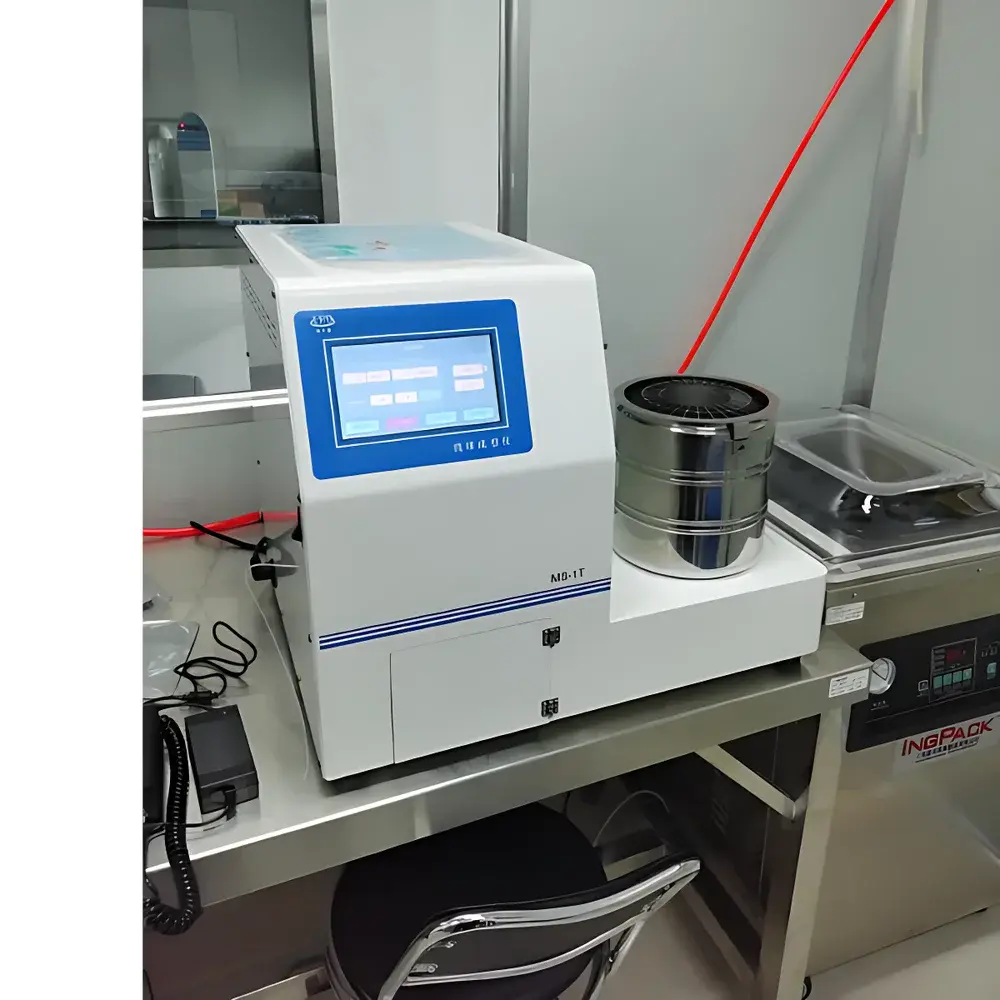
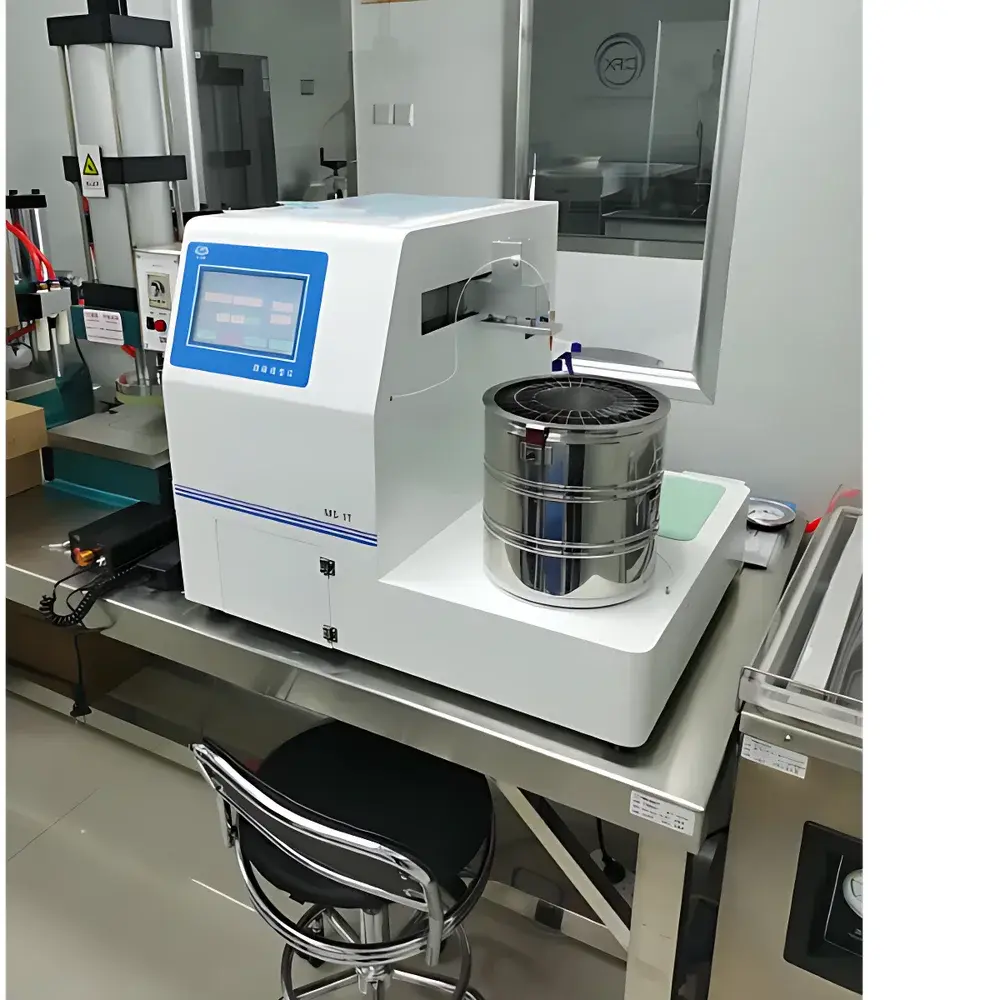
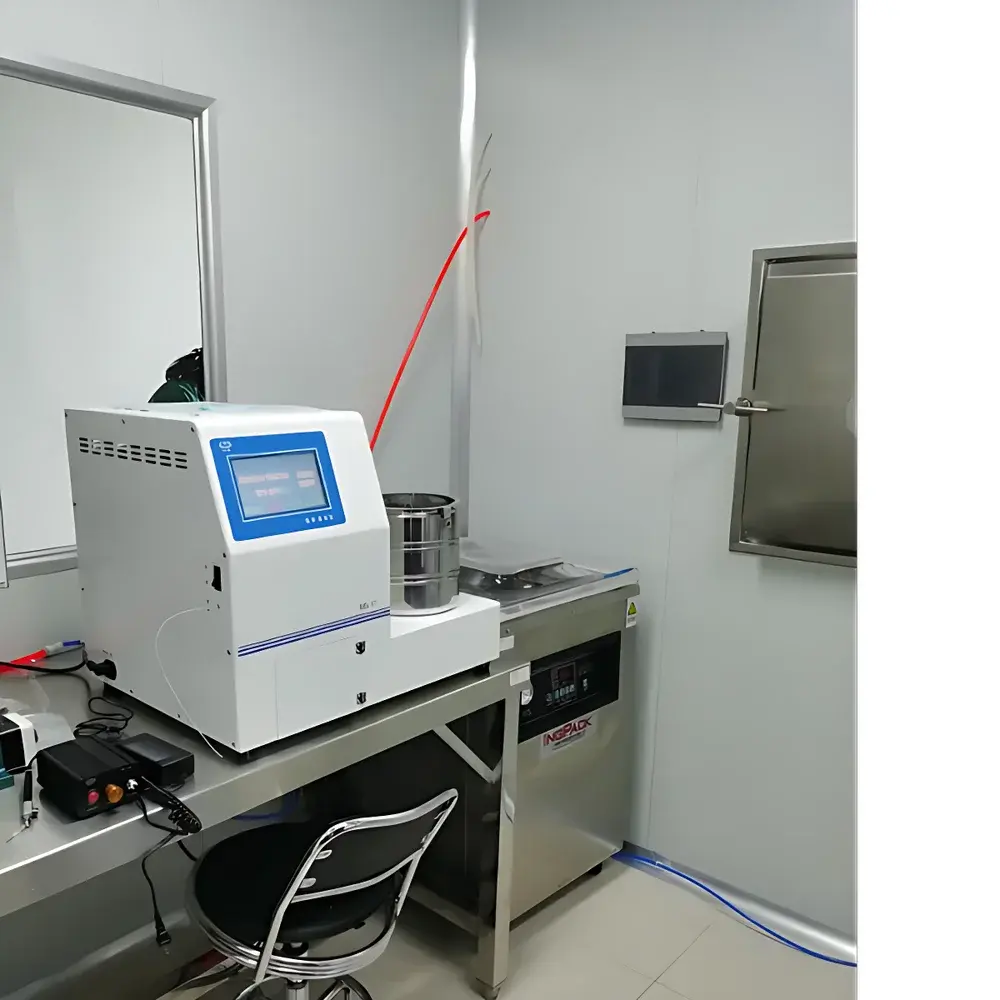
AA OPTO Electronic MS-1T Microsphere Forming Instrument
| Brand | AA OPTO Electronic |
|---|---|
| Origin | Beijing, China |
| Manufacturer Type | Authorized Distributor |
| Country of Origin | China |
| Model | MS-1T |
| Pricing | Available Upon Request |
Overview
The AA OPTO Electronic MS-1T Microsphere Forming Instrument is an engineered platform for the controlled, reproducible fabrication of monodisperse microspheres via precision droplet generation and in-flight solidification—commonly employed in lyophilized (freeze-dried) microsphere production. It operates on the principle of vibration-assisted jetting, where a piezo-driven or electromechanically actuated nozzle dispenses discrete liquid volumes under precisely regulated flow, frequency, and mechanical excitation. The resulting droplets fall through a controlled environment—often coupled with cryogenic or solvent-evaporation chambers—to form spherical particles with narrow size distribution (CV < 5% typical). Designed for laboratory-scale development and process optimization, the MS-1T bridges formulation science and scalable manufacturing requirements in diagnostics, biopharmaceuticals, and advanced drug delivery research.
Key Features
- Integrated compact architecture with footprint under 0.4 m²—optimized for benchtop deployment in GLP-compliant labs and QC environments.
- Ceramic pump core ensures chemical resistance, dimensional stability, and long-term volumetric accuracy across aqueous, organic, and mildly corrosive formulations.
- Selectably configurable dispensing stations: 2-, 4-, or 8-cup configurations support parallel batch processing or multi-formulation screening without hardware modification.
- Constant-flow self-priming micro-pump eliminates manual priming; enables uninterrupted operation over extended runtimes (>24 h) with minimal maintenance.
- DD (Direct Drive) motor-driven platform delivers high-torque, low-vibration motion control; integrated high-resolution optical rotary encoder with automatic homing ensures repeatable positional fidelity (< ±0.02° angular repeatability).
- Adjustable mechanical excitation amplitude modulates droplet detachment dynamics—enabling robust sphere formation across viscosities from 1 to 500 mPa·s and volumes ranging from 10 nL to 5 µL.
- Full-contact material path constructed exclusively from USP Class VI-certified low-protein-binding polymers and electropolished 316L stainless steel—validated for minimal adsorption of peptides, antibodies, and nucleic acids.
- Comprehensive safety architecture: real-time thermal overload detection, current-limiting motor protection, interlocked station sequencing, and origin-sensing fail-safes compliant with IEC 61000-6-2/6-4 EMC standards.
- Industrial-grade PLC controller paired with proprietary V1.0 firmware ensures deterministic timing, cycle-to-cycle repeatability (RSD < 1.2% for drop count), and audit-ready operational logging.
- 7-inch embedded capacitive touchscreen interface with intuitive HMI: displays live status metrics—including elapsed time, total dispensed drops, remaining runtime, and fault diagnostics—with multilingual UI support (English, German, Japanese).
Sample Compatibility & Compliance
The MS-1T accommodates a broad range of biologically active and formulation-sensitive materials, including but not limited to: protein solutions (e.g., monoclonal antibodies, enzymes), oligonucleotides, plasmid DNA, viral vectors, bacterial suspensions, hydrogel precursors, and polymer-based drug carriers (PLGA, chitosan, alginate). All wetted surfaces comply with ISO 10993-5 cytotoxicity and USP extractables testing. System design adheres to principles outlined in FDA Guidance for Industry: Process Validation (2011) and supports alignment with ICH Q5C (stability of biotechnological/biological products) and ISO 13485:2016 (medical device quality management). Data integrity features—including user-level access control, electronic signatures, and immutable audit trails—facilitate compliance with 21 CFR Part 11 and EU Annex 11 requirements when integrated into validated workflows.
Software & Data Management
The MS-1T runs on embedded Linux-based firmware with deterministic real-time scheduling. Parameter sets (flow rate, vibration frequency, dwell time, cup position mapping) are stored as encrypted .cfg files with version stamping and SHA-256 checksum validation. Raw operational logs—including timestamped drop counts, motor current profiles, temperature snapshots, and error codes—are exportable via USB 2.0 or Ethernet (TCP/IP) in CSV/JSON format. Optional API integration (RESTful endpoints over HTTPS) allows bidirectional communication with LIMS (e.g., LabVantage, Thermo Fisher SampleManager) and MES platforms. Firmware updates follow secure OTA protocols with rollback capability and cryptographic signature verification.
Applications
- Diagnostics Development: Production of lyophilized microspheres for point-of-care immunoassays (lateral flow, CLIA, ELISA), microfluidic cartridge reagent loading, and stable enzyme/protein reference standards.
- Molecular Diagnostics: Encapsulation of CRISPR-Cas ribonucleoproteins, RT-qPCR master mixes, and RNA standards into uniform spheres for room-temperature transport and controlled release.
- Biopharmaceutical Formulation: Screening of sustained-release microsphere candidates for peptide hormones (e.g., octreotide), vaccines (antigen + adjuvant co-encapsulation), and mRNA-LNPs.
- Cell & Gene Therapy Support: Cryo-stabilization of primary T-cells, dendritic cells, and stem cell spheroids via vitrification-compatible microencapsulation.
- Material Science Research: Fabrication of calibration standards for DLS, SEM particle sizing, and optical trap studies requiring traceable monodispersity.
FAQ
What types of solvents and biomolecules are compatible with the MS-1T?
Aqueous buffers, DMSO/water mixtures, ethanol/water blends, and low-concentration organic solvents (e.g., acetone, ethyl acetate) are supported. Proteins, nucleic acids, lipids, and live cells have been successfully processed—subject to formulation-specific viscosity and surface tension constraints.
Can the MS-1T be integrated into a GMP manufacturing line?
While designed for R&D and pilot-scale use, the system meets foundational GMP elements per ISO 13485 and supports IQ/OQ documentation packages. Full GMP qualification requires site-specific risk assessment and integration with environmental monitoring and process control systems.
Is remote monitoring or automation possible?
Yes—via Ethernet interface with Modbus TCP or custom REST API. Integration with robotic liquid handlers (e.g., Tecan Fluent, Hamilton STAR) has been demonstrated in multi-step lyophilization workflows.
What maintenance intervals are recommended?
Ceramic pump inspection every 500 hours; optical encoder calibration annually; full wetted-path cleaning after each formulation change using IPA/water rinse and nitrogen purge.
Does the system support regulatory submission data packages?
Yes—audit trail exports, parameter version history, and electronic signature logs meet ALCOA+ principles and are structured for inclusion in IND/IMPD dossiers when used within a validated analytical method framework.



